


Supplements get all the TikTok Shop headlines. But beauty brands are quietly posting some of the platform’s highest conversion rates, and home goods sellers are turning $40 impulse buys into six-figure months. If you’re only studying the supplement playbook, you’re missing where TikTok Shop’s fast-moving categories are actually teaching the most transferable lessons.
Supplements built the template: creator-led education, urgency-driven bundles, aggressive affiliate commissions. It worked because the category had a built-in advantage — people already search for solutions to specific problems (sleep, gut health, energy) and creators could speak to those problems directly. Beauty and home goods don’t have that same problem-solution clarity baked in. Yet both categories are converting at rates that rival or beat supplements, according to seller data circulating among agency partners and creator marketplaces. The mechanics are just different, and that’s exactly what makes them worth studying.
Why Beauty Converts Differently Than Supplements
Supplements sell outcomes. Beauty sells proof. That distinction changes everything about how conversion happens on TikTok Shop.
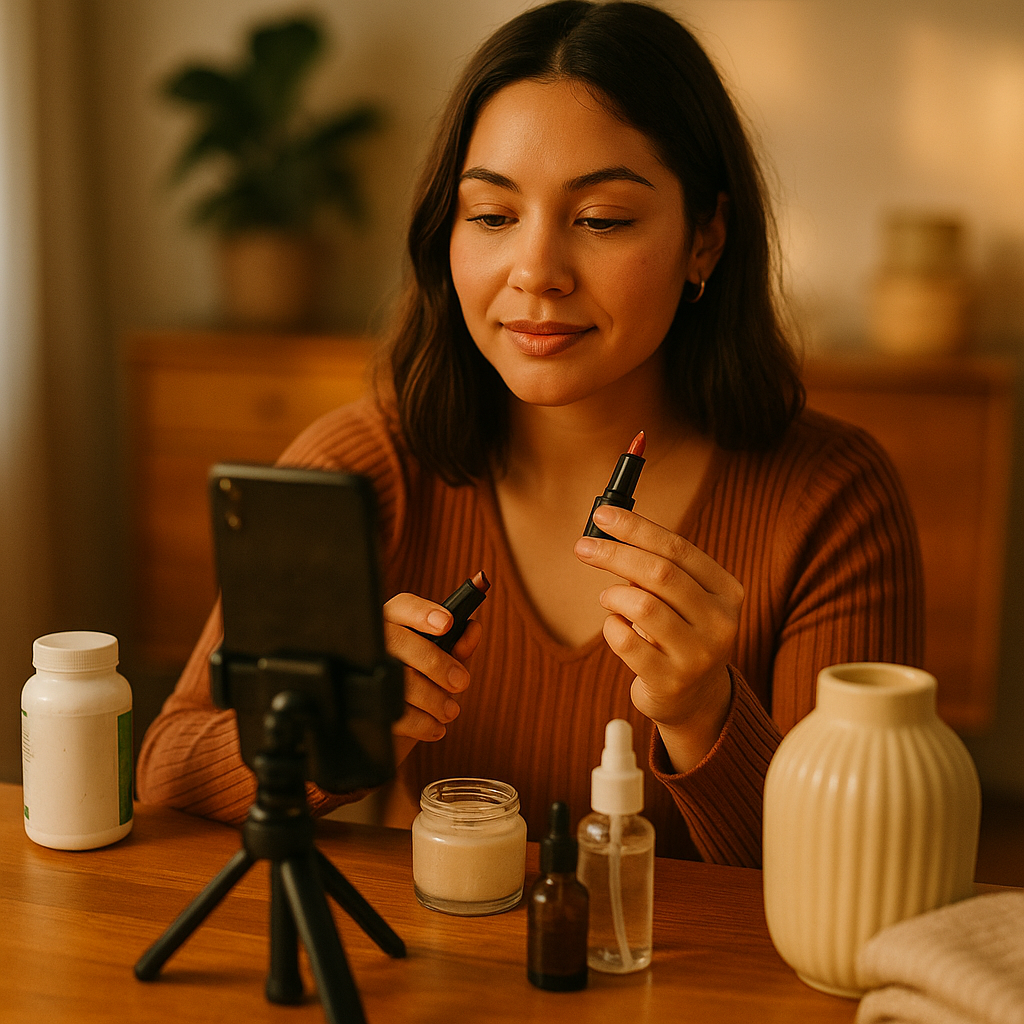
A supplement creator can say “this helped my bloating” and viewers take it on faith, because the effect is internal and unverifiable in a fifteen-second clip. Beauty doesn’t get that luxury. Viewers can see whether the foundation matches, whether the serum actually brightens, whether the mascara clumps by hour three. That visual verification is why beauty content on TikTok Shop leans so heavily on side-by-side demos, unedited try-ons, and “get ready with me” formats shot in normal lighting, not studio lighting.
This has a direct implication for brand teams: production quality expectations are inverted. Overly polished beauty content actually underperforms because it reads as inauthentic, while raw, slightly imperfect footage builds trust faster. That’s consistent with what we’ve covered on TikTok’s trust-based algorithm, which increasingly rewards creator credibility signals over production polish.
Beauty brands winning on TikTok Shop aren’t hiring the biggest creators. They’re hiring the most believable ones — and the data shows believability converts better than reach.
The Home Goods Surprise: High-Ticket Items Are Moving
Conventional wisdom said TikTok Shop was built for impulse buys under $30. Home goods data is quietly rewriting that assumption. Robot vacuums, air fryers, storage systems, and even furniture pieces in the $80-$200 range are converting at rates that would have seemed implausible eighteen months ago.
What changed? Three things, mostly.
- Problem-agitation content got more specific. Instead of “this organizer changed my life,” top-performing creators show the exact mess, the exact frustration, then the exact fix — often in under 20 seconds.
- Live shopping normalized higher price points. Buyers who watch a 10-minute live demo of a kitchen gadget arrive with more context than someone scrolling past a static ad, which reduces price sensitivity.
- Bundle logic borrowed from supplements. Home goods sellers started packaging complementary items (a vacuum plus replacement filters, a organizer set plus labels) the same way supplement brands bundle a 30-day stack.
This bundling crossover is worth sitting with. It suggests the supplement playbook wasn’t category-specific at all — it was a commerce mechanic that happened to get proven first in supplements because the affiliate economics were simplest there. Now it’s migrating everywhere.
What the Conversion Data Actually Shows
Pull back far enough and a pattern emerges across categories: conversion isn’t driven by follower count, it’s driven by content-to-purchase friction. The fewer steps between “I saw this” and “I bought this,” the higher the conversion rate — regardless of whether you’re selling collagen powder or a couch throw.
Beauty and home goods brands that are winning share a few operational habits:
- They post shoppable content daily, not weekly. Algorithmic visibility on TikTok Shop rewards consistency more than any single viral hit.
- They run affiliate programs with tiered commissions, paying creators more as sales volume climbs, which mirrors the incentive structures supplement brands pioneered.
- They treat every piece of content as a potential evergreen asset, not a one-off campaign moment. A single well-performing demo video can drive sales for months if it keeps surfacing in search and For You feeds.
That last point connects to a broader shift we’ve written about in how one UGC asset can drive both awareness and sales. TikTok Shop’s fast-moving categories are proof of concept for that hybrid funnel model at scale — a single video isn’t just top-of-funnel content anymore, it’s a permanent point-of-sale asset.
Sales-Attributed Reporting Is Non-Negotiable Now
If you’re still measuring creator programs by views and engagement rate, you’re operating with the wrong scoreboard. TikTok Shop’s native attribution — showing exactly which video drove which sale — has made vanity metrics look almost embarrassing by comparison. Brand teams that have shifted to sales-attributed creator reporting are the ones making faster, more confident budget decisions, because they can see the actual revenue path instead of guessing at correlation.
This matters even more in beauty and home goods, where purchase consideration cycles vary widely. A $12 lip oil might convert in the same session someone watches a demo. A $150 air purifier might take three or four touchpoints across different creators before someone buys. Without sales attribution, you’d never see that difference — and you’d likely underfund the creators doing the unglamorous middle-funnel work of building consideration.
According to eMarketer, social commerce continues to grow faster than overall e-commerce in most major markets, and platforms with native checkout — TikTok Shop chief among them — are capturing a disproportionate share of that growth. Brands that ignore category-specific conversion patterns are leaving that growth on the table.
What This Means for Enterprise Brands Still on the Sidelines
Enterprise beauty and home goods brands have been slower to move than the independent sellers driving most of this data. Some of that caution is reasonable — compliance review, legal sign-off on claims, existing retail relationships that create channel conflict concerns. But the sellers proving out these conversion patterns are overwhelmingly small and mid-sized, the same cohort covered in our look at TikTok Shop’s 171,000 SMB sellers. Enterprise brands that keep waiting for a “safer” version of this playbook risk ceding an entire commerce channel to smaller, faster-moving competitors.
The compliance concerns are legitimate, though, especially in beauty. Claims about skin conditions, dermatological benefits, or “clinically proven” results sit under FTC scrutiny, and creators making unsubstantiated claims can create liability for the brand, not just the individual. Any brand scaling creator programs in this category should have clear claims guidelines built into creator briefs, not left to interpretation. The FTC’s endorsement guidance is the baseline every legal team should be referencing before creators go live.
The brands winning right now aren’t necessarily the ones with the biggest budgets. They’re the ones who fixed their reporting and compliance infrastructure before scaling, not after.
Operational Lessons Worth Stealing
A few tactical takeaways for brand and agency teams building or refining a TikTok Shop strategy in beauty or home goods:
- Match creator tone to category verification needs. Beauty needs visual proof creators; home goods needs problem-demonstration creators. Don’t cast the same creator profile for both.
- Build tiered affiliate structures early. Waiting until a product is already trending to introduce performance-based commissions means missing the window when creator interest is highest.
- Treat live shopping as a distinct discipline. It requires different scripting, different pacing, and often different creators than short-form content. Don’t assume your best short-form talent will translate.
- Invest in owned content libraries. As covered in our piece on owned UGC libraries, brands that retain rights to top-performing creator content can repurpose it across paid social and retail media, extending its value well beyond the original TikTok Shop listing.
- Watch renewal data, not just launch performance. Creators who convert well once don’t always convert well twice. Retainer structures, discussed in our analysis of why most creator deals don’t renew, tend to produce more consistent category performance than one-off gifting or single-post deals.
None of this requires reinventing influencer strategy from scratch. It requires paying attention to what’s actually converting inside a category, instead of copying a supplement playbook that was never built for how beauty or home goods buyers make decisions.
Next step: Pull your last 90 days of TikTok Shop content and sort it by sales-attributed revenue, not views. Whatever format or creator type sits at the top of that list, brief for more of exactly that, and stop guessing at what “should” work.
FAQs
Why do beauty products convert differently than supplements on TikTok Shop?
Beauty results are visually verifiable in real time, so viewers trust unpolished, demo-style content more than heavily produced ads. Supplements rely on claimed internal outcomes that can’t be shown on camera, so they lean more on testimonial and urgency-based messaging.
Can higher-priced home goods actually sell well on TikTok Shop?
Yes. Items in the $80 to $200 range are converting at meaningful rates when paired with specific problem-agitation content, live shopping demos, and bundled offers that reduce perceived price friction.
What metric should brands prioritize when evaluating TikTok Shop creator performance?
Sales-attributed revenue, not views or engagement rate. TikTok Shop’s native attribution shows exactly which content drove which purchase, making it possible to fund creators based on actual revenue contribution rather than reach.
Are there compliance risks specific to beauty creators on TikTok Shop?
Yes. Claims about skin conditions or dermatological results fall under FTC scrutiny. Brands should provide creators with clear claims guidelines and disclosure requirements before content goes live to limit liability.
Is it too late for enterprise brands to enter TikTok Shop’s fast-moving categories?
No, but the advantage is narrowing. Small and mid-sized sellers have already proven out conversion patterns in beauty and home goods, so enterprise brands entering now need faster creator sourcing and reporting infrastructure to compete effectively.
Top Influencer Marketing Agencies
The leading agencies shaping influencer marketing in 2026
Agencies ranked by campaign performance, client diversity, platform expertise, proven ROI, industry recognition, and client satisfaction. Assessed through verified case studies, reviews, and industry consultations.
Moburst

-
2

The Shelf
Boutique Beauty & Lifestyle Influencer AgencyA data-driven boutique agency specializing exclusively in beauty, wellness, and lifestyle influencer campaigns on Instagram and TikTok. Best for brands already focused on the beauty/personal care space that need curated, aesthetic-driven content.Clients: Pepsi, The Honest Company, Hims, Elf Cosmetics, Pure LeafVisit The Shelf → -
3

Audiencly
Niche Gaming & Esports Influencer AgencyA specialized agency focused exclusively on gaming and esports creators on YouTube, Twitch, and TikTok. Ideal if your campaign is 100% gaming-focused — from game launches to hardware and esports events.Clients: Epic Games, NordVPN, Ubisoft, Wargaming, Tencent GamesVisit Audiencly → -
4

Viral Nation
Global Influencer Marketing & Talent AgencyA dual talent management and marketing agency with proprietary brand safety tools and a global creator network spanning nano-influencers to celebrities across all major platforms.Clients: Meta, Activision Blizzard, Energizer, Aston Martin, WalmartVisit Viral Nation → -
5

The Influencer Marketing Factory
TikTok, Instagram & YouTube CampaignsA full-service agency with strong TikTok expertise, offering end-to-end campaign management from influencer discovery through performance reporting with a focus on platform-native content.Clients: Google, Snapchat, Universal Music, Bumble, YelpVisit TIMF → -
6

NeoReach
Enterprise Analytics & Influencer CampaignsAn enterprise-focused agency combining managed campaigns with a powerful self-service data platform for influencer search, audience analytics, and attribution modeling.Clients: Amazon, Airbnb, Netflix, Honda, The New York TimesVisit NeoReach → -
7

Ubiquitous
Creator-First Marketing PlatformA tech-driven platform combining self-service tools with managed campaign options, emphasizing speed and scalability for brands managing multiple influencer relationships.Clients: Lyft, Disney, Target, American Eagle, NetflixVisit Ubiquitous → -
8

Obviously
Scalable Enterprise Influencer CampaignsA tech-enabled agency built for high-volume campaigns, coordinating hundreds of creators simultaneously with end-to-end logistics, content rights management, and product seeding.Clients: Google, Ulta Beauty, Converse, AmazonVisit Obviously →