


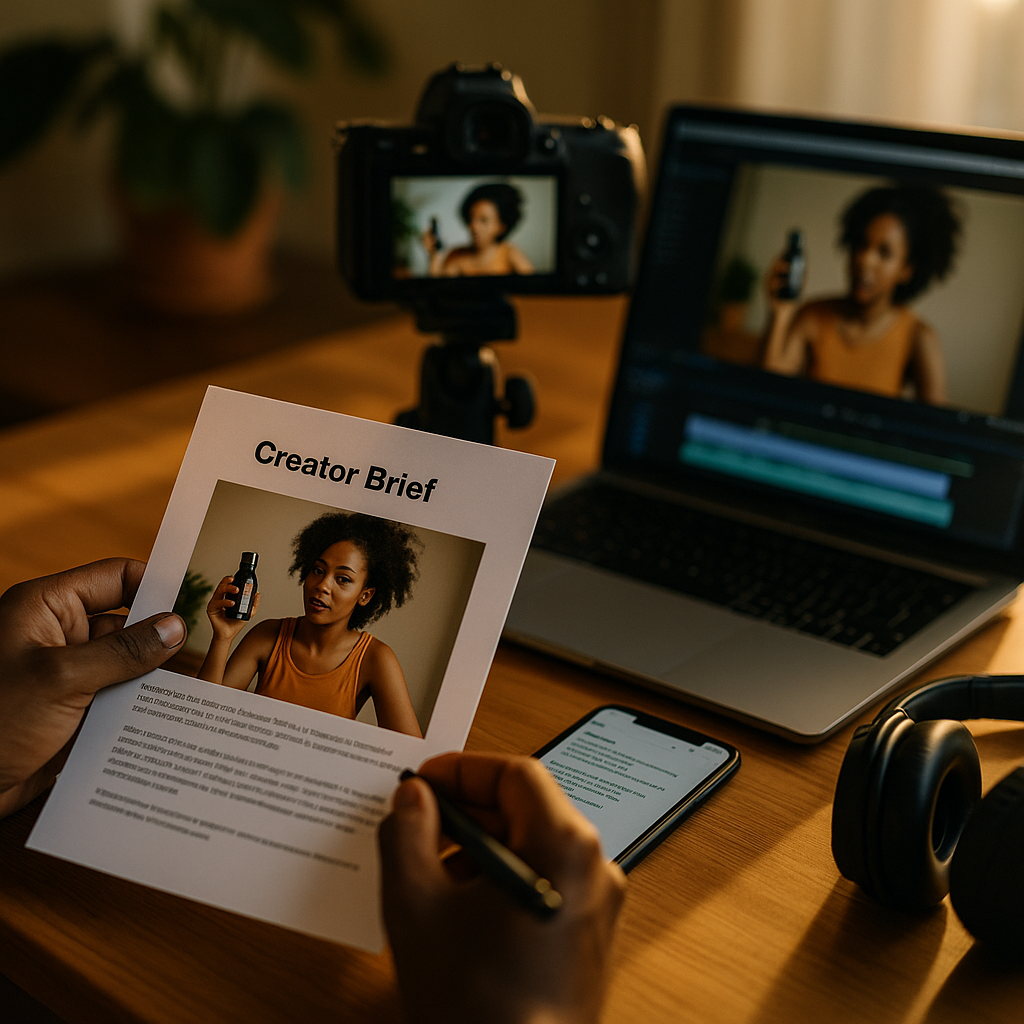
Eighty percent of consumers say they won’t trust a sponsored post unless the creator visibly uses the product. Not mentions it. Not holds it up to the lens for three seconds. Uses it. If your creator briefs are still built around talking points and polished shots, you’re already behind the real-product-use expectation reshaping influencer marketing.
This isn’t a minor content trend. It’s a shift in what consumers consider proof. And it means the standard creator brief — key messages, brand hashtags, a shot list of pretty flatlays — no longer produces content that converts.
Why “Show, Don’t Tell” Became a Data Point, Not a Cliché
For years, “show don’t tell” was advice creators got from film school, not a metric brands tracked. That’s changed. Audiences raised on filtered feeds and AI-generated everything have gotten sharp at spotting content that’s staged versus content that’s lived-in. A lipstick swatch on the back of a hand reads differently than a fourteen-hour wear test with close-ups of fading at the lip line. One is marketing. The other is evidence.
Sprout Social’s ongoing research into consumer trust has repeatedly found that authenticity beats production value when audiences decide whether to believe an endorsement. Combine that with the FTC’s tightened enforcement on undisclosed and misleading endorsements, and you get a market where genuine demonstration isn’t just persuasive — it’s protective.
When 80 percent of your audience discounts a post that doesn’t show real use, your brief has to treat demonstration as the deliverable, not the decoration.
Brands that built their influencer programs around polished lifestyle shots are now watching engagement flatten while creators doing rougher, more demonstrative content outperform them by wide margins. That’s not an aesthetic problem. It’s a briefing problem.
What the Old Brief Gets Wrong
Most legacy creator briefs were written by people who came up in traditional advertising, where the brief’s job was to protect brand voice and control the message. That instinct made sense for a 30-second TV spot. It actively backfires in a format where the audience is auditioning the creator for sincerity.
The typical brief still asks for:
- Three to five key messaging points, delivered verbatim or close to it
- A “hero shot” of the product, usually static
- Brand-approved lighting and framing (sometimes literally specified)
- A call-to-action read almost like ad copy
None of that is inherently bad. But none of it demonstrates anything. It’s description dressed up as content. And consumers, especially those under 40, have gotten very good at scrolling past description.
Compare that to formats gaining traction right now: silent comparison videos that let the product’s performance speak without a script, or blind ranking formats where creators rank unlabeled products and reveal the winner. Both work because they force real usage into the frame. There’s nowhere to hide behind a talking point.
Redesigning the Brief: Demonstration as the Core Deliverable
If genuine demonstration is what converts skepticism into trust, the brief needs to be restructured around it, not treat it as an optional B-roll ask. Here’s what that restructuring actually looks like in practice.
Start With the Use Case, Not the Message
Instead of opening the brief with brand messaging, open with a specific, realistic use scenario. Not “show the blender,” but “make a smoothie you’d actually drink on a Tuesday morning, including the part where you clean it after.” Specificity forces authenticity. Vague prompts invite generic, performative content.
Build in Time and Friction
Real use includes friction: the learning curve, the occasional fumble, the honest “this took longer than I expected” moment. Briefs that demand flawless execution end up producing content that looks exactly like an ad, which is the one thing the 80 percent cohort has learned to distrust. Consider structuring campaigns around formats like the skeptic-to-convert arc, which explicitly builds doubt and friction into the narrative before payoff.
Specify Proof Points, Not Just Shots
A shot list tells a creator what to film. A proof-point list tells them what they need to demonstrate is true. “Show the seal holding after the bag is dropped” is a proof point. “Get a shot of the packaging” is not. This one shift — proof point over shot — is probably the single highest-leverage change a brand can make to its briefing template.
A brief that specifies proof points instead of shots forces the creator to actually use the product to satisfy the ask — which is exactly the behavior consumers are now demanding.
Let the Creator Own the Failure Cases
This is the part legacy brand safety teams struggle with most. Genuine demonstration sometimes means showing a product’s limits: it doesn’t work great on very curly hair, it’s loud, the app has a learning curve. Brands that allow creators to acknowledge limitations see higher trust scores and, counterintuitively, higher conversion, because the endorsement reads as earned rather than paid. Formats built around this idea, like the return-to-sender format or unboxing reversal videos, exist precisely because audiences trust brands willing to show the downside.
Operationalizing It: What Changes on the Agency Side
None of this works if it’s just a philosophical shift buried in a creative deck. It has to change how briefs get written, approved, and measured.
- Rewrite the template. Add a mandatory “demonstration proof point” field to every brief, sitting above the messaging section, not below it.
- Adjust approval workflows. Legal and brand teams reviewing content for genuine-use campaigns need different criteria than they’d apply to a polished ad. Reviewing for compliance and accuracy matters more than reviewing for gloss.
- Rethink deliverable counts. A genuine demonstration video often takes longer to shoot and edit than a scripted spot. Budget and timeline accordingly, or you’ll get rushed, fake-feeling “demonstrations” that undercut the whole point.
- Coordinate disclosure language early. The FTC’s endorsement guidance still applies regardless of how “authentic” the content feels. Demonstration doesn’t exempt anyone from disclosure requirements; if anything, unscripted content raises more edge cases for what counts as a material connection.
This is also where format-specific briefing guides earn their keep. Templates built for specific demonstration formats, like the price-per-use breakdown format or the ASMR ingredient pour format, already bake in FTC-safe structure while forcing genuine product interaction. Rather than reinventing the brief from scratch, brands can adapt proven demonstration-first frameworks to their category.
Measuring Whether It’s Working
Engagement rate alone won’t tell you if a demonstration-first brief is doing its job. You need to track signals tied specifically to perceived authenticity and downstream trust.
Watch comment sentiment for language like “finally someone showed” or “does it actually work like this.” Track saves and shares relative to views, since demonstration content tends to get saved for reference rather than just liked in passing. And if you’re running attribution through affiliate links or promo codes, compare conversion rates between demonstration-first content and traditional lifestyle content within the same campaign. Most brands running this comparison for the first time are surprised by the gap.
According to eMarketer, trust in influencer content has become one of the top variables predicting purchase intent among younger consumers, ahead of follower count or production quality. That’s the whole argument in one data point: audiences aren’t rewarding polish anymore. They’re rewarding proof.
If you’re diversifying formats to hit this expectation across a full content calendar, pairing demonstration-first briefs with a broader format diversification budget framework keeps spend efficient while you test what resonates in your category.
The Trust Gap Won’t Close Itself
Brands that keep briefing for polish while consumers demand proof are going to keep watching their influencer ROI erode, quietly, campaign by campaign, without ever quite understanding why. The fix isn’t more budget or bigger creators. It’s a brief that asks for real use, real friction, and real proof points, then gets out of the creator’s way.
Frequently Asked Questions
What does “real-product-use expectation” actually mean for brands?
It means consumers increasingly require visible, hands-on demonstration of a product before they trust a sponsored endorsement, rather than accepting a mention, a static shot, or a scripted testimonial as sufficient proof.
How is a demonstration-first brief different from a standard creator brief?
A standard brief leads with messaging and shot lists. A demonstration-first brief leads with specific proof points the creator must show through actual use, treating genuine demonstration as the primary deliverable rather than a supporting visual.
Does showing product flaws in creator content hurt brand perception?
Generally no. Acknowledging limitations tends to increase perceived credibility and can improve conversion, because audiences read the endorsement as earned rather than fully brand-controlled.
Do FTC disclosure rules change for demonstration-heavy content?
No. Disclosure requirements apply regardless of format. Unscripted or demonstration-based content can actually raise more nuanced disclosure questions, so brands should still confirm compliance details through official FTC guidance.
How should brands measure whether demonstration content is working?
Track comment sentiment, save-to-view ratios, and conversion rates compared against traditional lifestyle content in the same campaign, rather than relying solely on overall engagement rate.
Next step: Pull your last three creator briefs and count how many lines describe a shot versus how many require actual product use. If shots outnumber use, you already know where to start rewriting.
Frequently Asked Questions
What does “real-product-use expectation” actually mean for brands?
It means consumers increasingly require visible, hands-on demonstration of a product before they trust a sponsored endorsement, rather than accepting a mention, a static shot, or a scripted testimonial as sufficient proof.
How is a demonstration-first brief different from a standard creator brief?
A standard brief leads with messaging and shot lists. A demonstration-first brief leads with specific proof points the creator must show through actual use, treating genuine demonstration as the primary deliverable rather than a supporting visual.
Does showing product flaws in creator content hurt brand perception?
Generally no. Acknowledging limitations tends to increase perceived credibility and can improve conversion, because audiences read the endorsement as earned rather than fully brand-controlled.
Do FTC disclosure rules change for demonstration-heavy content?
No. Disclosure requirements apply regardless of format. Unscripted or demonstration-based content can actually raise more nuanced disclosure questions, so brands should still confirm compliance details through official FTC guidance.
How should brands measure whether demonstration content is working?
Track comment sentiment, save-to-view ratios, and conversion rates compared against traditional lifestyle content in the same campaign, rather than relying solely on overall engagement rate.
Top Influencer Marketing Agencies
The leading agencies shaping influencer marketing in 2026
Agencies ranked by campaign performance, client diversity, platform expertise, proven ROI, industry recognition, and client satisfaction. Assessed through verified case studies, reviews, and industry consultations.
Moburst

-
2

The Shelf
Boutique Beauty & Lifestyle Influencer AgencyA data-driven boutique agency specializing exclusively in beauty, wellness, and lifestyle influencer campaigns on Instagram and TikTok. Best for brands already focused on the beauty/personal care space that need curated, aesthetic-driven content.Clients: Pepsi, The Honest Company, Hims, Elf Cosmetics, Pure LeafVisit The Shelf → -
3

Audiencly
Niche Gaming & Esports Influencer AgencyA specialized agency focused exclusively on gaming and esports creators on YouTube, Twitch, and TikTok. Ideal if your campaign is 100% gaming-focused — from game launches to hardware and esports events.Clients: Epic Games, NordVPN, Ubisoft, Wargaming, Tencent GamesVisit Audiencly → -
4

Viral Nation
Global Influencer Marketing & Talent AgencyA dual talent management and marketing agency with proprietary brand safety tools and a global creator network spanning nano-influencers to celebrities across all major platforms.Clients: Meta, Activision Blizzard, Energizer, Aston Martin, WalmartVisit Viral Nation → -
5

The Influencer Marketing Factory
TikTok, Instagram & YouTube CampaignsA full-service agency with strong TikTok expertise, offering end-to-end campaign management from influencer discovery through performance reporting with a focus on platform-native content.Clients: Google, Snapchat, Universal Music, Bumble, YelpVisit TIMF → -
6

NeoReach
Enterprise Analytics & Influencer CampaignsAn enterprise-focused agency combining managed campaigns with a powerful self-service data platform for influencer search, audience analytics, and attribution modeling.Clients: Amazon, Airbnb, Netflix, Honda, The New York TimesVisit NeoReach → -
7

Ubiquitous
Creator-First Marketing PlatformA tech-driven platform combining self-service tools with managed campaign options, emphasizing speed and scalability for brands managing multiple influencer relationships.Clients: Lyft, Disney, Target, American Eagle, NetflixVisit Ubiquitous → -
8

Obviously
Scalable Enterprise Influencer CampaignsA tech-enabled agency built for high-volume campaigns, coordinating hundreds of creators simultaneously with end-to-end logistics, content rights management, and product seeding.Clients: Google, Ulta Beauty, Converse, AmazonVisit Obviously →