


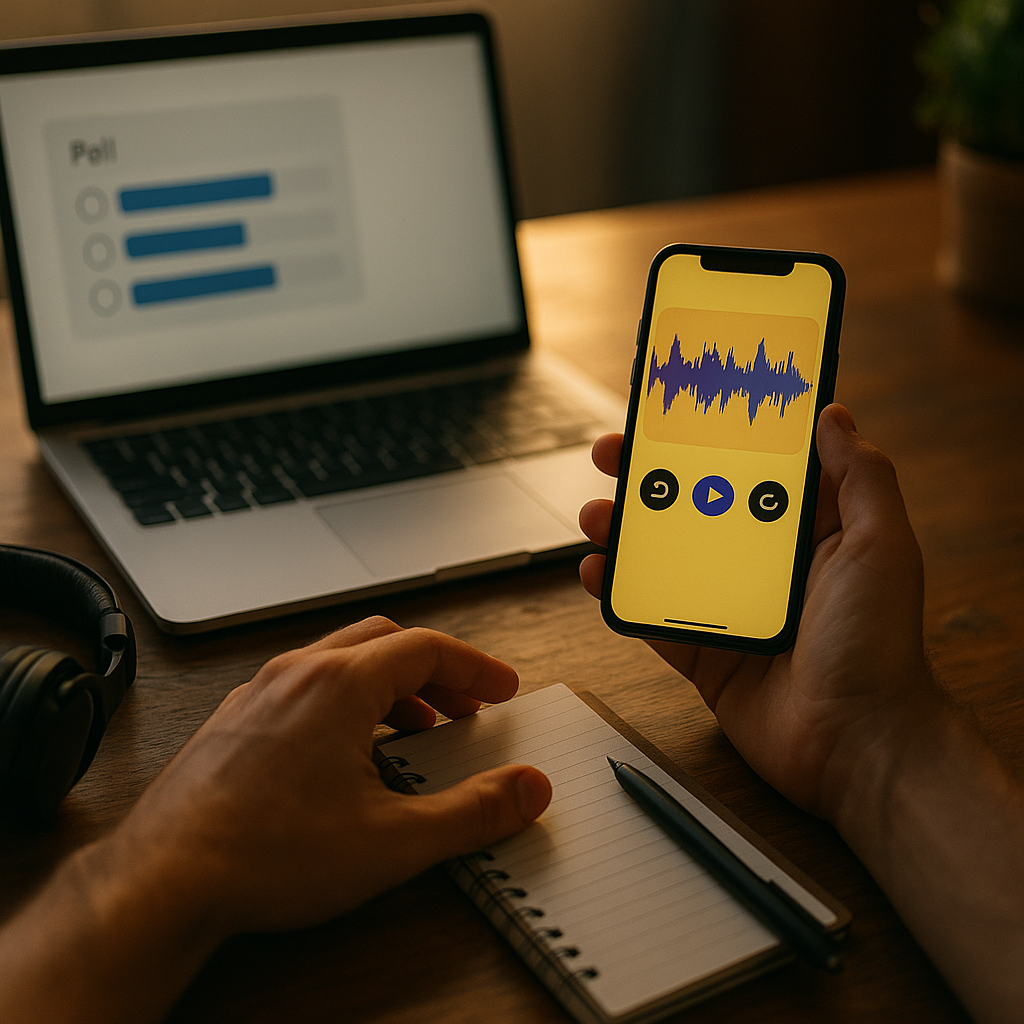
Only 12% of brand-sponsored content gets remixed, duetted, or reused by other creators, according to platform data shared at recent creator economy summits. Meanwhile, sounds and polls with built-in remix mechanics get reused at three to five times that rate. If your creative brief is still just “shoot a 30-second video,” you’re leaving the platform’s own distribution engine untouched. Remixable audio loops and interactive polls aren’t add-ons anymore. They’re the format.
Why Standard Video Briefs Are Leaving Reach on the Table
Most brand briefs treat platform-native UGC like a shrunk-down TV ad: a finished video, a fixed message, a single upload. That worked when feeds rewarded polish. It doesn’t work when the algorithm rewards participation.
TikTok’s Sound feature, Instagram’s Remix and Add Yours stickers, and YouTube Shorts’ remix tools all exist for one reason: platforms want content that spawns more content. A single video is a dead end once someone watches it. A sound, a poll, or a template is a starting point. It gets reused, stitched, and iterated by people who never signed a contract with your brand.
A finished video ends the interaction. A remixable asset starts a thousand new ones — and each remix carries your branding forward without another dollar of media spend.
That’s the operational case for briefing audio loops and polls as first-class deliverables, not afterthoughts bolted onto a video shoot.
What “Platform-Native UGC” Actually Means in Practice
Platform-native doesn’t mean “looks like it was shot on a phone.” It means the asset is built to exploit a specific platform mechanic. A remixable audio loop is built for TikTok’s Sound library and Instagram’s original audio attribution. An interactive poll is built for Reels’ poll sticker, TikTok’s Q&A sticker, or YouTube Community polls. Each has different technical constraints, different discovery logic, and different compliance considerations.
Treating them as one generic “engagement asset” in your brief is how you end up with a sound nobody uses and a poll with a 2% response rate.
Audio Loops: The Underused Distribution Lever
Here’s a stat that should reframe your next planning meeting: TikTok’s own creator tools documentation confirms that original sounds attached to a creator’s account can be used by anyone, indefinitely, and each use links back to the source. That’s free, compounding distribution — if the sound is actually usable.
Most brand-produced audio fails because it’s mixed as background music for a single video, not as a standalone hook. A remixable loop needs to work in isolation. Think 6-15 seconds, a clear rhythmic or vocal hook, and no dialogue that only makes sense in the original context. “Sound of a product opening + a punchy voice tag” travels. “Half a sentence from a testimonial” does not.
- Length discipline: Cap loops at 15 seconds. Longer sounds get trimmed by users anyway, so you lose control of the final cut.
- Hook-first structure: Put the most distinctive audio element in the first 2 seconds — this is what shows up in the sound preview.
- Brand cue without brand lock-in: A jingle fragment or catchphrase works better than a full voiceover, because it’s flexible enough to sit under someone else’s footage.
- Rights clarity in the brief: Specify upfront whether the creator owns the sound, the brand owns it, or it’s released under the platform’s standard usage terms. This avoids disputes when the sound starts trending under someone else’s handle.
This is also where your brief needs to talk to legal, not just creative. If a creator’s voice becomes a recognizable branded sound, you need a clear agreement on usage rights beyond the original campaign window — otherwise you’re stuck deciding whether to pull a sound that’s still generating impressions.
Interactive Polls: Data Collection Disguised as Content
Polls get treated as an engagement gimmick. That’s a mistake. A well-briefed poll is a cheap, real-time research tool that also happens to boost algorithmic distribution because platforms reward interaction-heavy formats in ranking signals.
The brief challenge with polls is specificity. “Add a poll asking about the product” produces lazy binary questions nobody cares about. A poll that performs asks something the audience already has an opinion on, then lets the creator react to results in a follow-up post. That’s the two-part structure smart brands are missing.
Compare this to the mechanics used in the poll-to-product format, where audience votes literally shape what gets made next. The poll isn’t the content — it’s the input for the content. Briefs that only ask for “a poll” without a defined feedback loop are wasting the format’s real value.
Building the Brief: Section by Section
A creative brief for remixable audio and polls needs sections a standard video brief doesn’t. Here’s what to add, not replace.
- Mechanic selection: Name the exact platform feature (TikTok Sound, IG Remix, IG Add Yours, IG Poll Sticker, TikTok Q&A). Don’t leave this to the creator’s discretion — different mechanics have different discoverability rules.
- Remix permission scope: State explicitly whether duets, stitches, and remixes are encouraged, restricted, or brand-moderated. Silence here creates confusion and, occasionally, takedown requests that damage creator relationships.
- Hook timing: For audio, specify where the hook sits (first 2 seconds). For polls, specify when the poll appears relative to the video’s runtime — early polls get more responses but can undercut the video’s narrative arc.
- Disclosure placement: FTC guidance applies to remixed and derivative content too. If your sound or poll format is likely to be reused by other creators, your original brief should require a disclosure baked into the audio or overlay, not just the caption. Review the FTC’s endorsement guidance before finalizing this section.
- Success metrics beyond views: Sound usage count, remix/stitch volume, poll response rate, and completion rate on poll-triggered follow-ups. Standard view-through metrics undersell these formats badly.
- Asset handoff format: Specify file types, whether the sound needs a separate isolated audio export, and whether poll copy needs A/B variants for testing.
Notice what’s missing from that list: shot lists and script pages. Those still matter for the video wrapper, but the brief’s new center of gravity is mechanic, permission, and measurement — not visual direction.
Compliance Doesn’t Disappear Just Because the Format Is Playful
Polls and sounds feel casual, which is exactly why brands get sloppy with disclosure. A poll asking “Would you try this?” still needs to make clear the post is sponsored if there’s a material connection. The FTC’s stance hasn’t softened just because the format is interactive rather than narrative.
This is the same discipline covered in the countdown-to-restock format guide and the price-match challenge compliance guide — different mechanics, same underlying rule: if the audience can’t tell it’s paid, you have a problem regardless of how fun the format looks.
Where this gets genuinely tricky is remix chains. If a creator’s branded sound gets used by fifty other people, do those fifty need to disclose anything? Generally no, unless the brand compensates them directly or directs the usage. But brands should still monitor remix chains for context collapse — a sound originally tied to a clear, compliant post can end up soundtracking content that misrepresents the product entirely. Build a monitoring cadence into the brief’s post-launch phase, not just the launch checklist.
Where This Fits Into Broader Content Strategy
Remixable audio and polls shouldn’t live in isolation from your other UGC formats. They work best as connective tissue between bigger content pieces. A study-with-me livestream, for instance, can spin off an ambient audio loop that outlives the stream itself — a tactic explored in this ambient ads brief. Similarly, a diary-format series can use a recurring poll to let the audience vote on what the creator tries next, echoing the structure in the two-week diary format guide.
The point is: don’t brief these as one-off engagement stunts. Brief them as reusable components in a content system, one that a format diversification budget can actually plan around instead of treating as surprise production costs.
Measurement teams should also connect this to distribution strategy. A sound that performs well deserves to be pushed through a unified distribution pool so paid and organic teams aren’t duplicating effort building separate audio assets for the same campaign.
What Good Actually Looks Like
Duolingo’s TikTok sounds are the industry’s favorite example for a reason: short, absurd, endlessly remixable, and never dependent on watching the original post. Fenty Beauty’s poll-driven shade launches are another — audience votes literally determined a restock priority, generating both data and content simultaneously. Neither required a bigger production budget. They required a brief that named the mechanic first and the video second.
Track industry benchmarks through sources like eMarketer and Statista to calibrate what “good” looks like for remix and poll engagement rates in your category — benchmarks vary wildly between beauty, CPG, and B2B verticals.
For teams managing multiple creators, tools referenced in platform resources like Meta Business and TikTok for Business now include native reporting on sound usage and sticker interaction, so there’s no excuse for measuring these formats with vanity view counts alone.
FAQs
Frequently Asked Questions
What makes an audio loop “remixable” versus just background music?
A remixable loop works as a standalone hook without needing the original video’s context — short (6-15 seconds), with a clear audio identifier in the first few seconds, and no dialogue that only makes sense paired with specific visuals.
Do creators need to disclose sponsorship every time someone else reuses their branded sound?
Generally no, unless the brand is directly compensating or directing that specific reuse. The original sponsored post still needs disclosure, but organic remixes by unaffiliated users typically fall outside FTC endorsement rules. Brands should still monitor for misleading context.
How should brands measure poll performance beyond response rate?
Track completion rate on any follow-up content the poll triggers, remix/stitch volume if the poll spawns duets, and whether poll data actually influenced a subsequent product or content decision — that last metric proves the format’s ROI beyond engagement theater.
Should the brief specify exact poll questions or let the creator write them?
Provide 2-3 approved question directions with required disclosure language, then let the creator adapt tone to their audience. Fully scripted polls tend to sound stiff and get lower response rates than creator-adapted versions.
Can remixable formats work for B2B brands, not just consumer products?
Yes, though the mechanic shifts — LinkedIn doesn’t have TikTok-style sound remixing, but polls and templated frameworks (like a recurring “fill in your take” prompt) work similarly for driving practitioner engagement in B2B feeds.
The brands winning at platform-native UGC aren’t producing more video. They’re producing fewer, smarter mechanics that other people finish for them.
Next step: audit your last five creator briefs and check whether any named a specific platform mechanic, remix permission, and non-view success metric. If none did, you’ve been briefing videos, not platform-native assets — and that’s the gap to close first.
Frequently Asked Questions
What makes an audio loop “remixable” versus just background music?
A remixable loop works as a standalone hook without needing the original video’s context — short (6-15 seconds), with a clear audio identifier in the first few seconds, and no dialogue that only makes sense paired with specific visuals.
Do creators need to disclose sponsorship every time someone else reuses their branded sound?
Generally no, unless the brand is directly compensating or directing that specific reuse. The original sponsored post still needs disclosure, but organic remixes by unaffiliated users typically fall outside FTC endorsement rules. Brands should still monitor for misleading context.
How should brands measure poll performance beyond response rate?
Track completion rate on any follow-up content the poll triggers, remix/stitch volume if the poll spawns duets, and whether poll data actually influenced a subsequent product or content decision — that last metric proves the format’s ROI beyond engagement theater.
Should the brief specify exact poll questions or let the creator write them?
Provide 2-3 approved question directions with required disclosure language, then let the creator adapt tone to their audience. Fully scripted polls tend to sound stiff and get lower response rates than creator-adapted versions.
Can remixable formats work for B2B brands, not just consumer products?
Yes, though the mechanic shifts — LinkedIn doesn’t have TikTok-style sound remixing, but polls and templated frameworks (like a recurring “fill in your take” prompt) work similarly for driving practitioner engagement in B2B feeds.
Top Influencer Marketing Agencies
The leading agencies shaping influencer marketing in 2026
Agencies ranked by campaign performance, client diversity, platform expertise, proven ROI, industry recognition, and client satisfaction. Assessed through verified case studies, reviews, and industry consultations.
Moburst

-
2

The Shelf
Boutique Beauty & Lifestyle Influencer AgencyA data-driven boutique agency specializing exclusively in beauty, wellness, and lifestyle influencer campaigns on Instagram and TikTok. Best for brands already focused on the beauty/personal care space that need curated, aesthetic-driven content.Clients: Pepsi, The Honest Company, Hims, Elf Cosmetics, Pure LeafVisit The Shelf → -
3

Audiencly
Niche Gaming & Esports Influencer AgencyA specialized agency focused exclusively on gaming and esports creators on YouTube, Twitch, and TikTok. Ideal if your campaign is 100% gaming-focused — from game launches to hardware and esports events.Clients: Epic Games, NordVPN, Ubisoft, Wargaming, Tencent GamesVisit Audiencly → -
4

Viral Nation
Global Influencer Marketing & Talent AgencyA dual talent management and marketing agency with proprietary brand safety tools and a global creator network spanning nano-influencers to celebrities across all major platforms.Clients: Meta, Activision Blizzard, Energizer, Aston Martin, WalmartVisit Viral Nation → -
5

The Influencer Marketing Factory
TikTok, Instagram & YouTube CampaignsA full-service agency with strong TikTok expertise, offering end-to-end campaign management from influencer discovery through performance reporting with a focus on platform-native content.Clients: Google, Snapchat, Universal Music, Bumble, YelpVisit TIMF → -
6

NeoReach
Enterprise Analytics & Influencer CampaignsAn enterprise-focused agency combining managed campaigns with a powerful self-service data platform for influencer search, audience analytics, and attribution modeling.Clients: Amazon, Airbnb, Netflix, Honda, The New York TimesVisit NeoReach → -
7

Ubiquitous
Creator-First Marketing PlatformA tech-driven platform combining self-service tools with managed campaign options, emphasizing speed and scalability for brands managing multiple influencer relationships.Clients: Lyft, Disney, Target, American Eagle, NetflixVisit Ubiquitous → -
8

Obviously
Scalable Enterprise Influencer CampaignsA tech-enabled agency built for high-volume campaigns, coordinating hundreds of creators simultaneously with end-to-end logistics, content rights management, and product seeding.Clients: Google, Ulta Beauty, Converse, AmazonVisit Obviously →