


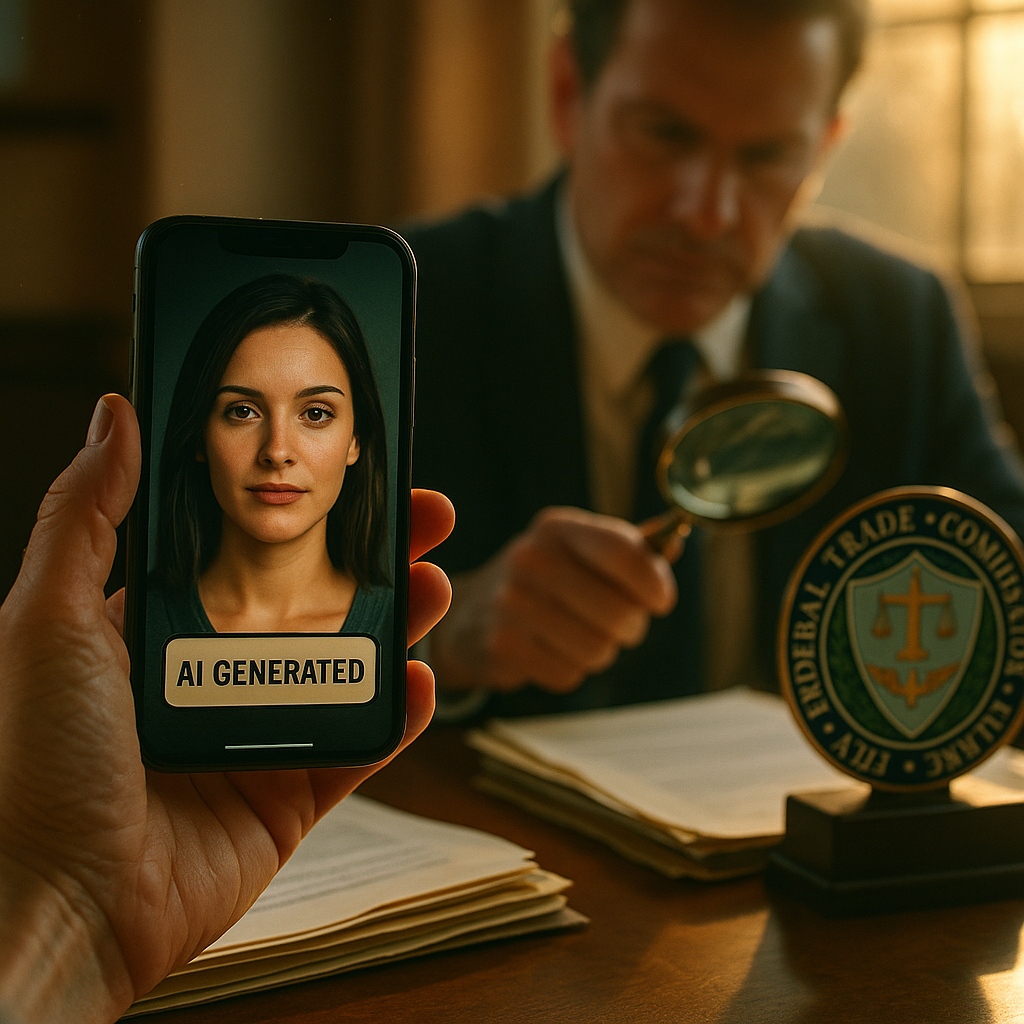
An AI-generated label on TikTok disappears the moment a clipper reposts your content to X. That single fact should terrify every brand running influencer campaigns through clipping networks in 2026. The FTC doesn’t care whose platform the video started on — it cares whether the person watching it knew about the material connection and the synthetic origin. Platform-native AI content labels were built to solve a platform problem, not a legal one. When user-generated content gets sliced, reposted, and redistributed by third-party clipping networks, those labels vanish, and brands are left holding a disclosure liability they didn’t know they had.
Why Platform Labels Were Never Built for This
TikTok’s “AI-generated content” tag, YouTube’s synthetic media disclosure, Meta’s “Made with AI” flag — these are useful tools. They’re also fragile. Each one is metadata tied to a specific post on a specific platform. Strip the video out of its native player, and the tag often doesn’t travel with it. Clipping networks — the loose ecosystems of aggregator accounts that repost creator content for engagement farming, commentary, or straight-up arbitrage — routinely re-encode, re-crop, and re-upload video without preserving any of that metadata.
The result? A branded UGC video that carried a compliant AI-disclosure tag on its original TikTok post can end up on a clipping account with zero indication it was ever AI-assisted, and zero indication the creator was paid. From a regulator’s perspective, that’s not a technical glitch. That’s an undisclosed material connection combined with an undisclosed synthetic media claim — two separate violations riding in the same fifteen-second clip.
A disclosure that only exists inside one platform’s UI isn’t a disclosure. It’s a courtesy the platform extends to itself.
What “Reconciliation” Actually Means Here
Reconciling platform labels with FTC standards isn’t about picking one system over the other. It’s about building a disclosure layer that survives outside both. The FTC’s Endorsement Guides require disclosures to be clear, conspicuous, and unavoidable “in the context” in which the audience encounters the content — not the context where it was first published. If your UGC gets clipped onto a compilation account with three million followers, the FTC’s expectation is that a reasonable viewer on that account can still tell it’s sponsored, AI-assisted content. Platform tags don’t guarantee that. Baked-in disclosure does.
This distinction matters more now than it did even eighteen months ago. Clipping networks have professionalized. Agencies pay clippers to farm reach off branded content, sometimes without brand knowledge, sometimes as a paid extension of the original campaign. Either way, brands are increasingly named as co-defendants or subjects of FTC inquiry letters when the disclosure trail breaks somewhere in that chain. This mirrors the same structural problem covered in our piece on FTC disclosure rules for repurposed UGC across channels — except AI labeling adds a second compliance dimension that most legal teams haven’t mapped yet.
The Two-Layer Disclosure Problem
Brands running AI-assisted UGC campaigns are actually managing two distinct disclosure obligations that get conflated constantly:
- Material connection disclosure — the creator was paid, gifted, or otherwise incentivized. This is standard #ad territory, governed by the Endorsement Guides.
- Synthetic content disclosure — the video, voice, or likeness was AI-generated, AI-enhanced, or AI-cloned in some material way. This is newer, less litigated, but squarely inside FTC’s deception authority when the AI element could mislead a reasonable consumer.
Platform-native tools usually handle only one of these, and inconsistently. TikTok’s AI label addresses synthetic content but says nothing about payment. A creator’s caption might disclose #ad but never mention that the “before and after” transformation was AI-rendered. When clipping networks strip captions and re-encode video (which most do, to avoid copyright detection), you lose both signals simultaneously. That’s a compounding failure, not a single point of breakdown.
This two-layer gap is exactly why brands can’t treat platform AI labels as a compliance substitute. Our earlier analysis on FTC substantiation standards for AI before-and-after UGC claims covers the deception side in more depth — it’s worth pairing with this piece if your campaigns involve any visual transformation content.
Burned-In Disclosure: The Only Format That Survives Clipping
If metadata disappears the moment content leaves its native app, the only durable fix is disclosure that lives inside the pixels themselves. That means:
- On-screen text disclosure (“Paid partnership · AI-generated voiceover”) burned into the first three seconds of the video file, not added as a platform overlay.
- Verbal disclosure spoken by the creator within the first 5-8 seconds, so audio-only reposts and transcript-based summaries still carry the signal.
- Watermarking practices that persist through re-encoding — visible logo-plus-label combinations rather than invisible metadata tags that get scrubbed by re-upload tools.
This is more work upfront. It’s also the only approach that holds up regardless of where the content ends up. Contracts should require creators to build disclosure into the content itself, not rely on the platform’s tagging feature as their only compliance mechanism. This is a natural extension of the standard covered in creator contracts for the FTC AI script review standard — script review needs to explicitly check for burned-in disclosure language, not just claims accuracy.
Contract Language That Actually Closes the Gap
Most influencer agreements say something vague like “creator will comply with FTC guidelines.” That sentence has never survived a real compliance audit. For AI-labeled UGC distributed through networks the brand doesn’t control, contracts need specificity:
- Require disclosure to be embedded in the visual and audio track, independent of platform metadata.
- Define “distribution” broadly enough to include reasonably foreseeable reposting by third parties, and assign monitoring responsibility.
- Set a takedown and re-disclosure protocol for when brand or agency discovers the content on a clipping account without adequate labeling.
- Address usage rights explicitly — clipping networks often operate in a licensing gray zone that overlaps with broader usage-rights disputes. See usage-rights clauses for multi-language UGC campaigns for a model framework you can adapt.
Brands negotiating raw footage rights should also revisit licensing terms with clipping exposure in mind. Loose licensing language is exactly how content ends up circulating on accounts nobody vetted. Our breakdown of raw-footage licensing fees and the UGC contract liability fix is directly relevant if your legal team hasn’t updated boilerplate in the last year.
Monitoring: You Can’t Disclose What You Can’t See
Here’s the uncomfortable operational reality: most brands have no visibility into where their UGC ends up once a clipping network gets hold of it. Social listening tools built for brand mention tracking weren’t designed to catch re-encoded, cropped, watermark-removed reposts. Some are catching up — Sprout Social and similar platforms have expanded visual-match detection — but coverage is inconsistent across TikTok, X, and Telegram, which is where a lot of clipping activity now happens.
Practical steps that actually move the needle:
- Run reverse-image and reverse-video searches on your highest-performing UGC monthly, not annually.
- Build a standing relationship with your legal or compliance team to review flagged reposts within 48 hours, since exposure compounds the longer non-compliant content circulates.
- Treat clipping network monitoring as part of the same cadence as your existing creator compliance audits. If you’re already running quarterly reviews for other platform rules — like the process outlined in our quarterly creator compliance audit for TikTok real IP rules — add clipping-network disclosure checks to that same cycle instead of building a separate process.
According to eMarketer, influencer marketing spend continues climbing well past the $30 billion mark globally, and a growing share of that content now involves some form of AI assistance in editing, voice, or visual enhancement. Volume plus AI plus uncontrolled redistribution is a liability formula brands can’t ignore much longer.
What the FTC Actually Looks At
Enforcement history suggests the FTC weighs three things when disclosure fails downstream: whether the brand had actual or constructive knowledge of the redistribution, whether contract terms attempted to address it, and whether the brand acted once it became aware. This is good news, actually — it means brands that build the contractual and monitoring infrastructure described above have a real compliance defense, even if a rogue clipping account slips something through.
It’s also why “the platform’s label should have handled it” is not a defense the FTC has ever accepted, and won’t start now. The agency has been explicit that responsibility for disclosure sits with the brand and endorser, not the platform hosting the content.
Quick Checklist for Marketing and Legal Teams
- Audit current UGC contracts for platform-metadata-only disclosure language and rewrite it.
- Require burned-in visual and verbal disclosure on all AI-assisted creator content going forward.
- Add clipping-network scans to existing compliance audit cycles.
- Document your monitoring and takedown process — it’s your best evidence of good faith if the FTC ever asks.
- Loop in creators on the requirement early; retrofitting disclosure into already-published content is far harder than building it in at the brief stage.
Frequently Asked Questions
FAQs
Do platform AI labels satisfy FTC disclosure requirements on their own?
No. Platform-native AI labels are metadata tied to a specific post and platform. The FTC evaluates disclosure based on what a reasonable viewer sees in the context they actually encounter the content, which may be a re-uploaded clip on a completely different platform with no label at all.
Who is liable when clipping networks strip disclosure from UGC?
Brands and endorsers carry the primary compliance burden, not the platform or the clipping account. The FTC has consistently held brands responsible for material connection and synthetic content disclosures regardless of how content is later redistributed by third parties.
What’s the most reliable way to make AI disclosure survive re-uploads?
Burned-in, on-screen text and spoken verbal disclosure within the first several seconds of the video file. Unlike platform overlays or metadata tags, these elements are embedded in the video itself and typically survive re-encoding and cropping done by clipping tools.
Should brands try to stop clipping networks from reposting UGC entirely?
That’s rarely realistic or worth pursuing legally in most cases. A more effective strategy is building disclosure into the content itself and maintaining a monitoring and takedown process for the rare cases where non-compliant reposts pose real legal or reputational risk.
How often should brands audit UGC for clipping network exposure?
Monthly scans for top-performing content, paired with quarterly formal compliance audits that also cover other creator compliance areas, gives most brands adequate coverage without overloading legal or marketing resources.
The brands that get ahead of this won’t wait for an FTC inquiry letter to rewrite their contracts. Start by auditing one active campaign’s UGC for clipping exposure this week, then use what you find to rebuild your disclosure language before the next brief goes out.
Top Influencer Marketing Agencies
The leading agencies shaping influencer marketing in 2026
Agencies ranked by campaign performance, client diversity, platform expertise, proven ROI, industry recognition, and client satisfaction. Assessed through verified case studies, reviews, and industry consultations.
Moburst

-
2

The Shelf
Boutique Beauty & Lifestyle Influencer AgencyA data-driven boutique agency specializing exclusively in beauty, wellness, and lifestyle influencer campaigns on Instagram and TikTok. Best for brands already focused on the beauty/personal care space that need curated, aesthetic-driven content.Clients: Pepsi, The Honest Company, Hims, Elf Cosmetics, Pure LeafVisit The Shelf → -
3

Audiencly
Niche Gaming & Esports Influencer AgencyA specialized agency focused exclusively on gaming and esports creators on YouTube, Twitch, and TikTok. Ideal if your campaign is 100% gaming-focused — from game launches to hardware and esports events.Clients: Epic Games, NordVPN, Ubisoft, Wargaming, Tencent GamesVisit Audiencly → -
4

Viral Nation
Global Influencer Marketing & Talent AgencyA dual talent management and marketing agency with proprietary brand safety tools and a global creator network spanning nano-influencers to celebrities across all major platforms.Clients: Meta, Activision Blizzard, Energizer, Aston Martin, WalmartVisit Viral Nation → -
5

The Influencer Marketing Factory
TikTok, Instagram & YouTube CampaignsA full-service agency with strong TikTok expertise, offering end-to-end campaign management from influencer discovery through performance reporting with a focus on platform-native content.Clients: Google, Snapchat, Universal Music, Bumble, YelpVisit TIMF → -
6

NeoReach
Enterprise Analytics & Influencer CampaignsAn enterprise-focused agency combining managed campaigns with a powerful self-service data platform for influencer search, audience analytics, and attribution modeling.Clients: Amazon, Airbnb, Netflix, Honda, The New York TimesVisit NeoReach → -
7

Ubiquitous
Creator-First Marketing PlatformA tech-driven platform combining self-service tools with managed campaign options, emphasizing speed and scalability for brands managing multiple influencer relationships.Clients: Lyft, Disney, Target, American Eagle, NetflixVisit Ubiquitous → -
8

Obviously
Scalable Enterprise Influencer CampaignsA tech-enabled agency built for high-volume campaigns, coordinating hundreds of creators simultaneously with end-to-end logistics, content rights management, and product seeding.Clients: Google, Ulta Beauty, Converse, AmazonVisit Obviously →