


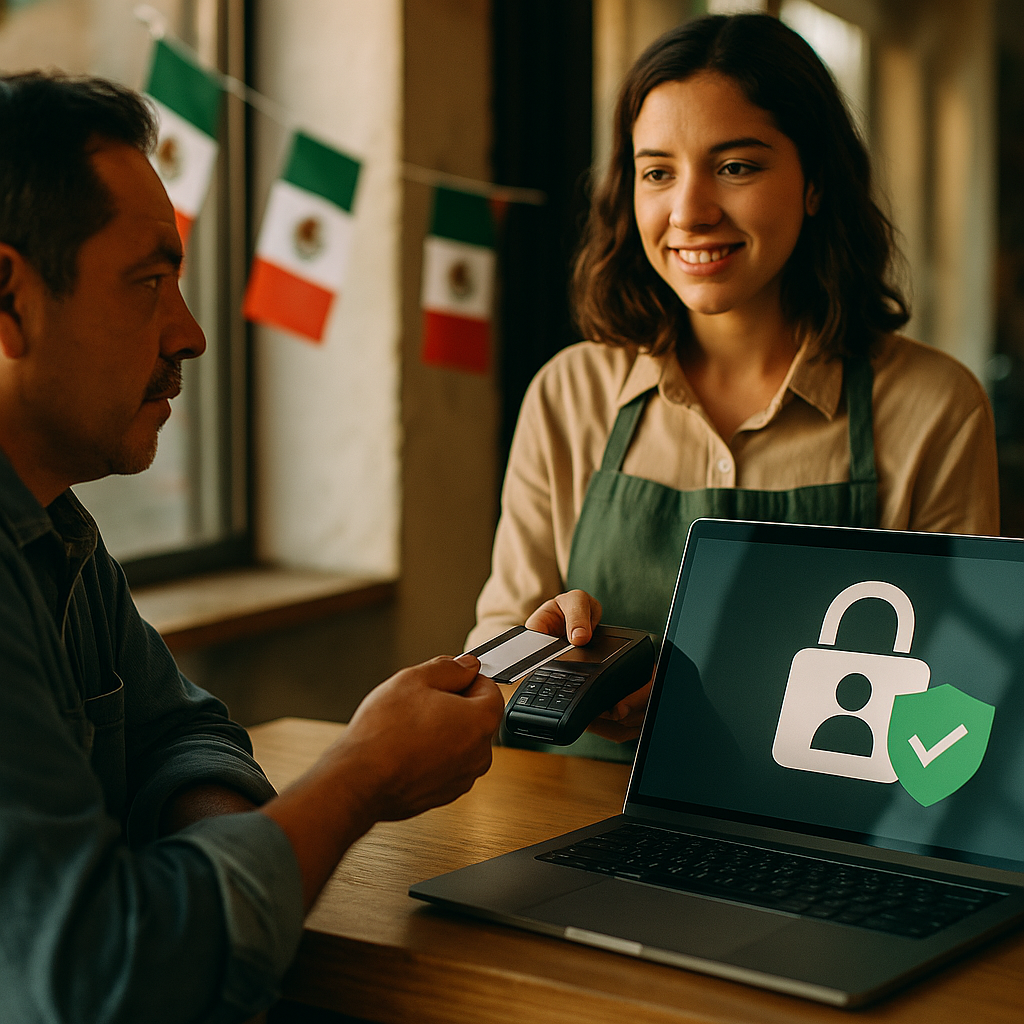
Nineteen percent of shoppers abandon carts over data privacy concerns. Now imagine an entire country rewriting its privacy law with that stat in mind. Mexico’s overhauled federal data protection framework, which tightens consent rules, cross-border transfer requirements, and breach disclosure timelines, is forcing brands and platforms operating in LATAM to treat data privacy as competitive advantage rather than legal overhead. That shift is coming for every market you operate in.
The Reform Nobody Outside Compliance Is Talking About
Mexico’s new privacy framework, which expands on the old Federal Law on Protection of Personal Data Held by Private Parties, introduces stricter opt-in consent standards, mandatory data protection officers for mid-size and large processors, and shorter breach notification windows. It also creates real enforcement teeth: fines scaled to global revenue, not just domestic sales.
For marketers, the headline isn’t the legal text. It’s the timing. Mexico is one of the fastest-growing digital commerce markets in Latin America, and platforms like MercadoLibre’s Meta integration have already made the country a proving ground for social commerce at scale. Layer a strict privacy regime on top of that growth, and you get a natural experiment: what happens when a booming creator-commerce market suddenly has to prove it respects user data?
The early answer is that trust becomes a sales lever, not just a legal shield.
Why “Compliant” Is Becoming a Marketing Claim
For years, privacy compliance lived entirely in legal and IT. Marketing treated it as a constraint: don’t collect too much, don’t retarget too aggressively, don’t get sued. Mexico’s reforms are part of a broader pattern, alongside GDPR’s ongoing enforcement and the UK’s evolving data regime under the Information Commissioner’s Office, that’s turning compliance into something brands actively market.
Think about it from the buyer’s side. Consumers have been trained by breach headlines and cookie-consent fatigue to assume brands are careless with their data. When a platform or brand can credibly say “we ask for less, and we protect what we take,” that becomes a differentiator, especially in markets where regulation just raised the baseline expectation.
Brands that treat new privacy law as a floor to clear will lose to brands that treat it as a ceiling to market against.
The Cart Abandonment Problem Is a Trust Problem
Influencers Time has already covered how privacy gaps are driving cart abandonment at a rate that should alarm any performance marketer. Nearly one in five checkout drop-offs traces back to data concerns, not price, not shipping cost, not product fit. That’s a conversion problem hiding as a compliance problem.
Mexico’s reform makes this dynamic explicit. Brands operating there now have to disclose what they collect, why, and for how long, in plain language, before a transaction. Done well, that disclosure isn’t friction. It’s reassurance placed exactly where hesitation happens.
What Trust-First Positioning Actually Looks Like
“Trust-first” gets thrown around as a buzzword, so let’s make it concrete. Brands and platforms adapting to Mexico’s rules are converging on a few tactical moves:
- Consent as UX, not legalese. Instead of a wall-of-text checkbox, leading platforms are building layered consent flows that explain data use in one sentence, with a link for detail. Fewer drop-offs, better legal defensibility.
- Data minimization as a feature. Collecting less isn’t just lower risk, it’s a story: “we don’t need your birthday to sell you shoes.” Brands are starting to advertise restraint.
- Localized data residency. Cross-border transfer restrictions are pushing platforms toward regional data storage, which doubles as a latency and reliability improvement worth mentioning in enterprise sales decks.
- Third-party audits as social proof. Independent privacy certifications are showing up in pitch decks and even influencer briefs, the same way SOC 2 badges show up in B2B SaaS marketing.
None of this is exotic. It’s the same playbook B2B software vendors have used for a decade to sell security as a feature. Marketing is just catching up to what infosec figured out first.
Creator Programs Are the Weak Link Nobody’s Auditing
Here’s where this gets uncomfortable for influencer marketing specifically. Most brand-creator contracts say almost nothing about data handling. Creators collect emails through giveaways, run their own retargeting pixels, and use CRM tools with wildly inconsistent security postures. Under Mexico’s reform, a brand can be held liable for a creator’s data mishandling if that creator was acting as an extension of a sponsored campaign.
That’s a bigger deal than it sounds. Influencer programs have operated for years on informal data practices: a creator collects follower emails for a giveaway, hands the list to a brand, nobody checks how it was stored. New rules that scale enforcement to revenue make that informality expensive.
Brands running affiliate and UGC programs should be auditing this now, not after a regulator asks. It pairs with disclosure risk too: Influencers Time’s reporting on FTC disclosure violations in affiliate video shows how much creator-side compliance already slips through the cracks in the U.S. Mexico’s reform suggests that gap won’t stay tolerated anywhere for long. The FTC has signaled similar appetite for creator-side enforcement domestically.
What Brands Should Add to Creator Contracts
- Explicit data collection disclosure requirements for any giveaway, survey, or lead-gen mechanic tied to sponsored content
- Data retention limits and deletion obligations post-campaign
- Prohibition on creators reselling or repurposing audience data collected during a brand partnership
- Indemnification clauses that don’t leave the brand holding 100% of regulatory risk for a creator’s tooling choices
This isn’t glamorous work. But it’s cheaper than a fine calculated against global revenue.
Platforms Are Racing to Rebrand Around Trust
Watch what major platforms do next, not what they say. TikTok’s algorithm changes have already shown a pattern of rewarding trust signals over raw reach, and that logic extends naturally into data handling. A platform that can demonstrate tighter consent and data practices gets a regulatory tailwind in markets like Mexico, the EU, and increasingly parts of Southeast Asia.
This also connects to the youth-safety wave reshaping platform design globally. Influencers Time covered how youth-safety rules are forcing a global algorithm standard, and privacy reform is the adult-audience version of the same pressure. Regulators in different countries are independently arriving at the same conclusion: platforms need default-safe settings, not opt-out complexity.
For brand strategists, the practical implication is platform selection itself becomes a risk decision. A platform with weak data governance in a country tightening enforcement is a liability you’re importing into your own campaigns.
Choosing where to run your influencer budget is no longer just a reach-and-audience decision. It’s a regulatory exposure decision.
The AI Layer Makes This Harder, Not Easier
Every brand is now layering AI-driven personalization, lookalike modeling, and predictive targeting on top of creator campaigns. Mexico’s reform, like most modern privacy law, doesn’t carve out an exception for “the algorithm did it.” If an AI system profiles a user based on data collected without proper consent, the liability sits with whoever deployed that system.
The AI-martech market crossing $74 billion, as Influencers Time reported on contract renegotiation pressure, means most brands are stacking new AI vendors into their stack faster than legal can review data flows. That’s a growing gap between marketing velocity and privacy governance. Mexico’s reform is a preview of what regulators elsewhere will start asking about: not just what data you collect, but what your AI vendors do with it downstream.
Vendor due diligence needs to include a straightforward question: can this tool actually comply with opt-in consent and data minimization requirements, or does its model depend on the kind of broad data hoovering that regulators are now targeting? If a vendor can’t answer clearly, that’s your answer.
Building the Trust-First Playbook Now
Brands don’t need to wait for their market to pass Mexico-style reform to start benefiting from trust-first positioning. A few starting moves:
- Audit creator and affiliate data flows this quarter. Know exactly what data your influencer partners collect and where it lives.
- Turn minimal data collection into a stated value. If you don’t need it, say you don’t take it. That’s copy, not just policy.
- Push vendors on AI data provenance. Ask martech and creator-platform vendors how their models were trained and whether consent was baked in.
- Localize consent language. A one-size-fits-all privacy notice reads as an afterthought. Region-specific plain language reads as respect.
- Brief creators on data hygiene, not just content guidelines. Add it to onboarding, not just legal riders.
None of this requires waiting for your regulator to catch up to Mexico’s. Data from eMarketer and Statista consistently shows consumer trust in brand data handling trending downward year over year across nearly every major market, which means the upside of moving early compounds the longer competitors wait.
FAQs
Common questions marketing leaders are asking about Mexico’s privacy reform and its broader implications.
Frequently Asked Questions
What exactly changed in Mexico’s data privacy law?
Mexico’s reform tightens opt-in consent requirements, mandates data protection officers for many mid-size and large data processors, shortens breach notification windows, and scales fines to a percentage of global company revenue rather than a fixed local penalty.
Does this affect brands that don’t operate directly in Mexico?
Yes, if you work with creators, agencies, or platforms that process Mexican consumer data, including affiliate programs and cross-border e-commerce partnerships. Liability can extend through the supply chain, not just to the entity headquartered locally.
How does this connect to influencer marketing specifically?
Creator-led giveaways, surveys, and lead-gen mechanics often collect consumer data with minimal oversight. Under stricter regimes, brands can be held liable for how creators acting on their behalf handle that data, making contract language and audits essential.
Is “trust-first” positioning just a marketing trend, or does it affect ROI?
It affects ROI directly. Data privacy concerns are already linked to measurable cart abandonment and conversion loss, meaning better data practices and clearer disclosure can improve checkout completion, not just reduce legal risk.
What should brands do first if they haven’t started preparing?
Start with an audit: map every place creators, agencies, and martech vendors touch consumer data in your campaigns. You can’t fix what you haven’t mapped, and most brands are surprised by how many hands touch their audience data.
Mexico’s reform is a preview, not an outlier. The brands that treat privacy compliance as a story worth telling, rather than paperwork to survive, will win the trust of consumers who’ve already learned to expect the opposite. Start the audit this quarter, not after the next headline forces your hand.
Top Influencer Marketing Agencies
The leading agencies shaping influencer marketing in 2026
Agencies ranked by campaign performance, client diversity, platform expertise, proven ROI, industry recognition, and client satisfaction. Assessed through verified case studies, reviews, and industry consultations.
Moburst

-
2

The Shelf
Boutique Beauty & Lifestyle Influencer AgencyA data-driven boutique agency specializing exclusively in beauty, wellness, and lifestyle influencer campaigns on Instagram and TikTok. Best for brands already focused on the beauty/personal care space that need curated, aesthetic-driven content.Clients: Pepsi, The Honest Company, Hims, Elf Cosmetics, Pure LeafVisit The Shelf → -
3

Audiencly
Niche Gaming & Esports Influencer AgencyA specialized agency focused exclusively on gaming and esports creators on YouTube, Twitch, and TikTok. Ideal if your campaign is 100% gaming-focused — from game launches to hardware and esports events.Clients: Epic Games, NordVPN, Ubisoft, Wargaming, Tencent GamesVisit Audiencly → -
4

Viral Nation
Global Influencer Marketing & Talent AgencyA dual talent management and marketing agency with proprietary brand safety tools and a global creator network spanning nano-influencers to celebrities across all major platforms.Clients: Meta, Activision Blizzard, Energizer, Aston Martin, WalmartVisit Viral Nation → -
5

The Influencer Marketing Factory
TikTok, Instagram & YouTube CampaignsA full-service agency with strong TikTok expertise, offering end-to-end campaign management from influencer discovery through performance reporting with a focus on platform-native content.Clients: Google, Snapchat, Universal Music, Bumble, YelpVisit TIMF → -
6

NeoReach
Enterprise Analytics & Influencer CampaignsAn enterprise-focused agency combining managed campaigns with a powerful self-service data platform for influencer search, audience analytics, and attribution modeling.Clients: Amazon, Airbnb, Netflix, Honda, The New York TimesVisit NeoReach → -
7

Ubiquitous
Creator-First Marketing PlatformA tech-driven platform combining self-service tools with managed campaign options, emphasizing speed and scalability for brands managing multiple influencer relationships.Clients: Lyft, Disney, Target, American Eagle, NetflixVisit Ubiquitous → -
8

Obviously
Scalable Enterprise Influencer CampaignsA tech-enabled agency built for high-volume campaigns, coordinating hundreds of creators simultaneously with end-to-end logistics, content rights management, and product seeding.Clients: Google, Ulta Beauty, Converse, AmazonVisit Obviously →