


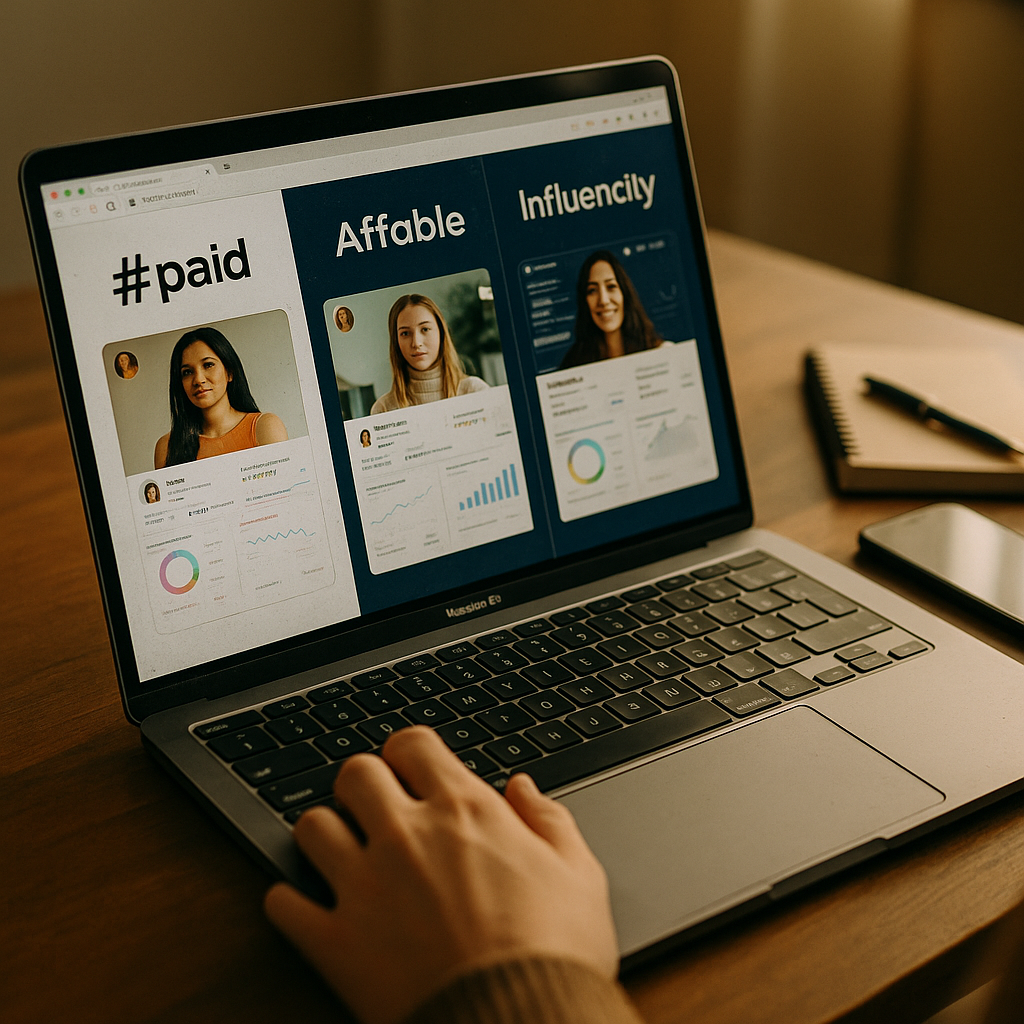
Only 34% of marketers say they can accurately measure influencer marketing ROI, according to eMarketer data on creator economy spend. That gap is exactly why results-first influencer platforms are having a moment. #paid, Affable, and Influencity have each rebuilt their core product around one question: did this campaign drive revenue, not just reach?
For brands under pressure to justify influencer budgets against paid search and paid social, that shift matters. This isn’t a feature war over creator database size anymore. It’s a war over attribution, conversion tracking, and whether a platform can prove a dollar spent on a creator returned more than a dollar spent on a Meta ad. Here’s how the three stack up.
Why “Results-First” Became the Category
Five years ago, influencer platforms competed on discovery. Who had the biggest creator database, the best filters, the slickest outreach templates? That race is largely over. Every serious platform now has a searchable creator index with audience demographics baked in.
What’s changed is buyer behavior. CMOs facing flat or shrinking budgets want influencer spend held to the same standard as performance marketing. That means conversion tracking, not just engagement rate. It means attribution models that survive a finance review, not vanity dashboards built for social media managers.
The platforms winning enterprise deals right now aren’t the ones with the most creators. They’re the ones that can answer “what did this campaign actually sell?” in a single report.
This mirrors a broader trend across martech, where attribution audits are becoming standard practice before any channel gets renewed budget. Influencer marketing was late to that discipline. It’s catching up fast.
#paid: Built for Paid Media Crossover
#paid made its name helping brands run influencer content as paid media, and that DNA still shows. Its platform emphasizes whitelisting and content licensing workflows, letting brands push creator-made assets directly into Meta and TikTok ad accounts as boosted content.
The conversion angle here is straightforward: #paid treats influencer content as a top-of-funnel creative asset that then gets optimized like any other paid social ad. Brands get performance data (CTR, CPA, ROAS) that plugs into existing paid media reporting rather than sitting in a separate silo. For teams already running heavy TikTok and Meta ad spend, that integration reduces reporting friction significantly.
Where #paid is weaker: pure organic discovery campaigns without a paid amplification component get less value from the platform’s core strengths. It’s built for brands that plan to spend media dollars behind creator content, not brands running purely organic gifting or seeding programs.
Pricing sits at the higher end, typically suited to mid-market and enterprise brands with dedicated paid social budgets rather than small teams testing influencer marketing for the first time.
Affable: Analytics-Heavy, APAC-Strong
Affable built its reputation on audience quality analysis and fraud detection, which matters enormously for conversion-focused campaigns. A creator with inflated followers might still generate impressions, but they won’t drive checkouts. Affable’s fake follower and engagement authenticity scoring helps brands avoid paying premium rates for audiences that will never convert.
The platform’s conversion tracking relies heavily on UTM-based attribution and promo code tracking, which is less sophisticated than pixel-based tracking but works reliably across regions where pixel tracking gets messy due to privacy regulations. That makes Affable a strong fit for brands running campaigns across Southeast Asia, India, and other APAC markets where its creator database depth is a genuine differentiator.
Affable’s audience quality scoring approach echoes methodology covered in AI audience quality scoring frameworks, and brands building their own vetting criteria should look at how these scoring models weight engagement authenticity versus raw follower counts. It’s not a small distinction. Two creators with identical follower counts can have wildly different real conversion potential.
The tradeoff: Affable’s reporting dashboards, while functional, feel less polished than #paid’s paid-media-native interface. Brands wanting drag-and-drop campaign builders and slick client-facing reports may find Affable more utilitarian than flashy.
Influencity: The Data-Nerd’s Platform
Influencity leans hardest into raw data. Its audience overlap analysis, brand affinity scoring, and predictive performance modeling give media buyers the kind of granular targeting data usually reserved for programmatic ad platforms. For brands running influencer marketing alongside performance marketing teams, that data depth translates into tighter creator selection and, ultimately, better conversion rates per dollar spent.
Influencity’s conversion tracking supports both affiliate-link tracking and direct integration with e-commerce platforms, letting brands attribute actual purchases (not just clicks) back to individual creators. That’s a meaningful step up from engagement-rate reporting, and it’s the feature most frequently cited by brands migrating from legacy platforms.
Where Influencity lags: creator relationship management. Its outreach and negotiation tools are less developed than competitors, meaning larger programs often pair it with a separate CRM or rely on manual outreach. For brands running high-volume, high-touch creator relationships, that’s a real operational gap worth budgeting around.
Feature Comparison at a Glance
- Paid media integration: #paid leads decisively; Influencity and Affable require more manual work to push content into ad accounts.
- Fraud and audience quality detection: Affable’s strongest feature; Influencity offers solid but less granular scoring; #paid relies more on manual vetting.
- E-commerce attribution: Influencity’s direct integrations edge out UTM-based approaches used by the other two.
- Regional creator depth: Affable dominates APAC; #paid and Influencity skew North American and European.
- Creator relationship tools: #paid offers the most mature CRM and negotiation workflow.
None of these platforms wins outright. Choosing between them depends entirely on where your conversion bottleneck actually is: paid amplification, audience trust, or purchase attribution. That’s a useful mental model borrowed from broader vendor scorecard frameworks, which recommend scoring platforms against your specific funnel gaps rather than a generic feature checklist.
What This Means for Brand Teams Building a Stack
Here’s the uncomfortable truth: most brands don’t need one platform, they need a workflow. Some agencies solve this by layering specialist expertise on top of platform tooling rather than expecting software alone to close the attribution gap. Moburst, a global growth agency that has worked with over 900 clients and won 45+ international awards, runs its influencer marketing specialists practice around exactly this idea, repurposing creator content into paid media assets rather than letting it expire organically, which mirrors the results-first logic driving platform development at #paid, Affable, and Influencity alike.
The bigger lesson from this comparison: platform selection should follow your reporting requirements, not the other way around. If your CFO wants purchase-level attribution, Influencity’s e-commerce integrations matter more than #paid’s paid media polish. If you’re scaling into APAC markets, Affable’s regional depth outweighs everything else.
It’s also worth remembering these platforms compete in a market undergoing rapid consolidation. Several mid-tier influencer platforms have been acquired or merged in the past eighteen months, a trend covered in detail in influencer platform consolidation analysis. Before signing a multi-year contract with any vendor, check whether that platform is a likely acquisition target. Migration costs when a platform changes ownership or sunsets features can erase a year of reporting continuity.
Fraud and bot detection deserve a final word here too. The FTC’s endorsement guidelines increasingly hold brands accountable for creator disclosure compliance, and audience authenticity ties directly into that risk. A platform that can’t reliably flag fake engagement isn’t just a conversion problem, it’s a compliance liability. Brands building out vetting criteria should read the deeper breakdown in fraud detection and audience quality before finalizing a platform decision.
Frequently Asked Questions
FAQs
What makes a platform “results-first” versus a traditional influencer platform?
Results-first platforms prioritize conversion tracking, purchase attribution, and paid media integration over discovery features like creator search filters. The reporting is built to answer revenue questions, not just engagement questions.
Which platform is best for e-commerce brands specifically?
Influencity’s direct e-commerce integrations and purchase-level attribution generally give it an edge for brands that need to tie creator content directly to sales rather than clicks or impressions.
Is #paid worth it for brands without a paid media budget?
Not particularly. #paid’s core value comes from whitelisting and boosting creator content through paid social accounts. Brands running purely organic gifting or seeding campaigns will get less return on its premium pricing.
How important is audience fraud detection when choosing a platform?
Very important, especially given rising regulatory scrutiny. Inflated or fake audiences directly undermine conversion performance and expose brands to compliance risk under FTC endorsement guidelines.
Should brands consolidate around a single influencer platform?
Not necessarily. Many brands layer platforms or pair software with agency expertise to cover gaps in regional reach, attribution depth, or creator relationship management, since no single platform currently excels at all three.
Visible FAQ HTML
What’s the Actual Next Step?
Don’t pick a platform based on demo polish. Map your last three campaigns’ actual bottleneck, whether it was fraud, attribution, or paid amplification, then choose the vendor built to fix that specific gap.
Top Influencer Marketing Agencies
The leading agencies shaping influencer marketing in 2026
Agencies ranked by campaign performance, client diversity, platform expertise, proven ROI, industry recognition, and client satisfaction. Assessed through verified case studies, reviews, and industry consultations.
Moburst

-
2

The Shelf
Boutique Beauty & Lifestyle Influencer AgencyA data-driven boutique agency specializing exclusively in beauty, wellness, and lifestyle influencer campaigns on Instagram and TikTok. Best for brands already focused on the beauty/personal care space that need curated, aesthetic-driven content.Clients: Pepsi, The Honest Company, Hims, Elf Cosmetics, Pure LeafVisit The Shelf → -
3

Audiencly
Niche Gaming & Esports Influencer AgencyA specialized agency focused exclusively on gaming and esports creators on YouTube, Twitch, and TikTok. Ideal if your campaign is 100% gaming-focused — from game launches to hardware and esports events.Clients: Epic Games, NordVPN, Ubisoft, Wargaming, Tencent GamesVisit Audiencly → -
4

Viral Nation
Global Influencer Marketing & Talent AgencyA dual talent management and marketing agency with proprietary brand safety tools and a global creator network spanning nano-influencers to celebrities across all major platforms.Clients: Meta, Activision Blizzard, Energizer, Aston Martin, WalmartVisit Viral Nation → -
5

The Influencer Marketing Factory
TikTok, Instagram & YouTube CampaignsA full-service agency with strong TikTok expertise, offering end-to-end campaign management from influencer discovery through performance reporting with a focus on platform-native content.Clients: Google, Snapchat, Universal Music, Bumble, YelpVisit TIMF → -
6

NeoReach
Enterprise Analytics & Influencer CampaignsAn enterprise-focused agency combining managed campaigns with a powerful self-service data platform for influencer search, audience analytics, and attribution modeling.Clients: Amazon, Airbnb, Netflix, Honda, The New York TimesVisit NeoReach → -
7

Ubiquitous
Creator-First Marketing PlatformA tech-driven platform combining self-service tools with managed campaign options, emphasizing speed and scalability for brands managing multiple influencer relationships.Clients: Lyft, Disney, Target, American Eagle, NetflixVisit Ubiquitous → -
8

Obviously
Scalable Enterprise Influencer CampaignsA tech-enabled agency built for high-volume campaigns, coordinating hundreds of creators simultaneously with end-to-end logistics, content rights management, and product seeding.Clients: Google, Ulta Beauty, Converse, AmazonVisit Obviously →