


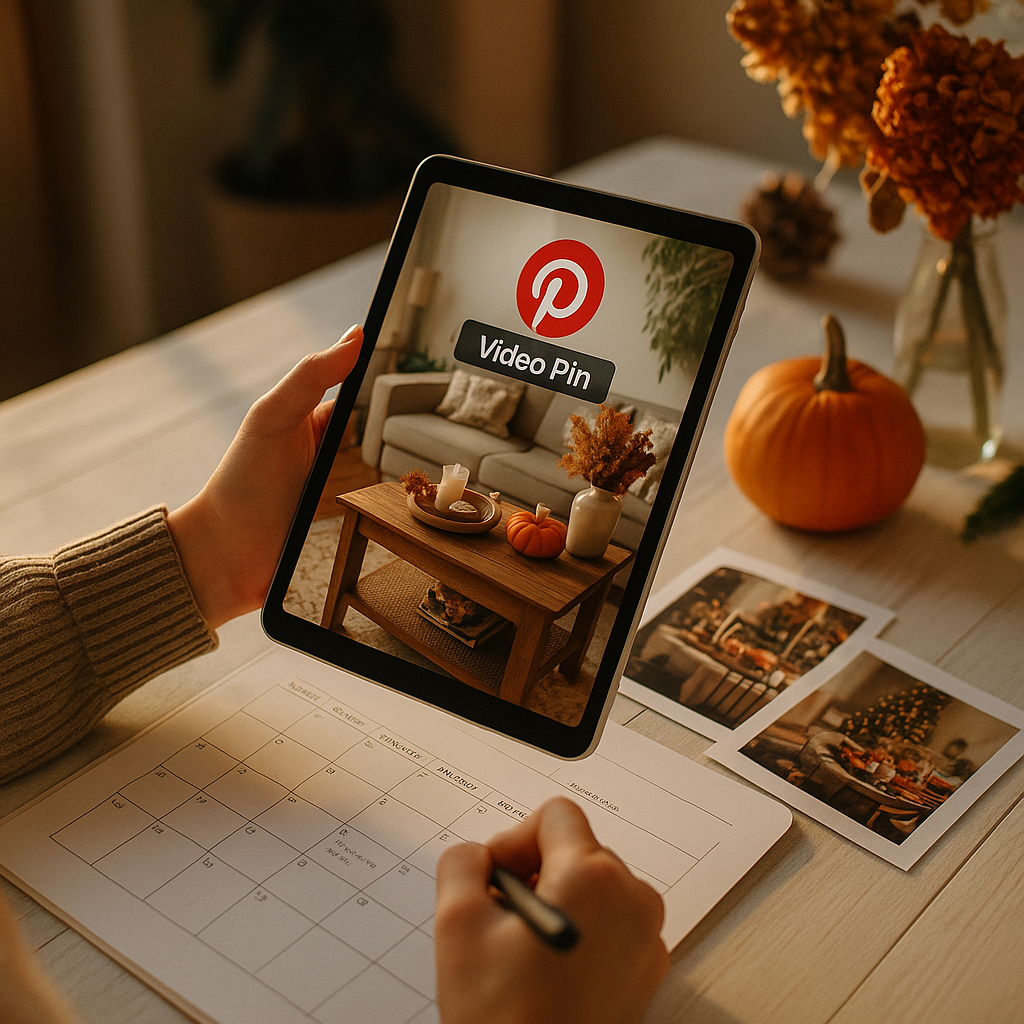
Pinterest users start saving Halloween ideas in July. That’s not a typo — it’s a documented behavior pattern, and it’s exactly why Pinterest video Pins deserve a bigger line item in your seasonal planning calendar than most brands currently give them. If your influencer program still treats Pinterest as an afterthought behind TikTok and Instagram, you’re leaving a long, low-competition discovery window completely unmapped.
The 4-Month Head Start Most Brands Waste
Pinterest’s own data has repeatedly shown that searches for seasonal content begin months before the actual holiday or event. Back-to-school planning starts in June. Christmas decor searches climb steadily from August. This isn’t a quirk of the platform — it’s the entire point of Pinterest. Unlike TikTok or Instagram, where content has a shelf life measured in hours or days, Pins keep surfacing in search and home feeds for weeks, sometimes months, after publication.
That long tail changes the math for home and lifestyle brands. A video Pin about “cozy fall entryway styling” published in early August can still be driving traffic in October. Try that with a TikTok posted the same week — it’s gone from the algorithm’s memory before the season even starts.
Pinterest content has an average lifespan far longer than most social formats, meaning a single well-optimized video Pin published in late summer can keep converting through an entire holiday season.
For brand marketers managing influencer budgets, this is an efficiency story as much as a reach story. You’re not paying for a burst of attention that dies in 48 hours. You’re paying for a discovery asset that compounds.
Why Video Pins Specifically — Not Just Static Pins
Static Pins still work, especially for product-forward catalog content. But Pinterest has been pushing video harder in its recommendation algorithm, and creator-made video Pins consistently outperform brand-produced static images on saves and outbound clicks, according to internal benchmarks Pinterest has shared with advertising partners. Video gives you movement, sound-off storytelling, and — critically for home and lifestyle categories — the ability to show transformation. A living room before and after a refresh. A table styled step by step. A candle lit and the room ambiance shifting. Static images can’t carry that narrative the same way.
There’s also a format-fit argument. Pinterest users are in a planning mindset, not a scrolling-for-entertainment mindset. Short, clear, instructional video content matches that intent better than heavily produced brand films. This is where creators genuinely outperform in-house content teams: they know how to make a 15-second video feel like a tutorial, not an ad.
What This Means for Creator Briefs
If you’re briefing creators for Pinterest the same way you brief them for TikTok Shop or Instagram Reels, stop. The hook-in-first-3-seconds rule still applies, but the content itself needs to read as evergreen and searchable, not trend-reactive. Think “5 ways to style a console table for fall” instead of “get ready with me for a fall party.” One is a search query. The other is a moment. Pinterest rewards the former.
Briefs should include target keywords the creator should say out loud or include in on-screen text — Pinterest’s algorithm still leans heavily on text and metadata signals alongside visual recognition. This is closer to SEO copywriting than typical influencer briefing, and marketers who treat it that way get better distribution.
Building the Seasonal Content Calendar Backward
Most brands plan seasonal content forward from the holiday date. For Pinterest, you need to plan backward from the discovery window. If Q4 gift guides start surfacing in searches by late September, your video Pins need to be live — and already gathering early engagement signals — by August at the latest. That means creator contracts, shoot schedules, and approvals need to wrap in June or July.
This is a genuine operational shift for teams used to TikTok’s compressed timelines. It also means your creator selection process needs to happen earlier than usual, which affects everything from content whitelisting agreements to how you structure creator whitelisting permissions for paid amplification later in the season.
- 12-16 weeks out: Finalize creator roster, lock briefs, confirm usage rights for paid promotion.
- 10-12 weeks out: Shoot and produce video Pins, batch by theme (styling, gifting, hosting, organizing).
- 8-10 weeks out: Publish organic Pins to start building the algorithmic discovery curve before paid spend begins.
- 6-8 weeks out: Layer in Pinterest ads behind top-performing organic Pins, using early saves and clicks as a performance signal.
- Ongoing through the season: Refresh descriptions and boards, but avoid replacing Pins — you’d lose accumulated engagement history.
This cadence mirrors what’s worked well in seasonal creator board strategies, where the paid layer is designed to amplify organic winners rather than launch cold.
Home and Lifestyle Has an Unfair Advantage Here
Not every category benefits equally from Pinterest’s long discovery window. Fast fashion and trend-driven beauty content ages quickly — nobody’s searching for last season’s micro-trend. Home and lifestyle content, by contrast, is inherently more evergreen. A well-styled bookshelf, a smart storage hack, a seasonal tablescape — these ideas stay relevant across multiple years with minor refreshes.
That durability is why home brands see some of the strongest long-term ROI on Pinterest video content of any vertical. A Pin can keep performing two or three seasons after it was made, provided the styling doesn’t look dated. Smart brands build “evergreen-adjacent” content: seasonal enough to hook into search intent, generic enough to still look current 18 months later.
Measurement: What Actually Counts as Success
Engagement metrics on Pinterest don’t map cleanly onto other platforms, and marketers who apply TikTok or Instagram benchmarks here often misjudge performance. Saves matter more than likes. Outbound clicks matter more than comments. A video Pin with modest view counts but a high save-to-view ratio is often a stronger long-term asset than one that gets a view spike and fades.
Track these specifically:
- Save rate — the clearest signal of planning-stage purchase intent.
- Outbound click rate — direct correlation to traffic and, downstream, conversion.
- Search impression share for your target seasonal keywords, available in Pinterest Analytics.
- Time-to-peak performance — Pinterest content often peaks weeks after publish, not days. Don’t judge a Pin at 72 hours.
If your reporting cadence forces weekly performance reviews with hard cutoffs, you risk pulling budget from Pins that simply haven’t hit their discovery curve yet. Build patience into the measurement framework, or you’ll systematically undervalue your best-performing seasonal assets.
Compliance and Disclosure Still Apply
It’s easy to forget FTC disclosure requirements on a platform that feels more like a search engine than a social feed. They still apply. Sponsored video Pins featuring creators need clear, unambiguous disclosure — #ad or #sponsored in the caption, not buried in a description field users won’t scroll to. Pinterest’s own ad policies require this too, and enforcement has tightened as the platform has scaled its creator monetization tools.
Brands running whitelisted or boosted creator content should also double check usage rights extend to the full flight of the seasonal campaign, not just the initial organic post. Seasonal campaigns that run 10-12 weeks need contracts that match that timeline, not the shorter usage windows typical of TikTok Shop deals. For more on structuring these agreements to avoid mid-campaign renegotiation, see the creator whitelisting guide.
Regulators have also been paying closer attention to influencer disclosure across visual platforms generally — worth a periodic check of current guidance from the FTC and, for brands operating in the UK, the ICO.
Where This Fits Alongside Your Broader Creator Mix
Pinterest video Pins shouldn’t operate in isolation from your TikTok, Instagram, and YouTube programs — the smartest home and lifestyle brands are repurposing creator content across platforms with format-specific edits. A creator’s TikTok styling video can become the source footage for a Pinterest video Pin, trimmed and re-captioned for search intent rather than trend relevance. That’s efficient production, not lazy recycling.
It’s worth noting the platforms reward very different signals. What works on TikTok’s watch-time algorithm — fast hooks, pattern interrupts, trend audio — doesn’t automatically translate to Pinterest’s search-driven discovery model. Treat Pinterest as its own briefing exercise, informed by but not identical to your other creator content.
For brands running local or regional seasonal promotions alongside national Pinterest campaigns, there’s also a strong case for pairing broad-reach video Pins with hyperlocal activation — something covered well in the ZIP-code targeting playbook for driving foot traffic from digital discovery.
Industry data from eMarketer continues to show Pinterest holding a distinct position in the social commerce landscape — lower daily engagement than TikTok or Instagram, but disproportionately high purchase intent among active users. That’s the trade-off: less volume, more qualified discovery. For home and lifestyle brands with real margin on seasonal SKUs, that trade-off often favors Pinterest more than marketers assume. Platforms like Sprout Social and HubSpot both publish social benchmarking data worth cross-referencing when you’re building the business case internally.
FAQs
Frequently Asked Questions
How far in advance should home and lifestyle brands plan Pinterest video Pin campaigns?
Start creator briefing and production 12-16 weeks before the target season. Organic Pins should publish 8-10 weeks ahead of the holiday or event to build discovery momentum before paid amplification begins.
Do video Pins perform better than static Pins for seasonal content?
Video Pins generally see stronger save and outbound click rates for home and lifestyle categories, particularly when the content shows transformation or step-by-step styling. Static Pins still work well for catalog and product-specific content.
How should success be measured differently on Pinterest compared to TikTok or Instagram?
Prioritize save rate and outbound click rate over likes and comments. Pinterest content often peaks in performance weeks after publishing, so avoid judging a video Pin’s success within the first few days.
Do FTC disclosure rules apply to sponsored Pinterest content?
Yes. Sponsored video Pins featuring creators require clear disclosure such as #ad or #sponsored in the caption, consistent with FTC guidelines and Pinterest’s own advertising policies.
Can the same creator content be reused across TikTok, Instagram, and Pinterest?
Source footage can be repurposed, but Pinterest briefs should be written for search intent rather than trend relevance. Captions, text overlays, and keywords need platform-specific adjustment to perform well in Pinterest’s discovery algorithm.
Pull your Q4 creator calendar forward by eight weeks, brief for search intent instead of trends, and measure saves before you measure views — that’s the entire playbook in one sentence.
Top Influencer Marketing Agencies
The leading agencies shaping influencer marketing in 2026
Agencies ranked by campaign performance, client diversity, platform expertise, proven ROI, industry recognition, and client satisfaction. Assessed through verified case studies, reviews, and industry consultations.
Moburst

-
2

The Shelf
Boutique Beauty & Lifestyle Influencer AgencyA data-driven boutique agency specializing exclusively in beauty, wellness, and lifestyle influencer campaigns on Instagram and TikTok. Best for brands already focused on the beauty/personal care space that need curated, aesthetic-driven content.Clients: Pepsi, The Honest Company, Hims, Elf Cosmetics, Pure LeafVisit The Shelf → -
3

Audiencly
Niche Gaming & Esports Influencer AgencyA specialized agency focused exclusively on gaming and esports creators on YouTube, Twitch, and TikTok. Ideal if your campaign is 100% gaming-focused — from game launches to hardware and esports events.Clients: Epic Games, NordVPN, Ubisoft, Wargaming, Tencent GamesVisit Audiencly → -
4

Viral Nation
Global Influencer Marketing & Talent AgencyA dual talent management and marketing agency with proprietary brand safety tools and a global creator network spanning nano-influencers to celebrities across all major platforms.Clients: Meta, Activision Blizzard, Energizer, Aston Martin, WalmartVisit Viral Nation → -
5

The Influencer Marketing Factory
TikTok, Instagram & YouTube CampaignsA full-service agency with strong TikTok expertise, offering end-to-end campaign management from influencer discovery through performance reporting with a focus on platform-native content.Clients: Google, Snapchat, Universal Music, Bumble, YelpVisit TIMF → -
6

NeoReach
Enterprise Analytics & Influencer CampaignsAn enterprise-focused agency combining managed campaigns with a powerful self-service data platform for influencer search, audience analytics, and attribution modeling.Clients: Amazon, Airbnb, Netflix, Honda, The New York TimesVisit NeoReach → -
7

Ubiquitous
Creator-First Marketing PlatformA tech-driven platform combining self-service tools with managed campaign options, emphasizing speed and scalability for brands managing multiple influencer relationships.Clients: Lyft, Disney, Target, American Eagle, NetflixVisit Ubiquitous → -
8

Obviously
Scalable Enterprise Influencer CampaignsA tech-enabled agency built for high-volume campaigns, coordinating hundreds of creators simultaneously with end-to-end logistics, content rights management, and product seeding.Clients: Google, Ulta Beauty, Converse, AmazonVisit Obviously →