


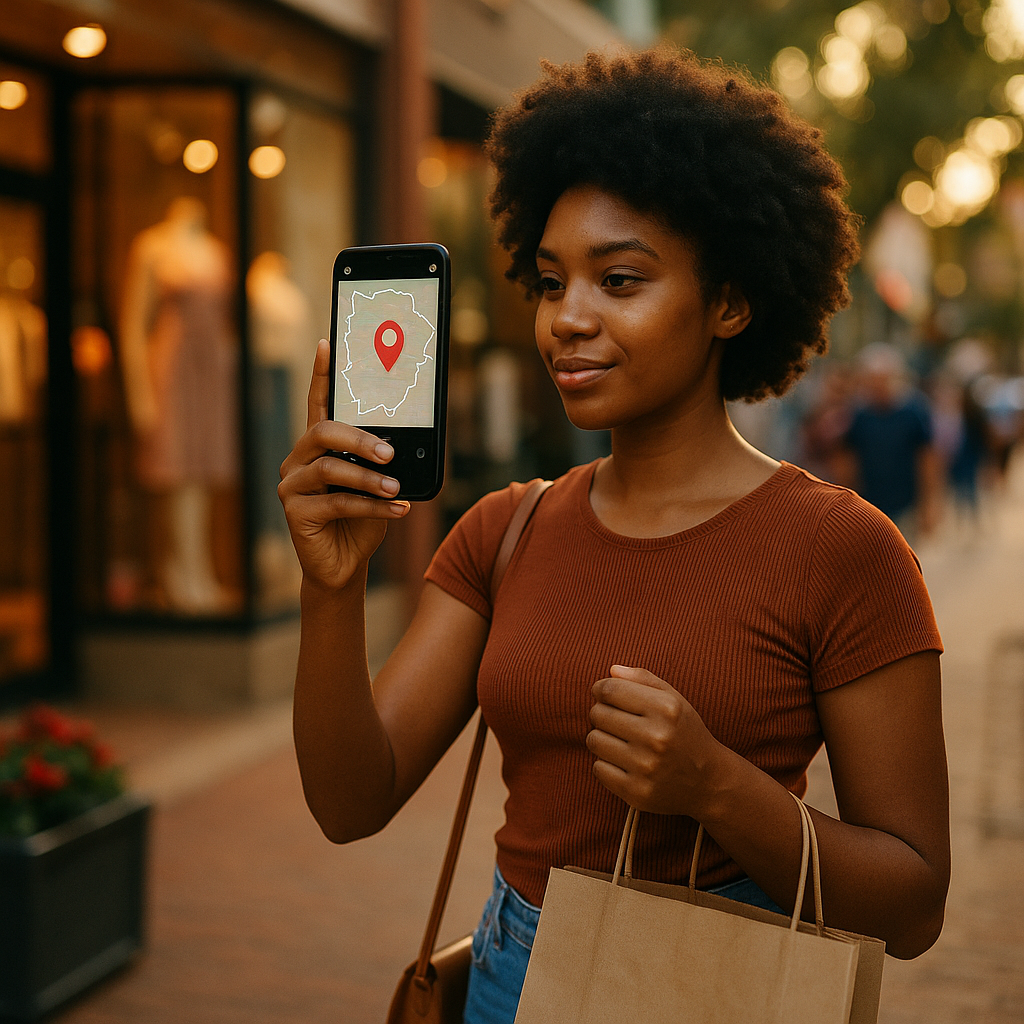
One geo-fenced radius. Three creators. A 34% lift in in-store visits over six weeks. That’s the kind of number pulling regional retail brands into ZIP-code targeting built around creator-controlled Meta Business Managers, and it’s quietly becoming the most efficient local media buy most brands aren’t running yet.
Why does this matter now? Because national creator deals are getting more expensive per impression while delivering less local relevance. Meanwhile, retailers with 20, 50, or 200 store locations are sitting on foot-traffic problems that a national awareness campaign simply can’t solve. ZIP-code precision can.
The Foot Traffic Problem National Campaigns Can’t Solve
Here’s the uncomfortable truth: a creator with 400,000 followers scattered across the country is nearly useless if your goal is driving people into a store in Tempe, Arizona on a Saturday afternoon. Reach without geographic density is just noise.
Retail marketers have known this for years, which is why local ambassador programs have been outperforming national creator deals on pure ROI metrics. But ambassador programs alone don’t solve the targeting problem at scale — you still need to get that content in front of the right people within driving distance of a specific store.
That’s where creator-controlled Meta Business Managers come in. Instead of running a single national ad set and hoping geographic targeting settings do the heavy lifting, brands are structuring campaigns where individual local creators — or micro-influencers embedded in specific metro areas — grant access to their content and ad accounts through partnership permissions, and the brand builds hyper-local ZIP-code radius targeting on top of that authentic, locally-shot content.
A national creator ad running in one ZIP code and a local creator ad running in that same ZIP code are not the same asset. The local creator’s face, accent, and backdrop are doing conversion work the algorithm can’t replicate.
How the Creator-Controlled MCM Structure Actually Works
The mechanics aren’t complicated, but they require more setup discipline than a standard whitelisting arrangement. Brands are using Meta Business Manager partnership access — the same permission structure used for creator whitelisting — but layering ZIP-code and radius targeting on top of content that was shot specifically for that location.
If you haven’t set up whitelisting infrastructure before, the MCM setup guide for creator whitelisting is the right starting point before attempting geo-targeted variants.
The typical structure looks like this:
- A local creator produces content referencing a specific store, neighborhood, or landmark (“this is the Trader Joe’s on 5th,” “just grabbed this from the Riverside location”)
- The creator grants ad account access to the brand’s Business Manager through Meta’s partnership permissions
- The brand builds a custom audience using a radius target — typically 3 to 10 miles around the physical store — layered with demographic and interest signals
- Ad spend runs as a boosted post or Advantage+ campaign, attributed to the creator’s handle for authenticity, but controlled and optimized by the brand’s media team
- Store visit conversion data (via Meta’s offline conversions API or point-of-sale integration) closes the loop
The result is content that feels native to the neighborhood, backed by the brand’s ad budget and optimization tools. Nobody scrolling past it thinks “sponsored national campaign.” It reads as a local person talking about a local store, because it is.
Why ZIP-Code Precision Beats Broad Radius Targeting
Most brands default to a city-level or broad radius target because it’s easier to set up and requires less creative volume. That’s a mistake, and the data backs it up.
Retail foot traffic drops off sharply beyond a 5-mile radius for most convenience and grocery categories, and beyond 10 miles for big-box and specialty retail. Running one ad creative across an entire metro area means you’re wasting spend on audience segments who were never going to drive that far anyway. ZIP-code-level segmentation lets brands match creative variations — different offers, different urgency messaging, different creators — to the actual competitive and demographic makeup of each trade area.
According to eMarketer, location-based ad targeting continues to outperform broad demographic targeting on cost-per-visit metrics across retail verticals, and Meta’s own Business Suite documentation confirms that radius and ZIP-based custom audiences remain among the most reliable predictors of offline conversion when paired with the offline conversions API.
Some brands are running five or six ZIP-code variants simultaneously around a single flagship location, each with a slightly different creator and slightly different creative angle, then reallocating budget toward whichever ZIP segment converts best within the first 72 hours. It’s essentially A/B testing at the neighborhood level, and it’s only possible because the creator-controlled structure makes producing that creative volume affordable.
What This Costs (And Why It’s Cheaper Than You’d Think)
The math here is genuinely favorable compared to national campaigns. A single national creator partnership with usage rights and whitelisting access can run $15,000 to $80,000 depending on the creator’s tier. That same budget, spread across 15-20 local micro-creators at $500-$2,000 each, buys geographic density that a single national voice never could.
Add in the fact that local creator rates are dramatically lower than national talent, and the cost-per-store-visit math tilts even further in favor of the ZIP-code approach. Brands report media efficiency gains of 20-40% when shifting budget from national whitelisting to distributed local creator networks, primarily because the ad relevance score improves when the creative genuinely reflects the audience being targeted.
Fifteen local creators at $1,000 each often out-convert one national creator at $30,000 — because relevance beats reach when the goal is a physical store visit.
There’s also a compliance upside worth mentioning. Because each creator’s content is tied to their own handle and disclosed partnership, the FTC disclosure trail is cleaner than opaque whitelisting arrangements where the brand’s involvement is buried. That said, brands still need to confirm each local partnership includes clear #ad or #sponsored disclosure per FTC endorsement guidelines, especially since local creators are less likely to have agency representation flagging compliance risk for them.
Operational Friction: What Actually Goes Wrong
This isn’t a plug-and-play tactic. The operational overhead of managing 15-30 individual creator partnerships, each with their own Business Manager access, content approval cycle, and performance tracking, is real. Brands running this at scale typically need a dedicated local marketing manager or agency partner just to handle onboarding and access revocation.
The most common failure points:
- Access management lags. Creators forget to grant partnership permissions correctly, or revoke access mid-campaign without telling anyone. Build in a verification step before every campaign launch.
- Inconsistent disclosure. Fifteen creators means fifteen different interpretations of “how” to disclose. Standardize the disclosure language in the brief, don’t leave it to interpretation.
- Store-level attribution gaps. Without offline conversion tracking or a POS integration, brands are left guessing whether foot traffic actually moved. This is the single most common reason ZIP-code campaigns get killed after one quarter — nobody set up measurement before launch.
- Creative fatigue at the ZIP level. Small radius targets mean smaller audience pools, and those audiences burn through creative faster than national campaigns. Budget for content refreshes every 2-3 weeks, not every quarter.
None of these are dealbreakers, but they’re reasons this tactic tends to work better for brands with existing local ambassador infrastructure than for teams trying to stand up local creator relationships from scratch mid-campaign.
Where This Is Headed
Expect ZIP-code creator targeting to become standard practice for any multi-location retailer running paid social in the next few campaign cycles, not a niche tactic. The infrastructure — Meta’s partnership permissions, offline conversion APIs, radius targeting tools — already exists. What’s changed is brands finally connecting local creator sourcing with the ad tech to make it scalable rather than a one-off market test.
The next iteration will likely borrow from what’s happening with Instagram broadcast channels driving restock foot traffic — combining owned-channel urgency messaging with paid ZIP-code amplification for a two-pronged local push. Brands already comfortable with whitelisting infrastructure and offline attribution are the ones positioned to move first.
For a strategic complement to this playbook, marketing leads are also worth reviewing Sprout Social’s guidance on localized social strategy and cross-referencing with HubSpot’s local marketing benchmarks to set realistic conversion expectations before pitching budget internally.
Frequently Asked Questions
FAQs
What is ZIP-code targeting in creator marketing?
ZIP-code targeting is a paid social tactic where brands use Meta’s radius and location-based custom audience tools to serve creator content only to users within a defined distance of a specific retail location, typically 3-10 miles, in order to drive measurable in-store foot traffic rather than broad brand awareness.
How does creator-controlled Meta Business Manager access work?
Creators grant brands partnership permissions within Meta Business Manager, allowing the brand to run paid ads through the creator’s handle without needing full account access. This is the same permission structure used in creator whitelisting, adapted here with ZIP-code and radius targeting layered on top.
Is ZIP-code creator targeting cheaper than national creator campaigns?
Generally, yes. Local micro-creator rates are significantly lower than national talent fees, and brands often see 20-40% media efficiency gains because locally relevant creative improves ad relevance scores and lowers cost-per-store-visit.
How do brands measure whether this drives actual foot traffic?
Most brands pair the campaign with Meta’s offline conversions API or a point-of-sale integration to match ad exposure with in-store visits or purchases. Without this measurement layer, brands are only tracking clicks and engagement, not actual retail outcomes.
What compliance risks should brands watch for?
The main risk is inconsistent FTC disclosure across a large number of local creators who may lack agency representation to flag compliance issues. Brands should standardize disclosure language in every brief and confirm each partnership meets FTC endorsement guidelines before launch.
How many local creators does a typical ZIP-code campaign use?
It varies by store count and budget, but many brands run 15-30 local creators simultaneously across a market, testing different ZIP-code radius targets and creative angles to identify which segments convert best before reallocating budget.
Start small: pick one flagship store, five local creators, and a 5-mile radius test with offline conversion tracking switched on before launch. If cost-per-visit beats your national campaign benchmark within four weeks, you’ve got your business case for scaling the whole retail footprint.
Top Influencer Marketing Agencies
The leading agencies shaping influencer marketing in 2026
Agencies ranked by campaign performance, client diversity, platform expertise, proven ROI, industry recognition, and client satisfaction. Assessed through verified case studies, reviews, and industry consultations.
Moburst

-
2

The Shelf
Boutique Beauty & Lifestyle Influencer AgencyA data-driven boutique agency specializing exclusively in beauty, wellness, and lifestyle influencer campaigns on Instagram and TikTok. Best for brands already focused on the beauty/personal care space that need curated, aesthetic-driven content.Clients: Pepsi, The Honest Company, Hims, Elf Cosmetics, Pure LeafVisit The Shelf → -
3

Audiencly
Niche Gaming & Esports Influencer AgencyA specialized agency focused exclusively on gaming and esports creators on YouTube, Twitch, and TikTok. Ideal if your campaign is 100% gaming-focused — from game launches to hardware and esports events.Clients: Epic Games, NordVPN, Ubisoft, Wargaming, Tencent GamesVisit Audiencly → -
4

Viral Nation
Global Influencer Marketing & Talent AgencyA dual talent management and marketing agency with proprietary brand safety tools and a global creator network spanning nano-influencers to celebrities across all major platforms.Clients: Meta, Activision Blizzard, Energizer, Aston Martin, WalmartVisit Viral Nation → -
5

The Influencer Marketing Factory
TikTok, Instagram & YouTube CampaignsA full-service agency with strong TikTok expertise, offering end-to-end campaign management from influencer discovery through performance reporting with a focus on platform-native content.Clients: Google, Snapchat, Universal Music, Bumble, YelpVisit TIMF → -
6

NeoReach
Enterprise Analytics & Influencer CampaignsAn enterprise-focused agency combining managed campaigns with a powerful self-service data platform for influencer search, audience analytics, and attribution modeling.Clients: Amazon, Airbnb, Netflix, Honda, The New York TimesVisit NeoReach → -
7

Ubiquitous
Creator-First Marketing PlatformA tech-driven platform combining self-service tools with managed campaign options, emphasizing speed and scalability for brands managing multiple influencer relationships.Clients: Lyft, Disney, Target, American Eagle, NetflixVisit Ubiquitous → -
8

Obviously
Scalable Enterprise Influencer CampaignsA tech-enabled agency built for high-volume campaigns, coordinating hundreds of creators simultaneously with end-to-end logistics, content rights management, and product seeding.Clients: Google, Ulta Beauty, Converse, AmazonVisit Obviously →