


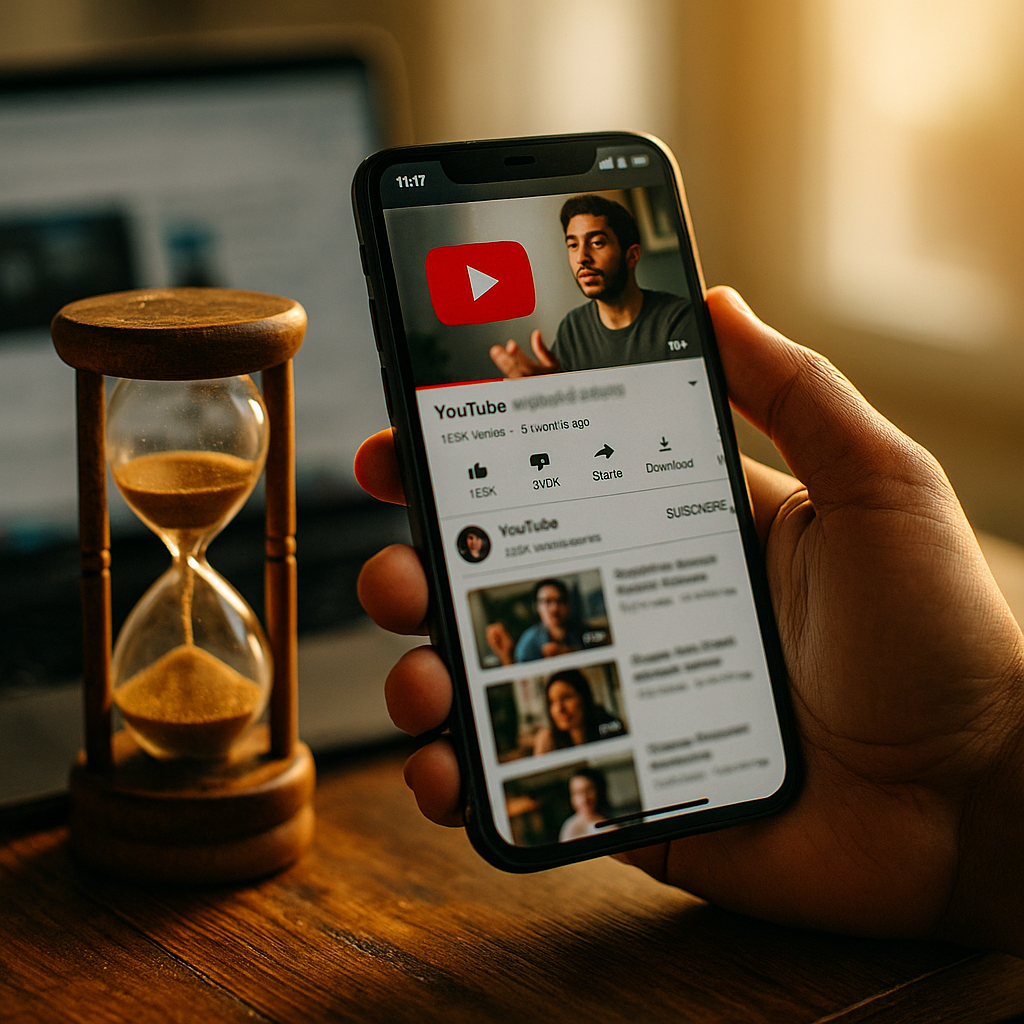
A TikTok video is functionally dead within 48 hours. A dedicated YouTube creator video? It’s still earning impressions, comments, and purchase consideration six months later. That’s not a content strategy footnote — it’s the whole ballgame for brands trying to win the messy middle of the funnel. YouTube’s longer content lifespan advantage is quietly reshaping where mid-funnel budgets should go, and most media plans haven’t caught up.
Marketers have spent three years obsessing over short-form virality. Fair enough — it built awareness cheaply. But awareness isn’t the problem most brands have right now. Consideration is. And consideration requires content that’s still findable, still watchable, still doing its job weeks after it published.
The Half-Life Problem Nobody Budgets For
Short-form platforms are built for velocity, not longevity. A TikTok’s engagement typically peaks within hours and flatlines shortly after. YouTube Shorts behave similarly. That’s fine for top-of-funnel reach campaigns where the goal is impressions at scale during a launch window. It’s a terrible fit for mid-funnel work, where the buyer is actively comparing options and searching for proof over a period of days or weeks, not minutes.
Dedicated YouTube videos operate on a completely different curve. Search-driven discovery means a well-optimized creator review or tutorial can keep pulling in views a year after publication. eMarketer has repeatedly flagged YouTube’s evergreen watch-time patterns as a distinguishing factor versus feed-based short-form apps, and it’s why smart media planners treat YouTube less like social and more like owned search real estate.
A dedicated YouTube video isn’t a media placement with a shelf life — it’s a compounding asset that keeps generating impressions long after the invoice is paid.
Why Mid-Funnel Recall Needs Time, Not Just Reach
Brand recall at the consideration stage isn’t built in a single exposure. It’s built through repeated, contextual encounters, someone watching a comparison video, then a few days later stumbling on a “day in the life” review, then searching the brand name and finding a third creator’s honest take. That sequence takes weeks to unfold naturally. Short-form’s disappearing act breaks the sequence before it can compound.
Long-form dedicated videos are built for exactly this kind of layered discovery. A 12-minute in-depth review sits in search results, gets pulled into “best of” playlists, and surfaces again when a viewer searches a competitor’s name. It’s still working while your short-form spend has already cycled through five new campaigns.
This is also why rate cards have shifted. Brands are willing to pay more for dedicated placements because the content keeps performing. Our previous coverage on dedicated video fees overtaking integrated placements found buyers increasingly treating these videos as durable assets rather than one-off sponsorship slots.
What the Data Actually Shows
Google’s own creator research has long emphasized that a meaningful share of YouTube views come from search and suggested video well after publication, not from subscriber feeds at launch. Google’s support documentation on YouTube Analytics traffic sources makes this pattern visible to any brand manager who bothers to check a partner creator’s dashboard: search and browse traffic often overtakes “subscriber notification” traffic within the first month, and it keeps climbing from there.
Compare that to Instagram Reels or TikTok, where the discovery algorithm heavily favors recency. Sprout Social’s platform research consistently shows short-form engagement front-loaded into the first 24 to 72 hours, after which the content is essentially archived unless a creator actively resurfaces it.
None of this means short-form is a bad investment. It’s an excellent tool for the top of the funnel: fast reach, low production cost, high volume testing of hooks and messaging. But treating it as a substitute for mid-funnel consideration content is where budgets go to die quietly. Our breakdown of TikTok and YouTube budget allocation by funnel stage covers this split in more operational detail, and it’s worth revisiting if your media mix model still treats both platforms as interchangeable video inventory.
The Production Trade-Off Brands Keep Getting Wrong
Here’s the objection every performance marketer raises: dedicated YouTube videos cost more and take longer to produce. True. A 10-to-15-minute creator video with a proper hook, structured narrative, and honest product demonstration is not a same-day turnaround. It requires briefing, creative alignment, and usually a heavier fee than a 15-second UGC clip.
But the cost-per-week-of-relevance math tells a different story. If a short-form asset generates strong engagement for three days and then dies, and a dedicated video generates steady, search-driven engagement for six months, the effective CPM over time flips dramatically in the long-form video’s favor. Brands that only look at launch-week metrics miss this entirely, because their reporting windows close before the asset’s real value shows up.
This is the same blind spot showing up in influencer contract structures generally. As deals shift toward performance-based pay, brands need attribution windows long enough to actually capture a long-form video’s tail. A 7-day attribution window is fine for a TikTok flash sale. It’s borderline malpractice for measuring a dedicated YouTube review meant to influence a purchase decision made a month later.
Where This Shows Up in Rate Cards
YouTube creator rate cards have evolved to reflect this durability. Tiered CPMs increasingly account for expected long-tail views, not just first-week performance, and top creators know it. If you’re negotiating placements without understanding how these tiers work, you’re likely overpaying for reach you won’t get or underpaying for a video that’ll outperform projections for months. Our explainer on YouTube rate cards, CPMs, and tiers is a useful gut-check before your next negotiation.
Building a Mid-Funnel Play Around Longevity
So what does this mean operationally? A few shifts worth making:
- Reallocate consideration-stage budget toward dedicated long-form. Keep short-form for awareness and retargeting hooks, but stop expecting it to carry comparison-stage messaging.
- Extend your attribution windows. If your dashboard only reports on a 7-to-14-day window, you’re structurally blind to YouTube’s compounding value.
- Brief for search intent, not just brand message. Work with creators to title and structure videos around the actual queries buyers type in, “[Product] vs [Competitor],” “[Product] honest review,” “is [product] worth it.” This is what feeds the long-tail search traffic that makes the format durable in the first place.
- Treat top creators as media partners, not one-off vendors. A creator whose back catalog keeps ranking is worth a retainer relationship, not a single transactional brief.
This isn’t a call to abandon TikTok or Reels. It’s a call to stop asking short-form to do a long-form job. The multi-channel video rollout model gaining traction across brand teams already reflects this: same creative concept, adapted per platform, with YouTube carrying the heavier consideration-stage lift while short-form handles discovery and frequency.
There’s also a discovery layer worth flagging. As AI search tools and zero-click results reshape how people research purchases, long-form video transcripts and structured content are becoming citation sources for generative engines in ways that short-form clips simply aren’t built for. If you’re already thinking about how generative search is rewriting the funnel, dedicated YouTube content is one of the few creator formats built to feed that system directly, since it’s searchable, transcribable, and citable in a way a 12-second TikTok never will be.
The Real Risk of Ignoring This
Brands that keep pouring mid-funnel budget into short-form aren’t necessarily wasting money on bad content. They’re wasting money on the wrong lifespan. Every dollar spent on a 48-hour asset for a decision that takes three weeks to make is a dollar that should have gone somewhere durable. Multiply that mismatch across a full year of campaigns, and you’ve got a media mix quietly underperforming its potential, not because the content was bad, but because the format’s shelf life never matched the buyer’s timeline.
The creator economy’s continued growth means this inefficiency will only get more expensive to ignore. Budgets are scaling up. Getting the funnel-stage-to-format match wrong at scale is a very different problem than getting it wrong on a single test campaign.
Next step: audit your last two quarters of mid-funnel creator spend and check the format mix against your actual sales cycle length. If your buyer takes three weeks to decide and your content dies in three days, that’s not a targeting problem — it’s a lifespan mismatch, and it’s fixable this quarter.
FAQs
Why does YouTube content last longer than TikTok or Reels?
YouTube’s discovery relies heavily on search and suggested video, which surfaces content based on relevance rather than recency alone. TikTok and Reels algorithms prioritize fresh content in the main feed, so engagement concentrates in the first few days after posting and drops off sharply after that.
Is short-form video still worth investing in?
Yes, for top-of-funnel awareness, message testing, and frequency building. Short-form is cheap to produce and fast to iterate on. The mistake is using it for mid-funnel consideration content, where buyers need durable, findable proof over a longer decision window.
How should brands measure the ROI of dedicated YouTube videos?
Extend attribution windows beyond the standard 7-to-14-day short-form benchmark. Track search and suggested-video traffic in YouTube Analytics over 90-to-180-day periods to capture the long-tail impressions and conversions that make dedicated videos valuable.
What makes a dedicated creator video effective for mid-funnel recall?
Structure and search intent matter most. Videos briefed around actual buyer queries, comparisons, honest reviews, use-case demonstrations, tend to keep surfacing in search long after publication, which is what drives sustained consideration-stage impressions.
Should brands shift budget entirely from short-form to long-form YouTube content?
No. The smarter move is matching format to funnel stage: short-form for awareness and retargeting, dedicated long-form YouTube for consideration and comparison. Most brands don’t need to reallocate everything, just the portion currently misapplied to mid-funnel goals.
FAQs
Why does YouTube content last longer than TikTok or Reels?
YouTube’s discovery relies heavily on search and suggested video, which surfaces content based on relevance rather than recency alone. TikTok and Reels algorithms prioritize fresh content in the main feed, so engagement concentrates in the first few days after posting and drops off sharply after that.
Is short-form video still worth investing in?
Yes, for top-of-funnel awareness, message testing, and frequency building. Short-form is cheap to produce and fast to iterate on. The mistake is using it for mid-funnel consideration content, where buyers need durable, findable proof over a longer decision window.
How should brands measure the ROI of dedicated YouTube videos?
Extend attribution windows beyond the standard 7-to-14-day short-form benchmark. Track search and suggested-video traffic in YouTube Analytics over 90-to-180-day periods to capture the long-tail impressions and conversions that make dedicated videos valuable.
What makes a dedicated creator video effective for mid-funnel recall?
Structure and search intent matter most. Videos briefed around actual buyer queries, comparisons, honest reviews, use-case demonstrations, tend to keep surfacing in search long after publication, which is what drives sustained consideration-stage impressions.
Should brands shift budget entirely from short-form to long-form YouTube content?
No. The smarter move is matching format to funnel stage: short-form for awareness and retargeting, dedicated long-form YouTube for consideration and comparison. Most brands don’t need to reallocate everything, just the portion currently misapplied to mid-funnel goals.
Top Influencer Marketing Agencies
The leading agencies shaping influencer marketing in 2026
Agencies ranked by campaign performance, client diversity, platform expertise, proven ROI, industry recognition, and client satisfaction. Assessed through verified case studies, reviews, and industry consultations.
Moburst

-
2

The Shelf
Boutique Beauty & Lifestyle Influencer AgencyA data-driven boutique agency specializing exclusively in beauty, wellness, and lifestyle influencer campaigns on Instagram and TikTok. Best for brands already focused on the beauty/personal care space that need curated, aesthetic-driven content.Clients: Pepsi, The Honest Company, Hims, Elf Cosmetics, Pure LeafVisit The Shelf → -
3

Audiencly
Niche Gaming & Esports Influencer AgencyA specialized agency focused exclusively on gaming and esports creators on YouTube, Twitch, and TikTok. Ideal if your campaign is 100% gaming-focused — from game launches to hardware and esports events.Clients: Epic Games, NordVPN, Ubisoft, Wargaming, Tencent GamesVisit Audiencly → -
4

Viral Nation
Global Influencer Marketing & Talent AgencyA dual talent management and marketing agency with proprietary brand safety tools and a global creator network spanning nano-influencers to celebrities across all major platforms.Clients: Meta, Activision Blizzard, Energizer, Aston Martin, WalmartVisit Viral Nation → -
5

The Influencer Marketing Factory
TikTok, Instagram & YouTube CampaignsA full-service agency with strong TikTok expertise, offering end-to-end campaign management from influencer discovery through performance reporting with a focus on platform-native content.Clients: Google, Snapchat, Universal Music, Bumble, YelpVisit TIMF → -
6

NeoReach
Enterprise Analytics & Influencer CampaignsAn enterprise-focused agency combining managed campaigns with a powerful self-service data platform for influencer search, audience analytics, and attribution modeling.Clients: Amazon, Airbnb, Netflix, Honda, The New York TimesVisit NeoReach → -
7

Ubiquitous
Creator-First Marketing PlatformA tech-driven platform combining self-service tools with managed campaign options, emphasizing speed and scalability for brands managing multiple influencer relationships.Clients: Lyft, Disney, Target, American Eagle, NetflixVisit Ubiquitous → -
8

Obviously
Scalable Enterprise Influencer CampaignsA tech-enabled agency built for high-volume campaigns, coordinating hundreds of creators simultaneously with end-to-end logistics, content rights management, and product seeding.Clients: Google, Ulta Beauty, Converse, AmazonVisit Obviously →