


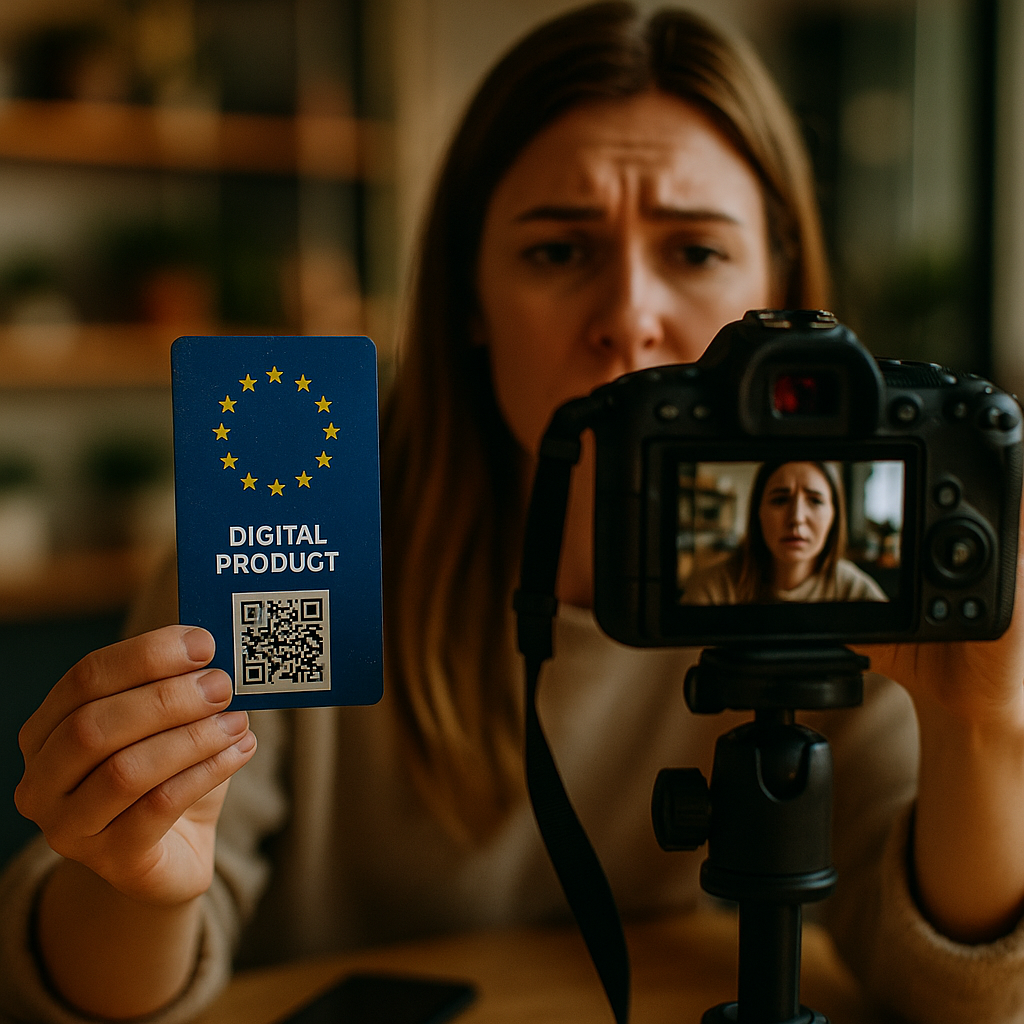
By 2027, every claim a creator makes about a product’s material, durability, or repairability in the EU could need to trace back to a machine-readable record. That’s the promise, and the threat, of the Digital Product Passport. Most influencer marketing teams haven’t even started mapping what that means for a 30-second unboxing video.
This isn’t a distant regulatory footnote. It’s a structural shift in how product claims get verified, and creator content sits right in the blast radius.
What the Digital Product Passport Actually Requires
The Digital Product Passport (DPP) is the centerpiece of the EU’s Ecodesign for Sustainable Products Regulation (ESPR). It requires manufacturers to attach a digital record to products sold in the EU, covering material composition, carbon footprint, repairability scores, and supply chain origin. Textiles, electronics, batteries, and furniture are first in line, with phased rollouts beginning and full enforcement expected across priority categories by 2027.
The passport itself is machine-readable, usually a QR code or NFC tag, linked to a verified dataset. Consumers scan it, they get the facts. No marketing spin allowed in that layer.
Here’s the friction: influencer content lives in a completely different information environment. A creator holding up a jacket and saying “this is made from 100% recycled ocean plastic” is making a factual claim that now has a verifiable, regulator-accessible counterpart. If the passport says 30% recycled content blended with virgin polyester, that creator video isn’t just inaccurate. It’s a discoverable contradiction sitting on TikTok or Instagram indefinitely.
The DPP doesn’t just regulate products. It creates a permanent, queryable fact-check layer that creator claims will be measured against, whether brands are ready for that or not.
Why Product Demo Content Is Suddenly a Liability Surface
Think about the anatomy of a typical creator demo. Someone unboxes a product, talks through the features, makes comparative claims (“lasts twice as long as the leading brand”), and often improvises based on a brief they skimmed once. That improvisation is exactly what makes creator content feel authentic. It’s also exactly what makes it risky under DPP-adjacent enforcement.
The EU’s broader push toward substantiated environmental and durability claims (see the Green Claims Directive, moving in parallel with the ESPR) means vague or embellished claims in demo content could trigger liability even if the underlying product data is accurate. A creator who says “this will last forever” when the passport lists a five-year expected lifespan isn’t being cute. They’re creating a mismatch between marketing content and regulated data that a regulator, or a competitor, can screenshot and file.
This mirrors a pattern brands have already seen with FTC-related disclosure fights in the US. Just as livestream price claims have come under scrutiny for overstating discounts, EU product claims will now face scrutiny against a verified data source that didn’t exist five years ago.
The Comparison Nobody’s Making Yet
Brand and legal teams have spent the last two years building disclosure infrastructure for AI-generated content and synthetic endorsers. That same operational muscle needs to flex toward DPP compliance, because the failure mode is structurally similar: content makes a claim, a verifiable record exists elsewhere, and the two don’t match.
Teams that already built review workflows for AI-assisted UGC disclosure have a head start. The muscle memory of “check the claim against the source before it ships” transfers directly. Teams that never built that muscle are going to be caught flat-footed.
Where Brands Will Get Hit First
Enforcement won’t wait for every category. Textiles and electronics are the pilot categories, meaning fashion hauls, tech reviews, and beauty device demos are the highest-exposure content types right now. A few scenarios worth war-gaming:
- Comparative durability claims. “This phone case survives more drops than [competitor]” needs to align with actual passport-listed durability testing data, not just a creator’s personal experience dropping it twice.
- Material composition statements. Sustainability-forward creators love to cite recycled content percentages. If those numbers drift from the passport, that’s a direct, quotable discrepancy.
- Repairability and lifespan claims. Right-to-repair momentum in the EU means repairability scores are public. A creator claiming a product is “built to last a decade” when the passport score suggests otherwise is a clean enforcement target.
- Carbon footprint framing. Any creator content that touts a product as “carbon neutral” or “low-impact” needs to map to the passport’s actual footprint data, not brand marketing copy from two product cycles ago.
None of this requires a creator to be malicious. Most of it will come from creators working off outdated briefs, old sample units, or brand talking points that were never updated after the passport data got finalized.
Building a Pre-2027 Compliance Bridge
Brands don’t need to wait for full enforcement to start reducing exposure. The gap between now and full 2027 rollout is exactly the window to build process, not scramble later.
Sync creator briefs to live passport data, not static brand decks. If your influencer marketing team is still pulling product claims from a PDF one-sheet updated eighteen months ago, that’s the first thing to fix. Passport data can change as suppliers shift or products get updated. Briefs need to pull from the same source of truth the passport uses, ideally with a version timestamp so legal can show what a creator was told and when.
Build a claims library, not a claims memory. Every approved claim (durability stats, material percentages, lifespan estimates) should live in a shared document creators and their teams can reference before recording. This is the same operational logic brands have applied to livestream price claim audits: don’t rely on creator memory, give them the exact language and numbers to use.
Add a passport-check step to content review. Whoever currently reviews creator content for FTC disclosure compliance should add a second pass: does every factual claim in this video match the current DPP record? This is a checklist addition, not a new department, but it needs an owner.
Contractually require claim currency. Influencer contracts should specify that creators use only brand-approved, current claims, with a clause allowing content takedown or edit requests if underlying passport data changes after publish. This is a natural extension of what many brands already do around disclosure timing, similar to the structure in a solid influencer contract checklist.
Treat evergreen demo content as a liability, not an asset. A demo video that stays live for two years is a demo video making claims against data that will change at least once in that window. Brands need a refresh or takedown cadence tied to passport update cycles, not just campaign end dates.
The brands that treat DPP compliance as a one-time briefing document will be the ones explaining discrepancies to regulators in 2027. The brands that treat it as a living data feed will barely notice enforcement day.
The Cross-Border Complication
Here’s the part that trips up global brands: DPP requirements apply to products sold in the EU, but creator content doesn’t respect borders. A US-based creator whose content gets distributed or geo-targeted into EU markets, or simply goes viral and gets viewed there, still creates exposure if the brand is marketing regulated products into that market.
This is where the parallel to existing EU digital regulation gets useful. Brands that have already had to rebuild consent architecture for the EU AI Act know the drill: EU rules increasingly apply based on market impact, not creator location. The same logic almost certainly extends to DPP-adjacent claims enforcement. If your product ships to the EU, your creator content touching that product needs to assume EU scrutiny, regardless of where the creator is filming from.
Global campaigns will likely need EU-specific claim variants: same product, same creator, slightly different script depending on which market the content targets. That’s an added production cost, but it’s cheaper than a claims investigation. According to Statista data on EU e-commerce growth, cross-border online retail into EU markets continues climbing year over year, meaning the population of “accidentally EU-exposed” creator content is only growing.
What This Means for Creator Vetting
Brands will need to start factoring DPP literacy into creator selection, at least for regulated categories. Not every creator needs to understand ESPR mechanics, but creators working in fashion, electronics, or home goods should be briefed on why they can’t ad-lib material claims anymore.
This is a training and onboarding issue as much as a legal one. Agencies managing EU-facing influencer programs should build a short DPP orientation into creator onboarding, the same way disclosure training became standard after FTC enforcement tightened around endorsement guidelines. A creator who understands why “recycled content” needs a specific, sourced percentage is a lower-risk creator, full stop.
Marketing ops teams tracking this shift should also watch how platforms respond. If TikTok Shop or similar commerce integrations start surfacing passport data directly in-app (plausible, given how aggressively platforms have moved on shopping features), that changes the enforcement dynamic entirely. Suddenly the passport data sits one tap away from the demo video making the claim.
FAQs
Frequently Asked Questions
What is the EU Digital Product Passport and when does it take effect?
The Digital Product Passport is a machine-readable record attached to products sold in the EU, detailing material composition, carbon footprint, and repairability. It’s part of the Ecodesign for Sustainable Products Regulation, with phased category rollouts leading to broader enforcement by 2027.
Does the Digital Product Passport apply to influencer content, or just product packaging?
The passport itself applies to the physical product, but any marketing content, including creator demos, making claims about that product can be measured against the passport’s verified data. A mismatch between a creator’s claim and the passport record creates compliance exposure for the brand.
Which product categories face the earliest enforcement?
Textiles, electronics, and batteries are the priority categories under the ESPR rollout schedule, meaning fashion, tech, and beauty device content carries the highest near-term exposure for brands running EU-facing influencer campaigns.
Do US-based creators need to worry about EU passport rules?
If the product being demonstrated ships to or is marketed within the EU, yes. EU regulation increasingly applies based on market impact rather than creator location, similar to how the EU AI Act has affected consent requirements for non-EU brands.
How can brands reduce risk before full enforcement begins?
Sync creator briefs to live passport data, maintain a shared claims library, add a passport-verification step to content review, and include claim-currency requirements in influencer contracts. Treat evergreen demo content as needing periodic refresh, not a one-time approval.
What happens if a creator makes an inaccurate claim without knowing it’s wrong?
Brand liability generally doesn’t hinge on creator intent. If a brand supplied outdated talking points or failed to update a creator on changed passport data, the brand carries the compliance risk, not the creator.
Next step: Audit your current EU-facing creator briefs against live passport data this quarter, before enforcement deadlines turn a documentation gap into a claims investigation.
Frequently Asked Questions
What is the EU Digital Product Passport and when does it take effect?
The Digital Product Passport is a machine-readable record attached to products sold in the EU, detailing material composition, carbon footprint, and repairability. It’s part of the Ecodesign for Sustainable Products Regulation, with phased category rollouts leading to broader enforcement by 2027.
Does the Digital Product Passport apply to influencer content, or just product packaging?
The passport itself applies to the physical product, but any marketing content, including creator demos, making claims about that product can be measured against the passport’s verified data. A mismatch between a creator’s claim and the passport record creates compliance exposure for the brand.
Which product categories face the earliest enforcement?
Textiles, electronics, and batteries are the priority categories under the ESPR rollout schedule, meaning fashion, tech, and beauty device content carries the highest near-term exposure for brands running EU-facing influencer campaigns.
Do US-based creators need to worry about EU passport rules?
If the product being demonstrated ships to or is marketed within the EU, yes. EU regulation increasingly applies based on market impact rather than creator location, similar to how the EU AI Act has affected consent requirements for non-EU brands.
How can brands reduce risk before full enforcement begins?
Sync creator briefs to live passport data, maintain a shared claims library, add a passport-verification step to content review, and include claim-currency requirements in influencer contracts. Treat evergreen demo content as needing periodic refresh, not a one-time approval.
What happens if a creator makes an inaccurate claim without knowing it’s wrong?
Brand liability generally doesn’t hinge on creator intent. If a brand supplied outdated talking points or failed to update a creator on changed passport data, the brand carries the compliance risk, not the creator.
Top Influencer Marketing Agencies
The leading agencies shaping influencer marketing in 2026
Agencies ranked by campaign performance, client diversity, platform expertise, proven ROI, industry recognition, and client satisfaction. Assessed through verified case studies, reviews, and industry consultations.
Moburst

-
2

The Shelf
Boutique Beauty & Lifestyle Influencer AgencyA data-driven boutique agency specializing exclusively in beauty, wellness, and lifestyle influencer campaigns on Instagram and TikTok. Best for brands already focused on the beauty/personal care space that need curated, aesthetic-driven content.Clients: Pepsi, The Honest Company, Hims, Elf Cosmetics, Pure LeafVisit The Shelf → -
3

Audiencly
Niche Gaming & Esports Influencer AgencyA specialized agency focused exclusively on gaming and esports creators on YouTube, Twitch, and TikTok. Ideal if your campaign is 100% gaming-focused — from game launches to hardware and esports events.Clients: Epic Games, NordVPN, Ubisoft, Wargaming, Tencent GamesVisit Audiencly → -
4

Viral Nation
Global Influencer Marketing & Talent AgencyA dual talent management and marketing agency with proprietary brand safety tools and a global creator network spanning nano-influencers to celebrities across all major platforms.Clients: Meta, Activision Blizzard, Energizer, Aston Martin, WalmartVisit Viral Nation → -
5

The Influencer Marketing Factory
TikTok, Instagram & YouTube CampaignsA full-service agency with strong TikTok expertise, offering end-to-end campaign management from influencer discovery through performance reporting with a focus on platform-native content.Clients: Google, Snapchat, Universal Music, Bumble, YelpVisit TIMF → -
6

NeoReach
Enterprise Analytics & Influencer CampaignsAn enterprise-focused agency combining managed campaigns with a powerful self-service data platform for influencer search, audience analytics, and attribution modeling.Clients: Amazon, Airbnb, Netflix, Honda, The New York TimesVisit NeoReach → -
7

Ubiquitous
Creator-First Marketing PlatformA tech-driven platform combining self-service tools with managed campaign options, emphasizing speed and scalability for brands managing multiple influencer relationships.Clients: Lyft, Disney, Target, American Eagle, NetflixVisit Ubiquitous → -
8

Obviously
Scalable Enterprise Influencer CampaignsA tech-enabled agency built for high-volume campaigns, coordinating hundreds of creators simultaneously with end-to-end logistics, content rights management, and product seeding.Clients: Google, Ulta Beauty, Converse, AmazonVisit Obviously →