


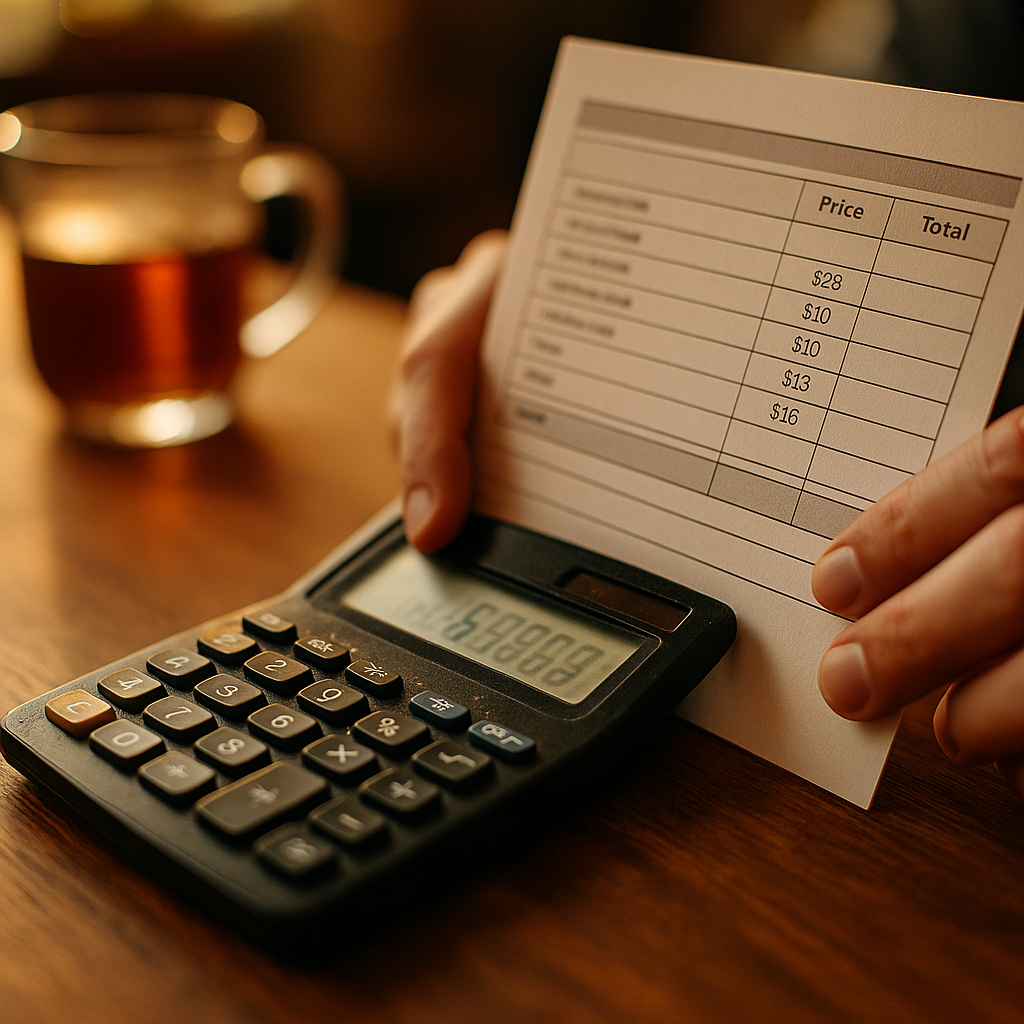
Fifty-eight percent of shoppers say they’ve abandoned a premium purchase because they couldn’t justify the price against a cheaper alternative, according to recent retail behavior research. The price-per-use breakdown format fixes that problem before it happens, turning sticker shock into a math equation your audience solves in your favor. It’s not a new idea. It’s just finally getting the creative treatment it deserves.
Why “Expensive” Is a Framing Problem, Not a Pricing Problem
Every premium brand runs into the same objection: “That’s a lot for a [candle/blender/jacket].” The product isn’t overpriced. It’s under-explained. Shoppers default to sticker comparison because nobody’s shown them a better frame.
Price-per-use math reframes the conversation. A $220 cast-iron pan looks steep next to a $30 nonstick set — until a creator breaks down that it’ll outlast six replacements over ten years, landing at roughly $0.06 per use if you cook daily. Suddenly the “cheap” option looks like the expensive one.
Premium positioning fails when brands ask shoppers to trust the price. It succeeds when brands show shoppers the arithmetic and let them arrive at trust themselves.
This isn’t about tricking people into rationalizing a splurge. It’s about surfacing real cost-per-wear, cost-per-serving, or cost-per-session data that traditional ad formats bury or ignore entirely. Value-conscious doesn’t mean cheap-obsessed. It means math-obsessed. Give them the numbers.
What the Format Actually Looks Like On-Screen
The mechanics are simple, which is exactly why they work. A creator holds up the product, states the price plainly (no dodging it), then overlays a simple on-screen calculation: total price divided by expected uses, divided by lifespan, compared against a cheaper competitor doing the same job over time.
- The anchor shot: product plus price tag, shown without apology in the first three seconds.
- The math overlay: a simple text graphic — price ÷ uses = cost per use — that stays on screen long enough to screenshot.
- The comparison beat: a side-by-side against the “cheap” alternative, showing its true cost once replacements are factored in.
- The verdict: a plain-spoken creator take on whether the math actually holds up. This is where authenticity lives or dies.
Skip any of these four beats and the format collapses into another vague “worth it” testimonial. The math is the content. Everything else is packaging.
The Skincare Brand That Made Its $68 Serum Look Cheap
A mid-size skincare brand briefed a cohort of creators to compare its $68 retinol serum against a $22 drugstore version. The twist: the drugstore serum needed to be reapplied twice as often to get comparable results, and users typically went through three bottles before switching. Per-use math put the “cheap” option at roughly $0.73 per application versus $0.51 for the premium serum, once dosage and frequency were factored in.
That single on-screen calculation, repeated across a dozen creators with slightly different phrasing, drove a documented lift in add-to-cart rate on the brand’s DTC site. Nobody had to say “trust us, it’s worth it.” The math said it.
This is the same principle behind cost breakdown formats that expose manufacturing and material costs — transparency builds trust faster than persuasion copy ever could. Price-per-use is a cousin of that format, just focused on the buyer’s ongoing math instead of the brand’s internal margins.
Where Brands Get the Brief Wrong
Most price-per-use content fails for one of three reasons, and none of them are the creator’s fault. They’re brief failures.
Vague usage assumptions. If the brief says “assume it lasts a while,” the creator will guess, and the math will feel invented because it is invented. Brands need to hand over real data: average number of washes before a garment loses shape, average number of uses before a battery degrades, average bottle life based on serving size. If you don’t have this data, get it before you brief anyone.
Comparisons that feel rigged. Picking the worst possible competitor product to make your own item look good is transparent, and audiences are sharper than brands give them credit for. The comparison has to be fair, or the whole format backfires and reads as manipulative rather than helpful.
No room for creator skepticism. The best price-per-use content lets the creator push back a little. “Okay but I’m not shaving every day, so my math looks different” is more persuasive than blind agreement, because it mirrors the internal debate the shopper is already having. This is the same logic behind briefs that favor casual, unpolished delivery over scripted perfection — the rough edges are what make the math believable.
Building the Brief: What to Hand Creators
A solid price-per-use brief gives creators three inputs and then gets out of the way.
- Realistic usage frequency, ideally sourced from customer data or a support/CX team, not marketing assumptions.
- An honest lifespan estimate, including a range (low-end and high-end user behavior), so the creator can show their math instead of hiding it.
- A fair comparison point — a real competitor product at a real price the target customer would actually consider.
From there, let the creator decide how casual or produced the delivery should be. Some formats call for a whiteboard-style breakdown. Others work better as a quick voiceover over b-roll. The math stays constant; the delivery style should match the platform and the creator’s usual tone. This mirrors the thinking in multi-episode brief structures, where consistency in the core message matters more than consistency in format.
Platform Fit: TikTok Math vs. YouTube Math
Short-form and long-form call for different pacing on this format, and treating them identically wastes the opportunity.
On TikTok, the math overlay needs to land inside the first ten seconds or the algorithm never gives the video a chance to prove its watch time. Think one clean number, not three. Save nuance for the caption. This lines up with strategies covered in watch-time-first briefing approaches, where the hook has to justify the next five seconds before anything else matters.
On YouTube, there’s room to slow down. A dedicated long-form video can walk through the full calculation, invite viewer pushback in the comments, and even update the math based on viewer-supplied usage data in a follow-up video. That kind of layered, evolving content plays well with the structures outlined in mid-funnel long-form video briefs, where depth is the entire point.
Compliance: Don’t Let the Math Become a Claim
Here’s where legal teams should get looped in early, not after the content ships. Price-per-use breakdowns can drift into unsubstantiated claims territory fast, especially when a creator implies performance parity or superiority based on informal math.
The FTC has been explicit that comparative claims need a reasonable basis, and “reasonable basis” doesn’t mean a creator’s gut feeling about how long a product lasts. If the lifespan or usage estimate isn’t backed by testing, warranty data, or documented customer behavior, it shouldn’t appear on screen as fact. Frame it as an estimate, disclose the source, and keep the sponsorship disclosure clear per platform guidelines from Meta and TikTok.
This is also where the format overlaps with broader trust-building content strategies. Brands running product graveyard formats or taste-test ranking series already understand that credibility comes from showing the unflattering data too. A price-per-use breakdown that only ever favors the sponsor stops being informative and starts looking like an ad wearing a calculator costume.
Measuring Whether the Math Actually Moved Anyone
Views and likes won’t tell you if the format worked. Watch for three signals instead: comment sentiment around price (“okay that actually makes sense” is the tell), add-to-cart or click-through lift on content tagged with this format versus standard product demos, and repeat mentions of the specific number in later user-generated content. If shoppers start repeating your cost-per-use figure back to you in reviews or DMs, the math has become part of your brand vocabulary. That’s the format working exactly as intended.
Tools like Sprout Social and platform-native analytics can help isolate performance by content theme, so brands aren’t guessing whether the “math” angle is outperforming standard testimonial content.
Next step: pull real usage and lifespan data from your CX or warranty team this week, hand it to two or three creators with a fair competitor comparison, and test the format on one platform before scaling it. The math either holds up or it doesn’t — let the pilot tell you which.
FAQs
What is the price-per-use breakdown format?
It’s a creator content format that divides a product’s price by its expected number of uses or lifespan, showing on-screen math that justifies a premium price against cheaper alternatives.
Which products benefit most from this format?
Durable goods, skincare and beauty products with dosage differences, appliances, and apparel work best, since they all have clear usage frequency and lifespan data to build the math around.
How do I avoid FTC issues with comparative math claims?
Only use lifespan or usage figures backed by real data — testing, warranty records, or documented customer behavior — and clearly disclose sources along with standard sponsorship disclosures per FTC guidance.
Does this format work better on TikTok or YouTube?
TikTok favors a single, fast, clean calculation delivered in the first few seconds; YouTube allows for a fuller breakdown with room for creator skepticism and viewer follow-up.
How do I know if the format is actually driving sales?
Track add-to-cart and click-through rates on content tagged with this format specifically, watch comment sentiment around price objections, and note whether shoppers start repeating your cost-per-use figure in reviews.
Top Influencer Marketing Agencies
The leading agencies shaping influencer marketing in 2026
Agencies ranked by campaign performance, client diversity, platform expertise, proven ROI, industry recognition, and client satisfaction. Assessed through verified case studies, reviews, and industry consultations.
Moburst

-
2

The Shelf
Boutique Beauty & Lifestyle Influencer AgencyA data-driven boutique agency specializing exclusively in beauty, wellness, and lifestyle influencer campaigns on Instagram and TikTok. Best for brands already focused on the beauty/personal care space that need curated, aesthetic-driven content.Clients: Pepsi, The Honest Company, Hims, Elf Cosmetics, Pure LeafVisit The Shelf → -
3

Audiencly
Niche Gaming & Esports Influencer AgencyA specialized agency focused exclusively on gaming and esports creators on YouTube, Twitch, and TikTok. Ideal if your campaign is 100% gaming-focused — from game launches to hardware and esports events.Clients: Epic Games, NordVPN, Ubisoft, Wargaming, Tencent GamesVisit Audiencly → -
4

Viral Nation
Global Influencer Marketing & Talent AgencyA dual talent management and marketing agency with proprietary brand safety tools and a global creator network spanning nano-influencers to celebrities across all major platforms.Clients: Meta, Activision Blizzard, Energizer, Aston Martin, WalmartVisit Viral Nation → -
5

The Influencer Marketing Factory
TikTok, Instagram & YouTube CampaignsA full-service agency with strong TikTok expertise, offering end-to-end campaign management from influencer discovery through performance reporting with a focus on platform-native content.Clients: Google, Snapchat, Universal Music, Bumble, YelpVisit TIMF → -
6

NeoReach
Enterprise Analytics & Influencer CampaignsAn enterprise-focused agency combining managed campaigns with a powerful self-service data platform for influencer search, audience analytics, and attribution modeling.Clients: Amazon, Airbnb, Netflix, Honda, The New York TimesVisit NeoReach → -
7

Ubiquitous
Creator-First Marketing PlatformA tech-driven platform combining self-service tools with managed campaign options, emphasizing speed and scalability for brands managing multiple influencer relationships.Clients: Lyft, Disney, Target, American Eagle, NetflixVisit Ubiquitous → -
8

Obviously
Scalable Enterprise Influencer CampaignsA tech-enabled agency built for high-volume campaigns, coordinating hundreds of creators simultaneously with end-to-end logistics, content rights management, and product seeding.Clients: Google, Ulta Beauty, Converse, AmazonVisit Obviously →