


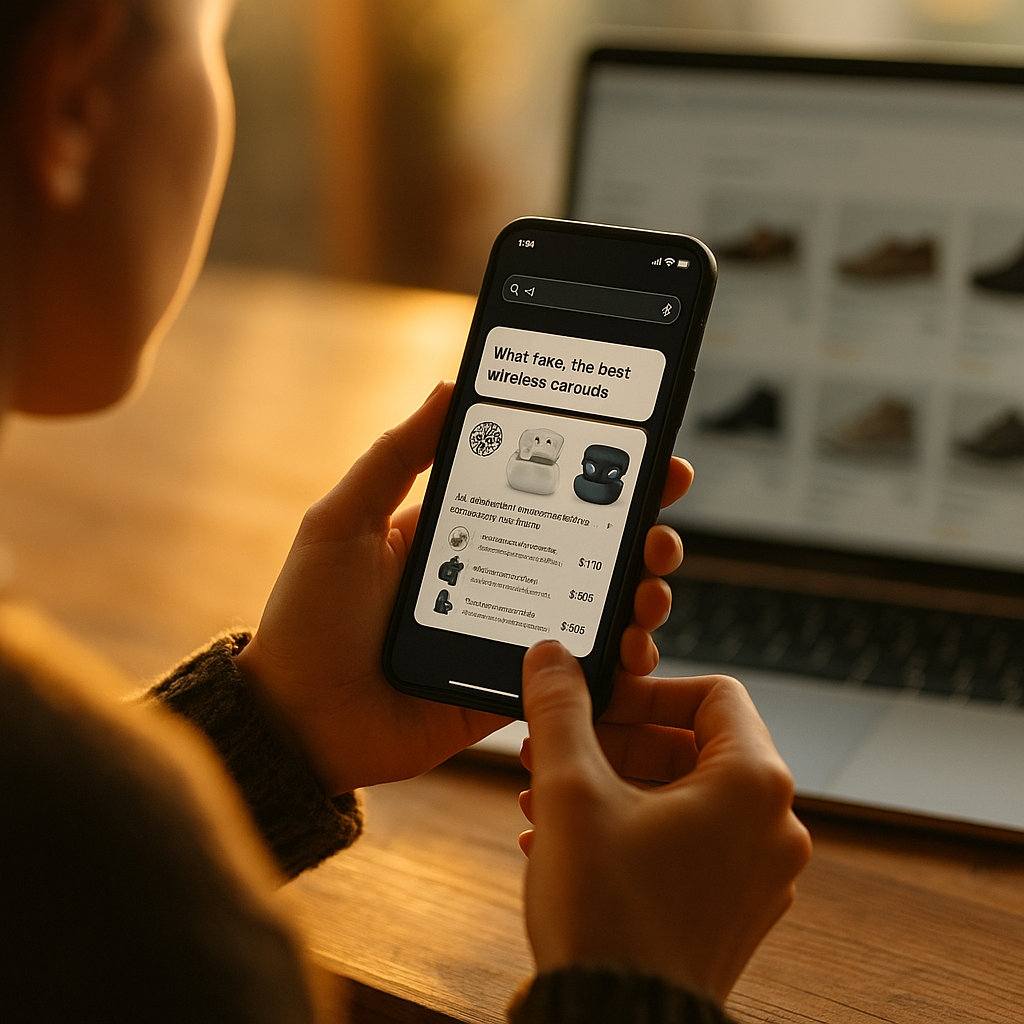
Nearly 60% of product searches now end inside an AI-generated answer, not a scroll of blue links. If your brand isn’t showing up in that answer, you don’t have a visibility problem — you have a revenue problem. AI answer engine recommendations are quietly rerouting the entire consumer journey, and most marketing teams are still optimizing for a funnel that no longer exists.
This isn’t a future-state warning. It’s already happening in category after category: skincare, kitchen gadgets, running shoes, baby gear. Consumers ask ChatGPT, Perplexity, or Google’s AI Overviews “what’s the best X for Y,” and the answer engine hands them two or three names. No comparison shopping. No ten open tabs. Just a shortlist, generated in seconds, that most shoppers treat as trustworthy default advice.
The Funnel Didn’t Shrink, It Got Reordered
Marketers love to say the funnel is “collapsing.” That’s not quite right. Awareness, consideration, and decision still happen, but they’re compressing into a single AI-mediated moment rather than unfolding across a week of touchpoints. A shopper who used to see a Google ad, read three blog reviews, watch a YouTube unboxing, and finally check Reddit now might do all of that implicitly in one prompt to an LLM that’s already synthesized those sources for them.
We’ve covered this shift before: the marketing funnel is dead in its classic linear form, and what’s replaced it looks more like a series of AI-arbitrated checkpoints. The brands winning right now aren’t the ones with the biggest media budgets. They’re the ones whose products keep getting cited by the models doing the recommending.
If an AI answer engine never mentions your product by name, you’ve effectively been delisted from consideration — regardless of how strong your paid search or social presence looks.
Why Answer Engines Recommend What They Recommend
Large language models don’t “know” your product. They infer it from patterns across training data and, increasingly, real-time retrieval from the web. That means the inputs that shape an AI recommendation look different from classic SEO ranking factors. Structured product data matters. Third-party review volume matters more. And — this is the part that should worry CMOs — independent creator content and UGC seem to carry disproportionate weight in what these systems surface as “trustworthy.”
That tracks with what we’ve seen in AI-mediated product discovery research: models tend to favor sources that read as unbiased, specific, and corroborated across multiple independent mentions. A single glowing brand-owned landing page won’t move the needle. Fifty scattered, specific mentions from creators, review sites, and forums will.
Consider a mid-size cookware brand. Its owned content is polished but repeats the same three claims everywhere. Meanwhile, a competitor gets organically mentioned in dozens of creator videos, Reddit threads, and niche blog comparisons, each with slightly different angles — “great for induction,” “holds heat evenly,” “good starter set.” The second brand wins the AI citation almost every time, even with a smaller ad budget. Consistency of message across owned channels is old-school SEO thinking. Answer engines reward breadth and specificity of independent corroboration instead.
What This Means for Budget Allocation
If citations are the new currency, then the spend that generates citations deserves reprioritization. That’s a hard sell internally when performance marketing teams are still measured on last-click ROAS. But the math is starting to shift. Creator spend surpassing $12 billion annually isn’t just about reach anymore — it’s about generating the kind of distributed, third-party content that AI systems treat as credible evidence.
Brands should be asking a different budget question: not “what’s our CPM,” but “how many independent, specific mentions of our product exist across the open web, and who’s creating them?” That’s a fundamentally different KPI, and most media plans aren’t built to track it yet.
Zero-Click Isn’t a Search Problem Anymore, It’s a Brand Problem
The zero-click search conversation used to live entirely in the SEO team’s lane. That’s no longer accurate. When zero-click search extends from informational queries into transactional, product-recommendation queries, it becomes a brand and demand-gen problem, not just a technical SEO one.
Think about the practical implication: a consumer asks an AI assistant to recommend a protein powder for muscle recovery. The assistant names three brands. The consumer buys one of those three, often without ever visiting a website through an organic search click. Your entire top-of-funnel content strategy, built around driving traffic to owned pages, just got bypassed. The traffic never happens. The decision happens inside someone else’s interface.
This is why generative engine optimization deserves its own line item, not a bullet point buried inside the SEO team’s roadmap. GEO and traditional SEO overlap, but they optimize for different outcomes: one drives clicks, the other drives citations. Treating them as the same discipline guarantees you’ll underinvest in the one that’s currently reshaping discovery.
Operational Reality: Who Owns This Inside the Org?
Here’s the uncomfortable truth nobody wants to say out loud in a Monday planning meeting: most marketing orgs don’t have a clear owner for AI answer engine visibility. It falls between SEO, PR, influencer marketing, and sometimes product. That ambiguity is costly.
A workable model splits ownership three ways:
- SEO/content teams handle structured data, schema markup, and technical crawlability so AI systems can parse product information accurately.
- Influencer and creator teams generate the distributed, independent-sounding mentions that models weight heavily — this ties directly into sensory, specific UGC that outperforms studio-polished brand content in exactly the categories where AI recommendations matter most.
- Comms/PR teams manage the earned media and review coverage that feeds retrieval-augmented generation systems their “trusted source” signals.
None of this works if these three teams operate in silos with separate KPIs. That’s the operational fix most brands need before they need a new tool.
Trust, Disclosure, and the Compliance Angle Brands Keep Missing
There’s a regulatory dimension here that deserves more attention than it’s getting. If an AI answer engine recommends your product based partly on creator content, and that content wasn’t properly disclosed as sponsored, you’re exposed to the same FTC disclosure requirements that already govern influencer marketing generally. The wrinkle: AI systems often strip attribution and context when they summarize sources. A disclosed sponsored post might get cited by an AI engine in a way that reads as an independent recommendation to the end user, even though the underlying content was compensated.
That’s not a loophole brands should exploit. It’s a risk they need to manage. Regulators are paying attention to how AI-generated summaries handle sponsored content, and brands that proactively disclose AI limitations tend to build more durable consumer trust than those hoping nobody notices the gap. Given that 61% of marketers already distrust AI-powered labeling in their own tools, assume consumer skepticism runs at least as high.
Compliance teams that only monitor influencer disclosure on-platform are missing half the risk surface — AI answer engines now redistribute that content into contexts where the original disclosure disappears.
Measuring What Actually Moves the Needle
Traditional funnel metrics — impressions, click-through rate, session duration — don’t capture whether you’re winning AI recommendation slots. A few practical measurement shifts worth adopting now:
Track citation frequency. Run consistent prompts across ChatGPT, Perplexity, Gemini, and Google AI Overviews on a recurring schedule. Log whether your brand gets named, in what position, and alongside which competitors. This is manual right now for most teams, but tooling is catching up fast.
Audit source diversity. Map which domains and creators are actually feeding the citations you’re getting. If it’s all owned media, that’s fragile — a single algorithm shift could wipe you out. If it’s spread across creators, review sites, and forums, that’s a more durable position, similar to how AI-curated answers have become a reputation battleground that rewards distributed credibility over centralized control.
Watch attention quality, not just volume. The same logic that says active attention beats watch time applies here — a brand mention buried in a low-engagement listicle carries less weight in training and retrieval patterns than one embedded in content people actually engage with, comment on, and share.
None of this replaces conversion tracking. But it adds a layer most dashboards currently lack: visibility into whether you’re even in the consideration set before a click ever happens.
What to Do About It This Quarter
Don’t wait for a perfect measurement framework before acting. Start with an audit: run 20-30 realistic customer queries through the major AI answer engines and see where you land. Then trace back what’s feeding those results. Fix structured data gaps immediately — that’s the cheapest lever. Redirect a portion of creator budget toward earned, specific, review-style content rather than polished brand integrations. And get compliance and influencer teams talking to each other about how disclosed content behaves once an AI engine strips the context away.
eMarketer and Statista both track emerging data on AI-driven discovery behavior worth monitoring quarterly, since this space is moving faster than most annual planning cycles can accommodate.
Frequently Asked Questions
What are AI answer engine recommendations?
They’re the product or brand suggestions generated by AI systems like ChatGPT, Perplexity, or Google AI Overviews when a user asks a question about what to buy. These recommendations synthesize web content into a short, direct answer rather than a list of links.
How is this different from traditional SEO?
Traditional SEO optimizes for ranking in a list of clickable results. AI answer engine optimization (often called GEO) optimizes for being cited by name inside a generated answer, where there’s no click involved and often no visible ranking at all.
Why do creator mentions matter more than owned brand content for AI visibility?
AI systems weight independent, corroborated sources heavily because they read as less biased. A brand’s own website repeating the same claims carries less signal than dozens of distinct creator or reviewer mentions saying similar things in different ways.
Does this affect paid media strategy?
Yes. If consumers get answers without clicking through to a website, paid search and top-of-funnel display spend built around driving traffic needs to shift toward generating the citations and third-party mentions AI systems actually pull from.
What compliance risks come with AI-summarized creator content?
When AI engines summarize sponsored creator content, disclosure context often gets stripped, which can make compensated recommendations appear organic to the end user. Brands should monitor how their sponsored content gets redistributed and maintain clear disclosure practices upstream.
How can a brand measure its AI recommendation visibility?
Run consistent, realistic purchase-intent queries across major AI platforms on a recurring basis, log whether and where your brand appears, and audit which sources are feeding those citations to identify strengths and gaps.
Next step: Run the 20-query audit this week, across the AI platforms your customers actually use, and treat the results as a baseline you revisit every quarter, not a one-time report.
Frequently Asked Questions
What are AI answer engine recommendations?
They’re the product or brand suggestions generated by AI systems like ChatGPT, Perplexity, or Google AI Overviews when a user asks a question about what to buy. These recommendations synthesize web content into a short, direct answer rather than a list of links.
How is this different from traditional SEO?
Traditional SEO optimizes for ranking in a list of clickable results. AI answer engine optimization (often called GEO) optimizes for being cited by name inside a generated answer, where there’s no click involved and often no visible ranking at all.
Why do creator mentions matter more than owned brand content for AI visibility?
AI systems weight independent, corroborated sources heavily because they read as less biased. A brand’s own website repeating the same claims carries less signal than dozens of distinct creator or reviewer mentions saying similar things in different ways.
Does this affect paid media strategy?
Yes. If consumers get answers without clicking through to a website, paid search and top-of-funnel display spend built around driving traffic needs to shift toward generating the citations and third-party mentions AI systems actually pull from.
What compliance risks come with AI-summarized creator content?
When AI engines summarize sponsored creator content, disclosure context often gets stripped, which can make compensated recommendations appear organic to the end user. Brands should monitor how their sponsored content gets redistributed and maintain clear disclosure practices upstream.
How can a brand measure its AI recommendation visibility?
Run consistent, realistic purchase-intent queries across major AI platforms on a recurring basis, log whether and where your brand appears, and audit which sources are feeding those citations to identify strengths and gaps.
Top Influencer Marketing Agencies
The leading agencies shaping influencer marketing in 2026
Agencies ranked by campaign performance, client diversity, platform expertise, proven ROI, industry recognition, and client satisfaction. Assessed through verified case studies, reviews, and industry consultations.
Moburst

-
2

The Shelf
Boutique Beauty & Lifestyle Influencer AgencyA data-driven boutique agency specializing exclusively in beauty, wellness, and lifestyle influencer campaigns on Instagram and TikTok. Best for brands already focused on the beauty/personal care space that need curated, aesthetic-driven content.Clients: Pepsi, The Honest Company, Hims, Elf Cosmetics, Pure LeafVisit The Shelf → -
3

Audiencly
Niche Gaming & Esports Influencer AgencyA specialized agency focused exclusively on gaming and esports creators on YouTube, Twitch, and TikTok. Ideal if your campaign is 100% gaming-focused — from game launches to hardware and esports events.Clients: Epic Games, NordVPN, Ubisoft, Wargaming, Tencent GamesVisit Audiencly → -
4

Viral Nation
Global Influencer Marketing & Talent AgencyA dual talent management and marketing agency with proprietary brand safety tools and a global creator network spanning nano-influencers to celebrities across all major platforms.Clients: Meta, Activision Blizzard, Energizer, Aston Martin, WalmartVisit Viral Nation → -
5

The Influencer Marketing Factory
TikTok, Instagram & YouTube CampaignsA full-service agency with strong TikTok expertise, offering end-to-end campaign management from influencer discovery through performance reporting with a focus on platform-native content.Clients: Google, Snapchat, Universal Music, Bumble, YelpVisit TIMF → -
6

NeoReach
Enterprise Analytics & Influencer CampaignsAn enterprise-focused agency combining managed campaigns with a powerful self-service data platform for influencer search, audience analytics, and attribution modeling.Clients: Amazon, Airbnb, Netflix, Honda, The New York TimesVisit NeoReach → -
7

Ubiquitous
Creator-First Marketing PlatformA tech-driven platform combining self-service tools with managed campaign options, emphasizing speed and scalability for brands managing multiple influencer relationships.Clients: Lyft, Disney, Target, American Eagle, NetflixVisit Ubiquitous → -
8

Obviously
Scalable Enterprise Influencer CampaignsA tech-enabled agency built for high-volume campaigns, coordinating hundreds of creators simultaneously with end-to-end logistics, content rights management, and product seeding.Clients: Google, Ulta Beauty, Converse, AmazonVisit Obviously →