


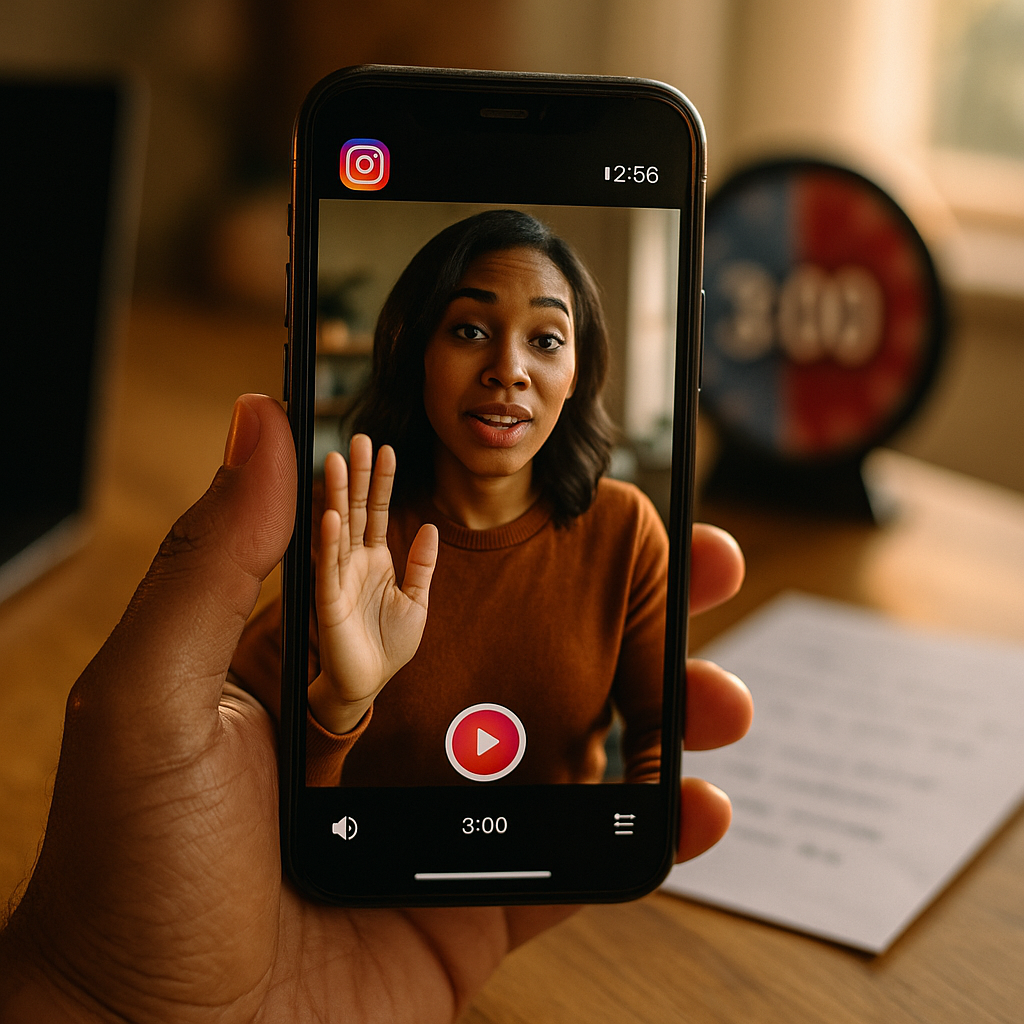
Three minutes. That’s how long a Reel can now run on Instagram, nearly triple the old ninety-second ceiling. For brands still cutting content to fit yesterday’s constraints, that’s dead weight sitting on your content calendar. The Instagram three-minute Reels limit isn’t just a spec update. It’s a structural invitation to rethink how branded video earns attention, and most teams are about to waste it by stretching fifteen-second ideas into three-minute filler.
Why Meta Extended the Runway
Meta didn’t bump Reels to three minutes out of generosity. It did it because watch time is the currency the algorithm trades in, and longer-form vertical video keeps users on the app longer when it’s paced well. YouTube Shorts already runs up to three minutes. TikTok allows uploads well past ten. Instagram was the outlier with its short ceiling, and Meta closed that gap to stop losing creators (and ad dollars) to competitors offering more room to breathe.
For brands, this changes the math on what a Reel can accomplish. A ninety-second cap forced everything into hook-punchline-CTA. Three minutes allows for actual narrative arcs: product demos with context, founder stories with texture, tutorials that don’t feel rushed. But — and this matters — the algorithm still rewards completion rate over raw length. A longer runtime with a saggy middle will tank your distribution faster than a tight sixty-second cut ever would.
Extra runtime is not extra permission to ramble. It’s extra rope, and the algorithm will use it to hang low-retention content.
What Actually Changed, Technically Speaking
The update raises maximum Reels upload and recording length to three minutes across most markets, aligning it with in-app camera limits Meta has been testing. Existing longer videos previously uploaded as feed posts can now qualify as Reels, which matters for distribution since Reels get algorithmic placement in the dedicated Reels tab and Explore that regular feed video doesn’t.
A few operational notes worth flagging for your production team:
- Aspect ratio expectations haven’t changed — vertical 9:16 still performs best in the Reels surface.
- Captions and text overlays remain critical since a large share of viewers watch muted, especially in the first ten seconds.
- Longer Reels still get chopped into preview thumbnails, so your opening frame needs to work as a static image, not just a motion hook.
- Meta’s Meta for Business documentation confirms the extended limit rolled into ads manager specs too, meaning paid amplification now supports the same runtime as organic.
That last point is the one media buyers should circle. If your paid creative specs still cap at ninety seconds, you’re leaving performance on the table for consideration and retargeting campaigns where longer storytelling tends to lift completion-based bidding efficiency.
The Retention Cliff Nobody Talks About
Here’s the uncomfortable truth: most branded video sees a retention cliff around the fifteen-second mark, regardless of total length. Sprout Social and other platform analytics providers have long documented this pattern in short-form video benchmarks — audiences decide fast, and they decide based on the first few seconds, not the promise of what’s coming.
Extending your runtime to three minutes doesn’t fix that cliff. It just gives you more real estate on the other side of it, for the viewers who survive. So the real question brands need to answer isn’t “what do we do with three minutes?” It’s “how do we get enough people past second fifteen to make three minutes worth producing?”
This is where a lot of teams get the sequencing backwards. They write a three-act script, front-load brand messaging, and treat the hook as an afterthought. Flip it. Build the hook first, test it in isolation, and only then decide how much runway the story deserves. Our brand playbook for hooks and pacing covers this in more depth if you’re rebuilding briefs from scratch.
Structuring a Longer Reel: A Practical Framework
Think of a three-minute Reel less like a short ad and more like a compressed episode. Here’s a structure that’s held up across category tests we’ve tracked from beauty, DTC, and B2B SaaS creators:
- 0–3 seconds: Visual or verbal pattern interrupt. No logo, no brand name yet. Just the thing that stops the scroll.
- 3–15 seconds: Establish the stakes or the promise. What problem, what payoff, what curiosity gap keeps them watching.
- 15 seconds–2 minutes: The meat. Demo, story, tutorial, behind-the-scenes. This is where three minutes actually earns its keep — enough space for a real before/after, a multi-step process, or a genuine narrative beat.
- Final 20–30 seconds: Payoff plus CTA. Resist the urge to sell early; the algorithm and the audience both punish premature pitches.
Notice how little of that structure is brand-forward in the traditional sense. That’s deliberate. Instagram’s own signals increasingly favor content that behaves like creator content rather than polished advertising, a pattern we’ve tracked in how the platform’s algorithm favors raw Reels over polished ads. Longer runtime doesn’t mean higher production value is mandatory. It often means the opposite performs better.
Where the Extra Time Actually Pays Off
Not every campaign type benefits equally from the longer format. Here’s where the added runway tends to move metrics:
- Product education and demos — SaaS and DTC brands showing multi-step setups or before/after transformations finally have room to show the full process instead of cutting to a jump-scare result.
- Founder-led storytelling — origin stories, “why we built this” content, and Q&A-style videos benefit from breathing room that a ninety-second cap never allowed.
- Creator partnership content — influencers doing genuine try-on hauls, reviews, or tutorials can now post native-length content as Reels instead of splitting it awkwardly across a feed video and a Reel teaser.
- Shoppable content — longer format pairs well with product tagging, since viewers who stick around for two-plus minutes are demonstrating real purchase intent. This connects directly to how the platform’s tagging behavior affects reach, something we broke down in Instagram’s shopping-tagged Reels shift.
Where it doesn’t help: quick awareness plays, meme-style content, or anything where the entire value proposition is the punchline. Forcing those into a longer runtime just dilutes the hit rate.
Brief Language Your Team Needs to Update
If your creator briefs still specify “15-30 second Reel, vertical, trending audio,” they’re already outdated. Update briefs to include target watch-through rate as a KPI, not just views or likes. Ask creators to submit a completion rate benchmark from recent longer-form posts if you’re testing them for the first time in this format.
Also worth building into contracts: a clause on revision rights if a longer video underperforms on retention within the first 48 hours. Agencies running always-on influencer programs are increasingly treating retention data the way TV buyers once treated Nielsen ratings — as the negotiating baseline for renewal.
For teams managing whitelisted creator content through Meta’s business tools, this is also a good moment to revisit your creator whitelisting setup, since paid amplification specs now match the extended organic runtime and your ad creative library may need a refresh to match.
Risk and Compliance Notes
Longer runtime means more room for disclosure to get buried or forgotten. If a three-minute Reel includes a paid partnership, the disclosure needs to stay visible and clear throughout, not just flashed in the first three seconds and abandoned. The FTC’s endorsement guidance hasn’t changed with the format update, but longer content gives more opportunity for a disclosure to feel like an afterthought — which is exactly the kind of thing regulators flag first.
Brands running countdown promotions, restock announcements, or urgency-driven creative should also revisit pacing guidance from our countdown timer compliance playbook — the core principles about not manufacturing false urgency apply just as much to Instagram’s longer format as they do to TikTok Shop.
How This Compares Across Platforms
Instagram catching up to three minutes doesn’t mean every platform’s short-form video behaves the same. TikTok’s algorithm still rewards different pacing signals than Instagram’s, and brands running identical cuts across both platforms are usually leaving performance behind on one or the other. We’ve covered why a single creative asset rarely wins on both platforms in Instagram Reels vs. TikTok brief strategy, and that gap gets wider, not narrower, as runtime options expand.
YouTube Shorts, similarly capped at three minutes, has its own viewing behavior quirks — a meaningful share of Shorts traffic comes from users watching at accelerated playback speeds, something covered in our breakdown of redesigning hooks for 2x speed viewing. Instagram doesn’t have that same playback-speed dynamic at scale yet, but it’s worth monitoring as Meta continues to mirror YouTube’s feature set.
Industry benchmarking from firms like eMarketer continues to show short-form video commanding the largest share of social ad spend growth, so getting format strategy right isn’t a nice-to-have. It’s where budget is already moving.
Testing Before You Scale
Don’t roll out three-minute Reels across every campaign at once. Pick one active creator partnership or one product line, produce both a ninety-second and a three-minute version of the same core content, and run them concurrently for two weeks. Compare completion rate, not just reach. Reach will often favor the shorter cut early on simply because Instagram’s distribution algorithm still defaults to safer bets with unproven longer content from a given account.
Track this in your reporting dashboard alongside existing engagement metrics from tools like Sprout Social or your platform of choice, and give it at least three full posting cycles before drawing conclusions. Algorithmic learning periods on new format types tend to run longer than teams expect.
Frequently Asked Questions
What is the current maximum length for an Instagram Reel?
Instagram Reels can now run up to three minutes, up from the previous ninety-second limit. This applies to both organic uploads and Reels-formatted ad creative through Meta’s ads manager.
Does a longer Reel length hurt reach if most viewers drop off early?
Not directly, but low completion rate on a longer video will reduce future distribution more than the same drop-off would on a shorter video, since the algorithm weighs watch-through percentage heavily in ranking decisions.
Should brands switch all content to three-minute Reels?
No. Quick awareness content, meme-style posts, and single-punchline creative generally perform better short. Reserve longer runtime for product demos, founder storytelling, tutorials, and creator content with genuine narrative value.
How does this affect paid amplification and whitelisting?
Meta’s ad specs now support the same three-minute runtime as organic Reels, so brands using creator whitelisting or boosted posts can run longer-form creative without reformatting for ad delivery.
Does the FTC treat disclosure differently for longer branded videos?
Disclosure guidance itself hasn’t changed, but longer runtime increases the risk of a disclosure appearing only briefly and getting lost. Brands should keep partnership disclosures visible throughout the video, not just in the opening seconds.
The three-minute ceiling rewards brands willing to test pacing rigorously, not the ones who simply pad existing scripts to fill new space. Run the ninety-second-versus-three-minute test on one live campaign this quarter before committing production budget across the board.
Frequently Asked Questions
What is the current maximum length for an Instagram Reel?
Instagram Reels can now run up to three minutes, up from the previous ninety-second limit. This applies to both organic uploads and Reels-formatted ad creative through Meta’s ads manager.
Does a longer Reel length hurt reach if most viewers drop off early?
Not directly, but low completion rate on a longer video will reduce future distribution more than the same drop-off would on a shorter video, since the algorithm weighs watch-through percentage heavily in ranking decisions.
Should brands switch all content to three-minute Reels?
No. Quick awareness content, meme-style posts, and single-punchline creative generally perform better short. Reserve longer runtime for product demos, founder storytelling, tutorials, and creator content with genuine narrative value.
How does this affect paid amplification and whitelisting?
Meta’s ad specs now support the same three-minute runtime as organic Reels, so brands using creator whitelisting or boosted posts can run longer-form creative without reformatting for ad delivery.
Does the FTC treat disclosure differently for longer branded videos?
Disclosure guidance itself hasn’t changed, but longer runtime increases the risk of a disclosure appearing only briefly and getting lost. Brands should keep partnership disclosures visible throughout the video, not just in the opening seconds.
Top Influencer Marketing Agencies
The leading agencies shaping influencer marketing in 2026
Agencies ranked by campaign performance, client diversity, platform expertise, proven ROI, industry recognition, and client satisfaction. Assessed through verified case studies, reviews, and industry consultations.
Moburst

-
2

The Shelf
Boutique Beauty & Lifestyle Influencer AgencyA data-driven boutique agency specializing exclusively in beauty, wellness, and lifestyle influencer campaigns on Instagram and TikTok. Best for brands already focused on the beauty/personal care space that need curated, aesthetic-driven content.Clients: Pepsi, The Honest Company, Hims, Elf Cosmetics, Pure LeafVisit The Shelf → -
3

Audiencly
Niche Gaming & Esports Influencer AgencyA specialized agency focused exclusively on gaming and esports creators on YouTube, Twitch, and TikTok. Ideal if your campaign is 100% gaming-focused — from game launches to hardware and esports events.Clients: Epic Games, NordVPN, Ubisoft, Wargaming, Tencent GamesVisit Audiencly → -
4

Viral Nation
Global Influencer Marketing & Talent AgencyA dual talent management and marketing agency with proprietary brand safety tools and a global creator network spanning nano-influencers to celebrities across all major platforms.Clients: Meta, Activision Blizzard, Energizer, Aston Martin, WalmartVisit Viral Nation → -
5

The Influencer Marketing Factory
TikTok, Instagram & YouTube CampaignsA full-service agency with strong TikTok expertise, offering end-to-end campaign management from influencer discovery through performance reporting with a focus on platform-native content.Clients: Google, Snapchat, Universal Music, Bumble, YelpVisit TIMF → -
6

NeoReach
Enterprise Analytics & Influencer CampaignsAn enterprise-focused agency combining managed campaigns with a powerful self-service data platform for influencer search, audience analytics, and attribution modeling.Clients: Amazon, Airbnb, Netflix, Honda, The New York TimesVisit NeoReach → -
7

Ubiquitous
Creator-First Marketing PlatformA tech-driven platform combining self-service tools with managed campaign options, emphasizing speed and scalability for brands managing multiple influencer relationships.Clients: Lyft, Disney, Target, American Eagle, NetflixVisit Ubiquitous → -
8

Obviously
Scalable Enterprise Influencer CampaignsA tech-enabled agency built for high-volume campaigns, coordinating hundreds of creators simultaneously with end-to-end logistics, content rights management, and product seeding.Clients: Google, Ulta Beauty, Converse, AmazonVisit Obviously →