


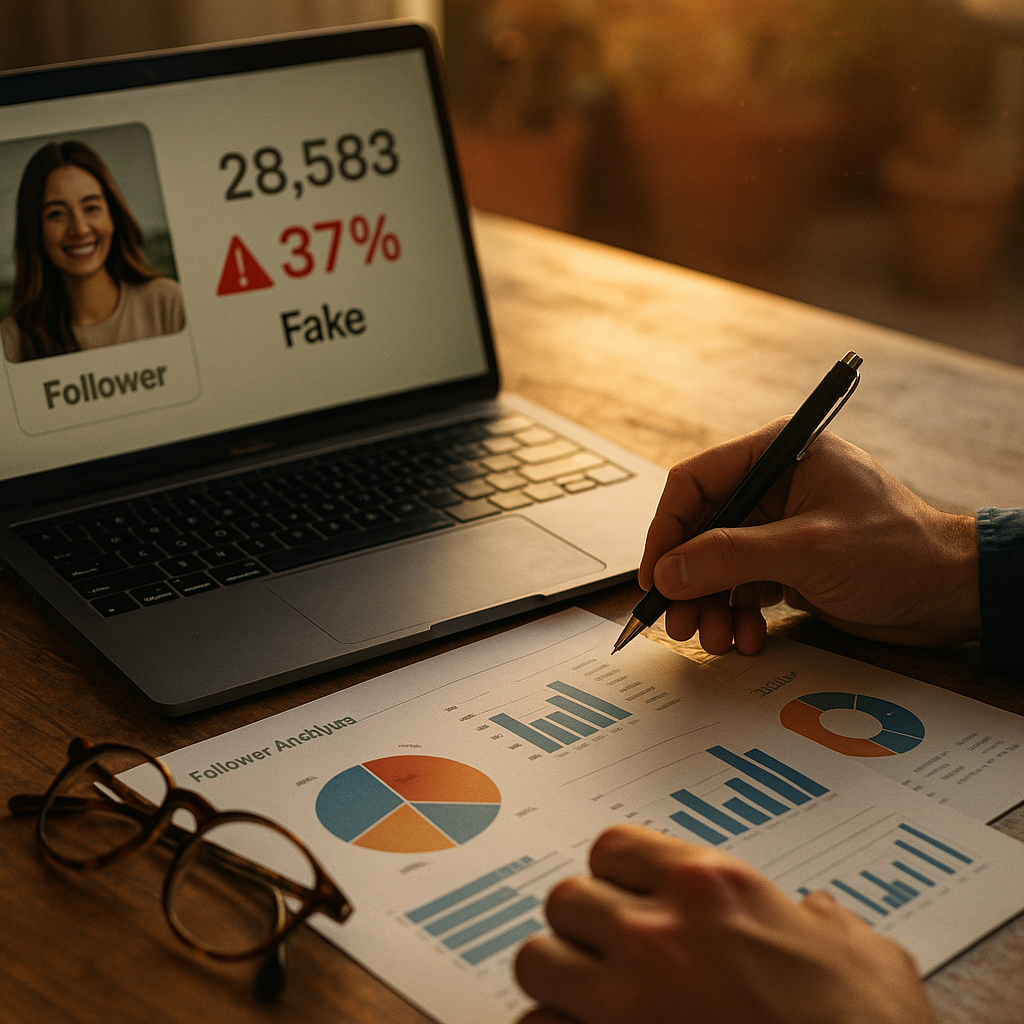
Thirty-seven percent. That’s the share of average creator followings now estimated to be fake, bot-driven, or purchased outright, according to recent fraud-detection audits circulating among agency trading desks. If your influencer vetting process still stops at a follower count and an engagement-rate glance, you’re not vetting. You’re gambling. And in 2026, that gamble costs real budget.
Follower fraud isn’t new. What’s new is the scale, the sophistication, and the fact that finance teams are finally asking marketing to prove it. CFOs who once nodded along to “reach” numbers now want fraud-adjusted CPMs. That shift changes how creator vetting budgets need to be built, staffed, and defended.
Why 37% Is the Number That Changes Everything
For years, brands treated follower fraud as background noise, an annoying but tolerable cost of doing business in influencer marketing. A few bot followers here, some engagement pods there. Shrug it off, adjust the CPM slightly, move on. That tolerance is no longer defensible when more than a third of the average following is fabricated.
This isn’t a niche problem confined to micro-influencers padding their numbers to land first deals. Fraud detection vendors are finding purchased followers and bot engagement across every tier, including creators with verified badges and six-figure follower counts. Some of the most sophisticated fraud now mimics organic growth curves closely enough to fool basic analytics dashboards. It takes forensic-level tools to catch it.
If a third of your influencer program’s audience doesn’t exist, a third of your influencer budget is being spent talking to nobody.
That’s the reckoning. Not a scandal involving one creator, but a structural realization that the entire measurement layer brands relied on, follower count as a proxy for reach, was quietly broken all along.
Where the Fraud Hides
Fake followers are the crude version. The more dangerous version is engagement fraud: comment farms, click farms, and increasingly, AI-generated comments that read as genuine human reactions. These don’t just inflate follower counts, they inflate the engagement rate metrics brands use to justify fees. A creator can have a modest, real following and still fake the engagement that makes them look high-performing.
- Purchased followers: Bulk-bought accounts, often bot networks or dormant profiles, that inflate raw follower count with zero engagement behavior.
- Engagement pods: Groups of creators who comment and like each other’s content on a schedule to trigger platform algorithms.
- Click and comment farms: Paid human labor generating likes, comments, and shares from real accounts with no genuine interest in the brand.
- AI-synthesized engagement: Generated comments and interactions designed to pass basic authenticity checks, harder to detect without behavioral analysis.
Each type requires a different detection method. That’s precisely why a single “engagement rate” number in a media kit tells you almost nothing anymore.
The Vetting Budget Problem Nobody Planned For
Most influencer programs still allocate vetting as a rounding error, maybe a manual review by a coordinator, a quick scroll through a creator’s last ten posts, a gut check on comment quality. That approach was thin even five years ago. Against 37% fraud rates, it’s negligence.
Rebuilding the vetting budget for 2027 means treating fraud detection as its own line item, not an afterthought buried inside campaign management fees. Brands that get this right are shifting from a reactive “spot check” model to a continuous audit model, running fraud analysis before signing, during the campaign, and again post-payment reconciliation.
This mirrors a broader trend Influencers Time has covered: as creator spend becomes core media budget, it inherits the same scrutiny paid media has always had. Nobody would run a programmatic display campaign without viewability and fraud filters. Influencer budgets are catching up, slowly and expensively.
What a Real Vetting Line Item Looks Like
Forward-thinking brands are now budgeting fraud detection at roughly 3-6% of total influencer spend, up from something closer to 0.5% just a couple of years back. That money typically covers:
- Third-party audience authenticity audits (tools like HypeAuditor, Modash, or similar platforms) run on every creator before contract signing
- Ongoing engagement monitoring throughout the campaign flight, not just a pre-campaign snapshot
- Contractual fraud clauses tied to payment milestones, with clawback provisions if fraud is detected post-payment
- Internal or agency-side analyst time to interpret audit reports, because raw data without context leads to bad calls
That last point matters more than it sounds. A fraud audit tool can flag suspicious follower growth spikes, but someone still needs to decide whether that spike came from a viral moment or a bot purchase. Automated tools reduce guesswork; they don’t eliminate judgment.
Rethinking Vetting Criteria: Beyond the Follower Count
Follower count as a primary qualifying metric should be retired. Full stop. It’s the metric easiest to fake and least correlated with actual business outcomes. Brands rebuilding their vetting frameworks are weighting differently:
- Audience geography consistency: Does the follower location distribution match where the creator’s content is actually filmed and discussed?
- Follower growth pattern: Steady organic growth curves look different from the step-function spikes typical of bulk purchases.
- Comment-to-like ratio and comment quality: Genuine engagement produces varied, specific comments. Bot and pod engagement produces repetitive, generic ones.
- Cross-platform consistency: A creator with real influence usually shows correlated activity across platforms, not an inflated number on one and near-silence elsewhere.
- Historical brand performance: Actual conversion or traffic data from past campaigns, when available, beats any audience metric.
This lines up with a shift we’ve tracked closely: engagement is beating reach as the metric that actually predicts campaign performance, and it’s exactly because reach numbers have become so easy to manufacture.
The Retainer Argument Gets Stronger
There’s a connection here to the industry’s move toward longer-term creator relationships. Brands betting on retainer-based creator partnerships aren’t just chasing content consistency, they’re reducing fraud exposure. A creator on a 12-month retainer with quarterly performance reviews gets audited repeatedly over time. A one-off influencer booked through a marketplace gets audited once, if at all. Repeated exposure to scrutiny is itself a fraud deterrent.
It also changes the unit economics. Spreading vetting costs across a 12-month retainer is far cheaper per dollar of spend than re-vetting a new creator for every single campaign. If your organization is running dozens of one-off influencer bookings a quarter, the audit overhead multiplies fast. Consolidating into fewer, deeper relationships makes the vetting math sustainable.
Who Should Own the Vetting Budget?
This is where most organizations are still fumbling. Vetting sits awkwardly between marketing, procurement, and legal, and often nobody fully owns it. Marketing wants speed. Procurement wants documented risk controls. Legal wants disclosure compliance under FTC endorsement guidelines.
The brands handling this well are creating a dedicated creator-risk function, sometimes a single senior hire, sometimes a shared service inside the marketing operations team, that owns fraud detection tooling, vendor relationships, and the audit cadence. This mirrors what’s happened with AI governance roles inside marketing teams: a niche compliance function becomes a paid specialty once the financial exposure gets large enough.
Follower fraud has moved from a marketing nuisance to a finance and legal exposure item. Budget it, staff it, and document it accordingly.
Worth noting: regulators are paying attention too. The FTC has issued increasingly specific guidance on disclosure and deceptive endorsement practices, and fake-follower schemes sit adjacent to that enforcement territory. Brands that can’t show a documented vetting process are exposed if a partnership blows up publicly.
What This Means for Agency Contracts and RFPs
If you work through an agency of record, 2027 is the year to rewrite the scope language. Ask directly: what fraud detection tool does the agency use, how often do they run audits, and who eats the cost if a creator turns out fraudulent after payment? Vague answers here are a red flag.
Build fraud audit reporting into standard campaign wrap decks as a required deliverable, not an optional add-on. If your agency can’t produce an audience authenticity report per creator, that’s a capability gap worth negotiating around before the next contract renewal. This is the same posture buyers are taking in broader martech renewal negotiations: demand transparency as a contract term, not a courtesy.
Industry benchmarking from firms like eMarketer and platforms tracking influencer marketing spend continue to show budgets rising even as trust in raw metrics falls. That gap, rising spend paired with falling metric confidence, is exactly the tension vetting budgets need to resolve.
A Quick Gut-Check for Your Current Process
- Do you run a third-party authenticity audit before every signed contract, or only for top-tier spend?
- Is there a contractual clawback if fraud is discovered post-payment?
- Does anyone on your team review comment quality manually, or only automated scores?
- Can you produce a fraud audit report for last quarter’s top five creator partnerships right now?
If you hesitated on any of those, your vetting budget isn’t sized for the 37% reality.
Next step: audit your current creator roster this quarter using a third-party authenticity tool, then use those findings to build a fraud-adjusted vetting line item into next year’s budget, before your next renewal cycle locks you into another year of guessing.
Frequently Asked Questions
What percentage of influencer followers are typically fake or purchased?
Recent fraud-detection audits estimate that around 37% of the average creator’s followers are fake, inactive, or purchased, though this varies significantly by platform, follower tier, and niche.
How can brands detect fake followers before signing a creator contract?
Third-party audience authenticity tools like HypeAuditor and Modash analyze follower growth patterns, geographic consistency, and engagement quality to flag suspicious accounts before a contract is signed.
How much should brands budget for creator fraud vetting?
Leading brands are now allocating roughly 3-6% of total influencer marketing spend to fraud detection and vetting, up from less than 1% a few years ago.
Does follower fraud violate FTC guidelines?
Follower fraud itself isn’t directly regulated, but schemes involving fake engagement or deceptive endorsement claims can intersect with FTC rules on truthful advertising and disclosure.
Are retainer-based creator partnerships less risky than one-off campaigns?
Retainers allow for repeated, ongoing fraud audits over time and spread vetting costs across a longer relationship, generally making them a lower-risk, more cost-efficient model than one-off bookings.
FAQs
See the visible FAQ section above for full questions and answers.
Top Influencer Marketing Agencies
The leading agencies shaping influencer marketing in 2026
Agencies ranked by campaign performance, client diversity, platform expertise, proven ROI, industry recognition, and client satisfaction. Assessed through verified case studies, reviews, and industry consultations.
Moburst

-
2

The Shelf
Boutique Beauty & Lifestyle Influencer AgencyA data-driven boutique agency specializing exclusively in beauty, wellness, and lifestyle influencer campaigns on Instagram and TikTok. Best for brands already focused on the beauty/personal care space that need curated, aesthetic-driven content.Clients: Pepsi, The Honest Company, Hims, Elf Cosmetics, Pure LeafVisit The Shelf → -
3

Audiencly
Niche Gaming & Esports Influencer AgencyA specialized agency focused exclusively on gaming and esports creators on YouTube, Twitch, and TikTok. Ideal if your campaign is 100% gaming-focused — from game launches to hardware and esports events.Clients: Epic Games, NordVPN, Ubisoft, Wargaming, Tencent GamesVisit Audiencly → -
4

Viral Nation
Global Influencer Marketing & Talent AgencyA dual talent management and marketing agency with proprietary brand safety tools and a global creator network spanning nano-influencers to celebrities across all major platforms.Clients: Meta, Activision Blizzard, Energizer, Aston Martin, WalmartVisit Viral Nation → -
5

The Influencer Marketing Factory
TikTok, Instagram & YouTube CampaignsA full-service agency with strong TikTok expertise, offering end-to-end campaign management from influencer discovery through performance reporting with a focus on platform-native content.Clients: Google, Snapchat, Universal Music, Bumble, YelpVisit TIMF → -
6

NeoReach
Enterprise Analytics & Influencer CampaignsAn enterprise-focused agency combining managed campaigns with a powerful self-service data platform for influencer search, audience analytics, and attribution modeling.Clients: Amazon, Airbnb, Netflix, Honda, The New York TimesVisit NeoReach → -
7

Ubiquitous
Creator-First Marketing PlatformA tech-driven platform combining self-service tools with managed campaign options, emphasizing speed and scalability for brands managing multiple influencer relationships.Clients: Lyft, Disney, Target, American Eagle, NetflixVisit Ubiquitous → -
8

Obviously
Scalable Enterprise Influencer CampaignsA tech-enabled agency built for high-volume campaigns, coordinating hundreds of creators simultaneously with end-to-end logistics, content rights management, and product seeding.Clients: Google, Ulta Beauty, Converse, AmazonVisit Obviously →