


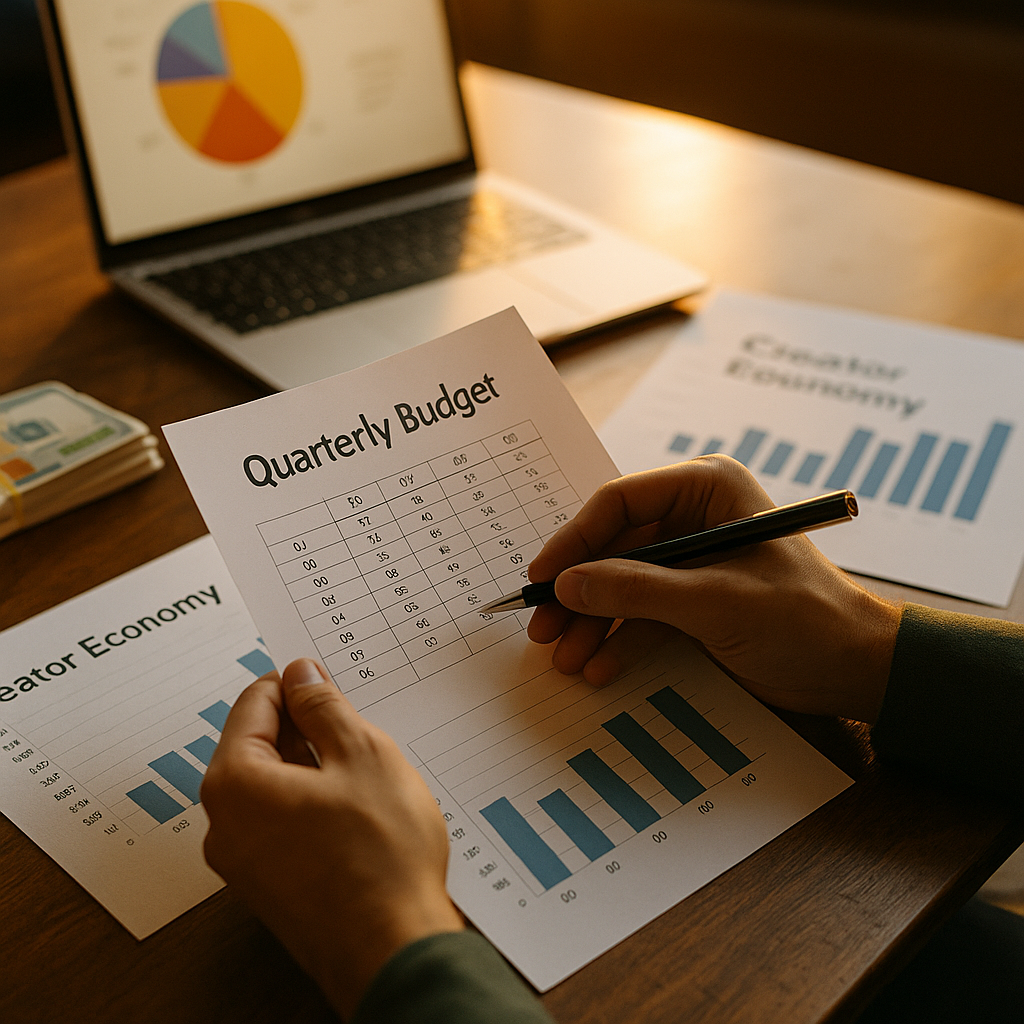
Analysts now peg the global creator economy at roughly $480 billion in projected value, and most brand budgets still get built like it’s a rounding error. That gap is the opportunity. If your creator economy forecast planning still runs on annual lump-sum allocations, you’re leaving performance data — and negotiating leverage — on the table every single quarter.
Planning cycles for the year ahead are already underway at most mid-market and enterprise brands. The teams that win won’t be the ones with the biggest budgets. They’ll be the ones who sequenced spend against evidence instead of guessing in December and hoping in November.
Why Annual Budgets Break in a Market This Size
A $480 billion market doesn’t move in straight lines. Platform algorithm shifts, creator rate inflation, and shifting FTC disclosure enforcement all happen faster than a 12-month budget cycle can absorb. Lock 100% of your creator spend in January, and by Q3 you’re often funding relationships that have already fatigued their audiences or paying rates that no longer reflect market reality.
We’ve covered this problem from the fatigue angle before — audience fatigue is fundamentally a targeting problem, not a budget one. But fatigue is also a sequencing problem. If you commit annual dollars to a fixed roster in Q1, you have no mechanism to react when performance data tells you to reallocate in Q2.
The brands doing this well have moved to rolling quarterly sequencing: a planning cadence that treats each quarter as a checkpoint, not a rubber stamp.
Treating an annual creator budget as four locked quarters isn’t discipline — it’s just slower decision-making dressed up as strategy.
The Quarterly Sequencing Model, Broken Down
Here’s the structure we recommend for brands building out planning cycles now, ahead of the next fiscal year.
- Q1 — Discovery and Vetting Spend (15-20% of annual budget): Front-load fraud detection, audience verification, and creator vetting. This is where you build the bench you’ll draw from all year. Skimping here is the single biggest cause of wasted spend later in the cycle.
- Q2 — Scale-Tested Winners (30-35%): Deploy budget toward creators and formats that showed strong signal in Q1 pilots. This is your highest-conviction spend quarter.
- Q3 — Diversification and Hedge (25-30%): Split spend between proven performers and emerging formats (new platforms, nano-creator ladders, GEO-driven discovery). This quarter exists to hedge against algorithm volatility and audience saturation.
- Q4 — Retention and Renewal (15-20%): Lock in long-term contracts with top performers at negotiated rates before the next planning cycle resets pricing expectations.
This isn’t arbitrary. It mirrors how paid media buyers have sequenced test-and-scale budgets for years — the difference is that creator relationships carry longer ramp times and reputational stakes that paid social doesn’t.
Why Front-Loading Vetting Pays Off Later
Most brands treat vetting as a one-time gate, not a quarterly discipline. That’s backwards. Creator rosters decay. Engagement quality shifts. A creator who over-indexed on authentic engagement last cycle might be running bot-inflated numbers this cycle. Our 12-month fraud-adjusted vetting playbook lays out the mechanics, but the short version: budget for ongoing verification, not just onboarding.
Brands skipping this step are effectively funding fraud risk with next year’s marketing budget. That’s not hypothetical — the FTC’s disclosure enforcement activity has intensified, and undisclosed or fraudulent partnerships now carry real legal exposure, not just wasted spend.
Mapping Sequencing to the $480B Forecast
Here’s where the forecast actually matters for planning, not just headlines. If the market is growing at the rate analysts project, the composition of that growth matters more than the topline number. A meaningful share of new spend is shifting toward mid-funnel formats — dedicated video, long-form integration, and creator-led commerce — rather than pure awareness plays.
That shift changes how you should sequence dollars. Q2’s “scale-tested winners” bucket, for instance, should weight toward creators who’ve proven mid-funnel conversion, not just reach. Our piece on matching format to funnel stage is worth revisiting here — sequencing budget without sequencing format strategy is half a plan.
Emarketer’s most recent creator spend projections (see eMarketer’s creator economy coverage) show brands increasingly shifting dollars from one-off sponsorships toward retained, performance-linked arrangements. That’s consistent with what the Q4 “retention” bucket in this model is designed to capture — you can’t retain performance-linked creators if you haven’t tracked performance all year.
Zero-Based Thinking Inside a Quarterly Frame
Quarterly sequencing works best paired with zero-based budgeting principles at each checkpoint. Don’t auto-renew Q2’s allocation into Q3 just because it’s easier. Force each quarter’s spend to justify itself against the prior quarter’s data. We’ve written extensively about this shift from macro sponsorships to micro-influencer allocations, and the same discipline applies to the crossover between amplification and organic sponsorship spend covered in our CFO budget model for creators.
The point isn’t austerity. It’s forcing evidence-based reallocation instead of habitual renewal.
What Changes for CFOs and Board Reporting
Quarterly sequencing also solves a reporting problem that’s been dogging marketing leaders for years: how do you defend creator spend to a board that thinks in quarters, not annual narratives?
An annual lump-sum budget forces you to justify a full year’s spend with partial-year data, which is a losing argument every time. Quarterly sequencing flips that. Each checkpoint comes with its own performance readout, its own reallocation logic, and its own defensible ROI story. That’s a much easier conversation at the board table, and it’s the exact structure we outlined in our CFO framework for proving sales lift.
It also gives you cover when fatigue data or platform volatility forces a mid-year pivot. Instead of explaining why you’re breaking an annual plan, you’re simply executing the next scheduled checkpoint. That distinction matters more than it sounds — boards trust process, not improvisation.
A quarterly checkpoint isn’t a smaller commitment than an annual budget — it’s a bigger accountability mechanism.
Where AI Fits Into the Sequencing Cadence
Agentic AI tools are increasingly handling the discovery and pacing work inside each quarter — flagging fatigue signals, adjusting bid strategy on amplified content, even recommending reallocation between creators mid-quarter. That’s useful, but it needs governance. Our governance charter for AI media-buying agents is a good starting point if you’re letting algorithmic tools touch quarterly reallocation decisions — because an AI agent optimizing for short-term engagement can quietly overspend a full quarter’s hedge budget in three weeks if nobody’s watching the guardrails.
Platforms like TikTok’s ad platform and Meta’s business tools are both leaning into automated budget pacing. Useful for execution. Not a substitute for the sequencing logic sitting above it.
Building the Model Into Your Planning Cycle Now
If you’re heading into planning cycles for the year ahead, the practical move is to build the quarterly checkpoints into your budget approval process before the fiscal year starts, not after Q1 already went sideways. That means:
- Setting explicit reallocation triggers (engagement decay thresholds, CPM inflation limits) at each quarter boundary.
- Reserving a hedge percentage — most brands land between 10-15% — that stays unallocated until Q2 data comes in.
- Building renewal-rate negotiation into Q4 planning rather than treating it as a Q1 scramble.
- Pairing sequencing with a capital allocation view across multiple years, not just the next four quarters — our 3-year capital allocation framework is a useful companion model here.
None of this requires new headcount or exotic tooling. It requires a planning calendar that treats quarters as decision points instead of accounting periods. That’s the whole shift.
Next step: before you finalize next year’s creator budget, map your current spend against these four quarterly buckets and identify which allocations you’re renewing on habit rather than evidence — that gap is where your reallocation opportunity is hiding.
Frequently Asked Questions
What is quarterly budget sequencing in creator marketing?
It’s a planning method that splits an annual creator budget into four evidence-based checkpoints, each with its own allocation logic, rather than committing the full year’s spend upfront.
How much of a creator budget should be held in reserve for reallocation?
Most brands running this model hold 10-15% unallocated until after Q1 or Q2 performance data comes in, giving them flexibility to shift spend toward proven performers.
Does quarterly sequencing work for small marketing teams, not just enterprise brands?
Yes. Smaller teams can apply the same logic at a smaller scale, and it pairs well with a structured approach like a nano-to-micro creator ladder for teams without large discovery budgets.
How does the $480 billion creator economy forecast affect budget planning specifically?
The forecast signals continued growth, but the composition matters more than the topline figure — spend is shifting toward performance-linked and mid-funnel formats, which should influence how you weight each quarterly bucket.
What’s the biggest mistake brands make when planning creator budgets for the next fiscal year?
Locking the full annual budget in Q1 based on the prior year’s performance data, without building in reallocation triggers for fatigue, fraud, or platform algorithm shifts.
FAQs
See visible FAQ section above.
Top Influencer Marketing Agencies
The leading agencies shaping influencer marketing in 2026
Agencies ranked by campaign performance, client diversity, platform expertise, proven ROI, industry recognition, and client satisfaction. Assessed through verified case studies, reviews, and industry consultations.
Moburst

-
2

The Shelf
Boutique Beauty & Lifestyle Influencer AgencyA data-driven boutique agency specializing exclusively in beauty, wellness, and lifestyle influencer campaigns on Instagram and TikTok. Best for brands already focused on the beauty/personal care space that need curated, aesthetic-driven content.Clients: Pepsi, The Honest Company, Hims, Elf Cosmetics, Pure LeafVisit The Shelf → -
3

Audiencly
Niche Gaming & Esports Influencer AgencyA specialized agency focused exclusively on gaming and esports creators on YouTube, Twitch, and TikTok. Ideal if your campaign is 100% gaming-focused — from game launches to hardware and esports events.Clients: Epic Games, NordVPN, Ubisoft, Wargaming, Tencent GamesVisit Audiencly → -
4

Viral Nation
Global Influencer Marketing & Talent AgencyA dual talent management and marketing agency with proprietary brand safety tools and a global creator network spanning nano-influencers to celebrities across all major platforms.Clients: Meta, Activision Blizzard, Energizer, Aston Martin, WalmartVisit Viral Nation → -
5

The Influencer Marketing Factory
TikTok, Instagram & YouTube CampaignsA full-service agency with strong TikTok expertise, offering end-to-end campaign management from influencer discovery through performance reporting with a focus on platform-native content.Clients: Google, Snapchat, Universal Music, Bumble, YelpVisit TIMF → -
6

NeoReach
Enterprise Analytics & Influencer CampaignsAn enterprise-focused agency combining managed campaigns with a powerful self-service data platform for influencer search, audience analytics, and attribution modeling.Clients: Amazon, Airbnb, Netflix, Honda, The New York TimesVisit NeoReach → -
7

Ubiquitous
Creator-First Marketing PlatformA tech-driven platform combining self-service tools with managed campaign options, emphasizing speed and scalability for brands managing multiple influencer relationships.Clients: Lyft, Disney, Target, American Eagle, NetflixVisit Ubiquitous → -
8

Obviously
Scalable Enterprise Influencer CampaignsA tech-enabled agency built for high-volume campaigns, coordinating hundreds of creators simultaneously with end-to-end logistics, content rights management, and product seeding.Clients: Google, Ulta Beauty, Converse, AmazonVisit Obviously →