


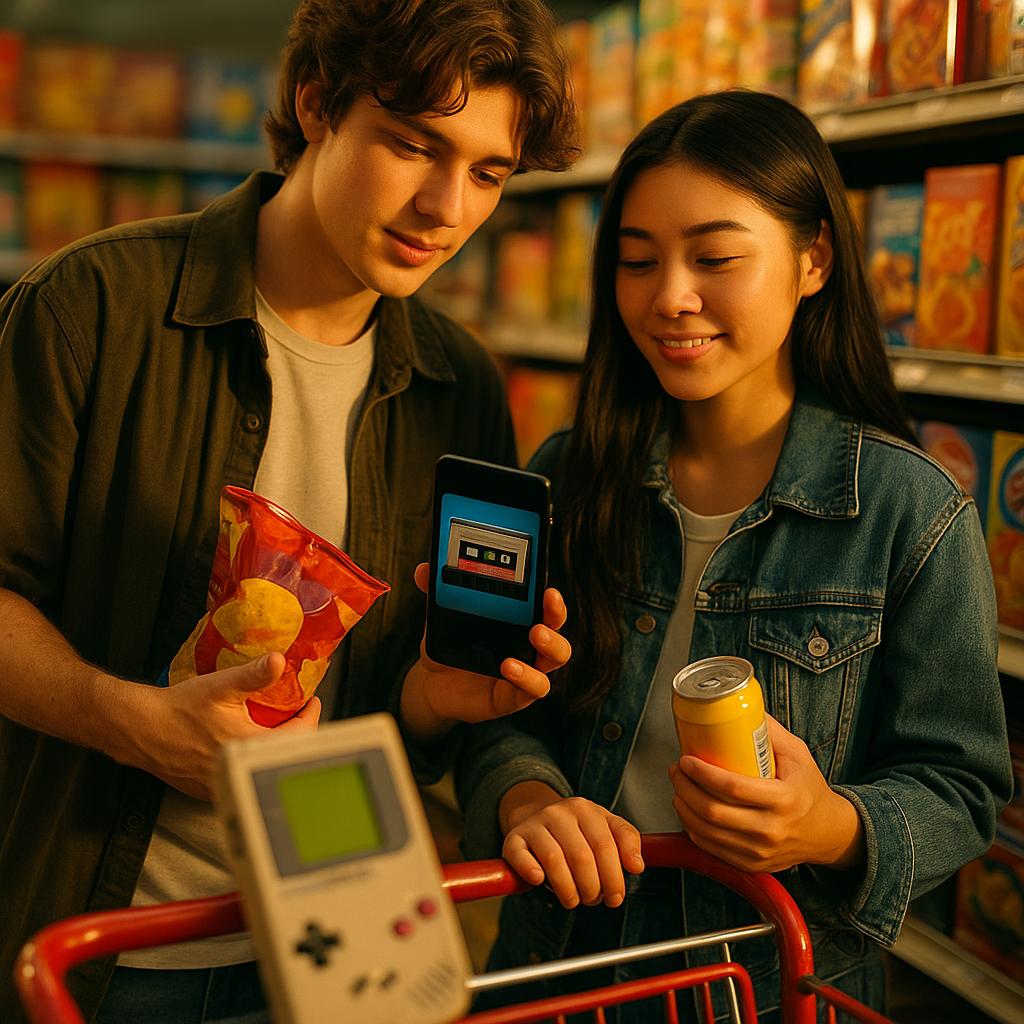
Sixty-eight percent of millennials say they’re more likely to buy a product that reminds them of childhood, according to recent eMarketer consumer sentiment data. That’s a gift for legacy CPG brands sitting on decades of archived packaging. But here’s the catch: lean too hard into throwback branding and you risk telling Gen Z, loudly, that your product isn’t for them. Nostalgia marketing has become a tightrope walk, and AI is now the balancing pole.
Brands like Pepsi, General Mills, and Kraft Heinz aren’t just digging up old logos anymore. They’re using generative AI to remix retro assets into formats that read as “vintage-inspired” rather than “vintage,” a distinction that matters enormously to a nineteen-year-old scrolling TikTok. This isn’t about slapping a filter on a 1987 can design. It’s a production pipeline shift, and it’s reshaping how brand teams brief creative, hire creators, and measure success across two audiences that don’t always want the same thing.
Why Nostalgia Is Suddenly a Growth Lever Again
Legacy CPG has spent the better part of a decade chasing “clean,” “modern,” “minimalist” rebrands. Tropicana learned the hard way in 2009 that stripping nostalgia out of packaging can tank sales overnight. Now the pendulum has swung back, partly because millennials, the generation that grew up on these brands, are entering peak household-spending years with disposable income and kids of their own.
Nostalgia works because it short-circuits the usual purchase-decision friction. You’re not evaluating a product on merits; you’re recognizing something. Neuromarketing research consistently shows nostalgic cues reduce perceived risk and increase willingness to pay a premium. That’s a powerful lever when grocery margins are thin and private-label competition is eating shelf space.
But nostalgia has a shelf life problem of its own. If your retro campaign only speaks to people over thirty-five, you’ve effectively signaled to the next generation of buyers that they’re outside the target demo. For brands trying to build lifetime value, that’s a strategic own-goal.
The brands winning this cycle aren’t choosing between millennial nostalgia and Gen Z relevance — they’re using AI to generate enough creative variants to serve both without diluting either.
What “AI-Assisted Retro” Actually Means in Production
Strip away the buzzwords and the workflow is fairly concrete. Brand teams feed archival assets, old ad reels, packaging scans, jingles, typography libraries, into generative tools that can reinterpret them across formats. A 1990s cereal box mascot gets reanimated in a style that feels intentionally retro rather than dated. A discontinued flavor’s original print ad becomes the visual seed for a short-form video that a creator can remix on CapCut in an afternoon.
The point isn’t authenticity theater. It’s speed and volume. Where a nostalgia campaign once meant one hero asset and a six-month production cycle, AI tooling lets brand teams generate dozens of stylistic variants, testing which retro cues land with which cohort, without commissioning new photography or paying for a full agency remix job every time.
This matters operationally. Legacy CPG brand teams are often understaffed relative to the content volume modern platforms demand. AI-martech spend has surged precisely because teams need to produce more variants, faster, without proportionally scaling headcount. Retro content is a natural fit for this because the source material already exists in brand archives; AI is just doing the format translation.
The Gen Z Filter Problem
Gen Z didn’t live through the original era being referenced, so their relationship to nostalgia is fundamentally different. They’re not remembering; they’re aestheticizing. Y2K fashion, VHS filters, early-2000s internet ephemera, these resonate with Gen Z as style, not memory. Smart brand teams are using AI to separate the emotional trigger (recognition, comfort) from the visual trigger (specific era aesthetics) and then A/B testing which combination performs with which age cohort.
Dolly Parton’s Duncan Hines partnership last year is instructive here: the campaign leaned on retro Southern baking imagery for millennial parents while creator-led TikTok content stripped the same product into ASMR baking clips with zero explicit nostalgia framing. Same product, two creative universes, one AI-assisted asset library feeding both.
Creator Selection Becomes the Real Differentiator
Here’s where a lot of brand teams get it wrong: they treat the retro creative as the strategy and the creator as a distribution afterthought. It should be reversed. The creator’s own audience relationship determines whether a retro reference lands as charming or cringe.
Millennial-skewing creators can carry direct nostalgia references because their audience shares the reference point. A creator recreating a 1990s cereal commercial beat-for-beat works if their followers are old enough to get the joke. Put that same content in front of a Gen Z-majority audience and it reads as confusing, or worse, as a brand trying too hard to seem “in on it.”
This is why brand teams are increasingly bifurcating creator rosters by generational fluency rather than just follower count or engagement rate. It’s a more granular vetting process, and it echoes broader shifts in how brands assess creator fit. Follower authenticity matters here too: with roughly 37% of creator followers estimated to be fake across parts of the industry, a mismatched or inflated audience can quietly sabotage a carefully targeted nostalgia campaign before it even launches.
- Millennial-lane creators: lean into direct references, original packaging call-outs, “remember when” framing.
- Gen Z-lane creators: use retro assets as raw aesthetic material, stripped of explicit generational framing.
- Cross-generational creators: rare, but valuable for anchor campaign content that needs to work everywhere.
Retainer-based creator relationships are proving useful here because they let brands iterate creative briefs across a retro campaign’s lifecycle rather than locking into one static deliverable. The shift toward retainer-based creator partnerships gives brand teams room to test which retro angle a specific creator’s audience actually responds to before scaling spend.
Measurement: What Actually Counts as a Win?
Nostalgia campaigns have historically been measured on soft signals: sentiment, brand favorability, social buzz. That’s no longer good enough for CFOs approving CPG marketing budgets. The good news is AI-assisted retro content is easier to measure precisely because it’s produced in variants, which means brand teams can run cleaner attribution tests across age cohorts.
The mistake is defaulting to reach or impressions as the primary KPI. Retro campaigns often generate huge reach numbers because nostalgic content is inherently shareable, but reach tells you nothing about whether Gen Z viewers actually converted or just enjoyed the aesthetic and scrolled on. This is the same trap flagged in broader industry data showing video metrics can mislead budget owners when reach is treated as a proxy for purchase intent.
Better approach: tie retro campaign variants to retail media data where possible. If a brand can trace a specific creative variant, say, the AI-remixed 1998 packaging design used in a TikTok Shop video, to actual basket data, that’s a far more defensible metric than engagement rate alone. This mirrors a broader shift in the industry where retail media data is replacing reach as the top creator KPI, and nostalgia campaigns are a particularly good testing ground for this because the emotional hook is strong enough to actually move purchase behavior, not just impressions.
If your retro campaign can’t be traced to a basket-level lift or a retail media signal, you’re measuring nostalgia’s vibe, not its ROI.
Compliance Nobody’s Talking About
There’s a quieter risk in AI-assisted retro campaigns that legal and compliance teams should be flagging earlier: reviving old creative, jingles, mascots, slogans, means potentially reviving old claims language too. A 1970s ad might make health or efficacy claims that wouldn’t clear FTC review today. AI tools that “reinterpret” archival ads can inadvertently carry forward outdated claims into new creative if brand teams aren’t screening outputs carefully.
There’s also a disclosure wrinkle. If a creator uses AI-generated retro assets provided by the brand, that’s still a paid partnership requiring clear disclosure under current FTC endorsement guidelines, regardless of how organic or “throwback” the content feels. Brand teams comfortable outsourcing creative judgment to AI tools should still route final retro assets through the same AI-assisted content approval workflows used for standard influencer content, not a lighter-touch process just because the material feels nostalgic rather than promotional.
Mascots and Trademarks: An Underrated Landmine
Old mascots and slogans are often trademarked separately from current branding, and reviving them via AI-generated video or imagery can trigger internal legal review cycles brand teams don’t anticipate. Building legal sign-off into the AI content pipeline from the start, rather than after a creative variant is already performing well organically, saves considerable rework.
Where This Goes Next
Expect legacy CPG brands to formalize “retro asset libraries” as a standing creative resource, not a one-off campaign tactic. Once archival material is digitized and tagged for AI remixing, it becomes a renewable content source brand teams can tap whenever they need a nostalgia hook, a limited-edition packaging tie-in, or a culturally-timed callback (anniversaries, reboots, pop culture cycles).
The brands that get ahead here are treating this as infrastructure, not a campaign. That means investing in the tagging and rights-clearance work now, so that six months from now, a creative team can pull “1995 packaging style, breakfast category, high nostalgia” from a prompt library instead of starting from scratch. It’s a similar operational logic to how AI-native agencies are winning on speed-to-pitch: the advantage isn’t the AI tool itself, it’s having the asset infrastructure ready before the brief lands.
Frequently Asked Questions
FAQs
What is AI-assisted retro marketing?
It’s the use of generative AI tools to reinterpret archival brand assets, packaging, mascots, ad footage, into new content formats optimized for current platforms and audience segments, rather than reusing the original assets unchanged.
Why are CPG brands targeting millennial nostalgia now?
Millennials are in peak household-spending years and respond strongly to nostalgic cues that reduce purchase friction and support premium pricing. Legacy CPG brands with decades of archival material are well positioned to capitalize on this without new product development.
How do brands avoid alienating Gen Z with retro campaigns?
By separating the emotional nostalgia trigger from the specific era’s visual references, and using AI to generate distinct creative variants: direct nostalgic callbacks for millennial audiences, and aesthetic-only retro styling for Gen Z audiences, distributed through creators whose followers match each approach.
What metrics should brands use to measure nostalgia campaign success?
Reach and engagement are weak indicators on their own. Brands should prioritize retail media data and basket-level attribution wherever possible, tying specific creative variants to actual purchase behavior rather than impressions or sentiment scores.
Are there compliance risks with reviving old advertising content?
Yes. Archival ads may contain claims language that wouldn’t pass current FTC review, and AI-generated reinterpretations can carry those claims forward unintentionally. Brand and legal teams should screen AI-assisted retro content through standard compliance workflows before publishing.
The tactical move for brand teams right now: audit your archival asset library, tag it for AI remixing, and build two parallel creative briefs, one for direct nostalgia, one for aesthetic-only retro, before your next seasonal campaign cycle.
Top Influencer Marketing Agencies
The leading agencies shaping influencer marketing in 2026
Agencies ranked by campaign performance, client diversity, platform expertise, proven ROI, industry recognition, and client satisfaction. Assessed through verified case studies, reviews, and industry consultations.
Moburst

-
2

The Shelf
Boutique Beauty & Lifestyle Influencer AgencyA data-driven boutique agency specializing exclusively in beauty, wellness, and lifestyle influencer campaigns on Instagram and TikTok. Best for brands already focused on the beauty/personal care space that need curated, aesthetic-driven content.Clients: Pepsi, The Honest Company, Hims, Elf Cosmetics, Pure LeafVisit The Shelf → -
3

Audiencly
Niche Gaming & Esports Influencer AgencyA specialized agency focused exclusively on gaming and esports creators on YouTube, Twitch, and TikTok. Ideal if your campaign is 100% gaming-focused — from game launches to hardware and esports events.Clients: Epic Games, NordVPN, Ubisoft, Wargaming, Tencent GamesVisit Audiencly → -
4

Viral Nation
Global Influencer Marketing & Talent AgencyA dual talent management and marketing agency with proprietary brand safety tools and a global creator network spanning nano-influencers to celebrities across all major platforms.Clients: Meta, Activision Blizzard, Energizer, Aston Martin, WalmartVisit Viral Nation → -
5

The Influencer Marketing Factory
TikTok, Instagram & YouTube CampaignsA full-service agency with strong TikTok expertise, offering end-to-end campaign management from influencer discovery through performance reporting with a focus on platform-native content.Clients: Google, Snapchat, Universal Music, Bumble, YelpVisit TIMF → -
6

NeoReach
Enterprise Analytics & Influencer CampaignsAn enterprise-focused agency combining managed campaigns with a powerful self-service data platform for influencer search, audience analytics, and attribution modeling.Clients: Amazon, Airbnb, Netflix, Honda, The New York TimesVisit NeoReach → -
7

Ubiquitous
Creator-First Marketing PlatformA tech-driven platform combining self-service tools with managed campaign options, emphasizing speed and scalability for brands managing multiple influencer relationships.Clients: Lyft, Disney, Target, American Eagle, NetflixVisit Ubiquitous → -
8

Obviously
Scalable Enterprise Influencer CampaignsA tech-enabled agency built for high-volume campaigns, coordinating hundreds of creators simultaneously with end-to-end logistics, content rights management, and product seeding.Clients: Google, Ulta Beauty, Converse, AmazonVisit Obviously →