


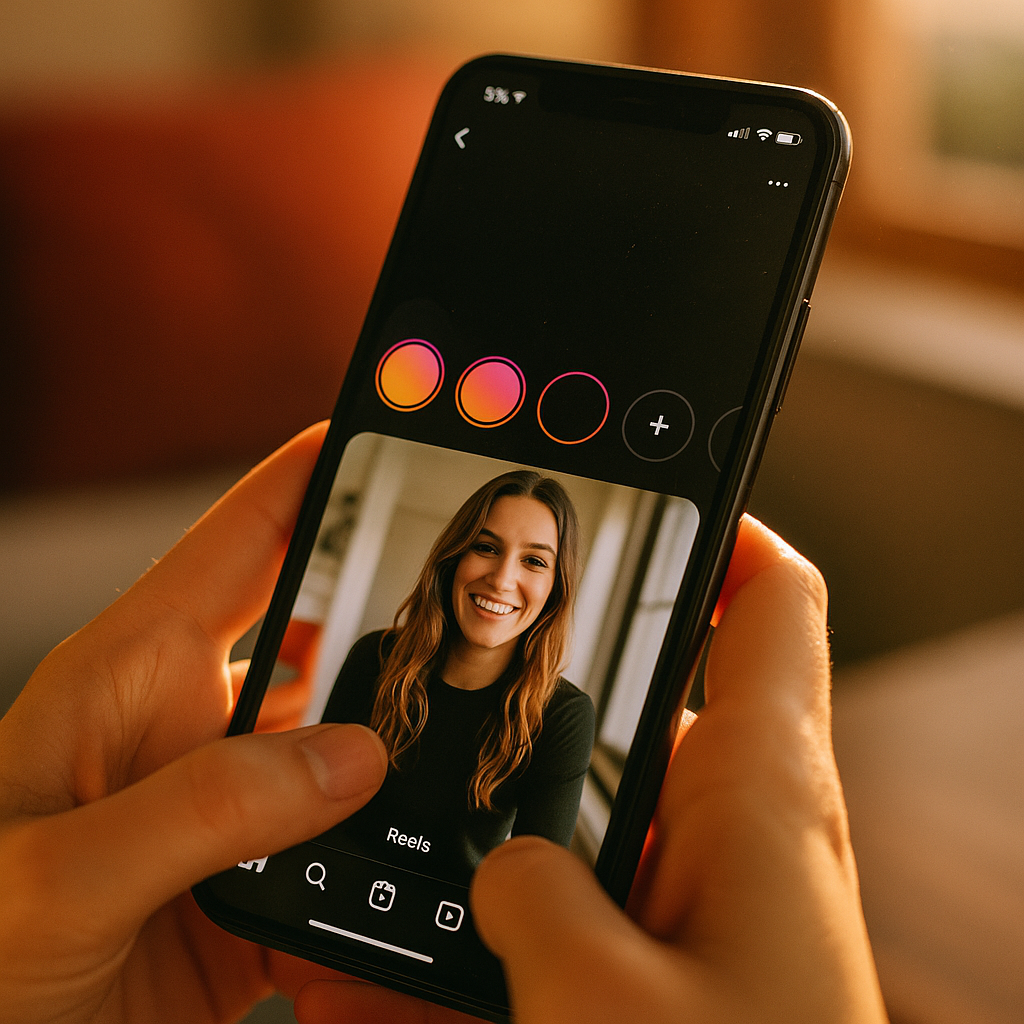
Instagram just quietly let a slice of users pin content to Highlights without ever posting it as a Story first. Buried feature test? Maybe. But it’s also a tell. Meta is loosening the dependency between ephemeral content and evergreen surfaces, right as it pushes harder toward full Instagram Highlights-without-Story posting as a Reels-first distribution model. If you run brand or agency accounts, this is the moment to rethink what “permanent” content actually means on the platform.
What’s Actually Changing
Historically, Highlights were a byproduct. You posted a Story, it expired in 24 hours, and if you wanted it to survive, you manually saved it to a Highlight reel on your profile. That workflow forced brands into a specific rhythm: post ephemeral, curate later, hope people click through to the profile grid.
The new test strips out the middle step. Users in the rollout group can create Highlight-ready content directly, without a live Story ever hitting followers’ feeds first. No expiration pressure. No dependency on catching an active posting window. It’s a small UI shift, but it reflects a bigger architectural bet Meta has been making for two years now: profile real estate and evergreen surfaces matter more than the fleeting Story feed ever did.
Pair this with Meta’s continued weighting toward Reels in ranking signals, and a pattern emerges. Instagram wants content that performs immediately (Reels, algorithmically distributed) and content that performs indefinitely (Highlights, profile-anchored). The Story format sitting in between is looking increasingly like legacy infrastructure.
If Highlights no longer require a Story detour, brands lose a built-in excuse for posting throwaway content. Every asset now has to justify its own permanence.
Why This Matters More Than It Looks
Ask yourself: how much of your Story content today is genuinely built to last? Countdown stickers, poll graphics, “swipe up” CTAs tied to a 48-hour promo — none of that belongs in a permanent Highlight, and none of it was designed with permanence in mind.
Under the new model, brands need two distinct content tracks instead of one blended pipeline:
- Reels-first, algorithm-facing content — built for discovery, cold-audience reach, and the AI-curated Reels feed now determining most non-follower impressions.
- Highlight-native, profile-facing content — built for warm audiences landing on your profile after a Reel converts them into a click.
That second bucket has been neglected industry-wide. Most brand profiles still treat Highlights as an afterthought: a FAQ tab, a “Shop” tab, maybe a stale set of testimonials from two years back. If Instagram is now inviting direct-to-Highlight publishing, that tab becomes prime, algorithmically-adjacent real estate. Treat it like a landing page, not a scrapbook.
The Reels-First Weighting Context You Can’t Ignore
This test doesn’t exist in isolation. Instagram has spent the better part of two years force-feeding Reels into feeds regardless of whether users follow the account, and the GEM recommendation system has increasingly favored tagged Reels in ranking. Add the platform’s continued preference for raw, unpolished Reels over produced ads, and you get a clear directional signal: distribution rewards native-feeling video, and permanence rewards curated evergreen assets.
Brands stuck optimizing only for the first — chasing viral Reels format and pacing tricks from the Reels length update playbook — are leaving the second half of the funnel completely unmanaged. A Reel might get someone to your profile. What happens next is on your Highlights, not your algorithm luck.
According to eMarketer data on short-form video consumption, average session time on Reels-heavy profiles has climbed, but profile-to-follow conversion rates have stayed flat industry-wide. Translation: people are watching more, but not committing more. That gap is exactly where a well-structured Highlights strategy can close the loop.
Building the Evergreen Layer: A Practical Framework
Here’s where it gets tactical. If Highlights no longer need a Story on-ramp, brands should treat Highlight creation as its own content production line, not a cleanup task assigned to whoever manages Stories.
- Audit your Highlight covers as first impressions, not decoration. Cold traffic arriving from a Reel will scan Highlights in under three seconds. Category clarity beats aesthetic branding every time.
- Map Highlights to funnel stage, not content type. Instead of “Behind the Scenes” and “Reviews” as loose buckets, structure around Awareness (who we are), Consideration (proof, comparisons, UGC), and Conversion (offers, how-to-buy, FAQ).
- Build direct-to-Highlight assets separately from Reels cutdowns. A 15-second product demo Reel and a 90-second explainer built for Highlight consumption are not the same asset repurposed twice. Viewing context differs; pacing should too.
- Refresh quarterly, not annually. Evergreen doesn’t mean untouched. Stale pricing or discontinued products sitting in a “Shop” Highlight is a trust killer.
- Track profile-to-Highlight click-through as its own metric. Most brands measure Reels views and follower growth. Almost nobody tracks whether visitors actually tap into Highlights once they land. Start now, because it’ll become a standard reporting line soon.
What About Creator Briefs?
If you brief creators for sponsored content, this shift has direct implications. A creator posting a branded Reel that disappears from active feed rotation within 48 hours delivers less residual value than one whose content gets pinned into a Highlight-equivalent structure on their own profile, or better, whose Reel is designed knowing it may live permanently as reference content.
Brands running influencer programs should start asking creators: does your profile organize past sponsored content in a discoverable way? A creator with a chaotic, un-curated profile grid is a weaker long-term partner than one who treats their own page like an evergreen asset library, even if their short-term view counts look similar.
This mirrors conversations already happening around other platforms. When TikTok’s force-feed algorithm forced brands to rewrite content briefs for cold-start discovery, the smart operators didn’t just chase the new ranking signal — they rebuilt briefs around durability too. The same discipline applies here. Ask creators to think in two timelines: the 48-hour discovery window and the permanent profile record.
A Reel’s algorithmic life might be measured in hours. Its Highlight life, done right, is measured in the entire duration a customer considers your brand.
Risk and Compliance Angle Brands Often Miss
There’s a compliance wrinkle worth flagging. Highlights that live indefinitely on a brand or creator profile carry longer disclosure and accuracy exposure than a 24-hour Story ever did. The FTC’s endorsement guidance doesn’t distinguish between ephemeral and permanent content when it comes to disclosure requirements, but permanence raises the practical stakes. A pricing claim, a “limited time” offer, or a health claim that’s fine for 24 hours becomes a liability if it sits in a Highlight for eight months unchecked.
This is the same logic driving scrutiny around countdown-timer scarcity claims on TikTok Shop — urgency language that ages badly becomes a regulatory and trust problem once it outlives its original context. Any brand building a direct-to-Highlight pipeline needs a review cadence, not a “post and forget” habit. Build expiration checks into your workflow even for content designed to be evergreen.
How to Prioritize This Quarter
Don’t overhaul everything at once. Sequence it:
- Week one: audit existing Highlights against current offers, pricing, and claims. Kill anything stale.
- Week two: restructure Highlight categories around funnel stage, not content type.
- Weeks three and four: brief your creative team (internal or creator-side) to produce two or three direct-to-Highlight assets that were never meant to be Stories in the first place.
- Ongoing: track profile-to-Highlight engagement alongside your standard Sprout Social or native Meta Business Suite reporting.
None of this requires waiting for Instagram to formally roll the feature out to everyone. Building the evergreen layer now means you’re not scrambling when Meta announces this as standard functionality, and if history with shopping-tagged Reels prioritization is any guide, feature tests like this tend to go platform-wide faster than brands expect.
Frequently Asked Questions
FAQs
What is Instagram’s Highlights-without-Story test?
It’s a feature rollout allowing select users to publish content directly into profile Highlights without first posting it as a temporary Story. This removes the previous requirement that all Highlight content originate from an expiring Story post.
Does this mean Stories are going away?
No. Stories remain a core engagement format for active followers. The change simply decouples Highlights from Stories as a mandatory pipeline, giving creators and brands more flexibility in how permanent content gets published.
How does this connect to Reels-first weighting on Instagram?
Instagram’s ranking systems already prioritize Reels for discovery and reach. This Highlights test complements that shift by making profile-level evergreen content easier to produce independently, so brands can pair algorithmic Reels reach with a stronger on-profile conversion layer.
Should brands change their content production workflow now?
Yes. Brands should start treating Highlight-native content as a distinct production track rather than a byproduct of Story posting, and should audit existing Highlights for outdated offers, pricing, or claims that carry compliance risk over time.
What compliance risks come with permanent Highlight content?
Claims, pricing, or urgency language that’s acceptable in a 24-hour Story can become misleading or non-compliant if left unchanged in a permanent Highlight. Brands should build a regular review cadence rather than treating Highlights as set-and-forget.
How should creator briefs adapt to this change?
Briefs should account for two timelines: short-term algorithmic discovery through Reels, and long-term value through well-organized, evergreen profile content. Creators with curated, discoverable profiles offer more residual brand value than those with high view counts but chaotic profile organization.
The brands that win this transition won’t be the ones chasing the feature announcement. They’ll be the ones who already rebuilt their Highlights into a real conversion layer before Instagram made it mandatory. Start the audit this week, not after the wider rollout lands.
Top Influencer Marketing Agencies
The leading agencies shaping influencer marketing in 2026
Agencies ranked by campaign performance, client diversity, platform expertise, proven ROI, industry recognition, and client satisfaction. Assessed through verified case studies, reviews, and industry consultations.
Moburst

-
2

The Shelf
Boutique Beauty & Lifestyle Influencer AgencyA data-driven boutique agency specializing exclusively in beauty, wellness, and lifestyle influencer campaigns on Instagram and TikTok. Best for brands already focused on the beauty/personal care space that need curated, aesthetic-driven content.Clients: Pepsi, The Honest Company, Hims, Elf Cosmetics, Pure LeafVisit The Shelf → -
3

Audiencly
Niche Gaming & Esports Influencer AgencyA specialized agency focused exclusively on gaming and esports creators on YouTube, Twitch, and TikTok. Ideal if your campaign is 100% gaming-focused — from game launches to hardware and esports events.Clients: Epic Games, NordVPN, Ubisoft, Wargaming, Tencent GamesVisit Audiencly → -
4

Viral Nation
Global Influencer Marketing & Talent AgencyA dual talent management and marketing agency with proprietary brand safety tools and a global creator network spanning nano-influencers to celebrities across all major platforms.Clients: Meta, Activision Blizzard, Energizer, Aston Martin, WalmartVisit Viral Nation → -
5

The Influencer Marketing Factory
TikTok, Instagram & YouTube CampaignsA full-service agency with strong TikTok expertise, offering end-to-end campaign management from influencer discovery through performance reporting with a focus on platform-native content.Clients: Google, Snapchat, Universal Music, Bumble, YelpVisit TIMF → -
6

NeoReach
Enterprise Analytics & Influencer CampaignsAn enterprise-focused agency combining managed campaigns with a powerful self-service data platform for influencer search, audience analytics, and attribution modeling.Clients: Amazon, Airbnb, Netflix, Honda, The New York TimesVisit NeoReach → -
7

Ubiquitous
Creator-First Marketing PlatformA tech-driven platform combining self-service tools with managed campaign options, emphasizing speed and scalability for brands managing multiple influencer relationships.Clients: Lyft, Disney, Target, American Eagle, NetflixVisit Ubiquitous → -
8

Obviously
Scalable Enterprise Influencer CampaignsA tech-enabled agency built for high-volume campaigns, coordinating hundreds of creators simultaneously with end-to-end logistics, content rights management, and product seeding.Clients: Google, Ulta Beauty, Converse, AmazonVisit Obviously →