


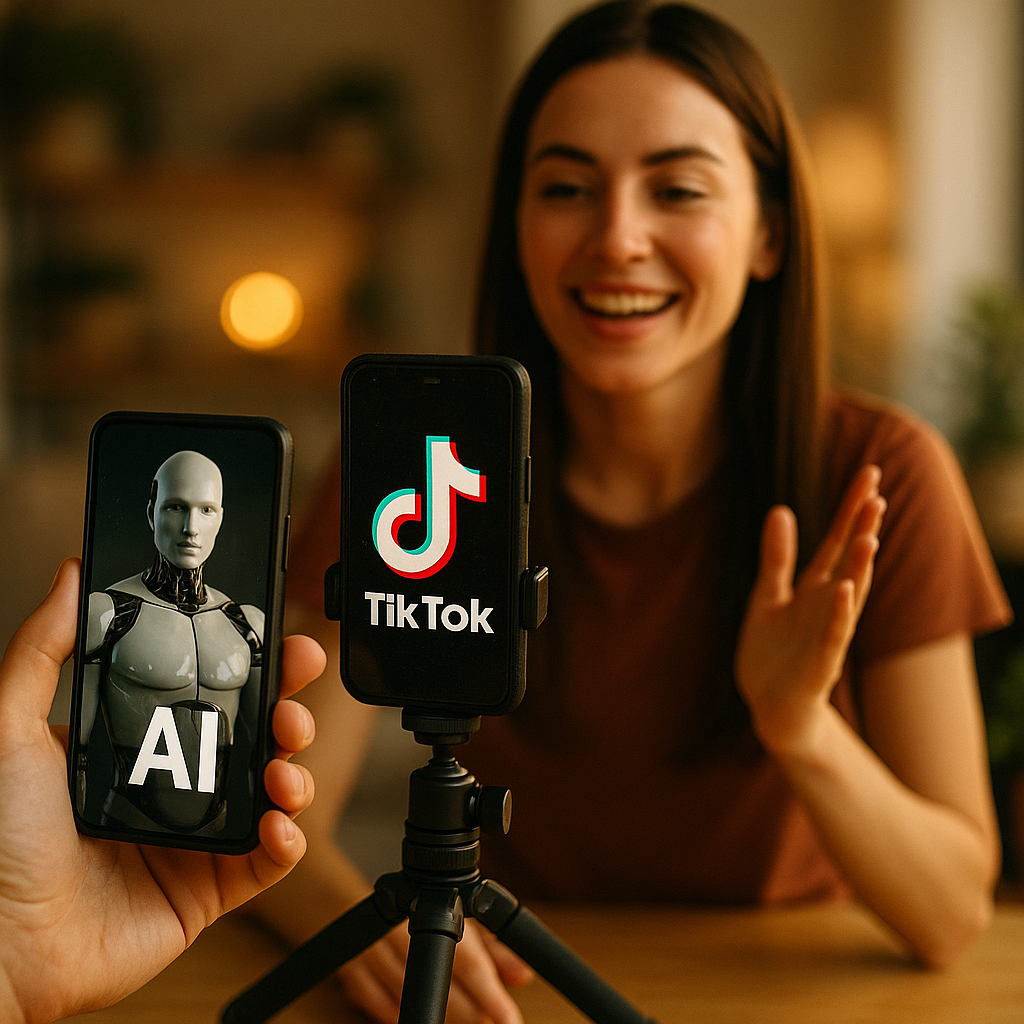
Videos flagged as “likely AI-generated” are seeing measurably softer distribution on TikTok. That’s not a rumor from a paranoid creator forum — it’s the practical outcome of TikTok’s creator-content preference shift, which now weighs human-shot video more favorably than synthetic or AI-assisted clips in the same feed slot. If your brief still treats AI video tools as a shortcut to scale, it’s time to rethink the math.
The Update, In Plain Terms
TikTok hasn’t published a granular ranking formula (it never does), but creator reports and platform statements point to the same conclusion: content that reads as authentically human, unscripted, filmed on a phone, imperfect, is getting preferential placement over content that looks synthetic, overly smooth, or assembled by generative tools. TikTok has been labeling AI-generated content for over a year now, and the labeling appears to now correlate with reduced reach in some testing cohorts.
This tracks with TikTok’s broader identity problem. The platform built its entire value proposition on feeling less produced than Instagram. Once AI tools made it trivially easy to fake that rawness, the feed started rewarding signals that are harder to fake: natural speech cadence, camera shake, real environments, genuine reactions. The algorithm is essentially trying to protect the thing that made TikTok work in the first place.
If your AI-assisted content strategy was built for reach on TikTok, that strategy just got a shelf life. The platform is now actively discounting the exact efficiency gains AI video promised.
Why This Matters More Than Another Algorithm Tweak
Brands have spent real budget over the past two years standing up AI video pipelines. Synthetic UGC, AI avatars reading scripts, auto-generated product demos. The pitch was compelling: cut production costs, scale variant testing, ship ten versions of an ad in the time it used to take to shoot one.
That pitch still works on Meta and YouTube, where machine-made content hasn’t been algorithmically penalized the same way. But on TikTok specifically, the cost-per-view math on AI-produced clips is quietly getting worse, even if the production cost stays flat. A clip that costs $200 to generate but earns a fraction of the reach of a $200 creator-shot video isn’t actually cheaper. It’s more expensive per impression.
This is the same pattern Influencers Time has tracked across other platform shifts this year, where polish gets punished in favor of raw content, and distribution logic quietly overrides production budgets. TikTok’s move is the most direct version of that trend yet.
What “Human-Made” Actually Signals to the Algorithm
It’s worth being precise here, because “human-made” doesn’t mean “no editing.” Creators using CapCut, adding captions, or cutting jump cuts aren’t being penalized. The signal TikTok appears to be reading for is closer to provenance: was a real person in front of a camera, speaking in their own voice, in a real setting?
- Voice authenticity: Synthetic voiceovers and AI avatar narration read as flatter, and pattern-matching against known AI voice models seems to be part of the detection layer.
- Visual inconsistency: Real footage has micro-imperfections, lighting shifts, background noise, that generative video still struggles to replicate convincingly.
- Behavioral signals: Videos that get flagged or under-distributed also tend to get lower completion rates and comment engagement, which compounds the algorithmic penalty regardless of the AI label itself.
- Disclosed AI use: Content that’s transparently labeled as AI-assisted (per TikTok’s own disclosure tools) appears to fare better than content trying to pass as fully organic.
That last point matters for compliance teams. Disclosure isn’t just an FTC obligation anymore, it may also be the difference between reach and suppression.
Rewriting the Brief: What Changes Operationally
This is where the brand-side implications get concrete. If you manage creator briefs, media buys, or in-house content production, here’s what needs to shift.
Stop briefing for “AI-assisted efficiency” as the primary KPI
Plenty of briefs over the past eighteen months have included language like “leverage AI tools to produce X variants at scale.” That instruction now works against you on TikTok specifically. Reframe the brief around creator-led production with AI supporting research, scripting, and captioning, not the on-camera output itself.
Build separate specs per platform
The same asset can no longer be repurposed identically across TikTok, Instagram, and YouTube. This isn’t new advice, we’ve said it before regarding why AI brief strategy fails across TikTok and Reels, but the gap has widened. TikTok now needs its own shot list: handheld footage, real locations, minimal synthetic overlay.
Renegotiate creator fees around authenticity, not output volume
If AI-assisted content produced more variants per dollar, and that volume advantage just eroded, your cost model needs adjusting. Paying creators for genuinely shot footage, even if it means fewer total assets, may now deliver better blended ROI than a high-volume AI pipeline that gets throttled at the algorithm level.
Audit existing AI content libraries
Any brand sitting on a backlog of AI-generated TikTok assets should run a quick reach audit. Compare average views and completion rates on AI-flagged content versus creator-shot content from the same campaign window. The data will likely make the case for reallocation on its own.
Brands optimizing for AI-driven volume on TikTok are now optimizing for the wrong variable. Distribution, not production speed, is the constraint that matters.
Where AI Still Earns Its Keep
None of this means pulling AI out of the workflow entirely. It means relocating it. AI tools remain genuinely useful for:
- Script ideation and hook testing before a creator ever picks up a phone
- Caption generation, translation, and accessibility text
- Trend and audio research, identifying what’s gaining traction before it peaks
- Post-production editing support (captions, pacing suggestions) layered onto human-shot footage
- Performance analysis across campaigns, similar to how brands are already adapting briefs around TikTok’s force-feed distribution logic
The line to hold: AI should shape the strategy behind the camera, not replace what’s in front of it. That distinction is now measurable in your analytics dashboard, not just a matter of brand philosophy.
How to Brief Creators Under the New Bias
Practically, briefs should now include explicit direction on format authenticity, not just messaging and CTAs. A few additions worth standardizing:
- Require creators to film in native environments rather than studio setups that read as overly produced.
- Ask for one unscripted “take” alongside the polished cut, and test both in paid amplification.
- Flag any AI-assisted elements (voice cleanup, background generation) for disclosure compliance, following the same logic brands are applying to AI-slop flagging on LinkedIn.
- Build in a testing window before scaling spend, since algorithmic reach penalties can shift the performance ranking of assets that tested well in isolation.
Agencies should also revisit vendor contracts. If a content vendor’s pitch leans heavily on AI-generated volume, ask directly how they’re accounting for TikTok’s distribution bias in their deliverable pricing. According to eMarketer, brand spend on creator content continues to climb even as production costs shift, which means efficiency claims need scrutiny now more than ever.
The Bigger Pattern Brands Should Watch
TikTok isn’t acting in isolation here. Platforms broadly are recalibrating around authenticity as a defense mechanism against content saturation. We’ve seen it in Instagram’s push toward raw Reels over polished ads, and in Meta’s own AI-curated feed logic. The direction is consistent: platforms want to protect what makes their feed feel human, because that’s the retention lever that actually works.
Brands that treat each platform’s algorithm as a static rulebook will keep getting surprised. The ones that build flexible, platform-specific production models, with clear rules for when AI helps and when it hurts, will spend less on wasted impressions. Marketing teams should also monitor Statista and Sprout Social benchmark data as more platforms disclose how they weight synthetic versus human content, since this pattern is unlikely to stay confined to TikTok.
Frequently Asked Questions
FAQs
Does TikTok actually reduce reach for AI-generated videos?
Reports from creators and early platform signals suggest content flagged as AI-generated is seeing lower distribution in some cases, particularly when it lacks disclosure or reads as synthetic in voice and visuals. TikTok hasn’t published exact ranking weights, but the pattern is consistent enough that brands should treat it as a real factor in planning.
Should brands stop using AI tools for TikTok content entirely?
No. AI tools remain effective for scripting, research, captioning, and editing support. The shift is about where AI sits in the workflow, supporting human-shot footage rather than generating the on-camera output itself.
How can brands tell if their content is being penalized?
Compare view counts, completion rates, and reach on AI-assisted or AI-generated assets against creator-shot content from the same campaign period. A consistent gap, especially in completion rate, is a strong indicator of algorithmic suppression.
Does disclosing AI use hurt performance more than hiding it?
Early evidence suggests the opposite. Transparently labeled AI content appears to perform better than content that tries to pass as fully organic and gets flagged anyway. Disclosure also protects brands from FTC compliance risk, making it the lower-risk choice on both fronts.
Is this update specific to TikTok, or will other platforms follow?
TikTok is the most explicit example right now, but Instagram and Meta’s broader Reels ecosystem have shown similar preferences for raw, human content over polished or synthetic production. Brands should expect this to become a cross-platform pattern rather than a TikTok-only quirk.
What’s the biggest brief mistake brands are making right now?
Treating AI-generated volume as a cost-saving strategy without factoring in reduced distribution. A cheaper asset that earns a fraction of the views isn’t actually more efficient, it just shifts the cost from production to wasted impressions.
Pull your last quarter of TikTok content, sort by AI-assisted versus creator-shot, and compare completion rates before you plan the next budget cycle. The data will tell you faster than any platform announcement will.
Top Influencer Marketing Agencies
The leading agencies shaping influencer marketing in 2026
Agencies ranked by campaign performance, client diversity, platform expertise, proven ROI, industry recognition, and client satisfaction. Assessed through verified case studies, reviews, and industry consultations.
Moburst

-
2

The Shelf
Boutique Beauty & Lifestyle Influencer AgencyA data-driven boutique agency specializing exclusively in beauty, wellness, and lifestyle influencer campaigns on Instagram and TikTok. Best for brands already focused on the beauty/personal care space that need curated, aesthetic-driven content.Clients: Pepsi, The Honest Company, Hims, Elf Cosmetics, Pure LeafVisit The Shelf → -
3

Audiencly
Niche Gaming & Esports Influencer AgencyA specialized agency focused exclusively on gaming and esports creators on YouTube, Twitch, and TikTok. Ideal if your campaign is 100% gaming-focused — from game launches to hardware and esports events.Clients: Epic Games, NordVPN, Ubisoft, Wargaming, Tencent GamesVisit Audiencly → -
4

Viral Nation
Global Influencer Marketing & Talent AgencyA dual talent management and marketing agency with proprietary brand safety tools and a global creator network spanning nano-influencers to celebrities across all major platforms.Clients: Meta, Activision Blizzard, Energizer, Aston Martin, WalmartVisit Viral Nation → -
5

The Influencer Marketing Factory
TikTok, Instagram & YouTube CampaignsA full-service agency with strong TikTok expertise, offering end-to-end campaign management from influencer discovery through performance reporting with a focus on platform-native content.Clients: Google, Snapchat, Universal Music, Bumble, YelpVisit TIMF → -
6

NeoReach
Enterprise Analytics & Influencer CampaignsAn enterprise-focused agency combining managed campaigns with a powerful self-service data platform for influencer search, audience analytics, and attribution modeling.Clients: Amazon, Airbnb, Netflix, Honda, The New York TimesVisit NeoReach → -
7

Ubiquitous
Creator-First Marketing PlatformA tech-driven platform combining self-service tools with managed campaign options, emphasizing speed and scalability for brands managing multiple influencer relationships.Clients: Lyft, Disney, Target, American Eagle, NetflixVisit Ubiquitous → -
8

Obviously
Scalable Enterprise Influencer CampaignsA tech-enabled agency built for high-volume campaigns, coordinating hundreds of creators simultaneously with end-to-end logistics, content rights management, and product seeding.Clients: Google, Ulta Beauty, Converse, AmazonVisit Obviously →