


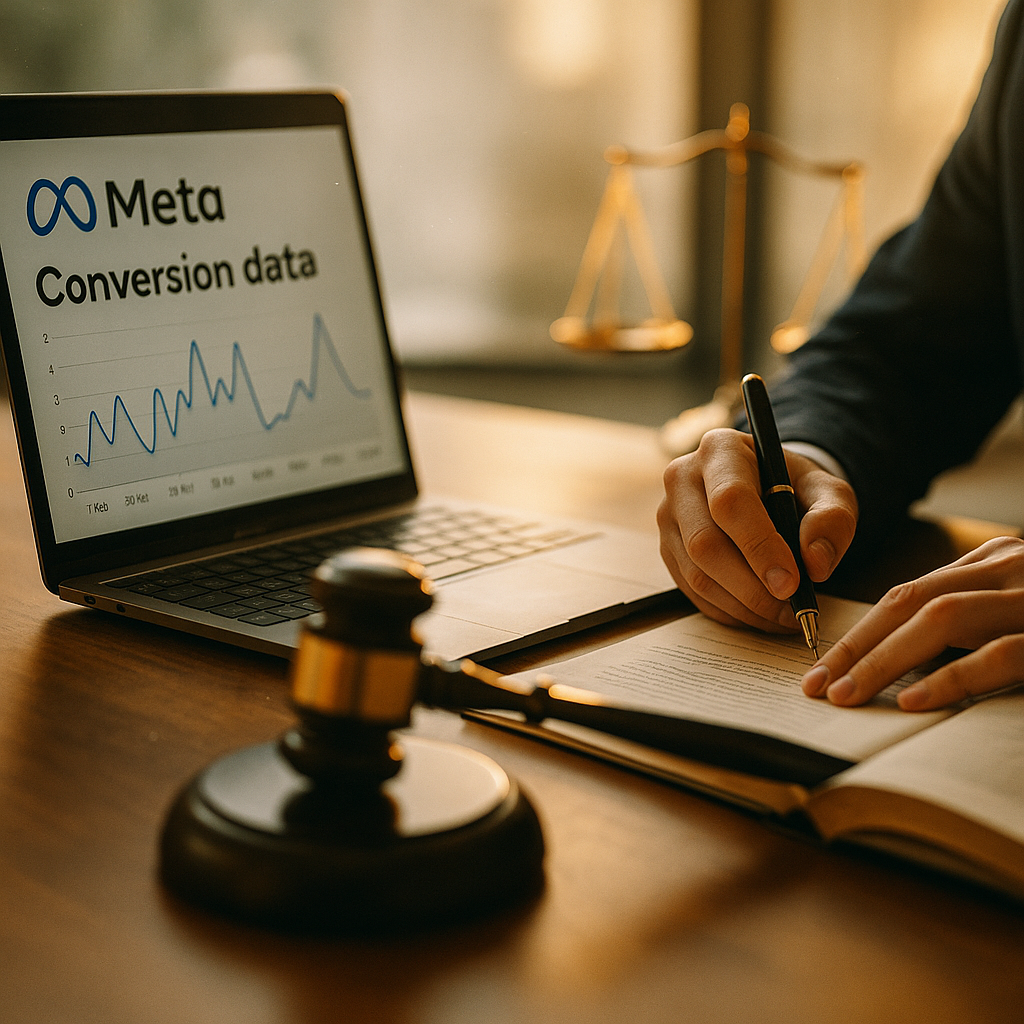
Meta’s ad platform now lets brands optimize for likes, saves, and shares as conversion events. Sounds harmless. It isn’t. When a “conversion” is just a save, but your creator contract still claims “driving measurable purchase intent,” you’ve created a paper trail that contradicts itself. That’s not a marketing problem. That’s an FTC exposure problem, and a Meta attribution model change compliance gap most legal teams haven’t caught yet.
This playbook walks through what changed, why it matters for endorsement substantiation, and exactly how to close the gap before an FTC inquiry or a plaintiff’s attorney does it for you.
What Actually Changed in Meta’s Attribution Model
Meta quietly expanded its conversion taxonomy to include engagement signals, saves, shares, and likes, as optimizable and reportable “conversion” events inside Ads Manager and Business Suite reporting. Historically, “conversion” meant something closer to a purchase, lead, or app install. Now it can mean someone tapped a heart icon.
For media buyers, this is a targeting and optimization convenience. For compliance teams, it’s a semantic landmine. The word “conversion” carries legal weight in advertising claims, especially when it appears in creator briefs, case studies, or performance reports that get referenced in substantiation files.
If your substantiation file says a campaign “converted” at 4.2%, but half those conversions were saves and shares, you no longer have evidence of purchase behavior. You have evidence of engagement. Those are not legally interchangeable.
We covered the mechanics of this shift in detail in Meta’s attribution model meets FTC disclosure rules, but the compliance implications deserve their own operational fix, not just an awareness post.
Why the FTC Cares About Your Attribution Semantics
The FTC’s Endorsement Guides require that any objective claim about product performance, including claims implied through creator content performance metrics, be substantiated with competent and reliable evidence. That’s the standard regulators have used for decades, and it hasn’t softened. If anything, the FTC has sharpened enforcement around influencer marketing specifically, issuing warning letters and settlements tied to unsubstantiated efficacy and results claims.
Here’s the collision: brands routinely cite platform “conversion” data as proof a campaign “worked,” and that language flows into case studies, investor decks, renewal pitches to clients, and sometimes directly into consumer-facing claims (“our top-rated product, chosen by thousands”). If the underlying data point was a save or a share, not a purchase, that claim is unsubstantiated on its face.
Regulators don’t care that Meta redefined a dashboard label. They care whether the claim you made to consumers, or the claim a creator made on your behalf, was actually backed by real evidence of the thing being claimed.
Where the Gap Actually Lives (It’s Not Where You Think)
Most compliance teams assume the risk is external, consumer-facing ad copy. It’s not primarily there. The bigger exposure sits in three overlooked places:
- Creator contracts and briefs that reference “conversion-driving content” as a deliverable standard, without defining what conversion means in that context.
- Internal substantiation files that pull Meta reporting exports directly into the record without annotating which conversion events are engagement-based versus transaction-based.
- Case studies and sales collateral repurposed from campaign reports, often built by a media team with zero visibility into FTC substantiation standards.
This is the same pattern we flagged in Meta attribution disclosure and why creator contracts need a rewrite: the compliance failure rarely originates in legal. It originates in media buying, then gets laundered through marketing collateral until it looks like a substantiated claim.
The Four-Part Reconciliation Framework
Here’s the practical fix. Not a policy memo nobody reads, an operational checklist your team can run this quarter.
1. Re-tag Your Conversion Taxonomy Internally
Before any Meta reporting data enters a substantiation file, case study, or client report, it needs a compliance tag: transactional (purchase, lead, subscription) versus engagement (like, save, share, comment). Build this into your reporting template, not as an afterthought, but as a mandatory field. If your BI dashboard can’t distinguish the two, that’s your first fix.
2. Rewrite Creator Brief Language
Stop writing briefs that ask creators to “drive conversions” without specifying which kind. If the KPI is saves, say saves. If it’s purchases, say purchases, and make sure your tracking actually measures that. Vague language in a brief becomes vague, unsubstantiated language in the creator’s post, and the FTC holds both brand and creator responsible for endorsement claims that lack backing.
A brief that says “optimize for conversions” without definition isn’t a KPI. It’s a liability waiting for a subpoena.
For contract-level fixes, pair this with the guidance in usage-rights escalation clauses for creator videos, since attribution disputes often surface alongside usage rights disagreements when a post overperforms unexpectedly.
3. Segregate Substantiation Evidence by Claim Type
Your substantiation file (the actual document you’d hand to the FTC or a plaintiff’s attorney on request) should never blend engagement metrics with efficacy or performance claims. If you’re claiming “customers loved it,” engagement data can support that. If you’re claiming “customers bought it in record numbers,” you need transactional data, full stop. Two claims, two evidence buckets. Don’t let a media report merge them for convenience.
This mirrors the discipline we recommend in the creator health claims substantiation file playbook, where claim-specific evidence segregation is the difference between a defensible file and a liability.
4. Audit Retroactively, Not Just Going Forward
New process is only half the job. Pull the last two to three quarters of campaign reporting and case studies. Flag anything using the word “conversion,” “results,” or “performance” that traces back to engagement metrics under Meta’s new taxonomy. If you find claims already circulating externally, that’s not a future risk, that’s a present one, and it needs remediation now, not at the next audit cycle.
How This Interacts With Broader Disclosure Obligations
Attribution semantics don’t exist in a vacuum. They intersect with disclosure adequacy questions that regulators are already scrutinizing across platforms. YouTube’s algorithm shifts, TikTok’s AI-generated content rules, and Meta’s own labeling requirements all point toward the same enforcement direction: platforms are automating detection, and regulators expect brands to keep pace.
Consider how this plays out elsewhere in the ecosystem. YouTube’s AI now flags undisclosed sponsorships automatically, meaning the era of manual disclosure review is ending. If Meta’s engagement-as-conversion data starts feeding into brand claims without similar scrutiny, you’re building risk on a platform that hasn’t caught up yet, but likely will.
Similarly, the “paid partnership” label problem persists regardless of attribution model. As detailed in why the paid partnership label alone won’t satisfy FTC rules, a disclosure tag doesn’t substitute for substantiation. The two obligations run on parallel tracks, and Meta’s taxonomy change only complicates the substantiation track.
What Marketing Ops Teams Should Build Right Now
If you run marketing ops or influencer program management, here’s the practical build list for this quarter:
- A shared glossary defining “conversion” per platform, distributed to media buying, legal, and creator management teams.
- A reporting template with mandatory transactional/engagement tagging before any data leaves the analytics team.
- A quarterly substantiation file audit, cross-referencing external claims against internal evidence type.
- Updated creator brief templates specifying exact KPI definitions, reviewed by legal before distribution.
None of this requires new headcount. It requires about two weeks of cross-functional workshop time and a template rebuild. Compare that cost to the cost of an FTC inquiry, or the reputational hit of a retracted case study. According to eMarketer, influencer marketing spend continues climbing year over year, which means the volume of claims running through this exact gap is only growing.
FAQs
Frequently Asked Questions
Does Meta’s new conversion tracking violate FTC rules by itself?
No. The platform change itself isn’t a violation. The risk arises when brands use engagement-based “conversion” data to support claims that imply purchase behavior or product efficacy without proper substantiation.
Who is legally responsible if a creator makes an unsubstantiated claim based on brand-provided data?
Both parties can face liability. The FTC has consistently held brands responsible for creator claims made in connection with sponsored content, especially when the brand supplied the underlying performance data or brief language.
What counts as “competent and reliable evidence” under FTC guidance?
It varies by claim type, but generally means evidence that’s methodologically sound and directly relevant to the specific claim made. Engagement metrics like saves or shares typically cannot substantiate purchase or efficacy claims.
How often should we audit our substantiation files given these platform changes?
Quarterly at minimum, with an immediate one-time retroactive audit covering the last two to three quarters to catch claims already in circulation under the old attribution assumptions.
Does this issue apply to platforms other than Meta?
Yes. Any platform that blends engagement and transactional metrics under a shared “conversion” label creates the same substantiation risk. Review reporting taxonomies across TikTok, YouTube, and LinkedIn as well.
Don’t wait for a warning letter to force this reconciliation. Pull your last two quarters of campaign reporting this week, tag every “conversion” claim by evidence type, and fix the language before it becomes someone else’s discovery request.
Top Influencer Marketing Agencies
The leading agencies shaping influencer marketing in 2026
Agencies ranked by campaign performance, client diversity, platform expertise, proven ROI, industry recognition, and client satisfaction. Assessed through verified case studies, reviews, and industry consultations.
Moburst

-
2

The Shelf
Boutique Beauty & Lifestyle Influencer AgencyA data-driven boutique agency specializing exclusively in beauty, wellness, and lifestyle influencer campaigns on Instagram and TikTok. Best for brands already focused on the beauty/personal care space that need curated, aesthetic-driven content.Clients: Pepsi, The Honest Company, Hims, Elf Cosmetics, Pure LeafVisit The Shelf → -
3

Audiencly
Niche Gaming & Esports Influencer AgencyA specialized agency focused exclusively on gaming and esports creators on YouTube, Twitch, and TikTok. Ideal if your campaign is 100% gaming-focused — from game launches to hardware and esports events.Clients: Epic Games, NordVPN, Ubisoft, Wargaming, Tencent GamesVisit Audiencly → -
4

Viral Nation
Global Influencer Marketing & Talent AgencyA dual talent management and marketing agency with proprietary brand safety tools and a global creator network spanning nano-influencers to celebrities across all major platforms.Clients: Meta, Activision Blizzard, Energizer, Aston Martin, WalmartVisit Viral Nation → -
5

The Influencer Marketing Factory
TikTok, Instagram & YouTube CampaignsA full-service agency with strong TikTok expertise, offering end-to-end campaign management from influencer discovery through performance reporting with a focus on platform-native content.Clients: Google, Snapchat, Universal Music, Bumble, YelpVisit TIMF → -
6

NeoReach
Enterprise Analytics & Influencer CampaignsAn enterprise-focused agency combining managed campaigns with a powerful self-service data platform for influencer search, audience analytics, and attribution modeling.Clients: Amazon, Airbnb, Netflix, Honda, The New York TimesVisit NeoReach → -
7

Ubiquitous
Creator-First Marketing PlatformA tech-driven platform combining self-service tools with managed campaign options, emphasizing speed and scalability for brands managing multiple influencer relationships.Clients: Lyft, Disney, Target, American Eagle, NetflixVisit Ubiquitous → -
8

Obviously
Scalable Enterprise Influencer CampaignsA tech-enabled agency built for high-volume campaigns, coordinating hundreds of creators simultaneously with end-to-end logistics, content rights management, and product seeding.Clients: Google, Ulta Beauty, Converse, AmazonVisit Obviously →