


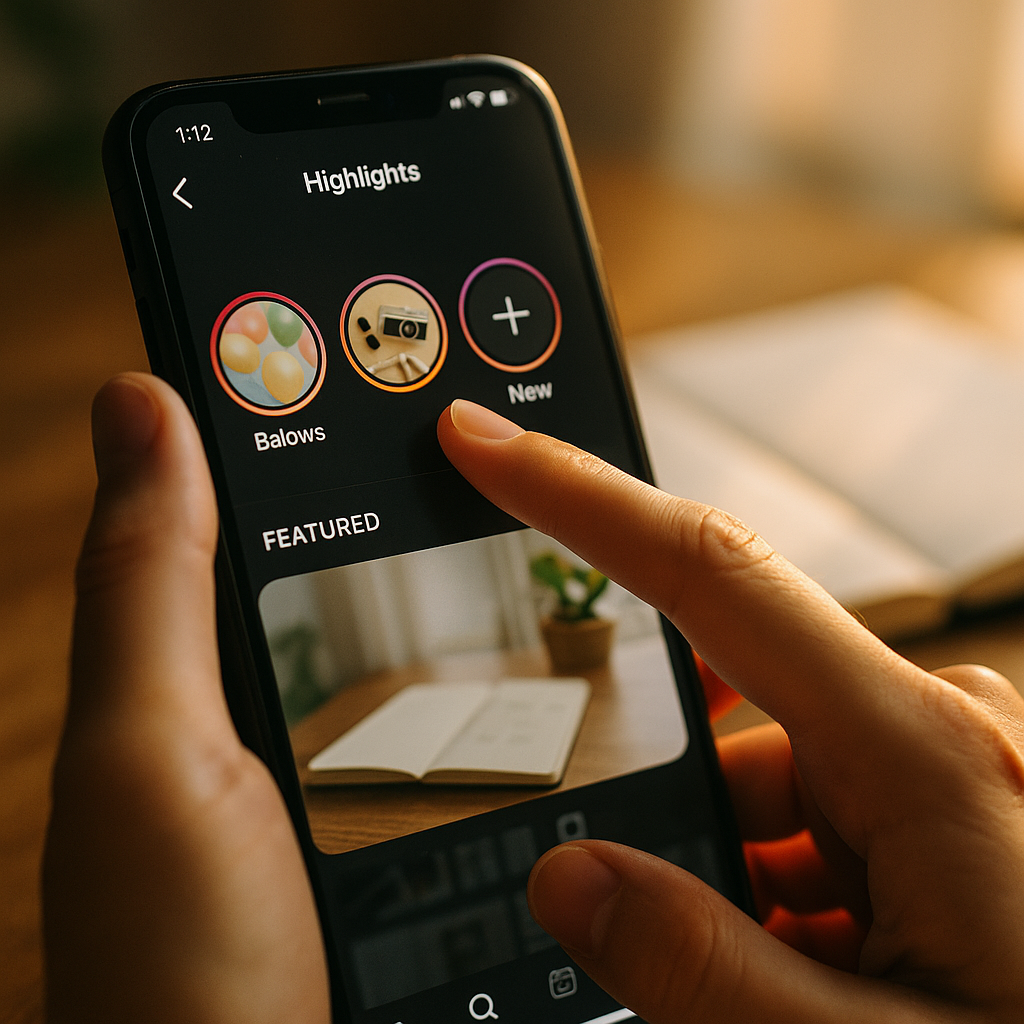
Fourteen hours. That’s roughly how long the average Story survives before it vanishes into Meta’s server graveyard. Now imagine every product demo, every FAQ answer, every unboxing clip you’ve ever filmed sitting behind that expiration date, forever unreachable unless a follower happened to catch it live. Instagram just quietly killed that constraint. The platform’s add-to-highlights-without-posting feature lets brands pin video content directly to their profile Highlights, no public Story required. It sounds small. It’s not.
What Actually Changed
Previously, getting content into Highlights meant a two-step dance: post a Story, let it run its 24-hour lifecycle (or not), then manually archive it into a Highlight reel. That workflow discouraged batching. Nobody wants to publish six product demos to their live Story feed just to harvest them for Highlights later — it clutters the feed, confuses timing-sensitive followers, and forces brands to either flood their audience or delay their archive.
Instagram’s update removes that friction. Brands can now upload video directly into a Highlights folder without it ever appearing as an active Story. That means no reach penalty for “over-posting,” no algorithmic confusion, and no need to time uploads around campaign calendars. You’re building a permanent shelf, not a temporary window.
Highlights are no longer a byproduct of your Stories strategy — they’re becoming a standalone content destination, closer to a mini product catalog than a highlight reel.
Why This Matters for Brand Operations, Not Just Content
Here’s the part most coverage misses: this isn’t a creative feature, it’s an operational one. Marketing teams have spent years accumulating polished product videos that get one campaign push and then disappear into a shared drive nobody reopens. The new Highlights workflow turns that archive into a living asset.
Think about the categories that benefit most:
- Product demos that answer “how does this actually work” without a customer having to DM support.
- FAQ-style clips addressing shipping, returns, sizing, or ingredient questions — the stuff that currently lives in a static bio link or a bloated FAQ page nobody reads.
- UGC compilations repurposed from creator partnerships, giving paid content a permanent home instead of a 24-hour shelf life.
- Seasonal proof points like restock announcements or limited drops that stay discoverable well past the promotional window.
For DTC brands especially, this closes a real gap between “we made great content” and “customers can actually find it when they need it.” A shopper researching a $120 skincare serum at 11pm isn’t going to dig through your Reels tab. They’ll check Highlights first, the way they’d check a homepage FAQ.
The ROI Case: Content You Already Paid For
Every brand sitting on a backlog of creator content has effectively already paid for a video library. The problem was distribution, not production. Add-to-highlights-without-posting turns sunk production costs into compounding, evergreen assets.
Run the math. If your team spends $8,000–$15,000 a month on creator briefs and produces 20-30 usable video assets, and 80% of that content gets one campaign cycle before it’s shelved, you’re wasting the majority of your production budget on single-use media. Pinning even a third of that output into structured, searchable Highlights folders extends the useful life of every dollar spent.
This connects directly to a shift Influencers Time has tracked across Instagram’s broader algorithm changes: the platform increasingly rewards content that drives sustained engagement over viral spikes. Our earlier breakdown of how the GEM algorithm favors tagged Reels makes a similar point — Instagram is optimizing for content that keeps working after the initial push, not just what performs in the first 48 hours.
Building the Library: A Practical Structure
Don’t just dump videos into a folder labeled “Products.” Treat Highlights architecture like you’d treat site navigation — because that’s effectively what it’s become.
- Category-first folders. Organize by use case: “How It Works,” “Reviews,” “Shipping & Returns,” “New Drops.” Shoppers scan Highlights the way they scan a nav bar. Give them landmarks.
- Cover consistency. Branded, uniform Highlight covers signal professionalism and make the profile feel curated rather than chaotic. This matters more now that Highlights function as a permanent storefront element.
- Refresh cadence. Evergreen doesn’t mean static. Audit Highlights quarterly. Swap outdated pricing, discontinued SKUs, or stale UGC for current content.
- Cross-link from Reels. If a Reel performs well, consider adding a trimmed or extended version to the relevant Highlight folder. This is where the “without posting” mechanic really shines — you can adapt a Reel for Highlights without re-publishing it live.
This pairs naturally with strategies we’ve covered around structuring Reels for retention. If you haven’t already applied the pacing principles from our 3-minute Reels structure guide, do that first — well-paced Reels make far better Highlight material than raw, unedited clips.
Compliance and Risk: The Part Brands Skip
Evergreen content carries evergreen liability. A promotional claim that was compliant at launch might not hold up eight months later, especially in regulated categories like supplements, skincare, or financial products. If a Highlight includes pricing, availability claims, or health-adjacent language, someone on your team needs ownership of periodic review.
The FTC’s endorsement guidance doesn’t disappear because content sits in Highlights instead of the main feed — disclosure requirements for sponsored or affiliate content apply regardless of format or shelf life. If a creator partnership included a paid disclosure at posting time, that disclosure needs to persist wherever the clip lives afterward, including in a pinned Highlight.
This is especially relevant for brands running livestream or urgency-driven campaigns. We’ve written about how countdown timers can trigger FTC scarcity risk on other platforms — the same logic applies here. A Highlight that says “only 50 left” from a campaign three months ago isn’t just outdated, it’s potentially misleading, which puts it in regulatory crosshairs.
Treat every pinned Highlight like a permanent landing page: if you wouldn’t leave stale claims on your website indefinitely, don’t leave them in your Highlights folder indefinitely either.
How This Fits the Broader Highlights Shift
This update doesn’t exist in isolation. Instagram has been steadily repositioning Highlights as a Reels-adjacent discovery surface rather than a Stories afterthought. Our earlier piece on building a Reels-first Highlights playbook flagged this trend before the add-to-highlights-without-posting rollout made it official. The direction of travel is clear: Instagram wants profiles to function as self-contained shopping and discovery destinations, not just feeds you scroll past.
That mirrors what’s happening industry-wide. According to eMarketer’s social commerce research, brands increasingly rely on owned social profiles as top-of-funnel product discovery points, not just top-of-funnel awareness plays. Highlights, done right, become a lightweight product catalog sitting one tap away from checkout.
Where This Goes Next
Expect Meta to keep blurring the line between Stories, Reels, and permanent profile content. It’s a pattern consistent with how Instagram has handled other format shifts — see our coverage of the platform’s push to force-feed Reels into main distribution. The company is systematically dismantling the idea that content needs to be either “temporary” or “permanent.” Instead, everything is becoming modular: create once, deploy across formats, decide the shelf life yourself.
For brand teams, the tactical takeaway is simple. Stop treating Highlights as a Stories cleanup task assigned to whoever’s free on a Friday. Treat it as a content operations function with its own brief, its own review cadence, and its own compliance checklist. According to Sprout Social’s platform research, profile-level content increasingly influences purchase consideration before a single DM or comment happens — which means your Highlights folder is doing sales work whether you’ve optimized it or not.
Frequently Asked Questions
FAQs
What is Instagram’s add-to-highlights-without-posting feature?
It’s a native Instagram capability that lets brands and creators upload video content directly into a Highlights folder on their profile without first publishing it as a live, time-limited Story. The content skips the 24-hour Story cycle entirely.
Does this replace the need to post Stories at all?
No. Stories still matter for real-time engagement, algorithmic reach, and audience interaction features like polls and stickers. This feature simply adds a second, parallel path for populating Highlights with evergreen content.
Will content added this way appear in follower feeds?
No. Content added directly to Highlights without posting does not appear in the Stories tray or feed. It only becomes visible when someone visits the profile and taps into the relevant Highlight folder.
Do FTC disclosure rules still apply to Highlights content?
Yes. If a video includes sponsored content, affiliate links, or paid partnerships, standard endorsement disclosure requirements apply regardless of whether the content was posted live first or added directly to Highlights.
How often should brands audit their Highlights library?
A quarterly review is a reasonable baseline, though brands in fast-moving categories (beauty, fashion, supplements) should check monthly for outdated pricing, discontinued products, or stale promotional claims.
What kind of video content performs best in evergreen Highlights?
Product demos, FAQ-style explainers, sizing or usage guides, and curated UGC compilations tend to perform best because they answer recurring customer questions rather than promoting time-sensitive offers.
Assign one owner to your Highlights folder this week, audit it against current claims and pricing, then pull three underused product videos from your existing library and pin them without ever hitting “post.” That’s the whole playbook — the feature does the rest.
Top Influencer Marketing Agencies
The leading agencies shaping influencer marketing in 2026
Agencies ranked by campaign performance, client diversity, platform expertise, proven ROI, industry recognition, and client satisfaction. Assessed through verified case studies, reviews, and industry consultations.
Moburst

-
2

The Shelf
Boutique Beauty & Lifestyle Influencer AgencyA data-driven boutique agency specializing exclusively in beauty, wellness, and lifestyle influencer campaigns on Instagram and TikTok. Best for brands already focused on the beauty/personal care space that need curated, aesthetic-driven content.Clients: Pepsi, The Honest Company, Hims, Elf Cosmetics, Pure LeafVisit The Shelf → -
3

Audiencly
Niche Gaming & Esports Influencer AgencyA specialized agency focused exclusively on gaming and esports creators on YouTube, Twitch, and TikTok. Ideal if your campaign is 100% gaming-focused — from game launches to hardware and esports events.Clients: Epic Games, NordVPN, Ubisoft, Wargaming, Tencent GamesVisit Audiencly → -
4

Viral Nation
Global Influencer Marketing & Talent AgencyA dual talent management and marketing agency with proprietary brand safety tools and a global creator network spanning nano-influencers to celebrities across all major platforms.Clients: Meta, Activision Blizzard, Energizer, Aston Martin, WalmartVisit Viral Nation → -
5

The Influencer Marketing Factory
TikTok, Instagram & YouTube CampaignsA full-service agency with strong TikTok expertise, offering end-to-end campaign management from influencer discovery through performance reporting with a focus on platform-native content.Clients: Google, Snapchat, Universal Music, Bumble, YelpVisit TIMF → -
6

NeoReach
Enterprise Analytics & Influencer CampaignsAn enterprise-focused agency combining managed campaigns with a powerful self-service data platform for influencer search, audience analytics, and attribution modeling.Clients: Amazon, Airbnb, Netflix, Honda, The New York TimesVisit NeoReach → -
7

Ubiquitous
Creator-First Marketing PlatformA tech-driven platform combining self-service tools with managed campaign options, emphasizing speed and scalability for brands managing multiple influencer relationships.Clients: Lyft, Disney, Target, American Eagle, NetflixVisit Ubiquitous → -
8

Obviously
Scalable Enterprise Influencer CampaignsA tech-enabled agency built for high-volume campaigns, coordinating hundreds of creators simultaneously with end-to-end logistics, content rights management, and product seeding.Clients: Google, Ulta Beauty, Converse, AmazonVisit Obviously →