


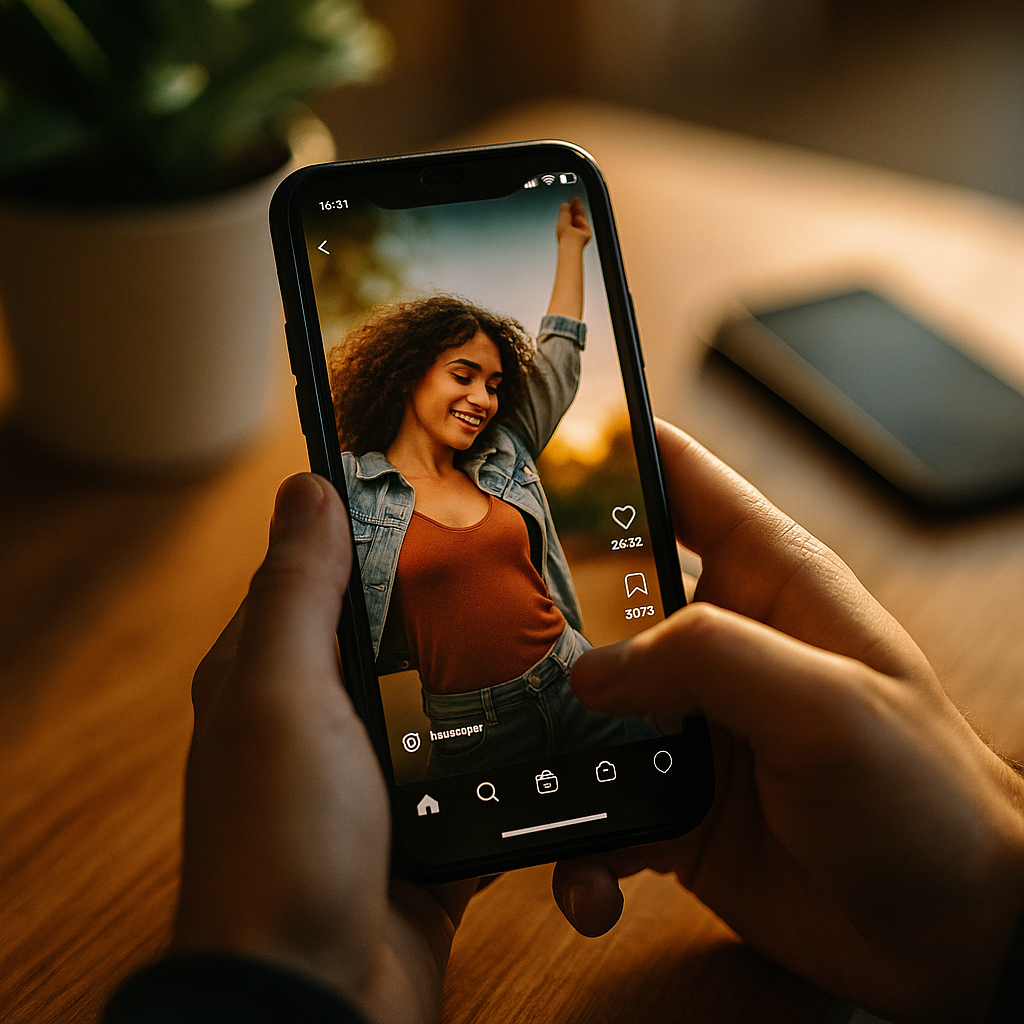
Instagram’s ranking systems now treat a share to DM as worth roughly the weight of several likes stacked together. That’s not a leaked memo — it’s the pattern hundreds of creator teams have reverse-engineered from a year of Reels performance data. If your briefs still tell creators to “drive engagement,” you’re optimizing for the wrong currency. The Instagram save-and-DM signal weighting shift has quietly rewritten what a winning Reel looks like, and most brand briefs haven’t caught up.
Why Likes Stopped Mattering (Mostly)
Meta has said publicly, more than once, that likes are a weak proxy for content quality. Easy to fake, easy to bait, easy to game with a comment-for-comment pod. Saves and shares, by contrast, require intent. Someone has to stop scrolling, tap an icon, and either file the content away or send it to a specific person. That’s friction. And friction, in ranking-algorithm terms, is a trust signal.
DMs carry even more weight than public saves in current distribution models, according to creator analytics platforms tracking Reels performance across thousands of accounts. When a user sends a Reel privately, Instagram reads it as a stronger endorsement than a public share, because there’s no social performance angle to it. Nobody shares a Reel to a friend’s DM to look good. They share it because the content actually solved something, made them laugh, or felt relevant enough to hand off.
A private share carries no audience-management incentive — which is exactly why Instagram’s models trust it more than a public like or comment.
What “Signal Weighting” Actually Means for Distribution
Instagram’s recommendation system doesn’t treat all engagement equally. It scores each action, then feeds that score into the initial distribution pool that decides whether a Reel gets pushed beyond followers. Saves and shares (especially DM shares) appear to carry a multiplier effect in early testing windows — the first 30 to 60 minutes after publish. A Reel that racks up saves and shares in that window gets a second, wider testing pool. One that gets likes but nothing else often stalls.
This mirrors what we’ve already covered around why saves beat likes now — but the DM layer adds a new wrinkle. It’s not enough to make something save-worthy. You need content that people want to hand to a specific person: a partner, a coworker, a group chat. That’s a different creative brief than “make something likeable.”
The Practical Difference Between Save-Bait and Share-Bait
Save-bait content usually looks like: listicles, step-by-step tutorials, “save this for later” reference material. Recipes, workout splits, packing lists. People save because they intend to return to it.
Share-bait content is different. It’s relatable, often emotional, sometimes funny, and built around a specific recipient in the viewer’s head. Think “sending this to my sister” or “this is literally you” energy. The creative hook isn’t “useful later” — it’s “someone I know needs to see this right now.”
A strong brief hits both. A brief that only chases one signal leaves reach on the table.
Rebuilding the Brief: What to Actually Ask Creators For
Most influencer briefs are still built around message points and CTAs. That’s necessary but insufficient. Here’s what belongs in a brief structured for save-and-DM performance:
- A “who would you send this to” prompt. Ask creators to script the hook with a specific recipient archetype in mind — not a demographic, an actual person type (“the friend who’s always late,” “the roommate who never cleans”).
- A reference-value component. Build in at least one element worth saving: a checklist, a comparison, a formula, a template. Something with shelf life beyond the first watch.
- Explicit save/share language in the video itself. “Save this before you forget” or “send this to the person who needs it” outperforms silent hope that viewers figure it out. Direct prompts increase both actions measurably.
- Pacing that survives a re-watch. Saved content gets watched two or three times. If the value is front-loaded and the back half is filler, the save doesn’t convert into a re-watch, and Instagram’s models can tell.
- A structure that resists context loss. DM shares often get watched without sound, or by someone who missed the setup. Captions and on-screen text need to carry the full narrative independent of audio.
Timing Windows Matter More Than Ever
Because saves and DM shares carry outsized weight in the early testing phase, posting time isn’t just about when your audience is online — it’s about giving the algorithm a clean read on early signal quality before it decides distribution tier. This connects directly to how Instagram has restructured discovery more broadly. If you haven’t adjusted for the platform’s push toward forced Reels distribution, worth revisiting Instagram’s Reels distribution playbook alongside this signal shift, since the two systems interact.
Brands running paid amplification on top of organic Reels should also account for the extended Reels length limits — longer runtime changes where the save prompt should land in the script. A save cue at the two-minute mark of a three-minute Reel behaves differently than one dropped at second eight of a fifteen-second clip.
Does This Replace the GEM Algorithm Conversation?
No — it complements it. Instagram’s GEM ranking system, which we broke down in our GEM algorithm brief rewrite, weighs predicted watch time and engagement likelihood before content ever reaches a broader audience. Save and DM signals feed into that same predictive model as high-confidence indicators of relevance. Think of GEM as the sorting engine and save/DM behavior as one of its highest-trust inputs.
Measurement: Stop Reporting Likes as a Success Metric
If your reporting deck still leads with likes and comment counts, you’re presenting a vanity metric to stakeholders who deserve better. Shift reporting toward:
- Save rate (saves ÷ reach)
- Share rate, broken out by public share vs. DM share where the platform’s Insights panel allows it
- Re-watch percentage as a proxy for reference value
- Follow-through rate on any linked product or landing page from saved content
Meta’s own Meta Business tools now surface save and share breakdowns at the post level for most business accounts, and it’s worth training whoever owns reporting to pull that data rather than defaulting to the top-line engagement number. Third-party platforms like Sprout Social also benchmark save-to-reach ratios across industries, which gives you something to compare against beyond your own historical baseline.
A Quick Gut-Check for Your Next Brief
Before a brief goes out to a creator, run it against three questions:
- Does the concept give someone an obvious reason to save it for later use?
- Does the concept give someone an obvious person to send it to?
- Does the script explicitly ask for either action, rather than assuming it’ll happen organically?
If the answer to any of these is no, the brief needs another pass before it goes to talent. This isn’t about padding a script with awkward CTAs — creators know when a save prompt feels bolted on versus baked in. The best-performing briefs we’ve seen treat the save/share ask as part of the creative concept from the first draft, not a line added in revision.
It’s also worth noting this shift isn’t unique to Instagram. eMarketer has tracked similar movement toward private-sharing weighting across short-form platforms generally, suggesting this is a durable industry direction rather than a temporary algorithm quirk. Brands running parallel TikTok programs should expect comparable logic to show up there, even if the mechanics differ — our TikTok force-feed algorithm breakdown covers a related distribution mechanic worth cross-referencing.
Frequently Asked Questions
What is Instagram’s save-and-DM signal weighting?
It refers to how Instagram’s ranking and recommendation systems assign greater trust and distribution value to saves and private DM shares compared to likes or public comments, because those actions require more deliberate user intent.
Why does a DM share matter more than a public share?
A DM share happens without any social performance incentive — the sender isn’t trying to look good to an audience. Instagram’s models treat that as a stronger, more honest signal of content quality than a public like or comment.
How soon after posting does signal weighting affect distribution?
Early testing windows, typically the first 30 to 60 minutes post-publish, appear to weigh saves and shares heavily when deciding whether to push a Reel into a wider distribution pool.
Should brands still track likes at all?
Likes still contribute to overall engagement scoring, but they shouldn’t be the headline metric in performance reports. Save rate, share rate, and re-watch percentage are stronger indicators of algorithmic favor and audience value.
Does this apply to paid partnership content too?
Yes. Branded content ads and organic creator posts are both subject to the same underlying ranking signals, though paid amplification can offset weaker organic save/share performance to some degree.
The Next Step
Pull your last ten Reels briefs and check whether any of them explicitly asked creators to prompt a save or a DM share. If the answer is mostly no, that’s your fastest fix — not a bigger budget, not a new creator tier, just a sharper ask in the next brief.
Frequently Asked Questions
What is Instagram’s save-and-DM signal weighting?
It refers to how Instagram’s ranking and recommendation systems assign greater trust and distribution value to saves and private DM shares compared to likes or public comments, because those actions require more deliberate user intent.
Why does a DM share matter more than a public share?
A DM share happens without any social performance incentive — the sender isn’t trying to look good to an audience. Instagram’s models treat that as a stronger, more honest signal of content quality than a public like or comment.
How soon after posting does signal weighting affect distribution?
Early testing windows, typically the first 30 to 60 minutes post-publish, appear to weigh saves and shares heavily when deciding whether to push a Reel into a wider distribution pool.
Should brands still track likes at all?
Likes still contribute to overall engagement scoring, but they shouldn’t be the headline metric in performance reports. Save rate, share rate, and re-watch percentage are stronger indicators of algorithmic favor and audience value.
Does this apply to paid partnership content too?
Yes. Branded content ads and organic creator posts are both subject to the same underlying ranking signals, though paid amplification can offset weaker organic save/share performance to some degree.
Top Influencer Marketing Agencies
The leading agencies shaping influencer marketing in 2026
Agencies ranked by campaign performance, client diversity, platform expertise, proven ROI, industry recognition, and client satisfaction. Assessed through verified case studies, reviews, and industry consultations.
Moburst

-
2

The Shelf
Boutique Beauty & Lifestyle Influencer AgencyA data-driven boutique agency specializing exclusively in beauty, wellness, and lifestyle influencer campaigns on Instagram and TikTok. Best for brands already focused on the beauty/personal care space that need curated, aesthetic-driven content.Clients: Pepsi, The Honest Company, Hims, Elf Cosmetics, Pure LeafVisit The Shelf → -
3

Audiencly
Niche Gaming & Esports Influencer AgencyA specialized agency focused exclusively on gaming and esports creators on YouTube, Twitch, and TikTok. Ideal if your campaign is 100% gaming-focused — from game launches to hardware and esports events.Clients: Epic Games, NordVPN, Ubisoft, Wargaming, Tencent GamesVisit Audiencly → -
4

Viral Nation
Global Influencer Marketing & Talent AgencyA dual talent management and marketing agency with proprietary brand safety tools and a global creator network spanning nano-influencers to celebrities across all major platforms.Clients: Meta, Activision Blizzard, Energizer, Aston Martin, WalmartVisit Viral Nation → -
5

The Influencer Marketing Factory
TikTok, Instagram & YouTube CampaignsA full-service agency with strong TikTok expertise, offering end-to-end campaign management from influencer discovery through performance reporting with a focus on platform-native content.Clients: Google, Snapchat, Universal Music, Bumble, YelpVisit TIMF → -
6

NeoReach
Enterprise Analytics & Influencer CampaignsAn enterprise-focused agency combining managed campaigns with a powerful self-service data platform for influencer search, audience analytics, and attribution modeling.Clients: Amazon, Airbnb, Netflix, Honda, The New York TimesVisit NeoReach → -
7

Ubiquitous
Creator-First Marketing PlatformA tech-driven platform combining self-service tools with managed campaign options, emphasizing speed and scalability for brands managing multiple influencer relationships.Clients: Lyft, Disney, Target, American Eagle, NetflixVisit Ubiquitous → -
8

Obviously
Scalable Enterprise Influencer CampaignsA tech-enabled agency built for high-volume campaigns, coordinating hundreds of creators simultaneously with end-to-end logistics, content rights management, and product seeding.Clients: Google, Ulta Beauty, Converse, AmazonVisit Obviously →