


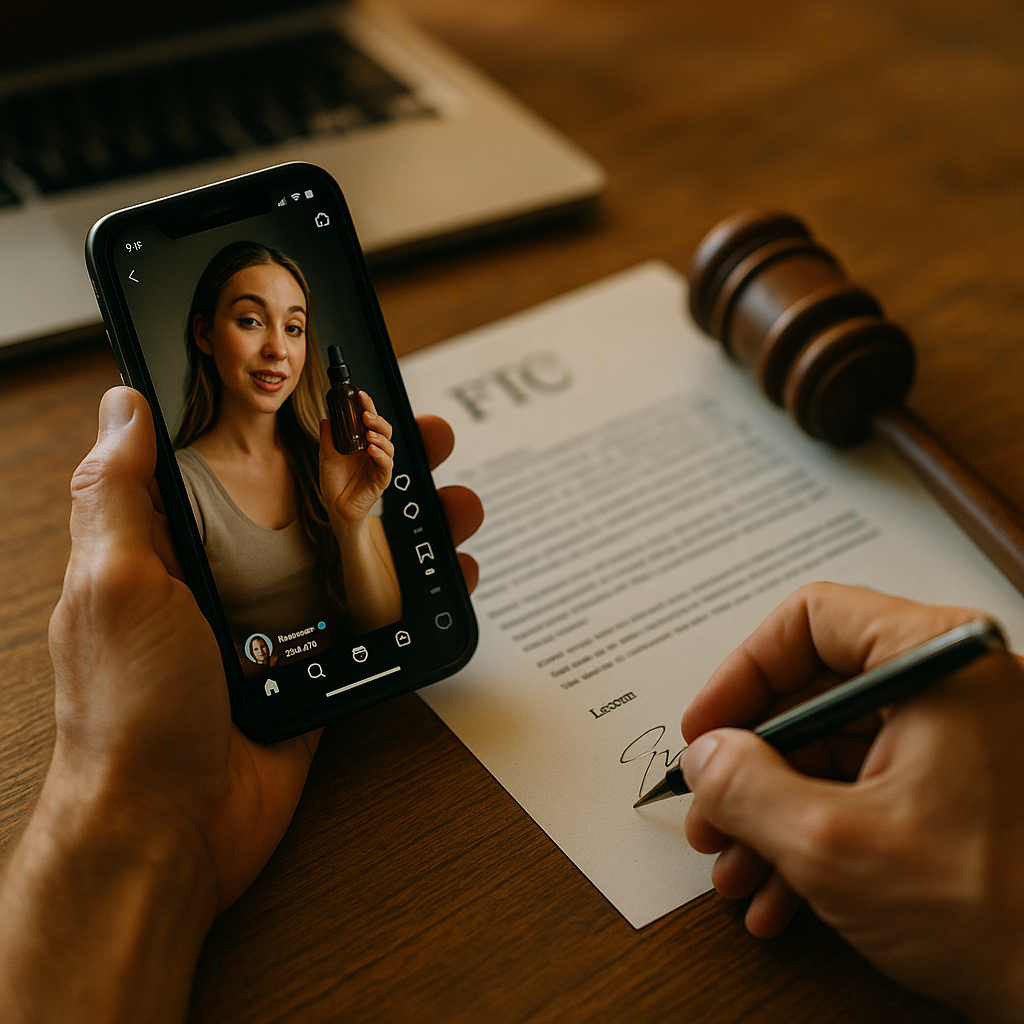
A hashtag never bought anyone’s silence. That’s the blunt lesson from a wave of recent enforcement actions where regulators looked past the disclosure language entirely and asked a simpler question: did money change hands, and did the audience know it? Commercial intent enforcement is now the dominant lens for regulators evaluating influencer content, and brands still treating #ad as a compliance checkbox are exposed in ways their legal teams haven’t fully priced in.
The Old Playbook Is Officially Obsolete
For years, the compliance conversation in influencer marketing revolved around a narrow question: is the hashtag there? Brands built entire approval workflows around confirming #ad, #sponsored, or #partner appeared somewhere in a caption. Legal teams signed off. Everyone moved on.
That approach worked when regulators were mostly checking boxes too. It doesn’t work anymore.
The Federal Trade Commission has increasingly signaled that the presence of a disclosure hashtag is not, by itself, evidence of compliance. Investigators are now looking at whether disclosures were clear, conspicuous, and unavoidable to an average viewer scrolling at normal speed — not buried in a hashtag stack after fifteen unrelated tags, and not contradicted by content that implies the endorsement is unpaid or purely organic.
Regulators have shifted from asking “was there a disclosure?” to asking “would a reasonable consumer have understood this was paid promotion?” That’s a substance test, not a formatting test.
Why “Substance Over Form” Is the New Standard
Substance-based enforcement means regulators evaluate the entire commercial relationship and the entire viewer experience, not a single visual element. A few factors now carry more weight than the hashtag itself:
- Placement and visibility. Disclosures buried below the “see more” fold on Instagram or dropped into a wall of TikTok caption text don’t count as conspicuous, even if the word “ad” is technically present.
- Contextual contradiction. If a creator’s spoken narrative frames a product as something they discovered independently while the caption says “#ad,” regulators treat that as a mixed signal that undermines disclosure.
- Pattern of relationship. A single sponsored post from an unaffiliated creator reads differently than an ongoing paid ambassadorship where every post looks organic. Regulators increasingly look at the full campaign arc, not one asset in isolation.
- Platform-native norms. What counts as “clear” on a livestream differs from a static Instagram carousel. Regulators are adapting their expectations to format, and brands need to as well.
In short: the test isn’t “did you tag it,” it’s “did you deceive.” That’s a much higher bar, and it puts brands, not just creators, directly in the blast radius.
Who Actually Gets Held Liable Here?
This is the part that should worry CMOs more than legal counsel. Historically, enforcement actions tended to focus on the creator: the individual who posted without disclosure. That’s shifting.
Brands are now named alongside creators, and in several cases, brands have faced primary liability for failing to have a “reasonable monitoring program” in place. The FTC’s endorsement guides explicitly state that advertisers bear responsibility for training creators, monitoring their output, and taking action against those who don’t comply. A hashtag requirement in a contract doesn’t satisfy that obligation if nobody checks whether it’s used correctly, or whether it’s used in a way that actually communicates paid intent.
This matters enormously for how agencies and in-house teams structure influencer programs. If you’re running dozens or hundreds of creator relationships through an influencer manager function tied to performance metrics, compliance can’t be an afterthought bolted onto the contract. It has to be part of the operational workflow, the same way brand safety and creative approval are.
The Commercial Intent Test, Explained
So what exactly are regulators looking for when they assess “commercial intent”? Think of it less as a legal formula and more as a set of investigative questions:
- Was there any material connection between the brand and the creator, including free product, payment, affiliate commission, or equity?
- Would that connection be surprising or material to a viewer’s purchase decision if they knew about it?
- Did the content, taken as a whole, communicate that connection in a way an average consumer would notice without hunting for it?
- Did the brand have any process for verifying disclosure compliance before or after publication?
Notice that none of these questions mention a specific hashtag. That’s deliberate. Regulators learned that hashtag-only enforcement created a compliance theater where brands could point to contractual language while actual consumer deception continued unabated. Substance-based enforcement closes that loophole.
What This Means for Creator Compensation Models
The rise of equity-based and revenue-share creator deals adds another wrinkle. When a creator holds equity in a brand, or earns ongoing commission through an affiliate structure like TikTok Shop’s affiliate model, the material connection is arguably even stronger than a flat one-time payment. Yet these relationships often get disclosed more casually, precisely because they don’t feel like a traditional “sponsored post.”
That’s a mistake regulators are increasingly primed to catch. An ownership stake or recurring commission is exactly the kind of financial relationship the FTC considers material. If anything, equity and affiliate arrangements deserve more disclosure rigor, not less, because the ongoing nature of the relationship makes every single post a potential compliance event.
The Global Angle: This Isn’t Just an FTC Problem
Brands running multi-market campaigns need to think beyond U.S. rules. The UK’s Information Commissioner’s Office and the UK’s Advertising Standards Authority have pursued similarly substance-focused enforcement, penalizing ambiguous disclosures even when some disclosure language existed. The EU’s Digital Services Act adds platform-level obligations that indirectly pressure brands to tighten their own practices, since platforms are now more aggressive about labeling and removing ambiguous sponsored content.
The practical implication: a disclosure approach that satisfies U.S. standards may not satisfy UK or EU regulators, and vice versa. Global campaigns need region-specific compliance review, not a single hashtag template copy-pasted across markets.
Building a Program That Survives Substance-Based Scrutiny
Here’s where the operational rubber meets the road. If hashtags alone don’t protect you, what does?
- Pre-publication review for high-risk formats. Livestreams, Stories, and Reels where disclosure can get visually or audibly buried deserve manual review, not just automated caption scans.
- Verbal disclosure requirements for video. A spoken “this is sponsored by” in the first few seconds is far harder to argue against than a caption hashtag alone.
- Documented monitoring cadence. Keep records showing you actually checked creator content post-publication, not just pre-approved scripts. Regulators want evidence of an active program, not a passive contract clause.
- Creator training refreshed regularly. Platform UI changes constantly. What counted as “above the fold” on Instagram a year ago may not anymore. Retrain creators when interfaces shift.
- Escalation and consequences. A monitoring program without teeth is not a monitoring program. Brands need documented processes for what happens when a creator fails to disclose properly, including content removal and repeat-offense termination.
This kind of rigor sits well alongside the broader trend toward adaptive martech vendor selection, where brands are increasingly choosing platforms and tools specifically because they support compliance tracking, not just campaign delivery. If your influencer platform can’t produce an audit trail of disclosure checks, that’s now a genuine gap, not a nice-to-have.
What About Smaller Creators and Micro-Influencer Programs?
A common misconception: enforcement risk scales with follower count. It doesn’t, at least not the way brands assume. A nano-influencer with 8,000 followers carries the same disclosure obligations as a celebrity with eight million. Regulators have pursued cases involving small creators specifically because brands assumed lower visibility meant lower scrutiny.
If your brand runs high-volume micro-influencer programs, and many performance-driven brands do because of the audience quality advantages smaller creators often deliver, you cannot rely on scale as a shield. In fact, the volume itself becomes the risk: more creators means more opportunities for inconsistent disclosure, and regulators can build a pattern-of-neglect case out of dozens of small violations just as easily as one large one.
Practical Next Step
Audit your current influencer contracts this quarter: if they mention a specific hashtag but say nothing about placement, verbal disclosure, or ongoing monitoring, they’re outdated. Replace hashtag-only clauses with substance-based disclosure standards, and build a documented review cadence before your next regulator does it for you.
Frequently Asked Questions
What is commercial intent enforcement in influencer marketing?
It’s a regulatory approach that evaluates whether consumers actually understood content was paid promotion, based on the full context of the post, rather than simply checking whether a disclosure hashtag was present.
Is #ad still required in influencer posts?
Yes, disclosure hashtags remain a useful and expected practice, but they’re no longer sufficient on their own. Regulators now assess placement, clarity, and whether the overall content contradicts or undermines the disclosure.
Can a brand be held liable if a creator fails to disclose properly?
Yes. The FTC has increasingly pursued brands directly for failing to maintain reasonable monitoring and training programs, even when contracts included disclosure requirements.
Do equity and affiliate-based creator deals need different disclosure treatment?
They arguably need more rigorous disclosure, since ongoing financial relationships like equity stakes or recurring commissions are considered material connections under most regulatory frameworks.
How often should brands review their influencer compliance programs?
At minimum quarterly, and immediately after any major platform UI change or new regulatory guidance, since disclosure norms considered adequate can shift quickly.
Top Influencer Marketing Agencies
The leading agencies shaping influencer marketing in 2026
Agencies ranked by campaign performance, client diversity, platform expertise, proven ROI, industry recognition, and client satisfaction. Assessed through verified case studies, reviews, and industry consultations.
Moburst

-
2

The Shelf
Boutique Beauty & Lifestyle Influencer AgencyA data-driven boutique agency specializing exclusively in beauty, wellness, and lifestyle influencer campaigns on Instagram and TikTok. Best for brands already focused on the beauty/personal care space that need curated, aesthetic-driven content.Clients: Pepsi, The Honest Company, Hims, Elf Cosmetics, Pure LeafVisit The Shelf → -
3

Audiencly
Niche Gaming & Esports Influencer AgencyA specialized agency focused exclusively on gaming and esports creators on YouTube, Twitch, and TikTok. Ideal if your campaign is 100% gaming-focused — from game launches to hardware and esports events.Clients: Epic Games, NordVPN, Ubisoft, Wargaming, Tencent GamesVisit Audiencly → -
4

Viral Nation
Global Influencer Marketing & Talent AgencyA dual talent management and marketing agency with proprietary brand safety tools and a global creator network spanning nano-influencers to celebrities across all major platforms.Clients: Meta, Activision Blizzard, Energizer, Aston Martin, WalmartVisit Viral Nation → -
5

The Influencer Marketing Factory
TikTok, Instagram & YouTube CampaignsA full-service agency with strong TikTok expertise, offering end-to-end campaign management from influencer discovery through performance reporting with a focus on platform-native content.Clients: Google, Snapchat, Universal Music, Bumble, YelpVisit TIMF → -
6

NeoReach
Enterprise Analytics & Influencer CampaignsAn enterprise-focused agency combining managed campaigns with a powerful self-service data platform for influencer search, audience analytics, and attribution modeling.Clients: Amazon, Airbnb, Netflix, Honda, The New York TimesVisit NeoReach → -
7

Ubiquitous
Creator-First Marketing PlatformA tech-driven platform combining self-service tools with managed campaign options, emphasizing speed and scalability for brands managing multiple influencer relationships.Clients: Lyft, Disney, Target, American Eagle, NetflixVisit Ubiquitous → -
8

Obviously
Scalable Enterprise Influencer CampaignsA tech-enabled agency built for high-volume campaigns, coordinating hundreds of creators simultaneously with end-to-end logistics, content rights management, and product seeding.Clients: Google, Ulta Beauty, Converse, AmazonVisit Obviously →