


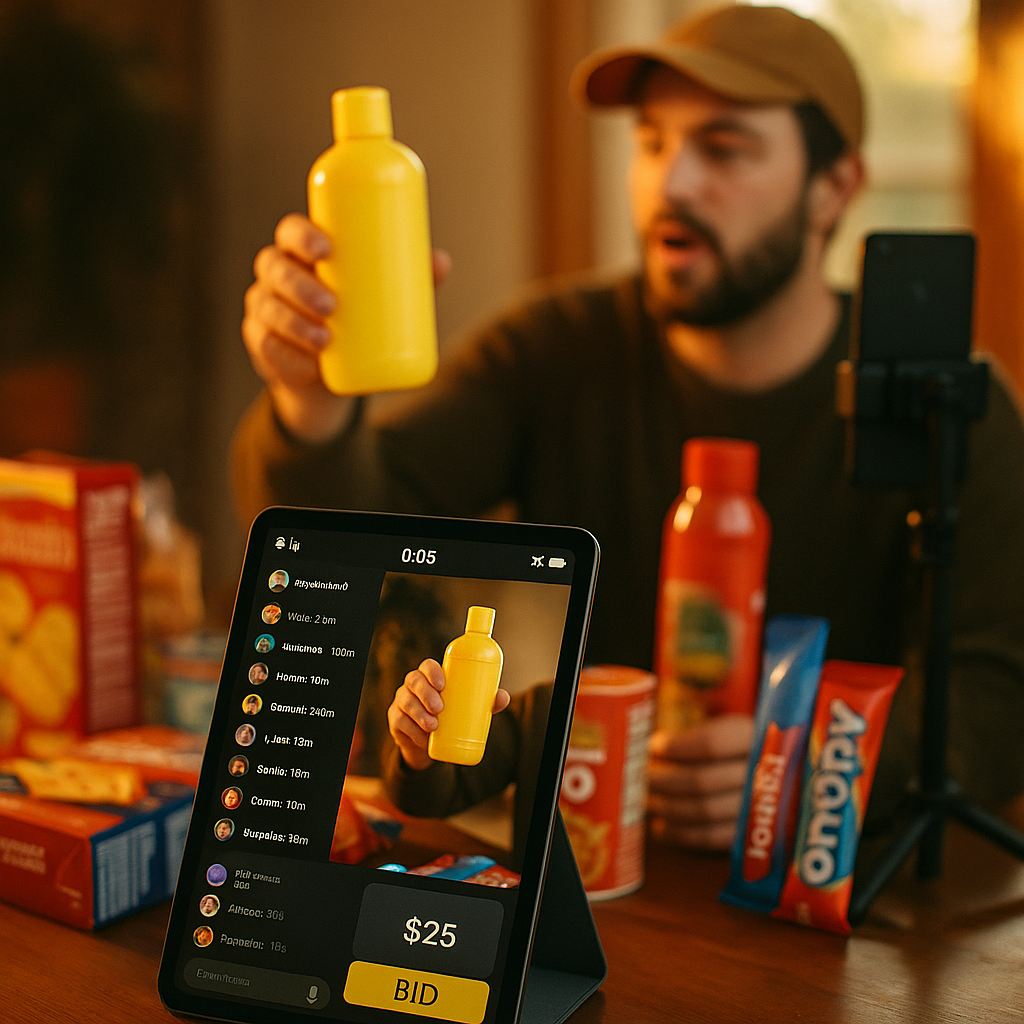
Whatnot did over $3 billion in gross merchandise value last year, almost entirely on the back of collectibles, sneakers, and trading cards. Now toothpaste brands and snack companies want in. But a Whatnot auction mechanic built for a $400 Pokémon slab doesn’t translate cleanly to a $6 bag of protein chips. Here’s the adaptation playbook nobody’s written yet.
Why CPG Brands Are Suddenly Watching Whatnot
Whatnot started as a resale marketplace for hobbyists. It’s now the fastest-growing live shopping app in the US, and it’s actively courting mainstream brands beyond its collectibles roots. The platform has been pushing categories like beauty, apparel, and home goods hard, and CPG is next on the list.
The appeal is obvious. Livestream shopping in the US is projected to keep climbing toward the tens of billions in annual sales, per eMarketer forecasts, and brands are tired of splitting attention between TikTok Shop and Amazon Live with diminishing returns. Whatnot offers something different: real-time bidding, a built-in auction engine, and an audience that’s trained to buy fast, on impulse, under time pressure.
That auction engine is the differentiator. It’s also the trap. Collectibles buyers bid because scarcity is real — there’s one card, one grail sneaker, one signed jersey. Your family-size cereal box is not scarce. It’s sitting in a warehouse in Ohio by the pallet. Import the bidding mechanic without adjusting the logic, and you’ll either tank your margins or confuse your audience into silence.
The Core Problem: Scarcity Theater vs. Real Scarcity
Collectibles sellers on Whatnot run true single-unit auctions. One item, highest bid wins, stream moves on. CPG doesn’t work that way — you’re not selling one bottle of laundry detergent, you’re selling thousands, and you need velocity, not a single winning bid.
The mistake most CPG brands make on Whatnot is treating the auction as a novelty instead of a demand-shaping tool — the mechanic only works if scarcity is credible, and credibility requires structural changes to how you list, price, and fulfill.
So the first adaptation isn’t cosmetic. It’s structural. You need to redesign what “winning” means for a product that exists in abundance.
Four Bidding Mechanics That Actually Translate
1. Multi-Unit Dutch Auctions Instead of Single-Item Bidding
Whatnot supports Dutch-style and multi-win formats where several buyers can win at the same or descending price. This is the CPG-native version of the auction: instead of one person winning one hero SKU, ten or twenty buyers can each claim a unit as the price ticks down or as bids stack. It keeps the tension of live bidding while matching the reality that you have inventory to move, not a single collector’s item to crown.
A snack brand running a Dutch auction on a 12-pack bundle can open at a stated MSRP and let the price fall in real time until units sell out. Buyers watch the countdown, chat gets loud, and the anxiety of “it might sell out before I claim mine” does the psychological work that scarcity does for a trading card.
2. Bundle Bidding, Not Unit Bidding
Nobody wants to bid war over a single bar of soap. Bundle the economics instead: bid on a “build your own case” lot, a mixed-flavor variety pack, or a seasonal gift set. Bundling raises average order value and gives the auction format something worth fighting over — variety and perceived deal size, not just unit price.
This mirrors what worked in Amazon Live’s bundling strategy outside of Prime Day: bundles create a reason to stay tuned rather than buy-and-bounce.
3. Reserve-Price Floors to Protect Margin
Collectibles sellers rarely use reserve pricing because scarcity does the pricing work for them. CPG brands can’t afford that. Set a hard floor tied to your actual margin structure — landed cost plus platform take rate plus minimum contribution margin — and never let the auction engine bid below it. Whatnot takes a commission on GMV, typically in the range sellers report as 8-10% depending on category and seller tier, so your floor math has to account for that from the outset, not as an afterthought when settlement hits.
4. Time-Boxed “Drops” Instead of Open-Ended Bidding
Open-ended bidding works for a rare item because collectors will camp out. General shoppers won’t. Structure CPG auctions as tight 3-5 minute drops within a longer stream: announce the SKU, run the clock, close it, move to the next. This keeps pacing tight and gives your host natural segments to reset energy, similar to the urgency-without-fatigue approach brands use in TikTok Shop restock alerts.
Casting the Right Host — This Isn’t a QVC Rerun
Whatnot’s collectibles hosts are part auctioneer, part hype man, part category expert who can authenticate a card on sight. CPG needs a different hybrid: someone who can talk product benefit fast, handle live objections about ingredients or shipping, and keep energy up without sounding like an infomercial from 1997.
Brands that succeed here usually cast two host archetypes:
- The category expert — a dietitian for supplements, an esthetician for skincare, someone whose credibility answers the “why should I trust this claim” question in real time.
- The auction-native performer — someone comfortable with the rapid-fire pacing and chat-reading skills that make Whatnot’s format work, even if they know nothing about your product going in. Pair them with the expert as a co-host.
Don’t default to your existing TikTok Shop affiliates without vetting their auction chops. Reading a live bid ladder and reacting to chat velocity is a different skill than a scripted GRWM video. It’s closer to what makes a strong live broadcast structure work on any platform: pacing discipline matters more than charisma alone.
Compliance Is Not Optional — And CPG Has More Exposure Than Collectibles
This is the section brands skip and regret. Collectibles auctions face relatively light regulatory scrutiny beyond authenticity claims. CPG carries FTC exposure around health claims, pricing representations, and disclosure — especially in food, beverage, supplements, and personal care.
A few non-negotiables:
- Never imply a bid price is a “discount” off a fabricated reference price. The FTC’s guidance on pricing claims applies regardless of platform, and “reference price” inflation is one of the most common violations in livestream commerce.
- Disclose sponsored hosts clearly, on-screen and verbally, every stream — not just in a bio link.
- Avoid unverified health or efficacy claims in the heat of live chat. Hosts riffing under bidding pressure are the most common source of compliance violations, and there’s no edit button on a live auction.
- Document your reserve-price logic internally in case a regulator or platform asks why a “starting bid” was set where it was.
These aren’t hypothetical risks. TikTok Shop’s own crackdowns on livestream compliance around returns and shipping claims show regulators and platforms are watching this category closely, and Whatnot has less mature seller tooling for compliance than TikTok Shop does today. Build your own guardrails; don’t wait for the platform to build them for you.
Fulfillment and Inventory: The Part Nobody Talks About
Collectibles sellers ship one item to one winner. CPG auctions running Dutch or multi-win formats can generate dozens of simultaneous orders in a five-minute window. If your 3PL isn’t set up for that burst pattern, you’ll blow your shipping SLAs and tank your seller rating.
Before your first stream, stress-test three things: warehouse pick-and-pack capacity for a burst of same-hour orders, your return policy for perishable or opened CPG goods (very different from a graded card’s return terms), and your customer service coverage for the immediate post-stream question spike. Whatnot’s buyer base expects fast shipping confirmation — collectibles culture is obsessive about tracking numbers, and that expectation transfers to whatever category you’re selling.
How to Measure Success Beyond GMV
GMV is the vanity metric everyone reports. For CPG specifically, track:
- Repeat purchase rate from Whatnot buyers within 60 days — this tells you if you’re building customers or just clearing a promo-driven audience.
- Average bid-to-list ratio per SKU, to see whether your reserve pricing is calibrated correctly.
- Cost per acquired customer including platform commission and host fees, benchmarked against your existing CAC data from paid social.
- Chat-to-bid conversion as a proxy for host effectiveness — a strong host converts a meaningful share of active chatters into bidders, not just spectators.
Run this the same way you’d evaluate any new channel test: three to five streams minimum before drawing conclusions, because the first stream is always noisy while your host and ops team find their rhythm.
Next Step
Don’t launch a full Whatnot program off a single test stream. Run one Dutch-auction bundle drop, one reserve-priced hero SKU drop, and one bundled variety-pack drop across three separate streams, then compare bid-to-list ratio and 60-day repeat rate before committing marketing budget beyond a pilot.
FAQs
Is Whatnot a good fit for CPG brands outside of beauty and apparel?
It can work for food, beverage, household, and supplement brands, but success depends on adapting the auction mechanics — multi-win formats, bundling, and reserve pricing — rather than copying collectibles-style single-item bidding.
What commission does Whatnot take on CPG sales?
Sellers commonly report take rates in the high single digits to around 10% of GMV depending on category and seller tier; brands should confirm current rates directly with Whatnot’s seller terms before pricing floors.
How is a Whatnot auction different from a TikTok Shop livestream?
TikTok Shop livestreams are primarily fixed-price with flash discounts and coupons, while Whatnot’s core mechanic is competitive bidding, which changes host skills, pricing strategy, and compliance risk around pricing claims.
What’s the biggest compliance risk for CPG brands running auctions?
Unsubstantiated health or efficacy claims made live by hosts, and pricing claims that imply a discount off an inflated reference price, both of which fall under FTC scrutiny.
Do I need a different host than the ones I use on TikTok Shop or Instagram?
Not necessarily a different person, but a different skill set: hosts need to read live bid ladders and chat velocity in real time, which is closer to auctioneering than scripted product demos.
FAQs
Is Whatnot a good fit for CPG brands outside of beauty and apparel?
It can work for food, beverage, household, and supplement brands, but success depends on adapting the auction mechanics — multi-win formats, bundling, and reserve pricing — rather than copying collectibles-style single-item bidding.
What commission does Whatnot take on CPG sales?
Sellers commonly report take rates in the high single digits to around 10% of GMV depending on category and seller tier; brands should confirm current rates directly with Whatnot’s seller terms before pricing floors.
How is a Whatnot auction different from a TikTok Shop livestream?
TikTok Shop livestreams are primarily fixed-price with flash discounts and coupons, while Whatnot’s core mechanic is competitive bidding, which changes host skills, pricing strategy, and compliance risk around pricing claims.
What’s the biggest compliance risk for CPG brands running auctions?
Unsubstantiated health or efficacy claims made live by hosts, and pricing claims that imply a discount off an inflated reference price, both of which fall under FTC scrutiny.
Do I need a different host than the ones I use on TikTok Shop or Instagram?
Not necessarily a different person, but a different skill set: hosts need to read live bid ladders and chat velocity in real time, which is closer to auctioneering than scripted product demos.
Top Influencer Marketing Agencies
The leading agencies shaping influencer marketing in 2026
Agencies ranked by campaign performance, client diversity, platform expertise, proven ROI, industry recognition, and client satisfaction. Assessed through verified case studies, reviews, and industry consultations.
Moburst

-
2

The Shelf
Boutique Beauty & Lifestyle Influencer AgencyA data-driven boutique agency specializing exclusively in beauty, wellness, and lifestyle influencer campaigns on Instagram and TikTok. Best for brands already focused on the beauty/personal care space that need curated, aesthetic-driven content.Clients: Pepsi, The Honest Company, Hims, Elf Cosmetics, Pure LeafVisit The Shelf → -
3

Audiencly
Niche Gaming & Esports Influencer AgencyA specialized agency focused exclusively on gaming and esports creators on YouTube, Twitch, and TikTok. Ideal if your campaign is 100% gaming-focused — from game launches to hardware and esports events.Clients: Epic Games, NordVPN, Ubisoft, Wargaming, Tencent GamesVisit Audiencly → -
4

Viral Nation
Global Influencer Marketing & Talent AgencyA dual talent management and marketing agency with proprietary brand safety tools and a global creator network spanning nano-influencers to celebrities across all major platforms.Clients: Meta, Activision Blizzard, Energizer, Aston Martin, WalmartVisit Viral Nation → -
5

The Influencer Marketing Factory
TikTok, Instagram & YouTube CampaignsA full-service agency with strong TikTok expertise, offering end-to-end campaign management from influencer discovery through performance reporting with a focus on platform-native content.Clients: Google, Snapchat, Universal Music, Bumble, YelpVisit TIMF → -
6

NeoReach
Enterprise Analytics & Influencer CampaignsAn enterprise-focused agency combining managed campaigns with a powerful self-service data platform for influencer search, audience analytics, and attribution modeling.Clients: Amazon, Airbnb, Netflix, Honda, The New York TimesVisit NeoReach → -
7

Ubiquitous
Creator-First Marketing PlatformA tech-driven platform combining self-service tools with managed campaign options, emphasizing speed and scalability for brands managing multiple influencer relationships.Clients: Lyft, Disney, Target, American Eagle, NetflixVisit Ubiquitous → -
8

Obviously
Scalable Enterprise Influencer CampaignsA tech-enabled agency built for high-volume campaigns, coordinating hundreds of creators simultaneously with end-to-end logistics, content rights management, and product seeding.Clients: Google, Ulta Beauty, Converse, AmazonVisit Obviously →