


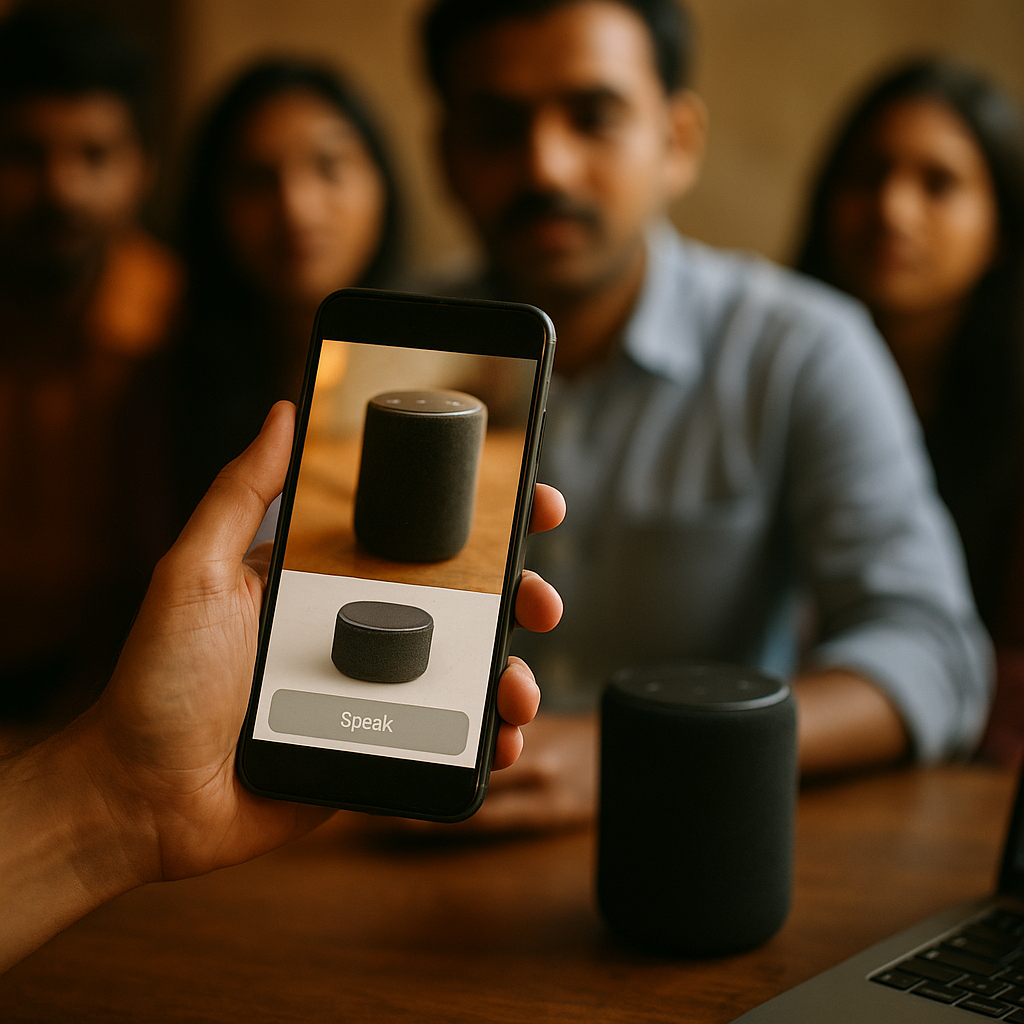
Sixty percent of consumers won’t buy a product if the marketing isn’t in their language, according to Statista research on localization preferences. Yet most brands still ship one English-language creator video to Hindi, Tamil, Bahasa, and Tagalog markets and hope for the best. The regional-language product demo format fixes that gap — and it doesn’t require ten separate production budgets to do it.
Why One Hero Video Isn’t Enough Anymore
Global brands love the efficiency of a single hero asset. Shoot once, distribute everywhere — it’s the whole premise behind the one hero asset framework that’s dominated creative ops thinking. But efficiency without relevance is just noise. A demo that nails the hook in English can fall completely flat in Indonesia if the humor doesn’t translate or the dialect feels foreign to the viewer.
Regional dialects aren’t just accents. They carry cultural context, slang, comedic timing, and trust signals that a dubbed voiceover can’t replicate. Consumers in Kerala don’t respond to Bollywood Hindi. Viewers in Cebu don’t relate to Manila Tagalog the way an outsider might assume. Brands treating “localization” as a subtitle file are leaving conversion on the table.
Localization isn’t translation with extra steps — it’s a distinct creative discipline that determines whether a demo feels native or feels like an ad.
What the Regional-Language Demo Format Actually Looks Like
The format works like this: you lock one hero script, one product narrative, one core demo structure. Then you brief regional creators — not translators — to reperform that script in their own dialect, adjusting idioms, pacing, and cultural references while keeping the product story identical. The bones stay the same. The skin changes completely.
This differs sharply from dubbing. Dubbing preserves the original performance and swaps audio. The regional-demo approach preserves the structure — hook, problem, demo, proof, CTA — but lets a native creator reperform it authentically. Think of it as a cover song rather than a translated subtitle track.
- Hero script: A master brief detailing beats, timestamps, and non-negotiable claims (especially for regulated categories).
- Dialect creator pool: Vetted creators per region who perform, not just voice-over, the script.
- Visual consistency layer: Shared packaging shots, product B-roll, and brand supers that stay identical across versions.
- Local proof points: Region-specific pricing, availability, or testimonials swapped into the proof section.
The Brief Is the Product, Not the Video
Here’s the uncomfortable truth for brand teams used to shipping finished creative to markets: in this model, you’re not exporting a video. You’re exporting a brief. The brief becomes the single source of truth that every regional creator interprets through their own cultural lens. This means your brief writing has to be tighter than usual — vague direction multiplies into vague output across a dozen markets simultaneously.
Borrow structure from cross-format storytelling briefs, which already force marketers to separate “what must stay fixed” from “what can flex.” Apply the same discipline here: lock claims and compliance language, flex tone and delivery.
Building the Master Brief: What to Lock and What to Let Go
Every regional-language demo program lives or dies on this split. Lock too much and creators produce stiff, translated-feeling content. Lock too little and legal will flag inconsistent claims across five markets before lunch.
What should stay fixed across every dialect version:
- Product claims and any regulatory disclosures (critical if operating under FTC guidance or equivalent regional bodies)
- Core demo sequence — the order in which product features appear
- Brand supers, logo placement, and end-card CTA
- Key numeric proof points (price, dosage, specs)
What should flex per market:
- Opening hook phrasing and humor style
- Pacing — some dialects need more runway for the same information
- Cultural references, idioms, and comparison points
- On-screen text styling and reading direction where applicable
This is essentially the same lock/flex logic used in silent product demo briefs, just applied to language instead of sound. If it works for stripping audio, it works for stripping cultural assumptions too.
Sourcing Creators Who Can Actually Carry Dialect Nuance
This is where most programs stall. Finding a creator who “speaks Spanish” is easy. Finding one who nails Rioplatense Spanish humor for a Buenos Aires audience versus neutral Latin American Spanish for a pan-regional campaign is a different sourcing problem entirely.
Three sourcing mistakes come up constantly:
- Hiring for language, not dialect. A creator who speaks Mandarin isn’t automatically right for a Cantonese-first Hong Kong audience.
- Skipping a regional creative lead. Someone local needs sign-off authority before the asset goes to media buying. A remote brand manager can’t judge whether a joke lands in Bangkok.
- Underpaying dialect specialists. Niche-dialect creators often have smaller followings but outsized cultural authority. Budget accordingly — reach isn’t the only value metric here.
Sourcing tools on platforms tracked by eMarketer increasingly let brands filter by dialect and regional engagement patterns, not just broad language tags. Use that filtering aggressively before you ever get to outreach.
A Quick Gut-Check Before You Greenlight a Market
Ask: would this demo feel embarrassing if a native speaker in that region watched it back? If the honest answer is “maybe,” you haven’t found the right creator yet. Skip the market rather than ship something that reads as tone-deaf — a bad regional demo damages trust faster than no demo at all.
Production Logistics That Keep This Scalable
Directing ten dialect shoots sounds expensive until you compare it to ten separate creative campaigns. The trick is running dialect production like a franchise model, not ten bespoke projects.
Practical framework that’s worked for multi-market brands:
- Batch the brief distribution. Send the master brief to all regional leads simultaneously with a locked shot list, so nobody’s waiting on sequential approvals.
- Standardize the shot list, not the performance. Same camera angles, same product close-ups, different delivery.
- Centralize compliance review. One legal/compliance pass per market before publishing, using the same checklist every time.
- Stagger launch by market readiness, not calendar convenience. A dialect version that needs another round of notes shouldn’t hold up the markets that are ready.
This mirrors the rapid-iteration thinking behind rapid-iteration ad briefs — one core shoot, many downstream variants, each optimized without re-shooting the whole thing.
A single hero script produced across eight dialect versions typically costs less than three fully separate market campaigns — and converts better in each region than a generic dubbed version, based on internal benchmarks brands are starting to share at industry panels.
Where This Format Breaks Down (And How to Avoid It)
It’s not foolproof. A few failure patterns show up repeatedly:
- Over-scripting the regional creator. If you hand a creator a word-for-word translated script, you’ve recreated dubbing with extra steps. Let them rewrite dialogue within the locked structure.
- Ignoring platform-specific viewing habits per region. A market where YouTube view-count changes matter more than TikTok needs a different distribution plan than one dominated by short-form.
- Treating regional proof points as optional. Local pricing, local availability, local testimonials — skip these and the demo feels imported no matter how good the dialect performance is.
- No dialect-specific QA before publish. Someone fluent needs to watch the final cut, not just approve the script. Delivery and phrasing can drift during filming.
Brands running always-on content calendars should also check this against their broader tone guidelines — the always-authentic brand voice brief is a useful reference for keeping regional flexibility from drifting off-brand entirely.
Measuring Whether It’s Actually Working
Standard view/engagement metrics won’t tell you if localization succeeded — they’ll tell you if the content got watched. What you actually want to track:
- Completion rate per dialect version versus the master hero video’s completion rate
- Comment sentiment in-language (not machine-translated, actually read by a native speaker)
- Conversion lift in the localized market versus historical performance with generic dubbed content
- Cost per acquisition per dialect version against production cost per version
Tools referenced by Sprout Social for regional sentiment tracking can help here, especially for markets where your internal team doesn’t have native reviewers on staff.
Start with three markets, not fifteen. Lock your master brief tight enough that compliance sleeps easy, loose enough that creators can actually perform in their own voice — then scale the format only once you’ve proven it converts, not just translates.
FAQs
What is a regional-language product demo?
It’s a creator-led video format where one hero script and demo structure gets reperformed by native creators in different dialects, rather than dubbed or subtitled, so each market gets a version that feels natively produced.
How is this different from simply dubbing a video into another language?
Dubbing keeps the original performance and swaps audio. The regional-demo format lets a native creator reperform the script with their own timing, idioms, and delivery, while keeping the underlying demo structure and claims identical.
How many dialect versions should a brand start with?
Most teams see better results starting with two or three priority markets rather than launching a dozen versions at once. It lets you validate the brief structure and measure conversion lift before scaling production.
Does this format cost more than a single global video?
Upfront production costs more than one video, but less than running fully separate campaigns per market. Shared shot lists, a locked script structure, and centralized compliance review keep per-version costs manageable.
Who should sign off on dialect accuracy before publishing?
A native-speaking regional creative lead, not the original brand manager. Someone fluent in the specific dialect needs to review the final cut for tone and phrasing before it goes to media buying.
What compliance risks come with multi-dialect demos?
Inconsistent claims across markets are the biggest risk. Lock product claims, disclosures, and numeric proof points in the master brief, and run every dialect version through the same compliance checklist before launch.
FAQs
What is a regional-language product demo?
It’s a creator-led video format where one hero script and demo structure gets reperformed by native creators in different dialects, rather than dubbed or subtitled, so each market gets a version that feels natively produced.
How is this different from simply dubbing a video into another language?
Dubbing keeps the original performance and swaps audio. The regional-demo format lets a native creator reperform the script with their own timing, idioms, and delivery, while keeping the underlying demo structure and claims identical.
How many dialect versions should a brand start with?
Most teams see better results starting with two or three priority markets rather than launching a dozen versions at once. It lets you validate the brief structure and measure conversion lift before scaling production.
Does this format cost more than a single global video?
Upfront production costs more than one video, but less than running fully separate campaigns per market. Shared shot lists, a locked script structure, and centralized compliance review keep per-version costs manageable.
Who should sign off on dialect accuracy before publishing?
A native-speaking regional creative lead, not the original brand manager. Someone fluent in the specific dialect needs to review the final cut for tone and phrasing before it goes to media buying.
What compliance risks come with multi-dialect demos?
Inconsistent claims across markets are the biggest risk. Lock product claims, disclosures, and numeric proof points in the master brief, and run every dialect version through the same compliance checklist before launch.
Top Influencer Marketing Agencies
The leading agencies shaping influencer marketing in 2026
Agencies ranked by campaign performance, client diversity, platform expertise, proven ROI, industry recognition, and client satisfaction. Assessed through verified case studies, reviews, and industry consultations.
Moburst

-
2

The Shelf
Boutique Beauty & Lifestyle Influencer AgencyA data-driven boutique agency specializing exclusively in beauty, wellness, and lifestyle influencer campaigns on Instagram and TikTok. Best for brands already focused on the beauty/personal care space that need curated, aesthetic-driven content.Clients: Pepsi, The Honest Company, Hims, Elf Cosmetics, Pure LeafVisit The Shelf → -
3

Audiencly
Niche Gaming & Esports Influencer AgencyA specialized agency focused exclusively on gaming and esports creators on YouTube, Twitch, and TikTok. Ideal if your campaign is 100% gaming-focused — from game launches to hardware and esports events.Clients: Epic Games, NordVPN, Ubisoft, Wargaming, Tencent GamesVisit Audiencly → -
4

Viral Nation
Global Influencer Marketing & Talent AgencyA dual talent management and marketing agency with proprietary brand safety tools and a global creator network spanning nano-influencers to celebrities across all major platforms.Clients: Meta, Activision Blizzard, Energizer, Aston Martin, WalmartVisit Viral Nation → -
5

The Influencer Marketing Factory
TikTok, Instagram & YouTube CampaignsA full-service agency with strong TikTok expertise, offering end-to-end campaign management from influencer discovery through performance reporting with a focus on platform-native content.Clients: Google, Snapchat, Universal Music, Bumble, YelpVisit TIMF → -
6

NeoReach
Enterprise Analytics & Influencer CampaignsAn enterprise-focused agency combining managed campaigns with a powerful self-service data platform for influencer search, audience analytics, and attribution modeling.Clients: Amazon, Airbnb, Netflix, Honda, The New York TimesVisit NeoReach → -
7

Ubiquitous
Creator-First Marketing PlatformA tech-driven platform combining self-service tools with managed campaign options, emphasizing speed and scalability for brands managing multiple influencer relationships.Clients: Lyft, Disney, Target, American Eagle, NetflixVisit Ubiquitous → -
8

Obviously
Scalable Enterprise Influencer CampaignsA tech-enabled agency built for high-volume campaigns, coordinating hundreds of creators simultaneously with end-to-end logistics, content rights management, and product seeding.Clients: Google, Ulta Beauty, Converse, AmazonVisit Obviously →