


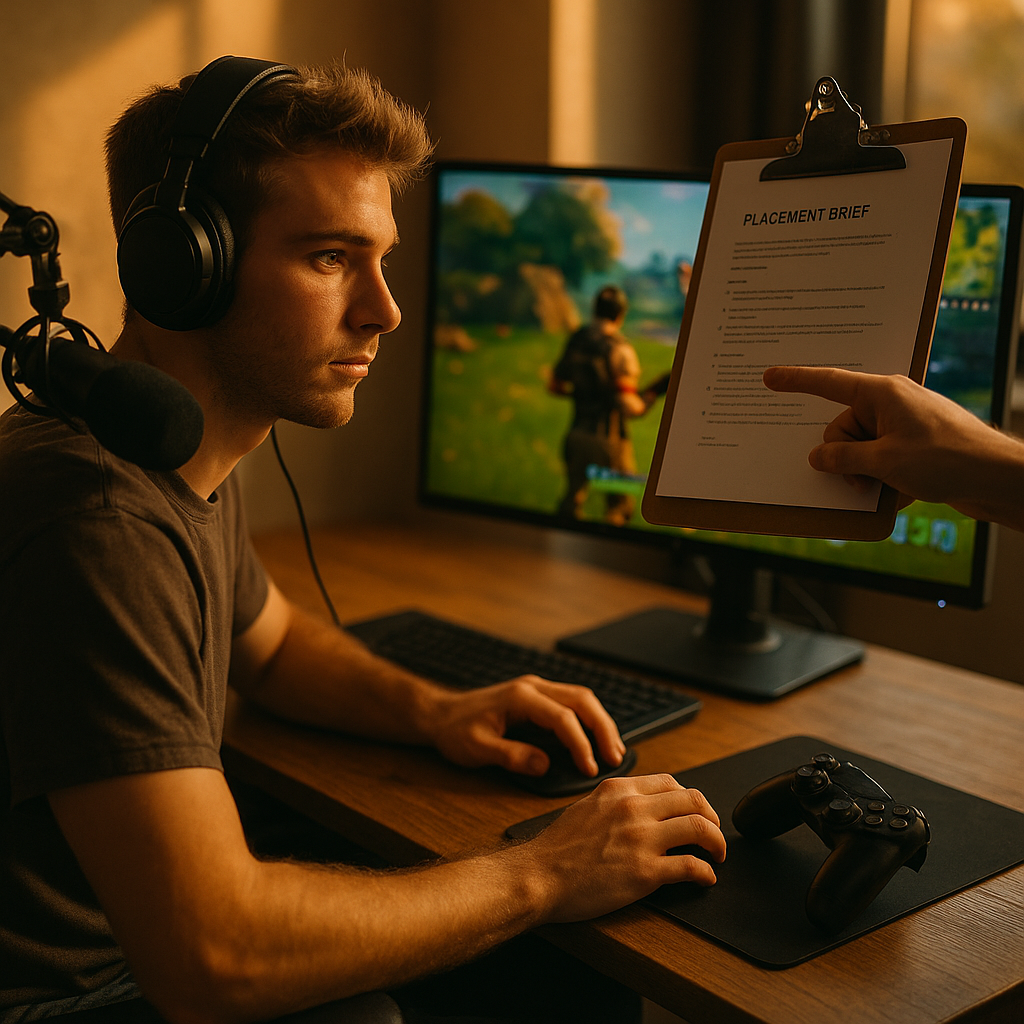
Twitch and YouTube Gaming now command more branded livestream hours than every awards show broadcast combined, yet most brands still treat in-game creator placement like a banner ad bolted onto a stream. That gap between spend and sophistication is exactly what the new PlayFronts model is forcing brands to close. If your 2026 media plan includes gaming and you haven’t rewritten your integration brief, you’re already behind.
PlayFronts arrived as gaming’s answer to the traditional upfronts, a formalized pitch season where platforms, publishers, and creator networks present inventory, pricing, and measurement standards to buyers months ahead of activation. It’s a signal that in-game placements have graduated from experimental line items to planned, negotiated media. That maturity comes with new expectations: brands need structured briefs, not vague “get the streamer to mention us” requests.
What PlayFronts Actually Changed for Buyers
Before PlayFronts, in-game brand deals were negotiated ad hoc, streamer by streamer, often through DMs or scattered agency relationships. Pricing was inconsistent. Measurement was worse. A mid-tier Twitch streamer might charge wildly different rates for the same integration depending on who asked.
The PlayFronts model standardizes three things buyers actually care about: inventory tiers (who qualifies as a “premium” gaming creator versus long-tail), placement categories (overlay, in-world, narrative, host-read), and baseline measurement (view-through, chat engagement, click attribution). Publishers like major esports orgs and platform-affiliated creator networks now present these packages the way TV networks present upfront slates — with forecasted reach, audience composition, and rate cards attached.
The real shift isn’t pricing transparency. It’s that brands can now brief in-game placements with the same rigor they’d apply to a linear TV buy or a YouTube pre-roll campaign — and platforms expect them to.
That expectation is the crux of this piece. A PlayFronts-era placement needs a brief that specifies format, integration depth, disclosure language, and success metrics before the stream ever goes live. Winging it in chat is no longer an option publishers will sell against.
The Four Native Placement Formats Worth Briefing
Not all in-game integrations are created equal, and lumping them together in a single SOW is how brands end up with inconsistent creative and murky reporting. Structure your brief around these four formats:
- Overlay sponsorship: Static or animated brand assets in stream layout (webcam frame, alert boxes, panel graphics). Low-friction, low-recall. Good for awareness, weak for conversion.
- In-world integration: The brand physically exists inside the game — a sponsored in-game billboard, a branded skin, a custom map element. Requires publisher cooperation and lead time, but delivers the highest perceived authenticity because it doesn’t interrupt gameplay.
- Host-read break: A scripted or semi-scripted pause where the streamer talks directly to camera about the product. This is the closest analog to a podcast mid-roll, and it should be briefed with the same discipline — see how podcast-to-shorts repurposing handles single-deal, multi-format asset planning.
- Narrative integration: The brand becomes part of the session’s storyline — a challenge, a giveaway triggered by in-game milestones, a co-branded tournament segment. Highest engagement, highest production complexity, and the format PlayFronts sellers are pushing hardest because it commands premium CPMs.
Each format needs its own brief template. Don’t ask a streamer to “work in a mention” and expect narrative-tier engagement. Specify which format you’re buying, and price accordingly.
Why Narrative Integration Is Winning Budget
Narrative placements are eating budget share for a simple reason: viewers don’t skip them. When a brand-sponsored challenge is the reason chat is engaged, the audience isn’t tolerating an ad, they’re participating in one. eMarketer has tracked rising advertiser interest in retail media and immersive ad formats as CPMs on traditional pre-roll compress, and gaming narrative slots are benefiting from that same budget migration.
The tradeoff is control. A narrative integration means ceding some creative direction to the streamer’s community dynamics — a raid, a donation goal, an in-joke — that a brand can’t fully script. Brief for flexibility inside guardrails, not a word-for-word script.
Structuring the Brief: What Goes In It
A workable PlayFronts-era brief needs six components. Skip any of these and you’re setting up a dispute later.
- Format selection — overlay, in-world, host-read, or narrative, chosen explicitly, not implied.
- Integration window — exact minute range or trigger condition (e.g., “activated at first boss kill” or “minute 45-50 of stream”).
- Disclosure requirements — verbal and on-screen, matched to platform policy and FTC endorsement guidelines. Livestream disclosure is trickier than static posts because viewers drop in mid-stream and may miss an opening disclaimer.
- Creative parameters — talking points, banned claims, required product visuals, tone guardrails.
- Measurement plan — concurrent viewer count during the segment, chat sentiment sampling, post-stream VOD view-through, and click or promo-code attribution.
- Usage rights — can the brand repurpose the VOD clip as a paid social asset afterward? Increasingly, yes, and it should be negotiated upfront, not renegotiated after a clip goes viral.
That last point matters more than brands realize. Some of the highest-performing paid social clips in gaming right now started as unscripted livestream moments, later cut down and boosted. If your contract doesn’t pre-clear that usage, you lose the asset.
Disclosure Is Harder to Get Right in Live Formats
Static posts have it easy: one caption, one #ad tag, done. Livestream is messier. Viewers join at random points, disclosure banners scroll past, and verbal mentions get buried under gameplay audio. Regulators haven’t relaxed standards for live formats just because they’re harder to execute.
Best practice, drawn from how brands are already handling FTC-safe urgency in livestream countdown briefs, is to repeat disclosure at intervals, not just once. For in-game placements specifically:
- Persistent on-screen tag during the sponsored segment, not just a single flash.
- Verbal disclosure at the start and end of the integration window.
- Chat bot auto-post reinforcing the disclosure when the segment begins, since chat scroll is often the most-viewed part of the screen.
The UK’s Information Commissioner’s Office and the FTC both treat live content under the same material-connection standard as recorded content. There’s no live-format exemption. Brief for it explicitly, or your legal team inherits the risk later.
Measurement: Set Expectations Before the Stream, Not After
Concurrent viewership is the vanity metric everyone quotes and almost nobody should optimize for alone. A streamer with 8,000 concurrents during your integration window tells you reach, not resonance. Pair it with:
- Chat velocity during the segment — messages per minute spike or drop when the brand is on screen.
- VOD retention past the integration timestamp — do viewers watch through, or does the clip mark a drop-off point in analytics?
- Promo-code or link-click attribution — the only hard-conversion signal available in most gaming platforms today.
This mirrors the discipline brands have had to build for shoppable formats elsewhere. The first-60-seconds shoppable livestream approach proved that early-segment engagement predicts downstream conversion — the same logic applies to in-game brand windows. If chat goes quiet in the first thirty seconds of your integration, the rest of the segment rarely recovers.
Sprout Social’s social media benchmarking data and HubSpot’s marketing analytics resources are useful references when building the reporting template your finance team will actually accept — gaming platforms don’t yet have a universal measurement standard, so borrowing rigor from adjacent formats keeps your reporting credible internally.
One Brief, Multiple Formats: Don’t Reinvent the Wheel Per Platform
If you’re running the same sponsorship across Twitch, YouTube Gaming, and Kick, resist the urge to write three separate briefs from scratch. The core creative and disclosure requirements should stay consistent; only the technical delivery specs change. This is the same logic behind cross-format upfront asset planning and the broader cross-format storytelling brief for video, podcast, and gaming — build once, adapt for platform mechanics, don’t rebuild.
For high-volume campaigns, treat the in-game segment the way performance marketers treat rapid ad iteration: shoot once, adapt widely. The principles in rapid-iteration creative briefs translate surprisingly well to gaming, where a single strong narrative integration can be clipped into a dozen short-form ad variants post-stream.
Budget Reality Check
PlayFronts pricing tiers mean premium narrative slots with top-tier streamers now command CPMs closer to linear sports sponsorship than to standard influencer posts. Statista’s gaming and esports advertising data shows continued year-over-year growth in branded content spend across livestreaming platforms, and that growth is concentrating in the formats with the clearest measurement stories, not the cheapest ones.
Budget accordingly: overlay sponsorships are your volume play for awareness, narrative integrations are your high-cost, high-signal bets reserved for launches or hero moments.
FAQs
Frequently Asked Questions
What is the PlayFronts model and how is it different from a standard influencer deal?
PlayFronts is a formalized pitch and inventory system where gaming platforms and creator networks present standardized placement tiers, pricing, and measurement frameworks to brand buyers ahead of the year, similar to TV upfronts. It replaces the ad hoc, DM-negotiated deals that previously defined in-game sponsorships.
Which in-game placement format delivers the best ROI?
Narrative integration typically delivers the strongest engagement and recall because the brand becomes part of the stream’s active storyline rather than a passive overlay. It’s also the most expensive and hardest to fully script, so it works best for hero launches rather than always-on campaigns.
How should brands handle disclosure during a livestream integration?
Disclosure needs to repeat, not appear once. Best practice includes a persistent on-screen tag during the sponsored segment, verbal disclosure at the start and end of the integration, and an auto-posted chat message reinforcing the disclosure, since viewers join mid-stream at random points.
Can brands reuse livestream footage from an in-game placement as paid social ads?
Yes, but only if usage rights are negotiated in the original contract. Brands should secure VOD and clip usage rights upfront rather than trying to renegotiate after a strong moment goes viral.
What metrics matter most for measuring in-game creator placements?
Concurrent viewership alone is a vanity metric. Pair it with chat velocity during the sponsored segment, VOD retention past the integration timestamp, and promo-code or link-click attribution for a more complete read on performance.
Start with one format, not four. Pick narrative integration for your next major launch, brief it with the six components above, and build your measurement template before the stream airs, not after the invoice arrives.
Top Influencer Marketing Agencies
The leading agencies shaping influencer marketing in 2026
Agencies ranked by campaign performance, client diversity, platform expertise, proven ROI, industry recognition, and client satisfaction. Assessed through verified case studies, reviews, and industry consultations.
Moburst

-
2

The Shelf
Boutique Beauty & Lifestyle Influencer AgencyA data-driven boutique agency specializing exclusively in beauty, wellness, and lifestyle influencer campaigns on Instagram and TikTok. Best for brands already focused on the beauty/personal care space that need curated, aesthetic-driven content.Clients: Pepsi, The Honest Company, Hims, Elf Cosmetics, Pure LeafVisit The Shelf → -
3

Audiencly
Niche Gaming & Esports Influencer AgencyA specialized agency focused exclusively on gaming and esports creators on YouTube, Twitch, and TikTok. Ideal if your campaign is 100% gaming-focused — from game launches to hardware and esports events.Clients: Epic Games, NordVPN, Ubisoft, Wargaming, Tencent GamesVisit Audiencly → -
4

Viral Nation
Global Influencer Marketing & Talent AgencyA dual talent management and marketing agency with proprietary brand safety tools and a global creator network spanning nano-influencers to celebrities across all major platforms.Clients: Meta, Activision Blizzard, Energizer, Aston Martin, WalmartVisit Viral Nation → -
5

The Influencer Marketing Factory
TikTok, Instagram & YouTube CampaignsA full-service agency with strong TikTok expertise, offering end-to-end campaign management from influencer discovery through performance reporting with a focus on platform-native content.Clients: Google, Snapchat, Universal Music, Bumble, YelpVisit TIMF → -
6

NeoReach
Enterprise Analytics & Influencer CampaignsAn enterprise-focused agency combining managed campaigns with a powerful self-service data platform for influencer search, audience analytics, and attribution modeling.Clients: Amazon, Airbnb, Netflix, Honda, The New York TimesVisit NeoReach → -
7

Ubiquitous
Creator-First Marketing PlatformA tech-driven platform combining self-service tools with managed campaign options, emphasizing speed and scalability for brands managing multiple influencer relationships.Clients: Lyft, Disney, Target, American Eagle, NetflixVisit Ubiquitous → -
8

Obviously
Scalable Enterprise Influencer CampaignsA tech-enabled agency built for high-volume campaigns, coordinating hundreds of creators simultaneously with end-to-end logistics, content rights management, and product seeding.Clients: Google, Ulta Beauty, Converse, AmazonVisit Obviously →