


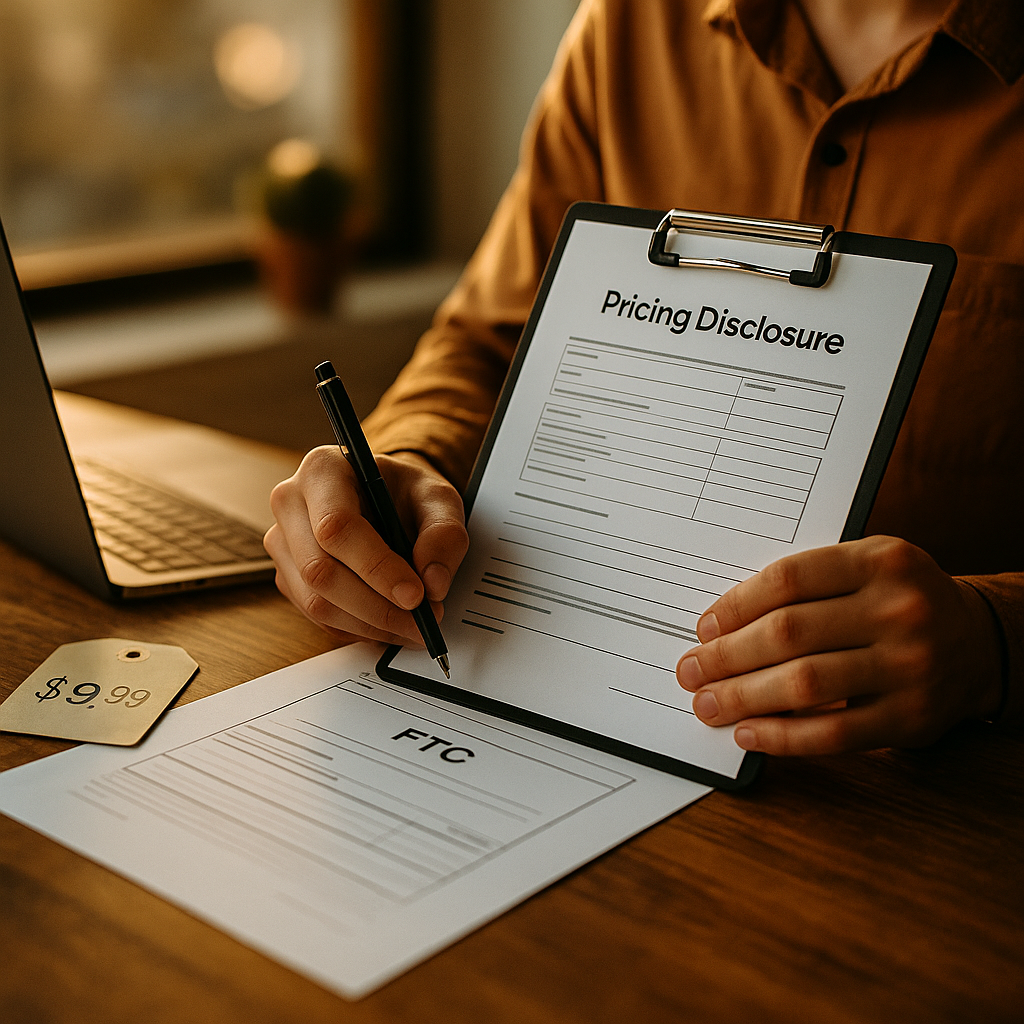
Zero. That’s how many personalized pricing disclosure enforcement actions the FTC has formally announced as of this writing. But the agency’s Section 5 guidance has been sitting on the books, loaded, for months. If you’re still waiting for a consent order to build your disclosure template for personalized pricing, you’re planning your fire drill after the building’s already burning.
Brands that treat this as a “someday” compliance project are making a bet: that regulators move slower than plaintiffs’ attorneys, state AGs, and the press. That’s a bad bet in 2026.
Why the FTC’s Section 5 Guidance Changes the Calculus
Section 5 of the FTC Act prohibits unfair or deceptive acts and practices. It’s broad by design, which is exactly why the agency has leaned on it for personalized pricing scrutiny rather than waiting on new legislation. The guidance doesn’t create a brand-new law. It clarifies that algorithmic price discrimination, when undisclosed, can constitute deception even if every individual price is technically accurate.
That’s the trap a lot of pricing and growth teams fall into. They assume “the price we showed was real” is a full defense. It isn’t. The FTC’s theory is about the omission — failing to tell a consumer that their price was calculated differently than someone else’s based on browsing history, device type, location, loyalty status, or a dozen other signals feeding a dynamic pricing engine.
We’ve covered the underlying policy shift in detail in our breakdown of the FTC personalized pricing policy, but the short version: disclosure is no longer optional hygiene. It’s the control that determines whether your pricing model is legal or “unfair” under Section 5.
Undisclosed personalized pricing isn’t illegal because the price is wrong — it’s a Section 5 problem because the consumer never got to evaluate whether the price was fair to begin with.
What Actually Belongs in a Personalized Pricing Disclosure Template
Here’s where most compliance teams overcomplicate things or, worse, underbuild something that looks like a disclosure but doesn’t hold up. A real template needs five components, not two.
- Trigger identification: Plain-language statement that the price shown may differ from prices shown to other users.
- Basis disclosure: The general categories of data used to generate the price (location, device, browsing behavior, loyalty tier, purchase history). You don’t need to reveal the algorithm’s weighting, just the inputs.
- Timing and placement: Disclosed before the transaction decision point, not buried in a footer link three scrolls down.
- Opt-out or comparison mechanism: Where feasible, a way for the consumer to see or request the standard, non-personalized price.
- Record retention: Proof you disclosed, timestamped, tied to the specific pricing instance and user session.
Skip any one of these and you’ve built a checkbox, not a defense. The FTC has been explicit that disclosures need to be “clear and conspicuous” — a standard that’s tripped up plenty of brands running influencer-driven promo codes and creator-specific discount tiers, where the personalization is often the entire marketing hook.
For a deeper structural comparison of how these requirements diverge by jurisdiction, our piece on FTC vs state law rules is worth bookmarking before you finalize legal sign-off. California, Colorado, and a handful of other states are layering their own disclosure mandates on top of the federal guidance, and they don’t always align on timing or format.
The Creator Layer Nobody’s Thinking About
If your influencer program uses dynamic discount codes, tiered affiliate pricing, or algorithmically-generated “personal deals” for followers, your creators are now front-line disclosure agents whether they signed up for that role or not. A creator who says “use my code for a special price just for you” is making a personalized pricing claim on camera. If that claim isn’t backed by a compliant disclosure at the point of purchase, the brand carries the exposure, not the creator.
This is the same logic we’ve applied to material connection disclosures for years. See our creator compliance checklist for how to extend the same rigor to pricing claims, not just sponsorship claims.
Building the Template: A Step-by-Step Framework
Start with an audit, not a template. You can’t disclose what you don’t know you’re doing. Pull every system that touches price generation: e-commerce platform, loyalty engine, geolocation-based offers, retargeting-triggered discounts, TikTok Shop promotional pricing, affiliate-specific codes. Map each one against whether the price shown varies by user attribute.
Once you know where personalization lives, build the template in layers:
- Layer one — universal footer language. A persistent, site-wide statement that pricing may be personalized, linked to a full policy page.
- Layer two — point-of-decision banner. Triggered specifically when a personalized price is served, appearing above the fold, near the price itself.
- Layer three — transactional confirmation. Order confirmation emails or receipts that restate the basis for the price shown, creating a durable record.
- Layer four — creator/affiliate script language. Pre-approved phrasing creators must use when promoting personalized codes, synced with legal.
Layer four is the one brands skip, and it’s the one most likely to generate a headline. Creator content lives forever on TikTok and Instagram, unlike a website banner you can update overnight. If your creator says something in a video that contradicts your current disclosure practice, that video becomes evidence — the kind that shows up in a discovery request eighteen months later.
Our audit framework on creator content data disclosures covers how to reverse-engineer existing creator content for exactly this risk.
A disclosure template that lives only on your website and never reaches your creator scripts is a template with a hole in it big enough to drive a class action through.
Where Brands Get This Wrong
Three recurring failure patterns show up in nearly every brand’s first draft:
- Treating disclosure as a legal document instead of a UX element. If the language reads like a EULA, it doesn’t meet the “clear and conspicuous” bar. Consumers have to actually notice and understand it, not just have access to it.
- Assuming algorithmic pricing and promotional discounts are the same thing. A time-limited flash sale isn’t personalized pricing. A price that varies by the individual user’s predicted willingness to pay is. Conflating the two either over-discloses (annoying customers unnecessarily) or under-discloses (missing real risk).
- No cross-functional ownership. Pricing sits with growth or revenue teams. Disclosure sits with legal or compliance. Creator messaging sits with marketing. Unless someone owns the whole chain, gaps form at every handoff.
This mirrors what we’ve seen with other FTC-adjacent compliance gaps, like the escalation failures documented in our compliance escalation matrix. The pattern is consistent: enforcement risk concentrates wherever ownership is ambiguous.
Industry data backs up the urgency here. Consumer trust in pricing fairness has been declining as algorithmic personalization scales — a trend eMarketer and other research firms have tracked alongside rising scrutiny of retail media and AI-driven merchandising. Meanwhile, surveys from firms like Statista consistently show consumers rank pricing transparency among their top trust factors with retailers, right alongside data privacy.
Does This Overlap With Surveillance Pricing Rules?
Yes, and the overlap is significant enough that treating them as separate compliance projects wastes resources. Surveillance pricing, the practice of using granular behavioral and biometric-adjacent data to set individualized prices, is a subset of what the personalized pricing guidance covers. If your algorithm pulls from location history, device fingerprinting, or browsing session data to set a price, you’re squarely in surveillance pricing territory, and the disclosure bar is arguably higher.
We’ve mapped this specific intersection for TikTok Shop sellers in our algorithm audit for FTC surveillance pricing, and the same logic on data lineage applies broadly: know where the inputs come from before you write a word of disclosure copy. A related resource, our surveillance pricing disclosure framework guide, walks through the platform-specific mechanics if TikTok Shop is a meaningful revenue channel for your brand.
What Enforcement Will Probably Look Like
Nobody has a crystal ball on FTC timing, but the agency’s public statements and past consent orders in adjacent areas (data broker practices, dark patterns, junk fees) suggest a predictable sequence: informal inquiry letters to a handful of visible offenders, a consent order or two establishing precedent, then broader sweeps once the standard is tested. Brands that already have a documented, dated disclosure framework in place before that first inquiry letter arrives are negotiating from a position of “we were compliant and iterating.” Brands without one are negotiating from “we got caught.”
That distinction matters enormously in how consent orders get scoped, and it’s the same dynamic we’ve seen play out with COPPA-adjacent enforcement following the FTC’s broader children’s privacy actions this year, including the fallout covered in our piece on TikTok’s settlement resetting parental consent rules. Early movers get treated differently than laggards.
Build the template now. Assign an owner, run the audit, layer the disclosure into your site, your emails, and your creator scripts, then log every iteration with a date stamp — because the paper trail showing good-faith effort before enforcement began may end up mattering more than the template itself.
Frequently Asked Questions
What is personalized pricing disclosure under the FTC’s Section 5 guidance?
It’s the requirement that businesses clearly inform consumers when the price they’re shown was generated using individualized data, such as browsing behavior, location, or loyalty status, rather than a standard, uniform price applied to all customers.
Does every dynamic price change need a disclosure?
No. Time-based promotions, inventory-driven surge pricing, and general sales apply to everyone equally and generally don’t trigger the same disclosure obligation. The guidance targets prices that vary based on attributes of the individual consumer, not the product or timing alone.
Who is liable if a creator promotes a personalized discount without proper disclosure?
The brand typically carries primary exposure since it controls the pricing system and the material terms of the offer, but creators can face secondary liability if they made independent, unsubstantiated claims. Clear creator scripting and pre-approved language reduce risk for both parties.
How is this different from state-level personalized pricing laws?
State laws, particularly in California and Colorado, often impose stricter or more specific disclosure timing and format requirements than the federal Section 5 guidance. Brands operating nationally need a template flexible enough to satisfy the strictest applicable state standard.
What’s the biggest mistake brands make when building a disclosure template?
Treating it as a static legal document rather than a living operational process. Disclosure needs to travel across your website, transactional emails, and creator content, and it needs an owner who updates it as pricing systems change.
Frequently Asked Questions
Top Influencer Marketing Agencies
The leading agencies shaping influencer marketing in 2026
Agencies ranked by campaign performance, client diversity, platform expertise, proven ROI, industry recognition, and client satisfaction. Assessed through verified case studies, reviews, and industry consultations.
Moburst

-
2

The Shelf
Boutique Beauty & Lifestyle Influencer AgencyA data-driven boutique agency specializing exclusively in beauty, wellness, and lifestyle influencer campaigns on Instagram and TikTok. Best for brands already focused on the beauty/personal care space that need curated, aesthetic-driven content.Clients: Pepsi, The Honest Company, Hims, Elf Cosmetics, Pure LeafVisit The Shelf → -
3

Audiencly
Niche Gaming & Esports Influencer AgencyA specialized agency focused exclusively on gaming and esports creators on YouTube, Twitch, and TikTok. Ideal if your campaign is 100% gaming-focused — from game launches to hardware and esports events.Clients: Epic Games, NordVPN, Ubisoft, Wargaming, Tencent GamesVisit Audiencly → -
4

Viral Nation
Global Influencer Marketing & Talent AgencyA dual talent management and marketing agency with proprietary brand safety tools and a global creator network spanning nano-influencers to celebrities across all major platforms.Clients: Meta, Activision Blizzard, Energizer, Aston Martin, WalmartVisit Viral Nation → -
5

The Influencer Marketing Factory
TikTok, Instagram & YouTube CampaignsA full-service agency with strong TikTok expertise, offering end-to-end campaign management from influencer discovery through performance reporting with a focus on platform-native content.Clients: Google, Snapchat, Universal Music, Bumble, YelpVisit TIMF → -
6

NeoReach
Enterprise Analytics & Influencer CampaignsAn enterprise-focused agency combining managed campaigns with a powerful self-service data platform for influencer search, audience analytics, and attribution modeling.Clients: Amazon, Airbnb, Netflix, Honda, The New York TimesVisit NeoReach → -
7

Ubiquitous
Creator-First Marketing PlatformA tech-driven platform combining self-service tools with managed campaign options, emphasizing speed and scalability for brands managing multiple influencer relationships.Clients: Lyft, Disney, Target, American Eagle, NetflixVisit Ubiquitous → -
8

Obviously
Scalable Enterprise Influencer CampaignsA tech-enabled agency built for high-volume campaigns, coordinating hundreds of creators simultaneously with end-to-end logistics, content rights management, and product seeding.Clients: Google, Ulta Beauty, Converse, AmazonVisit Obviously →