


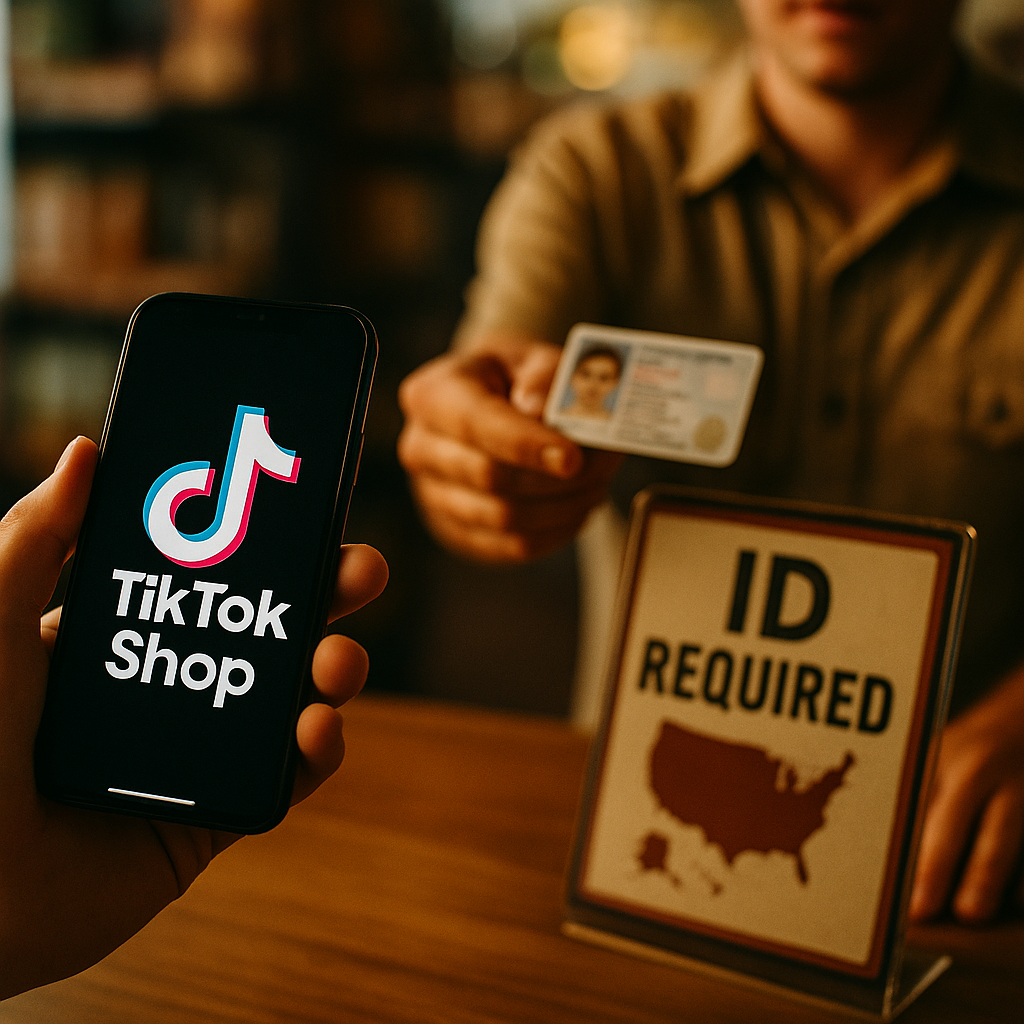
Four hundred million dollars. That’s what TikTok paid to settle COPPA violations, and it’s still the cheap outcome compared to what’s coming from state attorneys general. If your brand runs a multi-state age-verification compliance program on TikTok Shop that treats all fifty states the same, you’re one subpoena away from finding out how expensive “same” can get.
The federal settlement closed one chapter. It did not close the book. States are now writing their own rules for youth data, parental consent, and platform liability — and brands selling through TikTok Shop are squarely in the blast radius.
Why One Settlement Didn’t End the Problem
The $400 million COPPA settlement addressed TikTok’s federal violations: collecting data from under-13 users without verifiable parental consent, retaining that data, and using it to serve ads. Big number, real consequences, case closed at the federal level.
But COPPA is a floor, not a ceiling. States like California, Utah, Texas, and Connecticut have passed their own youth privacy and social media laws that impose additional obligations — some overlapping with COPPA, some going further, and some conflicting outright. Our earlier coverage of why the TikTok settlement won’t cover state youth privacy laws laid out the mechanics: a brand can be fully COPPA-compliant and still face enforcement in Sacramento or Austin.
That’s the trap. Legal teams check the federal box and assume they’re covered. State AGs disagree, and they’ve been increasingly willing to act unilaterally when they think the FTC left gaps.
Compliance built for one federal settlement is compliance built for yesterday’s risk. States are now the primary enforcement vector for youth data violations on social commerce platforms.
What a Compliance Matrix Actually Needs to Cover
A real multi-state matrix isn’t a spreadsheet with fifty rows and a green checkmark column. It’s a living document that maps four variables against each other: age-verification method, parental consent trigger, data retention rule, and enforcement authority. Miss one axis and the matrix gives you false confidence.
Here’s the minimum viable structure:
- Age gate mechanism per state: Some states accept self-attestation for 13+; others (Utah, Louisiana) require third-party age verification for certain content categories or purchase types.
- Parental consent threshold: COPPA sets 13 as the federal line. California’s SB 976 and similar state laws push protections to 16 or 18 for specific data uses like personalized ads.
- Data retention and deletion windows: Some states mandate deletion within 30 days of account closure; others tie retention to the original consent scope.
- Private right of action: A handful of states let individuals sue directly, which changes your risk calculus entirely versus AG-only enforcement.
If your legal and marketing teams haven’t mapped all four dimensions, you don’t have a compliance program. You have a hope.
The TikTok Shop Wrinkle Nobody’s Pricing In
TikTok Shop isn’t just content, it’s commerce. That changes the risk profile substantially, because now you’re not just worried about ad targeting to minors, you’re worried about actual purchase transactions, shipping data, and payment information tied to underage accounts.
Our team’s TikTok Shop compliance audit for underage-user data found that many brands running affiliate storefronts had no age-gate logic at the checkout layer at all — verification happened (if at all) at account creation, and never again. That’s a gap regulators are actively hunting for.
Consider a beauty brand selling through TikTok Shop’s affiliate program. A 14-year-old creates an account claiming to be 18, buys a retinol serum through a creator’s storefront link, and the brand’s DPA with that creator says nothing about age verification obligations. Who’s liable when a state AG comes asking? Right now, probably you — not the creator, and not entirely TikTok. This is exactly the scenario we mapped in TikTok Shop age verification and beauty DPAs, and it’s not hypothetical. It’s happening at scale across categories from supplements to gaming peripherals.
Toy and Gaming Brands Face a Sharper Edge
If your category skews toward younger audiences by design, the matrix gets harder, not easier. Toy and gaming brands can’t rely on “we didn’t know” because the entire creator strategy is built around appealing to kids and teens. We built out a dedicated parental consent framework for toy and gaming brands because the default TikTok Shop settings simply don’t hold up against state-level scrutiny in this category. If you’re in toys, games, or youth apparel, treat that framework as a starting point, not an afterthought.
Building the Matrix: A Practical Approach
Skip the 50-state spreadsheet fantasy. Start with a tiered model instead.
Tier 1 — High-enforcement states. California, Texas, Utah, Connecticut, and New York account for the majority of active youth privacy enforcement activity right now. Build your strictest controls here first; they’ll likely become your default baseline anyway.
Tier 2 — Emerging states. States with bills pending or recently passed but not yet enforced (Colorado, Virginia, Maryland fall here as of this writing). Monitor quarterly, build in flexibility.
Tier 3 — Baseline states. States without standalone youth privacy statutes beyond COPPA. Federal compliance is your floor here, but don’t get lazy — laws move fast.
For each tier, assign an owner. Legal owns statutory interpretation. Compliance owns the audit cadence. Marketing ops owns the actual implementation — age gates, consent flows, data retention triggers inside your CDP or CRM. If one department owns all three, you’ll miss things. This is not a one-person job, no matter how good that person is.
Treat state law tiers the way you’d treat a threat model: rank by likelihood of enforcement and severity of penalty, not alphabetically.
Where Consent Data Actually Lives
Here’s a question most brands can’t answer quickly: if a state AG asked for proof of parental consent for a specific TikTok Shop transaction from six months ago, could you produce it in 48 hours? For most brands, the honest answer is no.
Your data processing addendums with TikTok, with creators, and with any third-party age-verification vendor need to specify exactly where consent records live and how long they’re retained. We covered the technical side of this in data processing addendums for AI decision engines, and the same logic applies to consent record custody. If your DPA doesn’t name a system of record for consent, fix that this quarter.
Enforcement Signals Are Already Flashing
The underage data enforcement wave isn’t theoretical anymore. Our analysis of TikTok underage data enforcement signals pointed to a pattern: regulators are moving from platform-level settlements to brand-level and advertiser-level scrutiny. That’s the direction of travel across the industry — see also how the FTC’s broader posture on personalized pricing enforcement shows regulators increasingly comfortable going after the advertiser, not just the platform.
According to FTC enforcement guidance, COPPA liability can extend to any operator that collects data “on behalf of” a covered platform — a definition broad enough to catch brands running TikTok Shop storefronts if their data flows aren’t cleanly separated from TikTok’s own collection.
Multi-state AG coalitions have also become the norm rather than the exception. When one state moves on youth privacy, three or four others often file coordinated actions within months. Your matrix needs a rapid-response protocol for exactly this scenario: what happens when Tier 2 becomes Tier 1 overnight?
What to Do Before the Next Enforcement Wave
Start with an inventory, not a rebuild. Map every TikTok Shop touchpoint — storefront, livestream shopping, affiliate links, in-app checkout — against your current age-verification method at each step. According to eMarketer’s social commerce research, live shopping and creator storefronts are among the fastest-growing transaction types on the platform, which means they’re also the fastest-growing liability surface if verification is inconsistent.
Then run a tabletop exercise: pick your three highest-risk states and simulate an AG inquiry. Can your team produce consent records, age-gate logs, and DPA terms within the response window state law requires? If the answer is “we’d need weeks,” you’ve found your priority fix.
Finally, revisit creator contracts. Every affiliate and storefront-linked creator agreement should include explicit age-verification representations and indemnification language. This ties directly into broader creator compliance work — see the FTC personalized pricing rule creator checklist for a template on structuring these obligations contractually rather than hoping goodwill covers the gap.
None of this is glamorous work. It won’t show up in a campaign recap deck. But according to Sprout Social’s platform trust research, brand trust erosion from a public compliance failure takes far longer to rebuild than the fine itself takes to pay. Treat the matrix as insurance, not overhead.
Frequently Asked Questions
Does the $400 million TikTok settlement cover state-level COPPA-style laws too?
No. The settlement resolved federal COPPA claims only. State attorneys general in California, Texas, Utah, and elsewhere can and do pursue separate enforcement under their own youth privacy statutes, which often set stricter age thresholds or broader data protections than federal law.
What age-verification method satisfies the most states at once?
There isn’t a single universal method yet. A layered approach — self-attestation plus behavioral signals plus, for high-risk categories, third-party verification — tends to satisfy the broadest range of state requirements while remaining commercially viable.
Who is liable if a minor makes a purchase through a creator’s TikTok Shop storefront?
Liability typically extends to the brand, not just the platform or the creator, especially if the brand’s data processing addendum doesn’t clearly delegate age-verification responsibility. Brands should assume shared liability unless contracts state otherwise.
How often should a multi-state compliance matrix be updated?
Quarterly at minimum, with immediate updates whenever a new state law passes or an existing one takes effect. States are moving faster than annual compliance cycles can track.
Are toy, gaming, and beauty brands held to a different standard?
Not a different legal standard exactly, but a higher practical scrutiny standard. Regulators assume these categories attract underage users by design, so weak age-verification controls draw enforcement attention faster than in categories with naturally older audiences.
Next step: pull your TikTok Shop transaction logs for the last quarter, cross-reference them against your Tier 1 state list, and identify the first gap you find. Fix that one gap this month — it’s the fastest way to convert this framework from theory into an audit trail regulators will actually respect.
Frequently Asked Questions
Does the $400 million TikTok settlement cover state-level COPPA-style laws too?
No. The settlement resolved federal COPPA claims only. State attorneys general in California, Texas, Utah, and elsewhere can and do pursue separate enforcement under their own youth privacy statutes, which often set stricter age thresholds or broader data protections than federal law.
What age-verification method satisfies the most states at once?
There isn’t a single universal method yet. A layered approach — self-attestation plus behavioral signals plus, for high-risk categories, third-party verification — tends to satisfy the broadest range of state requirements while remaining commercially viable.
Who is liable if a minor makes a purchase through a creator’s TikTok Shop storefront?
Liability typically extends to the brand, not just the platform or the creator, especially if the brand’s data processing addendum doesn’t clearly delegate age-verification responsibility. Brands should assume shared liability unless contracts state otherwise.
How often should a multi-state compliance matrix be updated?
Quarterly at minimum, with immediate updates whenever a new state law passes or an existing one takes effect. States are moving faster than annual compliance cycles can track.
Are toy, gaming, and beauty brands held to a different standard?
Not a different legal standard exactly, but a higher practical scrutiny standard. Regulators assume these categories attract underage users by design, so weak age-verification controls draw enforcement attention faster than in categories with naturally older audiences.
Top Influencer Marketing Agencies
The leading agencies shaping influencer marketing in 2026
Agencies ranked by campaign performance, client diversity, platform expertise, proven ROI, industry recognition, and client satisfaction. Assessed through verified case studies, reviews, and industry consultations.
Moburst

-
2

The Shelf
Boutique Beauty & Lifestyle Influencer AgencyA data-driven boutique agency specializing exclusively in beauty, wellness, and lifestyle influencer campaigns on Instagram and TikTok. Best for brands already focused on the beauty/personal care space that need curated, aesthetic-driven content.Clients: Pepsi, The Honest Company, Hims, Elf Cosmetics, Pure LeafVisit The Shelf → -
3

Audiencly
Niche Gaming & Esports Influencer AgencyA specialized agency focused exclusively on gaming and esports creators on YouTube, Twitch, and TikTok. Ideal if your campaign is 100% gaming-focused — from game launches to hardware and esports events.Clients: Epic Games, NordVPN, Ubisoft, Wargaming, Tencent GamesVisit Audiencly → -
4

Viral Nation
Global Influencer Marketing & Talent AgencyA dual talent management and marketing agency with proprietary brand safety tools and a global creator network spanning nano-influencers to celebrities across all major platforms.Clients: Meta, Activision Blizzard, Energizer, Aston Martin, WalmartVisit Viral Nation → -
5

The Influencer Marketing Factory
TikTok, Instagram & YouTube CampaignsA full-service agency with strong TikTok expertise, offering end-to-end campaign management from influencer discovery through performance reporting with a focus on platform-native content.Clients: Google, Snapchat, Universal Music, Bumble, YelpVisit TIMF → -
6

NeoReach
Enterprise Analytics & Influencer CampaignsAn enterprise-focused agency combining managed campaigns with a powerful self-service data platform for influencer search, audience analytics, and attribution modeling.Clients: Amazon, Airbnb, Netflix, Honda, The New York TimesVisit NeoReach → -
7

Ubiquitous
Creator-First Marketing PlatformA tech-driven platform combining self-service tools with managed campaign options, emphasizing speed and scalability for brands managing multiple influencer relationships.Clients: Lyft, Disney, Target, American Eagle, NetflixVisit Ubiquitous → -
8

Obviously
Scalable Enterprise Influencer CampaignsA tech-enabled agency built for high-volume campaigns, coordinating hundreds of creators simultaneously with end-to-end logistics, content rights management, and product seeding.Clients: Google, Ulta Beauty, Converse, AmazonVisit Obviously →