


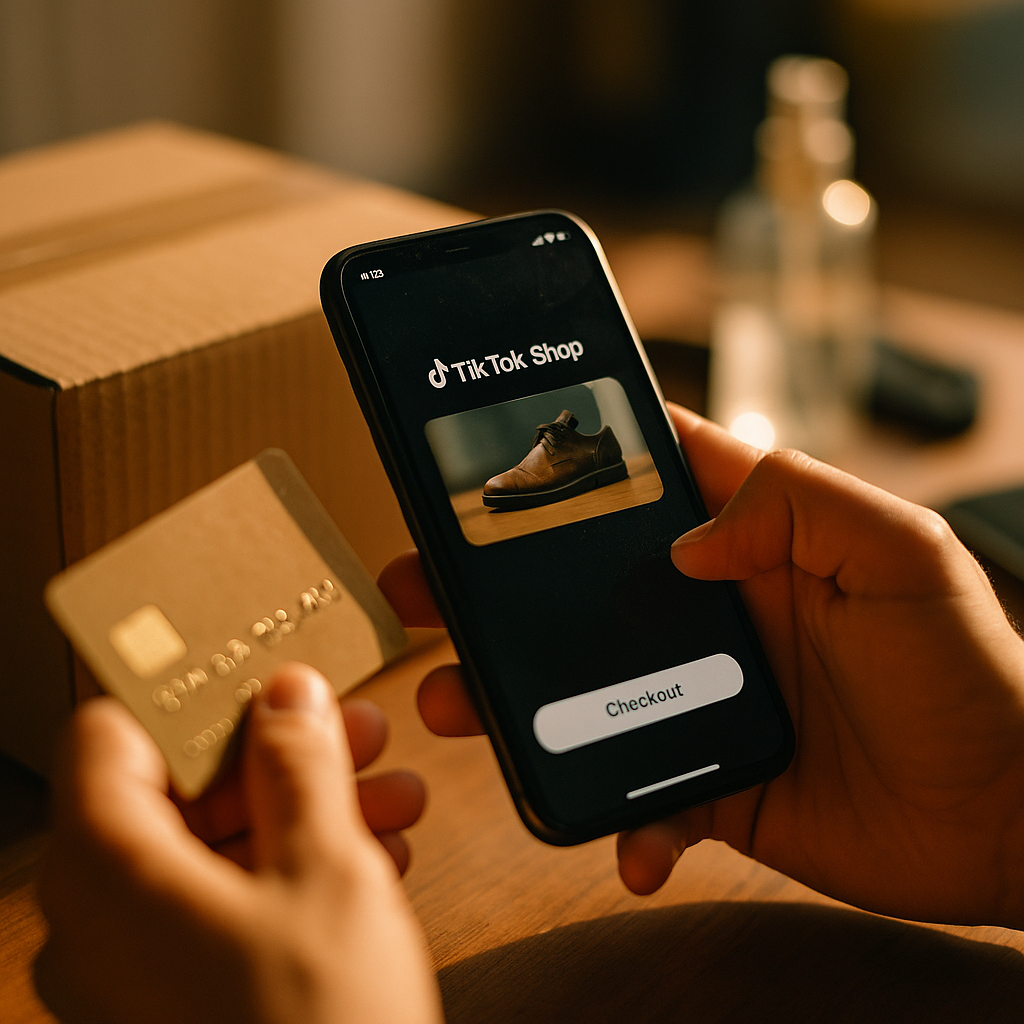
Checkout abandonment on standard e-commerce sites hovers around 70%, according to Statista. On TikTok Shop, the in-feed purchase happens in three taps, no redirect, no new tab. That single design choice is quietly rewriting how brands split social commerce budgets. If your 2026 media plan still treats TikTok Shop as a “nice to have” line item, you’re already behind.
The Checkout Advantage Isn’t a Feature. It’s a Budget Argument.
Most marketers still evaluate TikTok Shop the way they evaluate Instagram Shopping or Pinterest’s product pins: as a discovery channel that eventually funnels traffic to a brand’s own site. That framing is outdated. TikTok Shop’s native checkout means the platform owns the entire path from impulse to purchase, and that changes the unit economics of every dollar spent there.
Compare the friction. A shoppable Instagram post typically sends users to a mobile browser, then to a product page, then through a login or guest-checkout flow. Every one of those steps bleeds conversions. TikTok Shop compresses that into a single in-app transaction, often completed in under 30 seconds. Fewer steps means fewer chances for a shopper to reconsider, get distracted, or abandon.
When checkout friction drops, the cost of customer acquisition drops with it — which means the ROI math brands use to justify influencer spend needs a full recalculation, not a minor adjustment.
This is precisely why the platform’s ROI conversations look different from the rest of the industry. Influencers Time covered how the $5.78 creator ROI benchmark gets challenged when checkout-native platforms enter the mix, and TikTok Shop is the clearest example of why blended benchmarks can mislead budget owners who don’t separate platform mechanics from creative performance.
What’s Actually Driving Growth
Three structural factors are compounding TikTok Shop’s trajectory heading into this year, and none of them are about algorithm luck.
- Live shopping maturity. Livestream commerce on TikTok has moved past novelty. Brands running weekly live sessions report repeat-viewer rates that rival email open rates, and the checkout is embedded directly in the stream overlay.
- Affiliate infrastructure. TikTok’s Creator Marketplace and Shop affiliate program let brands recruit thousands of micro and nano creators without individual contracts. Commission-based structures mean spend scales with sales, not impressions.
- Fulfillment and trust improvements. Shop’s seller protections, return policies, and logistics partnerships have closed much of the trust gap that made early adopters nervous about buying from an in-app storefront rather than a familiar retailer site.
None of this happened in isolation. It tracks with the broader vertical media surge that grew 42% outside China and pushed short-form, feed-native formats into the center of brand media plans rather than the periphery.
Budget Allocation: The Real Question Brands Are Asking
The question isn’t whether to fund TikTok Shop. It’s how much of the influencer and social commerce budget should move there, and from where. Three buckets are typically getting raided:
- Instagram Shopping and affiliate link spend, because checkout friction there hasn’t improved much despite Meta’s ongoing investment.
- Traditional paid search retargeting budgets, since impulse purchases on Shop don’t need a retargeting funnel — the sale already happened.
- Agency retainer fees, as brands shift toward performance-based affiliate commissions instead of flat creative production contracts.
That third point deserves attention. Brands that used to pay agencies five figures a month for content production are increasingly routing that money into affiliate commission pools instead, letting creators self-select into campaigns based on product fit rather than brief compliance. It’s a leaner model, but it requires different oversight, which is a compliance issue we’ll get to shortly.
Ownership Shifts Change the Risk Calculus
Budget allocation decisions can’t be made in a vacuum. TikTok Shop’s growth is happening against the backdrop of significant ownership and structural changes to the platform itself. The recent shift detailed in TikTok Shop’s ownership change means merchants are being asked to renegotiate seller agreements, and brands that haven’t reviewed their terms are exposed to unexpected fee structures or data-handling clauses they didn’t anticipate.
Layer on top of that the broader joint venture restructuring covered in TikTok’s US joint venture analysis, and it’s clear that brand safety teams need a standing review process, not a one-time audit. The same goes for IP and content verification questions raised by the Oracle deal’s verification requirements. Budget allocation and risk allocation are now the same conversation.
Practically, this means finance and legal need a seat at the table when marketing proposes shifting six or seven figures into Shop. Not because the opportunity isn’t real, but because platform terms can change faster than annual budget cycles.
Hiring Patterns Tell You Where the Money Is Actually Going
Want a leading indicator that’s more reliable than platform press releases? Look at who’s getting hired. The TikTok Shop hiring surge Influencers Time tracked shows the platform investing heavily in retention-focused roles: customer success, seller support, loyalty program management. That’s not a company optimizing for one-time impulse buys. It’s a company building for repeat purchase behavior, which should shift how brands think about lifetime value modeling for Shop customers versus customers acquired through other channels.
On the brand side, the parallel trend is in overseas KOL operations hiring, where companies are building dedicated teams just to manage cross-border creator relationships and Shop logistics. If you’re still managing TikTok Shop with the same one-person “social commerce coordinator” role you had two years ago, you’re understaffed relative to where competitors are investing.
Testing Discipline Matters More Than Platform Hype
Here’s the trap: treating TikTok Shop’s growth numbers as a reason to abandon testing rigor. Just because the platform’s checkout converts well doesn’t mean every creator partnership on it will. The shift toward multi-creator testing over single-bet campaigns is the right instinct here. Run smaller pilots across five or six creators with different audience profiles before committing a quarter’s affiliate budget to one voice.
This is also where enterprise brands are getting smarter about structure. Estée Lauder’s approach, detailed in coverage of its creator tiering model, offers a template: tier creators by proven conversion performance on Shop specifically, not just follower count or general engagement, and allocate commission rates accordingly.
A creator who drives strong engagement on organic content won’t necessarily drive strong Shop conversions. Checkout performance and content performance are correlated, not identical — treat them as separate KPIs.
What This Means for Q1 Budget Meetings
If you’re heading into budget planning right now, here’s the practical framework worth bringing to the table:
- Separate “discovery spend” from “conversion spend” in your reporting. TikTok Shop blurs these, and if your dashboards don’t, your ROI numbers will be misleading.
- Cap initial reallocation at 15-20% of existing social commerce budget in the first testing cycle. Growth trajectory is real, but platform terms are still shifting.
- Require legal review of seller agreement changes before scaling affiliate commitments, given the ownership and JV changes still working through the system.
- Build creator scorecards specific to Shop conversion rate, not general engagement metrics borrowed from other platforms.
None of this requires abandoning other channels. Reddit video’s ad budget gains reflect a legitimate diversification instinct among brands nervous about concentration risk on a single platform’s infrastructure. Smart allocation isn’t “TikTok Shop or nothing.” It’s building a portfolio where checkout-native commerce gets funded in proportion to its measurable conversion advantage, while hedging against the platform-level uncertainty that comes with any ByteDance-linked product right now.
For a broader view of how this fits the general reallocation happening across vertical media, the budget reallocation playbook Influencers Time published lays out the sequencing logic most CFOs will want to see before signing off on bigger commitments.
The Bottom Line for Budget Owners
TikTok Shop’s checkout advantage is real, measurable, and worth funding more aggressively than most brands currently do. But growth trajectory and platform stability are two different variables. Fund the opportunity, hedge the risk, and demand conversion-specific data before your next budget cycle locks in.
FAQs
How much of a social commerce budget should go to TikTok Shop right now?
Most brands are testing with 15-20% of existing social commerce budget reallocated toward Shop in an initial cycle, scaling up once conversion data from their own creator partnerships confirms the platform’s checkout advantage translates to their specific product category.
Why does TikTok Shop convert better than Instagram Shopping?
TikTok Shop completes transactions natively in-app without redirecting to a browser or separate checkout flow, removing several friction points that typically cause cart abandonment on other social platforms.
Is TikTok Shop’s growth at risk from ownership or regulatory changes?
Yes. Recent ownership restructuring and joint venture changes mean seller agreements and data-handling terms can shift with limited notice, so brands scaling Shop budgets should build in legal review checkpoints rather than assuming static terms.
Should brands measure TikTok Shop ROI the same way as other influencer channels?
No. Because Shop combines discovery and conversion in a single transaction, standard engagement-based ROI benchmarks can understate or misrepresent performance. Brands should track Shop-specific conversion rate per creator separately from general engagement metrics.
What’s the biggest mistake brands make when scaling TikTok Shop spend?
Treating platform-level growth stats as a guarantee of creator-level performance. Multi-creator testing before large affiliate commitments remains essential, since content engagement and checkout conversion don’t always correlate.
FAQs
How much of a social commerce budget should go to TikTok Shop right now?
Most brands are testing with 15-20% of existing social commerce budget reallocated toward Shop in an initial cycle, scaling up once conversion data from their own creator partnerships confirms the platform’s checkout advantage translates to their specific product category.
Why does TikTok Shop convert better than Instagram Shopping?
TikTok Shop completes transactions natively in-app without redirecting to a browser or separate checkout flow, removing several friction points that typically cause cart abandonment on other social platforms.
Is TikTok Shop’s growth at risk from ownership or regulatory changes?
Yes. Recent ownership restructuring and joint venture changes mean seller agreements and data-handling terms can shift with limited notice, so brands scaling Shop budgets should build in legal review checkpoints rather than assuming static terms.
Should brands measure TikTok Shop ROI the same way as other influencer channels?
No. Because Shop combines discovery and conversion in a single transaction, standard engagement-based ROI benchmarks can understate or misrepresent performance. Brands should track Shop-specific conversion rate per creator separately from general engagement metrics.
What’s the biggest mistake brands make when scaling TikTok Shop spend?
Treating platform-level growth stats as a guarantee of creator-level performance. Multi-creator testing before large affiliate commitments remains essential, since content engagement and checkout conversion don’t always correlate.
Top Influencer Marketing Agencies
The leading agencies shaping influencer marketing in 2026
Agencies ranked by campaign performance, client diversity, platform expertise, proven ROI, industry recognition, and client satisfaction. Assessed through verified case studies, reviews, and industry consultations.
Moburst

-
2

The Shelf
Boutique Beauty & Lifestyle Influencer AgencyA data-driven boutique agency specializing exclusively in beauty, wellness, and lifestyle influencer campaigns on Instagram and TikTok. Best for brands already focused on the beauty/personal care space that need curated, aesthetic-driven content.Clients: Pepsi, The Honest Company, Hims, Elf Cosmetics, Pure LeafVisit The Shelf → -
3

Audiencly
Niche Gaming & Esports Influencer AgencyA specialized agency focused exclusively on gaming and esports creators on YouTube, Twitch, and TikTok. Ideal if your campaign is 100% gaming-focused — from game launches to hardware and esports events.Clients: Epic Games, NordVPN, Ubisoft, Wargaming, Tencent GamesVisit Audiencly → -
4

Viral Nation
Global Influencer Marketing & Talent AgencyA dual talent management and marketing agency with proprietary brand safety tools and a global creator network spanning nano-influencers to celebrities across all major platforms.Clients: Meta, Activision Blizzard, Energizer, Aston Martin, WalmartVisit Viral Nation → -
5

The Influencer Marketing Factory
TikTok, Instagram & YouTube CampaignsA full-service agency with strong TikTok expertise, offering end-to-end campaign management from influencer discovery through performance reporting with a focus on platform-native content.Clients: Google, Snapchat, Universal Music, Bumble, YelpVisit TIMF → -
6

NeoReach
Enterprise Analytics & Influencer CampaignsAn enterprise-focused agency combining managed campaigns with a powerful self-service data platform for influencer search, audience analytics, and attribution modeling.Clients: Amazon, Airbnb, Netflix, Honda, The New York TimesVisit NeoReach → -
7

Ubiquitous
Creator-First Marketing PlatformA tech-driven platform combining self-service tools with managed campaign options, emphasizing speed and scalability for brands managing multiple influencer relationships.Clients: Lyft, Disney, Target, American Eagle, NetflixVisit Ubiquitous → -
8

Obviously
Scalable Enterprise Influencer CampaignsA tech-enabled agency built for high-volume campaigns, coordinating hundreds of creators simultaneously with end-to-end logistics, content rights management, and product seeding.Clients: Google, Ulta Beauty, Converse, AmazonVisit Obviously →