


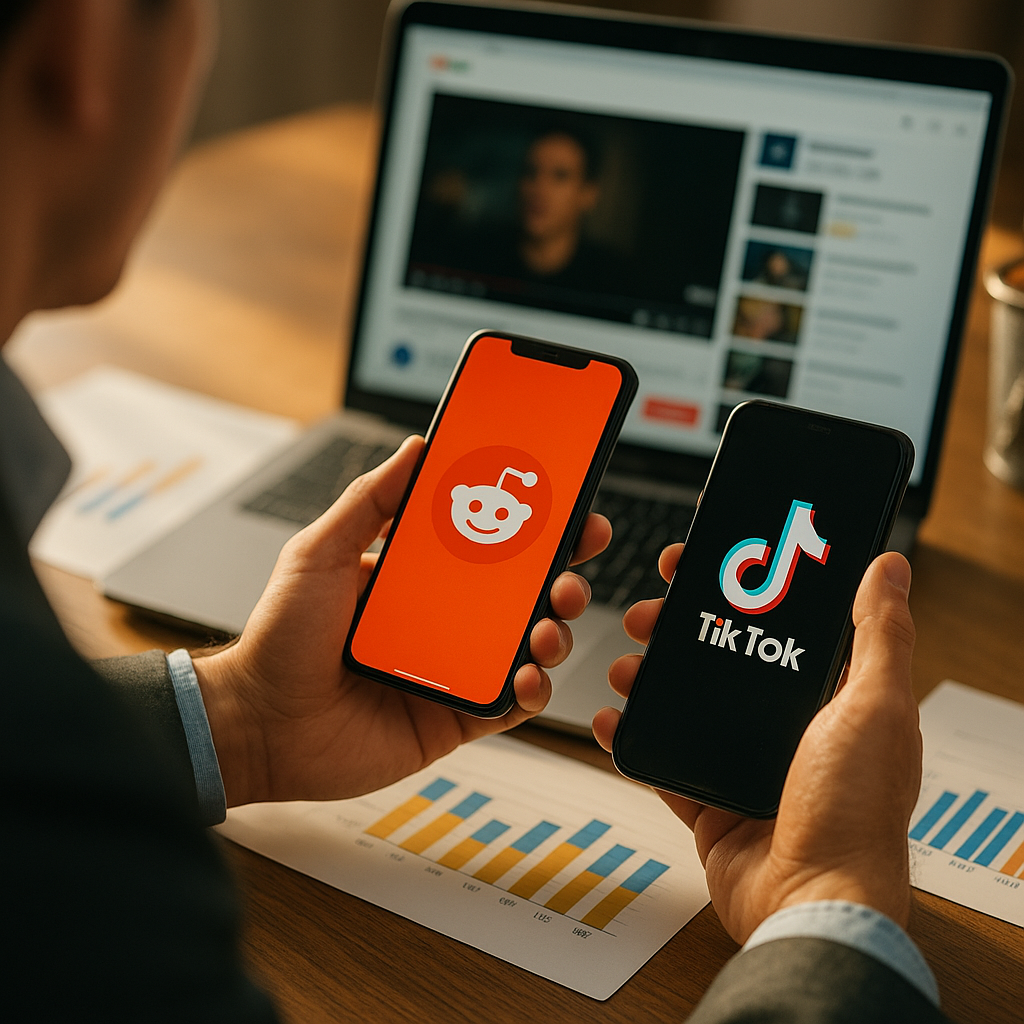
Reddit’s ad revenue grew 68% year-over-year last quarter, and video units are the fastest-growing format on the platform. That’s not a rounding error — it’s a signal. Brands that spent years treating Reddit video as an afterthought are now building it into core media plans, and the reason has less to do with Reddit’s charm than with everyone’s growing discomfort with ByteDance exposure.
This is a diversification story, not a Reddit-loves-video story. Regulatory uncertainty, algorithm volatility, and the sheer concentration risk of pouring budget into one platform family have pushed marketers to hedge. Reddit just happens to be the beneficiary sitting closest to the exit door.
Why Advertisers Stopped Trusting a Single Platform Bet
Concentration risk used to be a portfolio management term. Now it’s a media planning term. Marketers who built entire campaign calendars around TikTok spent much of the last two years watching ownership disputes, joint-venture negotiations, and IP verification requirements reshape the platform underneath them. Our coverage of the US joint venture restructuring laid out exactly why brand safety teams got nervous, and that nervousness hasn’t faded.
Add to that the compliance burden. The Oracle deal’s IP verification requirements forced legal and compliance teams into audits nobody budgeted for. When a platform change triggers a legal review, that platform stops being a “set it and forget it” channel. It becomes a liability line item.
Platform diversification isn’t a creative strategy anymore — it’s a risk management function sitting inside the media plan.
Meanwhile, TikTok Shop’s ownership transitions have merchants renegotiating commercial terms mid-contract, a scenario we detailed in our piece on TikTok Shop ownership changes. None of this means TikTok is going away. It means smart media buyers no longer treat it as the only lever worth pulling.
Reddit Video: From Afterthought to Line Item
Reddit spent a decade as the place brands feared, not the place they advertised. Too niche, too skeptical of marketing, too likely to roast a tone-deaf post into oblivion. That reputation is outdated. Reddit’s redesigned video feed, its Reddit Video Ads product, and its expanded conversation-placement units have turned the platform into a legitimate performance and awareness channel.
What changed? Three things, mostly.
- Contextual targeting by community. Reddit’s structure around topic-specific subreddits gives advertisers a level of interest-based context that broad social feeds can’t replicate. A skincare brand can run video specifically against r/SkincareAddiction rather than hoping an algorithm finds the right audience.
- Higher trust signals. Reddit consistently ranks well in independent surveys on perceived authenticity of user opinions, which matters more as consumers grow wary of algorithmically pushed content. Our analysis of the trust gap in personalized advertising shows why authenticity signals are becoming a targeting criterion in their own right.
- Lower CPMs relative to saturated platforms. As demand shifts, Reddit’s video inventory remains comparatively underpriced versus Meta and YouTube, at least for now. That won’t last if the diversification trend keeps accelerating.
None of this makes Reddit a TikTok replacement. The formats, audience behavior, and creative requirements are different animals entirely. But as one line in a diversified plan, especially for brands targeting younger, research-heavy male and Gen Z audiences, it’s earned a seat at the table.
The ByteDance Alternatives Getting Real Budget
Reddit isn’t fighting alone for the diversification dollar. A handful of platforms are absorbing meaningful test budgets as brands spread risk across formats and audiences rather than chasing a single short-video king.
YouTube Shorts remains the safest harbor — same parent company as long-form YouTube, deep measurement infrastructure, and an advertiser base that already trusts Google’s ad stack. Many brands treat Shorts less as an experiment and more as an extension of existing YouTube buys, which lowers the operational lift considerably.
Meta Reels benefits from Advantage+ automation maturing fast. As we covered in Meta’s shift toward data and creative volume, the platform now rewards brands that can feed the algorithm enough creative variety, which pairs naturally with repurposed short-form video from other channels.
Snapchat and Pinterest are less obvious plays but growing in commerce-adjacent categories, especially where visual discovery drives purchase intent. Neither will replace ByteDance’s reach, but both offer lower competition for ad inventory and, in Pinterest’s case, unusually high purchase-intent signals.
Then there’s the FAST (free ad-supported streaming television) layer, which is quietly absorbing budget that used to sit purely in social. Our piece on FAST platform recommendation engines shows how creator content is bleeding into connected TV environments, creating yet another venue that isn’t dependent on any single short-video app’s fate.
What This Means for Budget Allocation
Here’s the uncomfortable part for planning teams: diversification is operationally expensive. Running video creative across five platforms instead of one means five sets of specs, five measurement frameworks, five creative testing cycles. It’s not simply “spread the same budget wider.” It requires more creative production, more nuanced attribution, and often more headcount.
That’s part of why we’re seeing UGC ad editor roles becoming permanent hires rather than freelance overflow. Brands need in-house or agency capacity that can turn one core creative concept into platform-native variants quickly, without ballooning production costs per channel.
Vertical media’s rise to a $150 billion category only intensifies this. As formats fragment further and channel-specific specs multiply, the brands that win are the ones treating creative production as a modular system, not a one-off asset per campaign.
The real cost of platform diversification isn’t media spend. It’s the creative and measurement infrastructure required to support five channels instead of one.
Measurement Is the Real Bottleneck
Ask any performance marketer running cross-platform video right now what keeps them up at night, and it’s rarely creative fatigue. It’s attribution. Comparing a Reddit video view to a YouTube Short completion to a Meta Reels click requires normalized measurement that most tech stacks weren’t built to handle.
This is where identity resolution gaps become a genuine business problem rather than a technical footnote. Without consistent identity signals across platforms, brands end up making channel allocation decisions on incomplete or misleading data. That’s a dangerous place to be when leadership is asking for justification on why budget moved away from a platform with a decade of institutional trust.
Our research into why identity persistence beats orchestration in modern marketing ops applies directly here. Brands that invested early in first-party identity infrastructure are the ones now able to actually prove Reddit video or YouTube Shorts performance against historical TikTok benchmarks. Everyone else is guessing with confidence intervals nobody wants printed in a board deck.
Industry data from eMarketer continues to show short-form video ad spend climbing across nearly every major platform simultaneously, which confirms the diversification thesis: this isn’t a zero-sum shift from TikTok to Reddit. It’s a broadening of the pie combined with reduced single-platform dependency.
How to Evaluate a New Platform Before Committing Budget
Chasing every emerging platform is its own kind of risk. Here’s a practical filter worth applying before committing real spend to any ByteDance alternative:
- Audience overlap, not just audience size. Does the platform’s user base actually match your existing customer segments, or are you buying reach against the wrong demo?
- Measurement compatibility. Can the platform’s reporting integrate with your existing MMM or MTA setup without a six-month engineering project?
- Creative reusability. Can your existing short-form assets be adapted with minor edits, or does the platform demand entirely bespoke production?
- Regulatory exposure. Review data handling practices against frameworks like those tracked by the FTC and, for UK/EU operations, the ICO. Our breakdown of converging AI governance rules is a useful starting checklist.
- Test budget size relative to risk. Treat new platforms like pilot programs, not full campaign replacements, until performance data justifies scale.
Agencies that specialize in fast platform vetting are seeing more demand for exactly this kind of due diligence. If you’re evaluating outside partners to help run these pilots, our guide on vetting agency partners covers the questions worth asking before signing anything.
Where This Trend Goes Next
Expect the diversification trend to keep compounding, not reverse. Platform concentration risk isn’t a temporary anomaly tied to one company’s regulatory drama; it’s becoming a permanent feature of media planning. Brands that build multi-platform video muscle now, including measurement systems that can compare performance apples-to-apples across Reddit, YouTube, Meta, and whatever emerges next, will have a durable advantage over those still treating platform selection as a single annual decision.
Frequently Asked Questions
Is Reddit video actually replacing TikTok for advertisers?
No. Reddit is absorbing incremental test budget as part of a broader diversification strategy, not functioning as a direct TikTok replacement. The audience behavior, content style, and campaign objectives differ enough that most brands run Reddit video alongside other short-form channels rather than instead of them.
Which platforms are gaining the most ByteDance-displaced budget?
YouTube Shorts and Meta Reels are absorbing the largest share due to existing advertiser trust and measurement infrastructure. Reddit, Snapchat, and Pinterest are gaining smaller but growing allocations, particularly in categories like commerce, gaming, and niche interest verticals.
Why are brands worried about platform concentration risk now?
Ownership changes, regulatory scrutiny, and compliance requirements tied to ByteDance-owned platforms have made single-platform dependency a board-level risk conversation rather than just a media planning consideration.
What’s the biggest operational challenge in diversifying video spend?
Measurement consistency. Comparing performance across platforms with different reporting standards and identity signals requires infrastructure most marketing teams are still building, which makes attribution the real bottleneck, not creative production or media budget.
How much test budget should go toward an emerging platform like Reddit video?
Most media planners recommend treating new platforms as pilot programs, typically five to ten percent of total video spend, until performance data justifies scaling further.
The takeaway for planning teams heading into next quarter’s budget review: stop asking “should we test Reddit video” and start asking “what percentage of our video budget can survive a single-platform disruption without tanking pipeline.” That’s the number that actually matters now.
Top Influencer Marketing Agencies
The leading agencies shaping influencer marketing in 2026
Agencies ranked by campaign performance, client diversity, platform expertise, proven ROI, industry recognition, and client satisfaction. Assessed through verified case studies, reviews, and industry consultations.
Moburst

-
2

The Shelf
Boutique Beauty & Lifestyle Influencer AgencyA data-driven boutique agency specializing exclusively in beauty, wellness, and lifestyle influencer campaigns on Instagram and TikTok. Best for brands already focused on the beauty/personal care space that need curated, aesthetic-driven content.Clients: Pepsi, The Honest Company, Hims, Elf Cosmetics, Pure LeafVisit The Shelf → -
3

Audiencly
Niche Gaming & Esports Influencer AgencyA specialized agency focused exclusively on gaming and esports creators on YouTube, Twitch, and TikTok. Ideal if your campaign is 100% gaming-focused — from game launches to hardware and esports events.Clients: Epic Games, NordVPN, Ubisoft, Wargaming, Tencent GamesVisit Audiencly → -
4

Viral Nation
Global Influencer Marketing & Talent AgencyA dual talent management and marketing agency with proprietary brand safety tools and a global creator network spanning nano-influencers to celebrities across all major platforms.Clients: Meta, Activision Blizzard, Energizer, Aston Martin, WalmartVisit Viral Nation → -
5

The Influencer Marketing Factory
TikTok, Instagram & YouTube CampaignsA full-service agency with strong TikTok expertise, offering end-to-end campaign management from influencer discovery through performance reporting with a focus on platform-native content.Clients: Google, Snapchat, Universal Music, Bumble, YelpVisit TIMF → -
6

NeoReach
Enterprise Analytics & Influencer CampaignsAn enterprise-focused agency combining managed campaigns with a powerful self-service data platform for influencer search, audience analytics, and attribution modeling.Clients: Amazon, Airbnb, Netflix, Honda, The New York TimesVisit NeoReach → -
7

Ubiquitous
Creator-First Marketing PlatformA tech-driven platform combining self-service tools with managed campaign options, emphasizing speed and scalability for brands managing multiple influencer relationships.Clients: Lyft, Disney, Target, American Eagle, NetflixVisit Ubiquitous → -
8

Obviously
Scalable Enterprise Influencer CampaignsA tech-enabled agency built for high-volume campaigns, coordinating hundreds of creators simultaneously with end-to-end logistics, content rights management, and product seeding.Clients: Google, Ulta Beauty, Converse, AmazonVisit Obviously →