


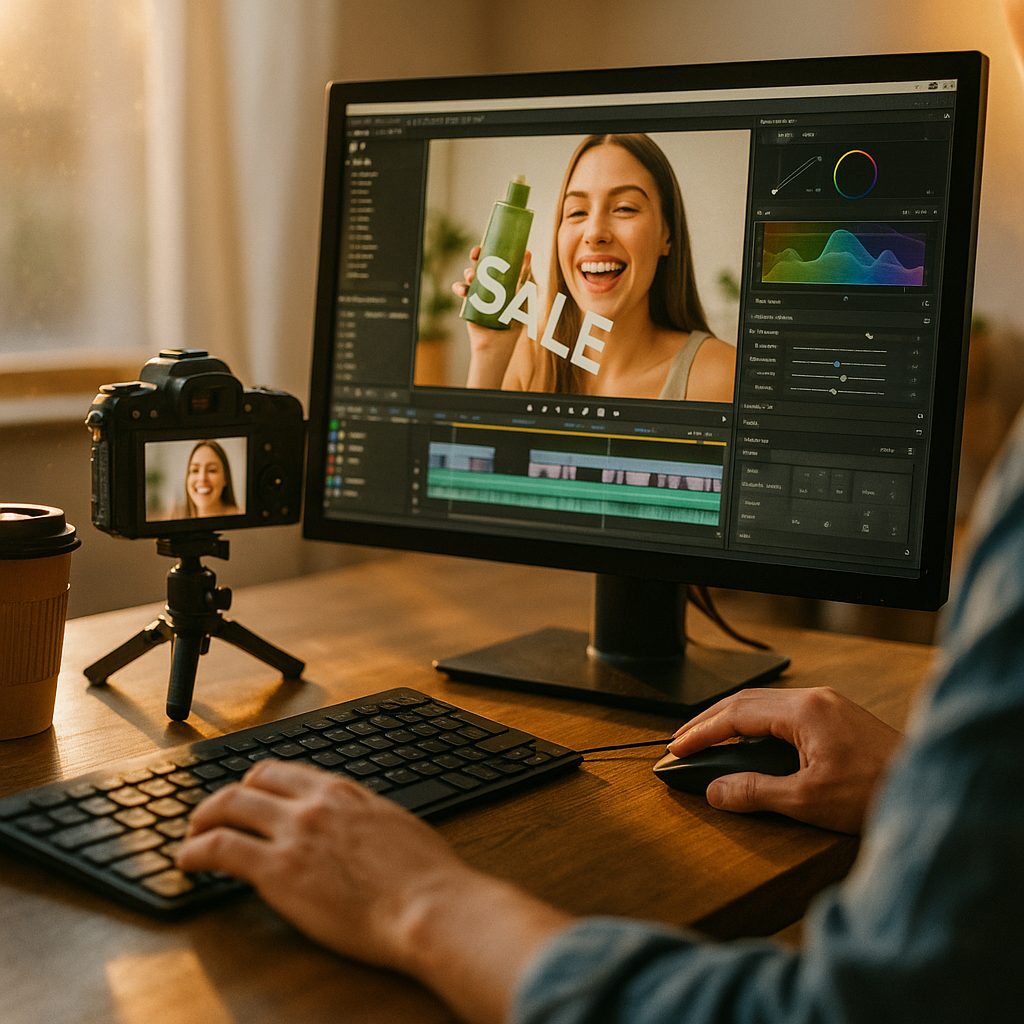
Search LinkedIn for “UGC ad editor” and you’ll find hundreds of open roles that didn’t exist eighteen months ago. Not “video editor.” Not “content creator.” A distinct, specialized job title built around one function: turning raw creator footage into ad-ready assets, fast and at volume. The UGC ad editor role isn’t a fluke of the hiring market. It’s a signal that content operations have outgrown freelancers and Slack requests.
A Job Title That Didn’t Exist Two Years Ago
Job titles lag reality. By the time a role gets its own listing on a careers page, the function it describes has usually been running informally inside the company for a year or more. That’s exactly what happened here.
Brands started buying UGC-style ads at scale once Meta’s algorithm rewarded native-feeling creative over polished brand films. Then TikTok Shop and Advantage+ campaigns demanded even more variations, more hooks, more thumbnail tests. Someone had to stitch, caption, and format all of it. For a while, that someone was a freelancer on Fiverr or an overworked social media manager doing double duty. Now it’s a full-time hire with a defined scope: sourcing raw UGC, editing it into scroll-stopping ad creative, and shipping variants for testing across platforms.
This mirrors a broader pattern covered in our piece on the creator economy hiring surge: when brands formalize a job title, they’re really formalizing a budget line and a workflow. The title is the fossil record of an operational shift that already happened.
What The Job Actually Involves
A UGC ad editor is not a video editor in the traditional sense. There’s no color grading, no cinematic pacing, no three-act structure. The job is closer to industrial production than filmmaking.
- Cutting raw creator footage into 15-30 second ad formats optimized for hook rate
- Adding captions, text overlays, and platform-native pacing (fast cuts for TikTok, slower builds for YouTube Shorts)
- Producing 10-20 variants of the same core asset for creative testing
- Matching brand guidelines without making content look “produced”
- Tagging and organizing assets inside a DAM or creative management platform for reuse
That last point matters more than it sounds. Volume without organization just creates a bigger mess. Brands running hundreds of UGC ad variants a month need someone thinking about taxonomy, not just timelines.
The UGC ad editor role exists because brands realized that creative testing at scale is a production problem, not a strategy problem — and production problems need dedicated headcount.
Why Now, Specifically?
Three forces converged. First, Meta’s Advantage+ and TikTok’s algorithmic delivery systems reward creative diversity over media buying finesse — our coverage of Advantage+ running on creative volume lays out how the algorithm itself now dictates asset quantity. Second, UGC-style ads consistently outperform polished brand content on cost-per-acquisition, a finding eMarketer has tracked across multiple verticals. Third, agencies got expensive. Paying agency rates for 50 monthly ad variants stopped making financial sense once brands realized they could bring the function in-house.
The Real Signal: Content Operations Are Becoming Permanent Infrastructure
Here’s the part that matters for anyone building a marketing org chart. A dedicated hire signals permanence. Freelancers and contractors are how you handle spikes. Full-time employees with defined career ladders are how you handle a function you expect to need forever.
That’s a meaningful admission. Brands are telling us, through their hiring behavior, that UGC ad production isn’t a campaign tactic anymore. It’s core infrastructure, like paid media buying or brand design. This tracks with the broader in-housing trend documented in our report on the Amazon, Google, and Estée Lauder hiring wave, where major brands pulled content production functions away from agencies and into internal teams.
It also explains why the video editor shortage has become a genuine hiring bottleneck. Demand for editing talent has outpaced the supply of people who understand both craft and platform-specific performance mechanics. A great traditional editor might not know why a hook needs to land in 1.3 seconds on TikTok versus 3 seconds on YouTube. That specificity is exactly why the role had to become its own job category rather than a subset of “video production.”
What This Means for Budget and Org Structure
If you’re a CMO or VP of marketing looking at this trend, the question isn’t “should we hire one person.” It’s “what does our creative supply chain look like at 5x current volume, and who owns it.”
Brands that have formalized this function typically structure it one of three ways:
- In-house pod model: A small team of 2-4 UGC ad editors sits inside the performance marketing or growth team, working directly off a creative testing calendar.
- Hybrid model: One or two in-house editors handle rapid-turnaround requests, while overflow volume goes to a vetted freelance bench or specialized agency.
- Creator-integrated model: Editors work alongside a tiered creator program, similar to the structure described in tiered influencer models becoming enterprise infrastructure, where different creator tiers feed different volumes of raw content into the editing pipeline.
None of these is objectively “correct.” The right model depends on your monthly ad spend, testing cadence, and how much creative refresh your paid social team actually needs. But if you’re still routing every UGC edit through an agency retainer, you’re likely paying a 30-50% markup for a function that costs far less in-house, once you account for onboarding time.
The Compliance Angle Nobody’s Talking About Enough
Bringing UGC editing in-house isn’t just a cost play. It’s a risk mitigation play too. When editors work directly for the brand, legal and compliance teams have far tighter control over disclosure language, FTC-required tags, and usage rights documentation. Agencies and freelance networks introduce more hand-off points, and every hand-off is a place where a disclosure gets dropped or a usage-rights clause gets missed.
The FTC’s endorsement guidelines apply regardless of who edits the content, but enforcement risk climbs when nobody on staff owns the final review. An in-house UGC ad editor, embedded inside a compliance-aware workflow, becomes a checkpoint rather than just a production resource.
How Does This Connect to AI Editing Tools?
You’d think AI video tools would kill this job before it fully matured. The opposite has happened, at least so far. Tools like CapCut’s ad templates, Vidyo.ai, and Pika have accelerated the more that these editors get done, but they haven’t replaced the judgment calls: which raw clips convert, which caption placement drives watch time, which pacing pattern matches which platform’s current algorithm behavior.
This is consistent with what we’ve seen across marketing tech broadly. Our coverage of AI marketing spend shifting toward governance makes a similar point: AI tools are handling execution while humans handle judgment, oversight, and quality control. UGC ad editors are becoming AI-tool operators, not AI replacements. They use generative tools to speed up rough cuts, then apply platform-specific expertise the tools still can’t replicate.
The brands scaling UGC ad production fastest aren’t the ones with the biggest budgets. They’re the ones who figured out the editor is now as strategically important as the media buyer.
What To Watch Next
Expect the role to fragment further. We’re already seeing job postings for “UGC ad editor, TikTok Shop specialist” and “performance creative editor, retention campaigns.” Specialization inside specialization. That’s a normal maturity curve for any function once it earns permanent headcount, similar to how creator tiering models eventually split into more granular sub-tiers as programs scaled.
Watch compensation data too. As of recent hiring trends tracked on LinkedIn’s talent insights, UGC-focused editing roles are commanding salaries closer to performance marketing associates than traditional video editors, another sign that companies view this as a growth function, not a support function.
Next Step for Brand Teams
Audit your last quarter of UGC ad spend and count how many hands touched each asset before it went live. If the number is more than two, you’re already paying the hidden cost of not having this role formalized. Post the job before your competitor does.
FAQs
What is a UGC ad editor?
A UGC ad editor is a specialized role focused on transforming raw, creator-shot footage into polished, platform-ready ad creative. The job involves cutting footage into short-form ad formats, adding captions and text overlays, and producing multiple variants for creative testing across paid social platforms.
How is a UGC ad editor different from a video editor?
A traditional video editor typically focuses on narrative pacing and cinematic quality for long-form or brand content. A UGC ad editor optimizes specifically for ad performance metrics: hook rate, watch time, and creative testing volume, while preserving the raw, native feel that makes UGC-style ads outperform polished production.
Why are brands hiring this role instead of using agencies?
Agency retainers for high-volume UGC editing typically carry a significant markup, and hand-offs between agency and brand introduce compliance risk around disclosures and usage rights. In-house hires reduce cost per asset at scale and give compliance teams tighter control over the final review process.
Will AI editing tools replace this role?
Not in the near term. AI tools like CapCut and Vidyo.ai speed up rough cuts and formatting, but platform-specific judgment calls, like pacing, hook placement, and caption timing, still require human expertise tied to current algorithm behavior.
What signals should marketing leaders watch for in their own org?
If UGC ad production still routes through freelancers or agency retainers on a per-project basis, and monthly creative testing volume keeps climbing, that’s a strong signal it’s time to formalize the function with dedicated headcount.
Top Influencer Marketing Agencies
The leading agencies shaping influencer marketing in 2026
Agencies ranked by campaign performance, client diversity, platform expertise, proven ROI, industry recognition, and client satisfaction. Assessed through verified case studies, reviews, and industry consultations.
Moburst

-
2

The Shelf
Boutique Beauty & Lifestyle Influencer AgencyA data-driven boutique agency specializing exclusively in beauty, wellness, and lifestyle influencer campaigns on Instagram and TikTok. Best for brands already focused on the beauty/personal care space that need curated, aesthetic-driven content.Clients: Pepsi, The Honest Company, Hims, Elf Cosmetics, Pure LeafVisit The Shelf → -
3

Audiencly
Niche Gaming & Esports Influencer AgencyA specialized agency focused exclusively on gaming and esports creators on YouTube, Twitch, and TikTok. Ideal if your campaign is 100% gaming-focused — from game launches to hardware and esports events.Clients: Epic Games, NordVPN, Ubisoft, Wargaming, Tencent GamesVisit Audiencly → -
4

Viral Nation
Global Influencer Marketing & Talent AgencyA dual talent management and marketing agency with proprietary brand safety tools and a global creator network spanning nano-influencers to celebrities across all major platforms.Clients: Meta, Activision Blizzard, Energizer, Aston Martin, WalmartVisit Viral Nation → -
5

The Influencer Marketing Factory
TikTok, Instagram & YouTube CampaignsA full-service agency with strong TikTok expertise, offering end-to-end campaign management from influencer discovery through performance reporting with a focus on platform-native content.Clients: Google, Snapchat, Universal Music, Bumble, YelpVisit TIMF → -
6

NeoReach
Enterprise Analytics & Influencer CampaignsAn enterprise-focused agency combining managed campaigns with a powerful self-service data platform for influencer search, audience analytics, and attribution modeling.Clients: Amazon, Airbnb, Netflix, Honda, The New York TimesVisit NeoReach → -
7

Ubiquitous
Creator-First Marketing PlatformA tech-driven platform combining self-service tools with managed campaign options, emphasizing speed and scalability for brands managing multiple influencer relationships.Clients: Lyft, Disney, Target, American Eagle, NetflixVisit Ubiquitous → -
8

Obviously
Scalable Enterprise Influencer CampaignsA tech-enabled agency built for high-volume campaigns, coordinating hundreds of creators simultaneously with end-to-end logistics, content rights management, and product seeding.Clients: Google, Ulta Beauty, Converse, AmazonVisit Obviously →