


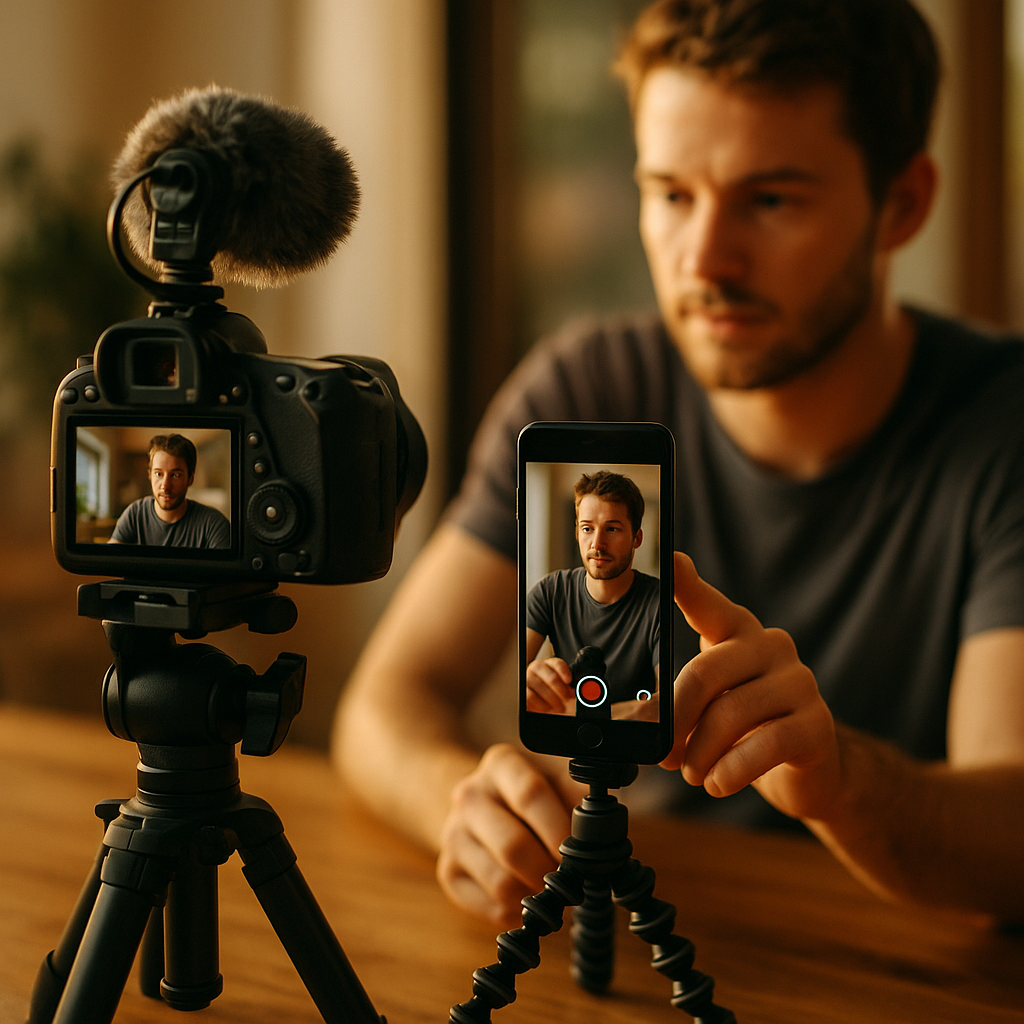
Brands that still commission separate shoots for YouTube and TikTok are burning roughly 40% more production budget than they need to, according to creator economy benchmarks tracked by eMarketer. The fix isn’t a bigger budget. It’s a smarter cross-format asset brief that directs creators to capture everything in one session, then edit natively for each platform’s grammar.
This isn’t about slapping a vertical crop on a horizontal video and calling it done. Audiences can smell that shortcut instantly, and engagement tanks accordingly. The brands winning this game are the ones treating the shoot day as a modular content harvest — one where the brief itself does the heavy lifting.
Why One Shoot, Two Platforms, Isn’t as Simple as It Sounds
YouTube rewards narrative arc, pacing, and retention curves that unfold over eight to fifteen minutes. TikTok rewards a hook inside the first three seconds and a payoff before the fifteen-second mark. These aren’t just different runtimes — they’re different cognitive contracts with the viewer. A creator who nails a slow-build story for long-form will often bury the lede on a short-form cut, and vice versa.
That tension is exactly why so many brands default to separate briefs, separate shoot days, and separate creator fees. It feels safer. It’s also unnecessary if the brief is engineered correctly from the start.
The real cost of format-siloed shoots isn’t the extra day on set — it’s the missed opportunity to let one story generate five distribution touchpoints instead of two.
Influencers Time has covered this shift before in the context of upfronts and multi-platform deals — see the cross-format upfront asset approach, which laid the groundwork for treating a single shoot as a multi-output pipeline rather than a one-off deliverable.
Build the Brief Around Modular Beats, Not a Linear Script
The single biggest structural change: stop writing scripts as a start-to-finish narrative. Write them as a series of self-contained beats that can be sequenced long or cut short.
A practical beat structure looks like this:
- Cold open hook (0-3 seconds): A visual or verbal pattern-interrupt that works as a TikTok opener and a YouTube retention anchor.
- Problem framing (10-30 seconds): Why this product, service, or moment matters right now.
- Demonstration or proof (30 seconds-3 minutes): The core value moment — unboxing, usage, before/after, testimonial.
- Objection handling (optional, long-form only): Price, durability, comparison to competitors.
- CTA and payoff (final 5-15 seconds): Clear next step, native to platform (comment prompt for TikTok, pinned link for YouTube).
Direct creators to shoot each beat as its own clean take, with slightly varied pacing and framing options captured at the same time. That means asking for a tighter, punchier delivery of the hook alongside a slower, more explanatory version — same words, different energy — without stopping the shoot to reset.
This modularity is the same principle behind podcast-to-shorts repurposing, where a single long conversation gets mined for short, standalone moments. The asset brief just applies that logic upstream, at the shoot stage, instead of downstream in the edit.
What to Explicitly Tell Creators to Capture
Vague direction produces vague footage. Your brief needs a shot list that anticipates both formats’ needs simultaneously:
- Wide establishing shots (for YouTube B-roll) and tight vertical-friendly close-ups of the same action.
- At least two audio takes of every key line — one at natural conversational pace, one condensed for pattern-interrupt pacing.
- Text-on-screen moments filmed with enough headroom that captions won’t clip faces in a 9:16 crop.
- A “silent-safe” version of the demo sequence, since a growing share of feed consumption happens with sound off. This overlaps directly with guidance in silent product demo briefing.
None of this requires exotic gear. Most creators are already shooting on phones or hybrid setups that can capture both aspect ratios in post if the framing was thoughtful on set. The brief just needs to say so explicitly, ahead of time, not as a note during a frantic reshoot request.
The Aspect Ratio Trap (And How to Avoid It)
Here’s the mistake that sinks most “shoot once” attempts: directing creators to frame everything in 16:9 and assuming the vertical cut will sort itself out. It won’t. Critical action — a product label, a facial reaction, a text overlay — ends up outside the 9:16 safe zone, and the TikTok cut looks like an afterthought because it is one.
The fix is simple but requires discipline in the brief: instruct creators to frame the core action inside a centered “safe zone” that works in both ratios. Most modern gimbals and phone camera apps display this as an overlay grid. If your creator’s setup doesn’t have it, send a printable framing guide as part of the brief packet. It costs nothing and saves a full reshoot.
Framing for the intersection of both aspect ratios, not the union of either, is the single highest-leverage instruction in a cross-format brief.
Editing Direction: Two Cuts, One Source
Once footage is captured, the brief needs to hand off clear editing logic — otherwise creators (or their editors) default to whichever platform they’re most comfortable with, and the other suffers.
For the YouTube cut, ask for:
- A cold open under 15 seconds that still teases the payoff, since YouTube’s own retention data rewards early hook strength even in long-form.
- Chapter markers aligned to the beat structure from the brief.
- Room for a mid-roll ad break if the creator monetizes with AdSense, positioned at a natural beat transition, not mid-sentence.
For the TikTok cut, ask for:
- The single strongest beat, isolated and re-hooked with on-screen text in the first second.
- Jump cuts every 2-3 seconds to maintain pacing — a technique also core to cliffhanger-style TikTok series structures.
- Native captions burned in, not relying on platform auto-caption alone, since accuracy still varies by accent and background noise.
Specify turnaround expectations for both cuts in the same document. A creator who delivers a polished YouTube video three weeks after the TikTok clip has already gone viral has wasted the compounding effect of cross-platform timing.
Disclosure and Compliance Don’t Change — But They Do Multiply
One brief, two platforms, means two separate disclosure surfaces to manage. The FTC’s endorsement guidance applies independently to each piece of content — a #ad tag on the TikTok cut doesn’t cover the YouTube description, and vice versa. Brands assuming one disclosure “covers” a repurposed asset are taking on unnecessary legal risk.
Build disclosure language directly into the brief’s deliverables checklist, per platform, per cut. This is the same discipline covered in AI labeling and creative brief compliance guidance — the labeling requirement doesn’t disappear just because the footage originated from a single shoot.
It’s also worth double-checking platform-specific paid partnership tools. YouTube’s paid product placement disclosure and TikTok’s branded content toggle are not interchangeable, and creators sometimes forget to activate both when they’re focused on juggling two edits from one shoot.
What This Actually Saves You
Let’s talk numbers, because that’s what gets this brief approved by finance. A single half-day shoot with a modular brief typically runs 30-50% cheaper than commissioning two separate creator engagements, based on typical mid-tier creator day rates reported across agency benchmarking from HubSpot‘s marketing research and Sprout Social‘s influencer benchmarks. Beyond raw cost, you get:
- Consistent messaging across platforms, since it originates from the same take.
- Faster time-to-publish, because the editing pipeline is planned before the shoot instead of improvised after.
- Better creator relationships — most creators prefer one efficient session over two disjointed ones, and it shows in the performance they bring to the work.
The tradeoff is upfront planning time. Your brief has to do more thinking than a traditional single-format document. That’s a fair trade for the savings and speed on the other side.
If your team is also managing YouTube’s evolving measurement standards alongside this shift, it’s worth reviewing YouTube’s updated view-count methodology so your reporting on the long-form cut stays accurate against the new baseline.
Next Step
Start with your next scheduled creator shoot: rewrite the script as modular beats, add a dual-ratio framing guide, and require two edited cuts with platform-specific disclosure in the deliverables list. That single change will tell you more about cross-format ROI than any amount of theorizing.
FAQs
What is a cross-format asset brief?
It’s a creative brief structured so a creator can shoot one session of footage that gets edited into both a long-form YouTube video and a short-form TikTok clip, using modular beats and dual-ratio framing instead of a single linear script.
Does shooting once actually save money compared to separate shoots?
Yes, typically 30-50% versus commissioning two separate creator engagements, since you’re paying for one production day and one creator fee instead of two full deliverable cycles.
How do you frame footage so it works for both 16:9 and 9:16?
Direct creators to keep the core action centered within the vertical safe zone even while shooting horizontal, using a framing grid overlay so nothing critical falls outside the crop when the vertical cut is made.
Do disclosure requirements change when one shoot produces two pieces of content?
No, but they apply separately to each piece. FTC endorsement disclosure and each platform’s paid partnership tool need to be activated independently on both the YouTube and TikTok cuts.
What’s the biggest mistake brands make with cross-format briefs?
Writing a linear script meant for one format and assuming the other platform’s cut will “figure itself out” in editing — it rarely does, and the neglected format’s content usually underperforms.
FAQs
What is a cross-format asset brief?
It’s a creative brief structured so a creator can shoot one session of footage that gets edited into both a long-form YouTube video and a short-form TikTok clip, using modular beats and dual-ratio framing instead of a single linear script.
Does shooting once actually save money compared to separate shoots?
Yes, typically 30-50% versus commissioning two separate creator engagements, since you’re paying for one production day and one creator fee instead of two full deliverable cycles.
How do you frame footage so it works for both 16:9 and 9:16?
Direct creators to keep the core action centered within the vertical safe zone even while shooting horizontal, using a framing grid overlay so nothing critical falls outside the crop when the vertical cut is made.
Do disclosure requirements change when one shoot produces two pieces of content?
No, but they apply separately to each piece. FTC endorsement disclosure and each platform’s paid partnership tool need to be activated independently on both the YouTube and TikTok cuts.
What’s the biggest mistake brands make with cross-format briefs?
Writing a linear script meant for one format and assuming the other platform’s cut will “figure itself out” in editing — it rarely does, and the neglected format’s content usually underperforms.
Top Influencer Marketing Agencies
The leading agencies shaping influencer marketing in 2026
Agencies ranked by campaign performance, client diversity, platform expertise, proven ROI, industry recognition, and client satisfaction. Assessed through verified case studies, reviews, and industry consultations.
Moburst

-
2

The Shelf
Boutique Beauty & Lifestyle Influencer AgencyA data-driven boutique agency specializing exclusively in beauty, wellness, and lifestyle influencer campaigns on Instagram and TikTok. Best for brands already focused on the beauty/personal care space that need curated, aesthetic-driven content.Clients: Pepsi, The Honest Company, Hims, Elf Cosmetics, Pure LeafVisit The Shelf → -
3

Audiencly
Niche Gaming & Esports Influencer AgencyA specialized agency focused exclusively on gaming and esports creators on YouTube, Twitch, and TikTok. Ideal if your campaign is 100% gaming-focused — from game launches to hardware and esports events.Clients: Epic Games, NordVPN, Ubisoft, Wargaming, Tencent GamesVisit Audiencly → -
4

Viral Nation
Global Influencer Marketing & Talent AgencyA dual talent management and marketing agency with proprietary brand safety tools and a global creator network spanning nano-influencers to celebrities across all major platforms.Clients: Meta, Activision Blizzard, Energizer, Aston Martin, WalmartVisit Viral Nation → -
5

The Influencer Marketing Factory
TikTok, Instagram & YouTube CampaignsA full-service agency with strong TikTok expertise, offering end-to-end campaign management from influencer discovery through performance reporting with a focus on platform-native content.Clients: Google, Snapchat, Universal Music, Bumble, YelpVisit TIMF → -
6

NeoReach
Enterprise Analytics & Influencer CampaignsAn enterprise-focused agency combining managed campaigns with a powerful self-service data platform for influencer search, audience analytics, and attribution modeling.Clients: Amazon, Airbnb, Netflix, Honda, The New York TimesVisit NeoReach → -
7

Ubiquitous
Creator-First Marketing PlatformA tech-driven platform combining self-service tools with managed campaign options, emphasizing speed and scalability for brands managing multiple influencer relationships.Clients: Lyft, Disney, Target, American Eagle, NetflixVisit Ubiquitous → -
8

Obviously
Scalable Enterprise Influencer CampaignsA tech-enabled agency built for high-volume campaigns, coordinating hundreds of creators simultaneously with end-to-end logistics, content rights management, and product seeding.Clients: Google, Ulta Beauty, Converse, AmazonVisit Obviously →