


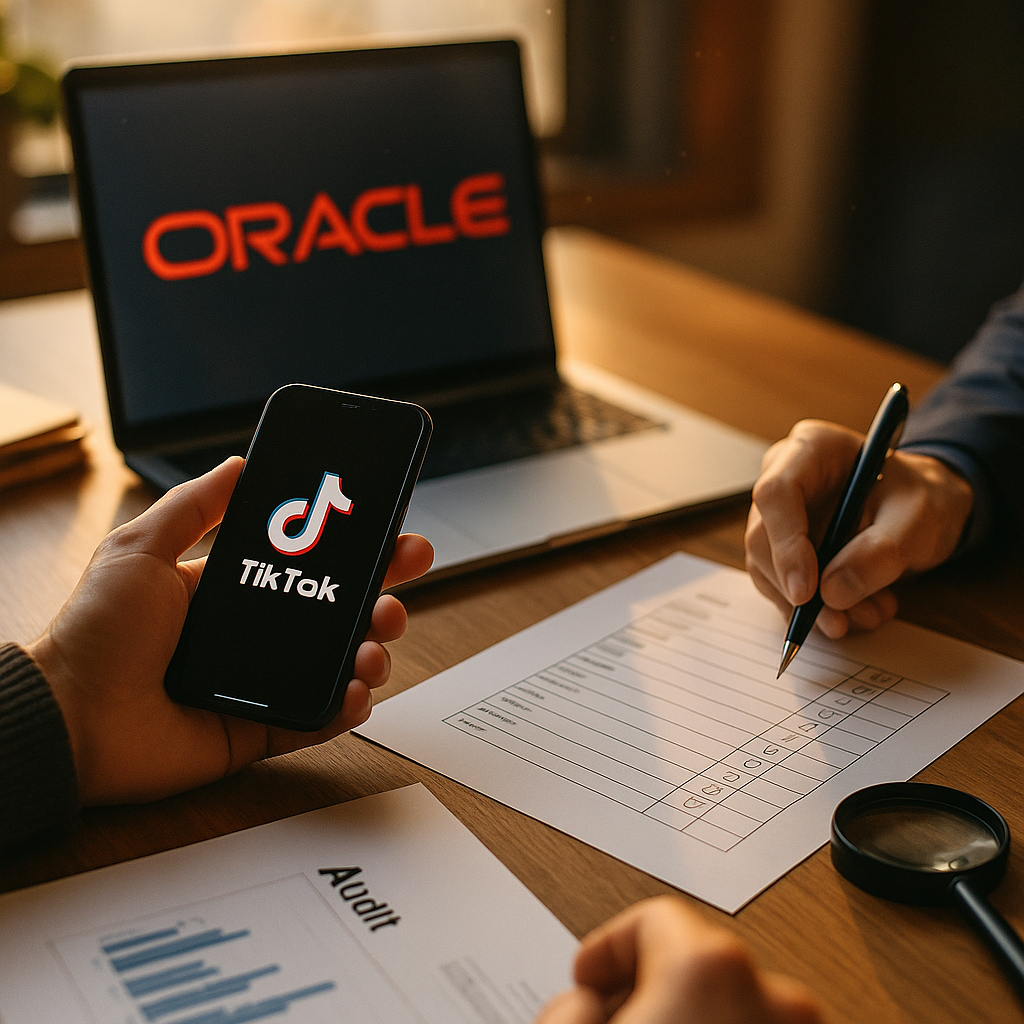
Roughly 170 million U.S. users. One algorithm now routed through Oracle’s cloud infrastructure. Zero public clarity on how TikTok’s Oracle joint venture will reshape identity verification for advertisers. If your brand runs paid media, influencer campaigns, or TikTok Shop commerce, the IP verification requirements baked into this deal will hit your data pipelines long before most legal teams expect.
Brands that treat this as a back-office IT problem will get blindsided. This is a marketing operations problem, a legal exposure problem, and a budget-allocation problem, all at once.
What’s Actually Changing Under the Joint Venture
The restructured U.S. TikTok entity, operating under the Oracle-backed joint venture, has committed to housing American user data on Oracle Cloud Infrastructure with new algorithmic oversight. Part of that commitment includes stricter identity and IP verification protocols designed to satisfy national security reviewers and demonstrate that Chinese parent ByteDance no longer controls the data layer.
Here’s the part brands keep missing: this isn’t just a backend data-residency swap. New verification requirements mean tighter checks on user location, device fingerprinting, and IP-to-identity mapping. That directly affects how ad platforms attribute conversions, how creator content gets geo-targeted, and how TikTok Shop transactions get validated for tax and compliance purposes.
If your attribution models rely on TikTok’s current IP and device signals, expect a transition period where match rates drop before the new verification stack stabilizes.
Brands already dealing with attribution volatility should look at how match rate degradation gets audited when platform-side identity signals shift underneath you. The playbook is the same here: don’t wait for the drop to show up in your quarterly report.
Why Q1 Is the Real Deadline, Not a Suggestion
TikTok and Oracle have signaled that the technical migration and verification rollout need to be substantially complete before the next major regulatory review checkpoint. That puts real pressure on Q1 as the operational deadline for advertisers, not just the platform itself.
Why does this matter to your team specifically? Because platform migrations of this scale historically break three things simultaneously: pixel and API integrations, audience targeting accuracy, and creator payout verification. TikTok’s own COPPA settlement history shows how quickly compliance gaps turn into nine-figure liabilities — brands should revisit the lessons from TikTok’s COPPA settlement checklist as a template for what regulators expect when identity verification fails at scale.
Marketing leaders who wait until the migration completes to start auditing will spend Q1 firefighting instead of planning. That’s a bad trade when your Q1 budget allocations are already locked.
The IP Verification Layer, Explained Simply
Strip away the jargon and IP verification does three jobs for TikTok’s new joint venture structure:
- Confirms user location to satisfy data-residency and national security requirements.
- Validates device and account authenticity to reduce bot traffic and fraudulent engagement, which directly affects your paid media fraud metrics.
- Feeds age and identity signals into TikTok’s broader compliance stack, including the age verification systems already under scrutiny.
That third point connects directly to a problem brands are already fighting. TikTok’s existing age verification tools don’t fully satisfy the patchwork of state-level consent laws, and the new IP verification layer won’t close that gap by itself. If you haven’t reviewed how age verification intersects with state consent requirements, do it before Q1, not after a regulator asks you to.
The Naming Rules Collision Nobody’s Talking About
Here’s a wrinkle that’s slipping under most brand teams’ radar. TikTok’s real-name and real-IP verification freeze, implemented as part of the joint venture’s identity overhaul, is running headlong into state-level naming and pseudonymity rules. Some states have specific protections around creator handles, minor privacy, and identity disclosure that don’t cleanly map to TikTok’s new verification demands.
If your influencer program works with creators under 18, or in states with stricter identity protection statutes, this collision creates real contractual risk. The detailed breakdown in TikTok’s IP verification freeze and state naming rules is required reading for any legal team reviewing creator agreements this quarter.
Four Things Brands Must Audit Before Q1
Consider this your working checklist. Not exhaustive, but it covers the areas where the joint venture’s changes will hit hardest.
1. Attribution and Pixel Integrity
Pull your last two quarters of TikTok attribution data and benchmark current match rates now, while the old infrastructure is still live. You need a clean baseline before the migration muddies the water. Any third-party MMM or MTA vendor touching TikTok data should be able to show you their data provenance chain; if they can’t, that’s a red flag worth escalating using a framework like the one in MTA and MMM vendor data provenance audits.
2. Creator Contract Language on Data Handling
Most influencer agreements signed over a year ago don’t account for a mid-contract infrastructure change of this magnitude. Does your standard creator contract include language addressing what happens if the platform’s data processing entity changes? If not, your legal team needs to draft an amendment before Q1 renewals go out.
3. TikTok Shop Compliance Overlap
If you’re running commerce through TikTok Shop, the IP verification changes stack on top of existing personalized pricing and FTC disclosure obligations. Brands already building compliance frameworks around the TikTok Shop personalized pricing rules should treat the Oracle migration as an additional variable, not a separate project. The safest move is folding IP verification checks into your existing TikTok Shop compliance checklist rather than building a parallel process.
4. Consent Mechanisms Across Your Stack
Any consent banner, opt-in flow, or data collection disclosure tied to TikTok integrations needs a fresh look. Verification changes at the platform level often require corresponding updates to how you disclose data use to your own audience. Run this through a structured consent mechanism audit rather than a quick manual check. It’s the difference between catching a gap in January and explaining one to a regulator in March.
Every joint venture data migration of this scale has produced at least one enforcement action within eighteen months. Betting your compliance posture on a smooth transition isn’t a strategy.
What This Means for Budget and Vendor Conversations
There’s a practical, unglamorous side to this: procurement. If your MMP (mobile measurement partner), CDP, or attribution vendor hasn’t confirmed their integration roadmap for the new TikTok data environment, get that in writing now. Vendors move slowly on infrastructure changes they don’t control, and you don’t want to discover a broken integration in the middle of a Q1 campaign push.
Ask your vendors directly: how will they handle reduced match rates during the transition, and what’s their fallback measurement approach? According to eMarketer’s platform measurement research, brands that maintain multi-touch attribution redundancy during platform migrations see significantly less reporting disruption than those relying on a single data source. That’s not a coincidence. It’s a hedge every brand should already have in place.
TikTok’s own advertiser resources, available through TikTok for Business, will likely update guidance as the joint venture rollout progresses. Set a calendar reminder to check that documentation monthly through Q1. Waiting for a press release is not a monitoring strategy.
Where Identity Resolution Fits Into the Bigger Picture
Zoom out and this TikTok situation is really a preview of a broader shift. Platforms across the board are tightening identity resolution in response to regulatory pressure, from the FTC’s stance on surveillance pricing and data practices to state-level privacy statutes multiplying every legislative session. Brands that build a general-purpose identity resolution compliance framework now will handle the next platform disruption, whatever it is, with far less scrambling than brands treating each one as a one-off crisis.
That’s really the strategic takeaway here. TikTok’s Oracle joint venture is a specific event with a specific Q1 deadline, but the underlying skill, auditing identity and IP verification dependencies across your marketing stack, is one you’ll need again. Sprout Social’s research on platform trust, available at Sprout Social, has repeatedly shown that brands slow to adapt to platform-level trust and safety changes lose measurable audience engagement in the following two quarters. Don’t be that data point.
Next Step
Assign one owner, ideally someone spanning legal and marketing ops, to run a single-page audit of your TikTok attribution, creator contracts, and consent flows before the end of Q1. Don’t wait for TikTok’s official migration notice; by then, your baseline data will already be gone.
FAQs
What is TikTok’s Oracle joint venture?
It’s the restructured ownership and infrastructure arrangement placing U.S. TikTok user data and operations under Oracle Cloud oversight, designed to satisfy national security reviewers by separating U.S. data handling from ByteDance’s direct control.
How will IP verification changes affect ad attribution?
Expect temporary match rate volatility as TikTok’s new identity and IP verification stack replaces existing infrastructure. Brands relying solely on platform-native attribution should maintain a backup measurement method during the transition.
Why is Q1 considered the real deadline?
Reports indicate TikTok and Oracle aim to complete the core technical migration and verification rollout ahead of the next regulatory review checkpoint, making Q1 the practical window for advertisers to adjust before disruptions peak.
Does this affect TikTok Shop compliance obligations?
Yes. IP verification changes stack on top of existing personalized pricing, data disclosure, and FTC-related obligations already governing TikTok Shop. Brands should integrate the new requirements into existing compliance checklists rather than treating them separately.
What should legal teams prioritize first?
Review creator contracts for data-handling clauses, confirm vendor data provenance for attribution tools, and reassess consent mechanisms tied to any TikTok data integrations.
Top Influencer Marketing Agencies
The leading agencies shaping influencer marketing in 2026
Agencies ranked by campaign performance, client diversity, platform expertise, proven ROI, industry recognition, and client satisfaction. Assessed through verified case studies, reviews, and industry consultations.
Moburst

-
2

The Shelf
Boutique Beauty & Lifestyle Influencer AgencyA data-driven boutique agency specializing exclusively in beauty, wellness, and lifestyle influencer campaigns on Instagram and TikTok. Best for brands already focused on the beauty/personal care space that need curated, aesthetic-driven content.Clients: Pepsi, The Honest Company, Hims, Elf Cosmetics, Pure LeafVisit The Shelf → -
3

Audiencly
Niche Gaming & Esports Influencer AgencyA specialized agency focused exclusively on gaming and esports creators on YouTube, Twitch, and TikTok. Ideal if your campaign is 100% gaming-focused — from game launches to hardware and esports events.Clients: Epic Games, NordVPN, Ubisoft, Wargaming, Tencent GamesVisit Audiencly → -
4

Viral Nation
Global Influencer Marketing & Talent AgencyA dual talent management and marketing agency with proprietary brand safety tools and a global creator network spanning nano-influencers to celebrities across all major platforms.Clients: Meta, Activision Blizzard, Energizer, Aston Martin, WalmartVisit Viral Nation → -
5

The Influencer Marketing Factory
TikTok, Instagram & YouTube CampaignsA full-service agency with strong TikTok expertise, offering end-to-end campaign management from influencer discovery through performance reporting with a focus on platform-native content.Clients: Google, Snapchat, Universal Music, Bumble, YelpVisit TIMF → -
6

NeoReach
Enterprise Analytics & Influencer CampaignsAn enterprise-focused agency combining managed campaigns with a powerful self-service data platform for influencer search, audience analytics, and attribution modeling.Clients: Amazon, Airbnb, Netflix, Honda, The New York TimesVisit NeoReach → -
7

Ubiquitous
Creator-First Marketing PlatformA tech-driven platform combining self-service tools with managed campaign options, emphasizing speed and scalability for brands managing multiple influencer relationships.Clients: Lyft, Disney, Target, American Eagle, NetflixVisit Ubiquitous → -
8

Obviously
Scalable Enterprise Influencer CampaignsA tech-enabled agency built for high-volume campaigns, coordinating hundreds of creators simultaneously with end-to-end logistics, content rights management, and product seeding.Clients: Google, Ulta Beauty, Converse, AmazonVisit Obviously →