


Ask ChatGPT for skincare recommendations and watch what happens next: it doesn’t just answer, it names brands, compares products, and increasingly, links to where you can buy them. AI-powered social discovery is no longer a research curiosity. It’s a live channel, and most brand teams haven’t budgeted a dollar toward it.
That’s a problem. Because the same shift that killed organic reach on Facebook a decade ago is happening again, this time inside chat windows instead of feeds.
What “AI-Powered Social Discovery” Actually Means
Forget the buzzword soup for a second. AI-powered social discovery describes the growing behavior of consumers asking large language models (ChatGPT, Perplexity, Gemini, Claude, Meta AI) for product recommendations the same way they’d ask a friend or scroll TikTok comments. The LLM synthesizes reviews, brand content, Reddit threads, and structured data, then serves up a shortlist. Sometimes with citations. Sometimes with shopping links baked directly into the response.
This isn’t hypothetical. OpenAI has already rolled out shopping features inside ChatGPT that surface product cards with images, pricing, and retailer links. Perplexity has its own shopping assistant. Google’s AI Overviews now sit above traditional search results for a huge share of commercial queries. The discovery layer of the internet is being rebuilt in real time, and brands that treat it like a footnote to SEO are going to get left behind.
If a consumer’s first product interaction happens inside an AI chat window instead of a search results page or a creator’s feed, brand visibility now depends on how well your product is represented in the data these models pull from — not just how well you rank or how many creators you’ve paid.
Why This Is a Sampling Channel, Not Just a Search Channel
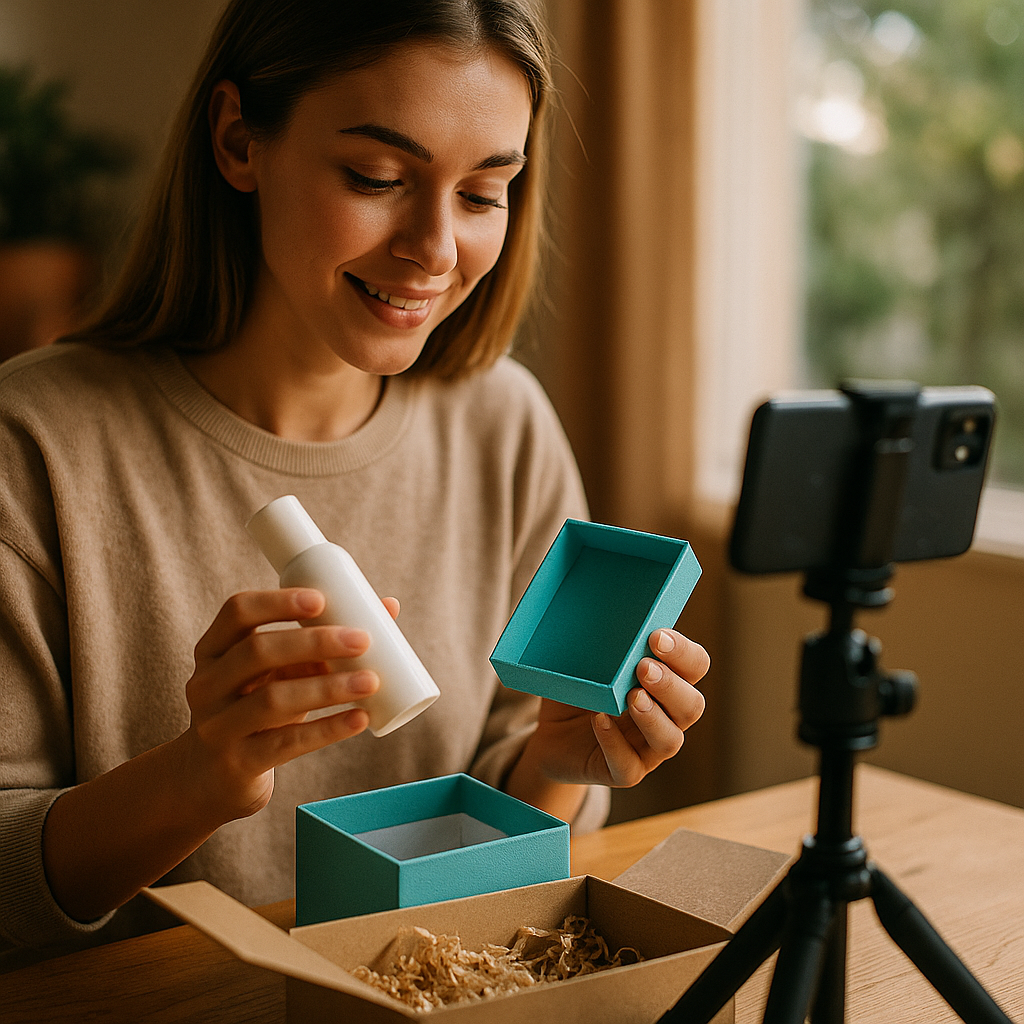
Here’s the part most marketing teams are missing. Product sampling has always meant physical goods in the hands of creators or consumers, or free trials gated behind an email address. AI discovery introduces a new, cheaper, faster version of sampling: informational sampling. When an LLM describes your product’s texture, ingredients, use case, or comparative advantage in response to a user query, that’s a sample of your brand experience delivered without you shipping a single unit.
Think about it from the consumer’s side. Someone asks Perplexity “what’s the best vitamin C serum for sensitive skin under $30” and gets three options with a breakdown of formulation differences. That interaction functions like a mini unboxing video, a comparison chart, and a testimonial rolled into one. No influencer fee. No PR mailer. Just whether your product data, reviews, and content exist in a form the model can retrieve and trust.
That’s exactly why this deserves budget line treatment, not a “let’s wait and see” shrug from leadership.
The Mechanics: How LLMs Decide What to Recommend
LLMs don’t have opinions. They have training data, retrieval systems, and increasingly, live web access through search plugins. Three things drive whether your brand shows up favorably:
- Structured product data — schema markup, retailer feeds, and clean specs that make it easy for a model to parse what your product does and who it’s for.
- Third-party validation density — the volume and sentiment of reviews, editorial mentions, Reddit discussions, and creator content that mentions your product by name.
- Retrieval freshness — whether the model’s live search layer (used by tools like Perplexity and ChatGPT’s browsing mode) can find recent, relevant content about you at query time.
This is why the old SEO playbook and the old influencer seeding playbook are colliding. You can’t win AI discovery with a landing page alone, and you can’t win it with a single paid post either. You need both, feeding the same signal.
The Data Backing the Shift
Search behavior is already bending toward zero-click, AI-mediated answers, a trend covered in depth in our piece on zero-click search becoming permanent rather than a passing phase. Separately, our reporting on AI search growth alongside falling ad trust shows a split worth paying attention to: consumers are using AI tools more, but they’re growing warier of anything that feels like a paid placement inside those answers.
That trust gap matters enormously for sampling strategy. If your brand’s AI visibility comes purely from paid syndication or manufactured reviews, savvy users (and increasingly, the models themselves) will discount it. Organic-feeling third-party validation — genuine creator content, real reviews, structured comparisons — carries more weight than anything that smells like an ad.
According to eMarketer, AI-driven shopping assistance is one of the fastest-growing use cases for generative AI tools among younger consumers, a trend retailers and DTC brands are already restructuring content strategy around. Statista data on generative AI adoption shows similar acceleration curves, echoing the search-behavior shifts that hit social platforms just a few years ago.
Where Influencer Marketing Fits Into the AI Discovery Stack
This is the part brand and agency teams should actually get excited about. Influencer content is one of the richest, most retrievable data sources LLMs pull from. Product reviews on YouTube, TikTok comparison videos, blog posts with embedded affiliate links — all of it becomes training and retrieval fodder for AI systems trying to answer “what’s the best X for Y.”
That means creator seeding campaigns now serve double duty. A single well-produced review video does its normal job (reach, engagement, conversion) and also becomes a durable data point that AI models can cite months or years later. Compare that to a paid social ad, which disappears the moment the budget stops. Creator content has a much longer half-life in the AI discovery ecosystem, and brands are starting to price that into contracts.
This connects directly to the broader shift we’ve tracked toward vetted micro-influencer networks as a trust layer for D2C brands. Micro-creators produce exactly the kind of specific, detailed, comparison-heavy content that LLMs favor when synthesizing recommendations. A single macro-influencer post might drive a spike in traffic, but a hundred micro-creators covering the same product from different angles builds the kind of data density that makes a brand “recommendable” by an AI system.
Micro-influencer content isn’t just cheaper per view anymore — it’s becoming the raw material AI discovery engines use to decide what gets recommended at all.
Budget Reallocation: What This Means Practically
Most influencer budgets are still allocated by platform: X percent TikTok, Y percent Instagram, Z percent YouTube. That framework is starting to look outdated. A more forward-looking allocation model adds a fourth bucket: AI-retrievable content, meaning content specifically structured (in title, transcript, and on-page copy) to answer the kinds of comparison and recommendation queries people now put to LLMs.
Brands already reallocating budgets toward vertical and short-form formats, as covered in our analysis of vertical media budget splits, should treat AI discoverability as an added layer on top of existing format decisions, not a separate initiative. The video you’re already commissioning for TikTok can be optimized for AI retrieval with better transcripts, clearer product naming, and structured descriptions, at almost no incremental cost.
Three practical moves worth making this quarter:
- Audit AI visibility. Run your top ten product queries through ChatGPT, Perplexity, and Gemini. See who gets recommended. If it’s not you, find out why — usually it’s thin review volume or inconsistent product naming across the web.
- Brief creators on citation-friendly content. Ask for clear product names, specific use-case language, and comparison framing in captions and video transcripts. Vague brand mentions don’t retrieve well; specific claims do.
- Fix your structured data. Product schema, review schema, and FAQ schema on owned pages directly feed the retrieval layer many LLMs use. This is unglamorous work, but it compounds.
Risk and Compliance: The Part Nobody’s Talking About Yet
Regulators haven’t caught up to AI-mediated product recommendations, but they will. The FTC has already signaled scrutiny of AI-generated endorsements and the blurred line between organic recommendation and paid placement. If your brand is paying to influence what an AI system recommends, whether through sponsored content that feeds training data or direct partnerships with AI shopping platforms, disclosure obligations likely apply even if the mechanism looks nothing like a traditional sponsored post.
This is uncharted territory legally, and it echoes concerns raised in our coverage of the AI personalization trust paradox: consumers want helpful AI recommendations but recoil the moment they suspect manipulation. Brands that get caught gaming AI discovery systems, through fake reviews, review farms, or undisclosed paid placement inside chat responses, risk a trust hit that’s harder to repair than a bad influencer partnership because it undermines the perceived neutrality of the AI tool itself.
Build compliance into this now, while the rules are still being written, rather than retrofitting it after a regulator or a journalist notices.
What Comes Next
Expect AI shopping assistants to formalize partnership programs the way search engines formalized paid listings two decades ago. OpenAI, Perplexity, and Google are all experimenting with commerce integrations, and where there’s commerce, there’s eventually an ad product. Brands that build genuine AI discoverability now, through real reviews, structured data, and creator content built for citation, will have leverage when those paid programs launch. Brands starting from zero will be buying their way into visibility they could have earned for free.
The parallel to voice discovery is instructive here: another channel brands underestimated until it was already reshaping how products get found. AI chat discovery is moving faster and touching a bigger share of purchase decisions.
Next step: run the ten-query AI visibility audit this week, not next quarter. If your brand isn’t showing up in ChatGPT or Perplexity responses for its core category terms, that’s a gap competitors are already working to close.
Frequently Asked Questions
What is AI-powered social discovery?
It’s the growing consumer behavior of using AI chat tools like ChatGPT, Perplexity, and Gemini to find and compare products, replacing or supplementing traditional search and social browsing for discovery and recommendations.
How is this different from traditional SEO?
Traditional SEO optimizes for ranking on a results page a human scans. AI discovery optimization focuses on being retrieved and cited by a model that synthesizes an answer, which depends more heavily on structured data, review density, and third-party validation than on keyword ranking alone.
Can brands pay to be recommended by AI tools?
Some platforms are testing sponsored placements within AI shopping features, but most recommendations today are generated organically from training data and live retrieval. Paid influence exists but disclosure norms are still being established.
Does influencer content actually affect what AI models recommend?
Yes. Creator reviews, comparison videos, and detailed product content are exactly the kind of specific, retrievable material LLMs pull from when answering product queries, making creator seeding an indirect but real lever on AI visibility.
What should brands do first to improve AI discoverability?
Start by auditing how your brand currently shows up across major AI tools for core category queries, then fix structured data gaps and brief creators to use consistent, specific product naming in their content.
FAQs
Top Influencer Marketing Agencies
The leading agencies shaping influencer marketing in 2026
Agencies ranked by campaign performance, client diversity, platform expertise, proven ROI, industry recognition, and client satisfaction. Assessed through verified case studies, reviews, and industry consultations.
Moburst

-
2

The Shelf
Boutique Beauty & Lifestyle Influencer AgencyA data-driven boutique agency specializing exclusively in beauty, wellness, and lifestyle influencer campaigns on Instagram and TikTok. Best for brands already focused on the beauty/personal care space that need curated, aesthetic-driven content.Clients: Pepsi, The Honest Company, Hims, Elf Cosmetics, Pure LeafVisit The Shelf → -
3

Audiencly
Niche Gaming & Esports Influencer AgencyA specialized agency focused exclusively on gaming and esports creators on YouTube, Twitch, and TikTok. Ideal if your campaign is 100% gaming-focused — from game launches to hardware and esports events.Clients: Epic Games, NordVPN, Ubisoft, Wargaming, Tencent GamesVisit Audiencly → -
4

Viral Nation
Global Influencer Marketing & Talent AgencyA dual talent management and marketing agency with proprietary brand safety tools and a global creator network spanning nano-influencers to celebrities across all major platforms.Clients: Meta, Activision Blizzard, Energizer, Aston Martin, WalmartVisit Viral Nation → -
5

The Influencer Marketing Factory
TikTok, Instagram & YouTube CampaignsA full-service agency with strong TikTok expertise, offering end-to-end campaign management from influencer discovery through performance reporting with a focus on platform-native content.Clients: Google, Snapchat, Universal Music, Bumble, YelpVisit TIMF → -
6

NeoReach
Enterprise Analytics & Influencer CampaignsAn enterprise-focused agency combining managed campaigns with a powerful self-service data platform for influencer search, audience analytics, and attribution modeling.Clients: Amazon, Airbnb, Netflix, Honda, The New York TimesVisit NeoReach → -
7

Ubiquitous
Creator-First Marketing PlatformA tech-driven platform combining self-service tools with managed campaign options, emphasizing speed and scalability for brands managing multiple influencer relationships.Clients: Lyft, Disney, Target, American Eagle, NetflixVisit Ubiquitous → -
8

Obviously
Scalable Enterprise Influencer CampaignsA tech-enabled agency built for high-volume campaigns, coordinating hundreds of creators simultaneously with end-to-end logistics, content rights management, and product seeding.Clients: Google, Ulta Beauty, Converse, AmazonVisit Obviously →