


Sixty-five million dollars. That’s what Poppi agreed to pay to settle a class-action lawsuit over “gut health” claims that regulators and plaintiffs said weren’t backed by science. So how do you rebuild micro-influencer trust after a settlement like that torches your credibility with the exact audience who made you a category leader? Poppi’s answer wasn’t a rebrand. It was a return to kitchen tables.
The Trust Collapse Nobody Saw Coming
Poppi built its entire growth story on influencer credibility. Wellness creators, gut-health advocates, and everyday moms filmed themselves cracking open cans, talking about bloating, digestion, and “prebiotic” benefits. It worked spectacularly. The brand went from a scrappy soda startup to a $1.95 billion PepsiCo acquisition target in a few short years.
Then came the lawsuit. Plaintiffs alleged Poppi’s gut-health claims lacked clinical substantiation, that the actual prebiotic fiber content was too low to deliver meaningful digestive benefits. Poppi settled for $65 million without admitting wrongdoing, but the reputational damage was already circulating. Creators who’d built content around Poppi’s health narrative suddenly looked complicit. Some deleted old posts. Others fielded angry comments asking why they’d promoted “unproven” claims.
This is the part brand teams underestimate. A legal settlement doesn’t just cost money. It creates a credibility vacuum among the exact micro-creators whose entire value proposition is authenticity. When influencers feel burned, they don’t just stop posting. They tell their audience why.
A regulatory settlement doesn’t end a trust crisis with influencers — it starts one, because creators feel personally implicated in claims they can no longer defend.
Why Kitchen-Table Content Became the Fix
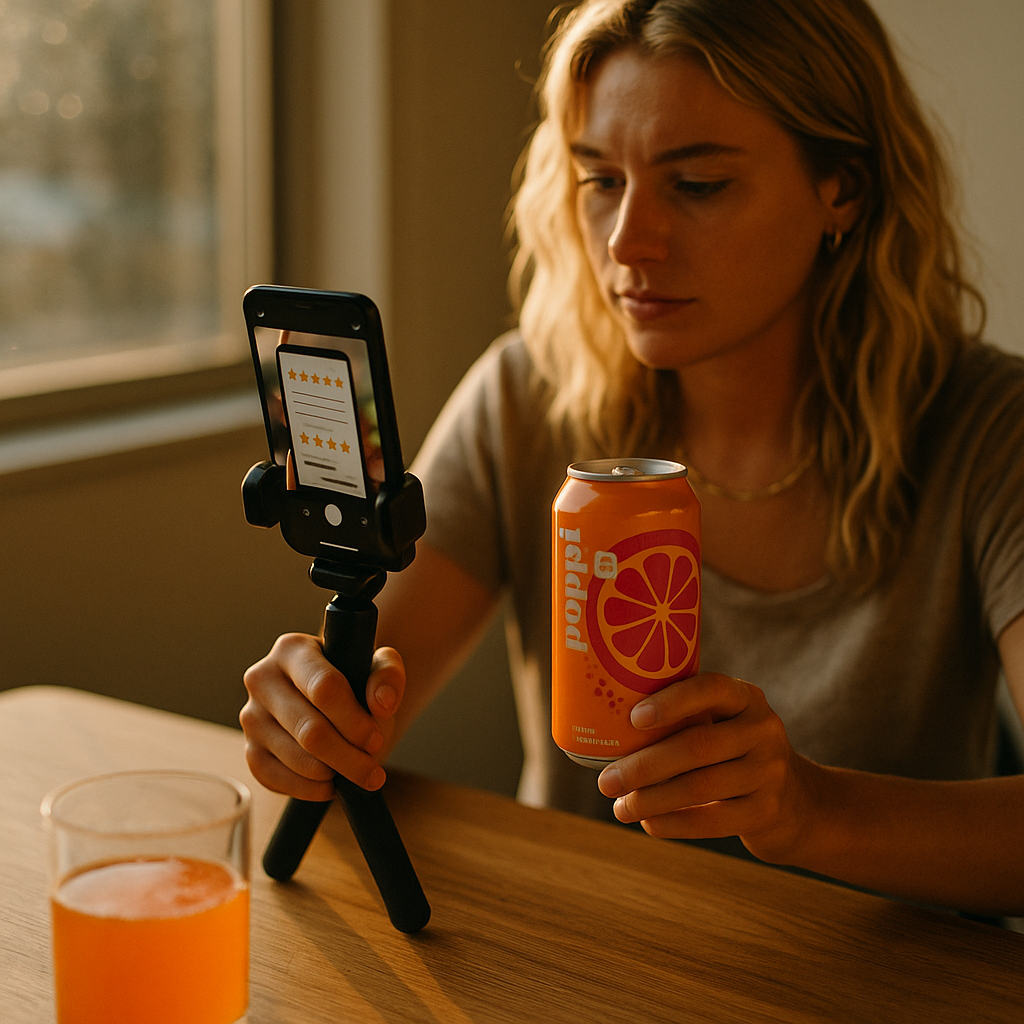
Poppi’s rebuild strategy centered on what internal teams reportedly called “kitchen-table content”: unscripted, low-production videos filmed in actual home kitchens, showing real usage without health claims attached. No mentions of gut health. No clinical language. Just people drinking soda and talking about taste, mixability, and whether it works as a mixer or an afternoon treat.
This wasn’t a creative pivot. It was a compliance pivot dressed as one. By stripping health claims from the brief entirely, Poppi removed the liability trigger that caused the original lawsuit. But the format also happened to be more believable than the polished wellness content that got them into trouble in the first place.
Think about it from the creator’s side. A micro-influencer with 8,000 followers doesn’t want to be the next person named in an amended complaint. Asking them to talk about “prebiotic fiber benefits” again, even informally, is a nonstarter. Asking them to film themselves making a Poppi mocktail in their actual kitchen? That’s low-risk, low-effort, and honestly more relatable than the original influencer playbook ever was.
What Changed in the Creator Brief
- Health and wellness terminology removed entirely from approved talking points
- Focus shifted to taste, occasion, and mixability (cocktails, mocktails, snack pairings)
- Legal review added as a mandatory step before any script or caption goes live
- Emphasis on unpaid, organic-style content over heavily disclosed paid partnerships
- Smaller creator tiers prioritized over macro-influencers with health/wellness niches
This mirrors a broader shift happening across the influencer economy: brands moving away from claims-heavy scripts toward format-driven authenticity. It’s the same logic behind unretouched, real-life content strategies that have outperformed polished campaigns precisely because they don’t ask audiences to trust a claim, just a moment.
Micro-Creators Were the Only Ones Who Could Rebuild This
Here’s the operational insight brand strategists should sit with: macro-influencers and celebrity partnerships couldn’t have executed this recovery. Their scale works against them in a trust crisis. Audiences assume big-name creators are paid to say whatever the brand needs said. Micro-creators, especially those with under 50,000 followers, carry a different kind of credibility. Their audiences know them personally, or close enough to it.
Sprout Social’s ongoing research on creator authenticity and audience trust consistently shows smaller creators score higher on perceived honesty, even as their reach is smaller. For a brand trying to prove it’s not manipulating its audience anymore, that trade-off, reach for credibility, is exactly the right one.
Poppi’s team reportedly re-engaged creators who had previously worked with the brand before the lawsuit, offering them a chance to post again but under a completely different brief: no claims, no scripts, just real usage. Some declined. Many accepted, treating it almost like a reconciliation. That’s a dynamic other brands facing reputational repair should note: your past creator relationships are an asset during a crisis, not a liability, if you handle the renegotiation transparently.
Micro-creators weren’t chosen for reach. They were chosen because their audiences would forgive a brand faster than they’d forgive a celebrity spokesperson repeating the same mistake.
Did It Actually Work?
Early signals suggest cautious success rather than a total turnaround. Engagement rates on Poppi’s re-engaged creator content reportedly outperformed the brand’s paid campaign benchmarks, though the company hasn’t published granular before-and-after trust metrics publicly. What’s measurable: sentiment in comment sections shifted from “why did you lie to us” toward “this actually looks good,” a meaningful shift for a brand that spent months as a cautionary tale in marketing Slack channels.
Sales didn’t collapse either, which matters. PepsiCo’s acquisition interest held through the settlement period, suggesting the brand’s underlying product-market fit survived even as its claims-based marketing didn’t.
Compare this to brands that tried to out-market a trust crisis with bigger campaigns and slicker creative. It rarely works. Consumers, and especially the FTC, are increasingly skeptical of polish. The Federal Trade Commission’s endorsement guidelines have tightened specifically because overly produced influencer content often signals scripted claims rather than genuine experience. Poppi’s kitchen-table aesthetic wasn’t just emotionally smart. It was legally defensible by design.
The Compliance Lesson Hiding Inside a Creative Strategy
Most case studies about influencer recovery focus on the emotional narrative: authenticity, vulnerability, humility. Those matter. But the real operational takeaway for brand and legal teams is this: Poppi’s new content format functions as a compliance firewall. By removing health claims from the creator brief entirely, they removed the exact language that triggered litigation risk in the first place.
This is a template other CPG and wellness brands should study closely, especially those making functional health claims (gut health, energy, focus, sleep) through influencer channels. If your claims can’t survive a Federal Trade Commission review or a class-action discovery process, they shouldn’t be in a creator’s script either.
Brands running influencer programs with any health, wellness, or efficacy claims should ask three questions before every campaign:
- Can this specific claim be substantiated by a clinical study we can produce on demand?
- Would we be comfortable if this creator’s exact wording appeared in a legal filing?
- Are we asking creators to make claims we wouldn’t put on our own packaging?
If the answer to any of these is uncertain, the claim doesn’t belong in the brief. This is the same discipline brands are having to apply across creator brief structures more broadly, as platforms and regulators both demand tighter alignment between what’s said and what’s provable.
What Other Brands Should Take From This
Poppi’s situation is specific, but the recovery mechanics are transferable. Any brand facing a trust deficit, whether from a lawsuit, a PR crisis, or just declining sentiment, can borrow this framework:
- Downshift from macro to micro. Big names amplify skepticism during a crisis. Smaller creators absorb it better.
- Strip risky language from every brief. If legal can’t approve a claim for packaging, it shouldn’t be approved for a script either.
- Favor unscripted formats. Audiences read polish as manipulation right now, especially post-scandal.
- Re-engage past creators honestly. Explain what changed. Don’t pretend nothing happened.
- Measure sentiment, not just reach. Comment-level trust recovery is a leading indicator long before sales data confirms it.
This same discipline shows up in how other brands have rebuilt trust or scaled cautiously through smaller creator waves rather than viral swings, as seen in Stanley’s tiered micro-creator rollout and the vetting rigor behind Curology’s influencer vetting engine. Trust recovery and trust building, it turns out, run on the same operational rails.
Marketing teams should also revisit their creator agreements. Every contract should specify who owns final approval on health, efficacy, or comparative claims, and require creators to flag any claim not explicitly pre-approved. The FTC’s endorsement guidance makes clear that brands, not just creators, bear responsibility when disclosures or claims mislead consumers. That liability doesn’t disappear because a creator wrote the caption themselves.
The bigger picture: influencer marketing is entering a phase where legal review and creative strategy can’t operate in separate lanes. HubSpot’s research on consumer trust in marketing content has repeatedly found that perceived authenticity, not production value, drives purchase intent. Poppi’s kitchen tables prove that lesson can survive even a $65 million settlement, provided the brand is willing to give up control of the narrative and let real usage speak instead.
Next step for brand teams: audit every active creator brief this quarter for unsubstantiated claims, and build a legal sign-off checkpoint into your influencer workflow before your next campaign, not after your next lawsuit.
FAQs
What triggered Poppi’s health-claims settlement?
Poppi settled a class-action lawsuit for $65 million after plaintiffs alleged the brand’s “gut health” and prebiotic marketing claims weren’t adequately supported by clinical evidence, despite the company not admitting wrongdoing.
Why did Poppi shift to micro-influencers instead of continuing with larger creators?
Micro-influencers carry higher perceived authenticity with smaller, closer-knit audiences. In a trust crisis, that credibility matters more than reach, since audiences are more skeptical of scripted, high-visibility endorsements right after a scandal.
What is “kitchen-table content” in this context?
It refers to unscripted, low-production videos filmed in real home settings that showcase product usage (taste, mixability, occasion) without making health or efficacy claims, reducing both legal risk and audience skepticism.
Can brands legally use this approach to reduce influencer marketing liability?
Removing unsubstantiated claims from creator briefs is a sound compliance practice, but brands should still consult legal counsel and follow FTC endorsement guidelines to ensure creator content, paid or organic, doesn’t imply misleading benefits.
How can other brands measure whether a trust-rebuilding campaign is working?
Track comment-level sentiment shifts, not just engagement or sales. Rising positive sentiment in comments and reduced skepticism-driven comments are earlier indicators of trust recovery than sales data, which often lags behind sentiment change.
Top Influencer Marketing Agencies
The leading agencies shaping influencer marketing in 2026
Agencies ranked by campaign performance, client diversity, platform expertise, proven ROI, industry recognition, and client satisfaction. Assessed through verified case studies, reviews, and industry consultations.
Moburst

-
2

The Shelf
Boutique Beauty & Lifestyle Influencer AgencyA data-driven boutique agency specializing exclusively in beauty, wellness, and lifestyle influencer campaigns on Instagram and TikTok. Best for brands already focused on the beauty/personal care space that need curated, aesthetic-driven content.Clients: Pepsi, The Honest Company, Hims, Elf Cosmetics, Pure LeafVisit The Shelf → -
3

Audiencly
Niche Gaming & Esports Influencer AgencyA specialized agency focused exclusively on gaming and esports creators on YouTube, Twitch, and TikTok. Ideal if your campaign is 100% gaming-focused — from game launches to hardware and esports events.Clients: Epic Games, NordVPN, Ubisoft, Wargaming, Tencent GamesVisit Audiencly → -
4

Viral Nation
Global Influencer Marketing & Talent AgencyA dual talent management and marketing agency with proprietary brand safety tools and a global creator network spanning nano-influencers to celebrities across all major platforms.Clients: Meta, Activision Blizzard, Energizer, Aston Martin, WalmartVisit Viral Nation → -
5

The Influencer Marketing Factory
TikTok, Instagram & YouTube CampaignsA full-service agency with strong TikTok expertise, offering end-to-end campaign management from influencer discovery through performance reporting with a focus on platform-native content.Clients: Google, Snapchat, Universal Music, Bumble, YelpVisit TIMF → -
6

NeoReach
Enterprise Analytics & Influencer CampaignsAn enterprise-focused agency combining managed campaigns with a powerful self-service data platform for influencer search, audience analytics, and attribution modeling.Clients: Amazon, Airbnb, Netflix, Honda, The New York TimesVisit NeoReach → -
7

Ubiquitous
Creator-First Marketing PlatformA tech-driven platform combining self-service tools with managed campaign options, emphasizing speed and scalability for brands managing multiple influencer relationships.Clients: Lyft, Disney, Target, American Eagle, NetflixVisit Ubiquitous → -
8

Obviously
Scalable Enterprise Influencer CampaignsA tech-enabled agency built for high-volume campaigns, coordinating hundreds of creators simultaneously with end-to-end logistics, content rights management, and product seeding.Clients: Google, Ulta Beauty, Converse, AmazonVisit Obviously →