


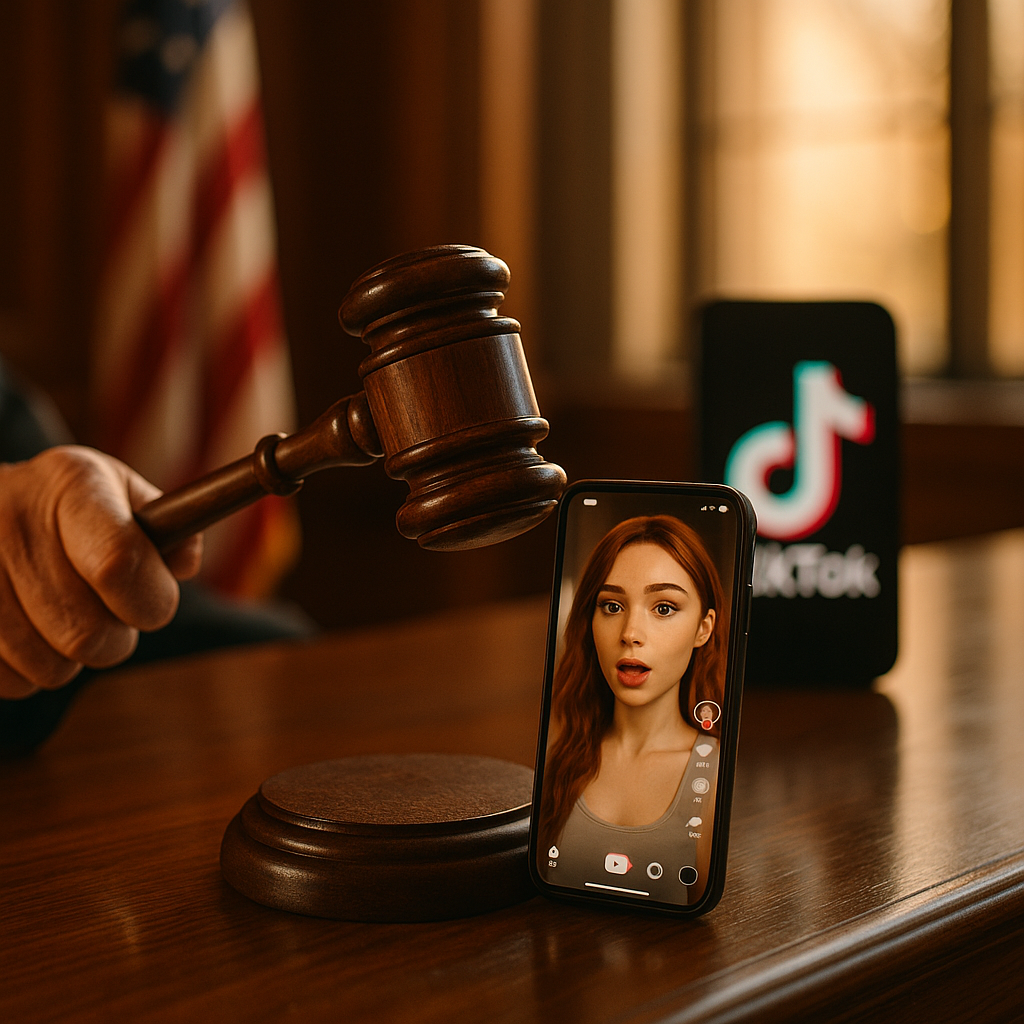
Two states now require synthetic performer disclosures that look nothing like the label TikTok slaps on your video automatically. Run the same ad in New York, California, and everywhere else, and you could be simultaneously compliant and non-compliant — on the same creative, at the same time. Synthetic performer disclosure requirements were supposed to simplify things. They’ve done the opposite.
Why One Label Isn’t Enough Anymore
TikTok’s platform-level AI labeling system was built for scale, not nuance. It scans uploads, detects synthetic media signals, and slaps on an “AI-generated” tag automatically in most cases, sometimes without the advertiser even prompting it. That’s convenient when you’re pushing thousands of ad variations through Smart+ or Symphony. It’s a liability when state law demands something more specific than a generic tag.
New York’s synthetic performer statute and California’s AB 1836-style disclosure requirements weren’t written with platform automation in mind. They were written by legislators responding to deepfake controversies, dead-celebrity endorsements, and AI clones of living actors showing up in ads without consent. The laws care about who is depicted, whether that person authorized the synthetic use, and whether the audience understands they’re watching a digital construct rather than a hired performer. TikTok’s label cares about none of that. It just flags “AI content” and moves on.
A platform label answers “was this made with AI?” State disclosure law answers “did a real person consent to being simulated?” Those are different questions, and one badge can’t answer both.
What New York and California Actually Require
New York’s approach targets the use of a digital replica of a performer in commercial content without a negotiated agreement covering that specific use. If your ad features an AI-generated likeness resembling a real, identifiable person, and that person didn’t sign off on the synthetic use, you’re exposed regardless of what TikTok’s auto-label says. The statute is performer-protection legislation first, disclosure legislation second.
California’s law is closer to a true disclosure mandate. It requires clear notice when a synthetic performer appears in commercial or political content, with specifics around placement, duration, and legibility of the disclosure. A vague platform badge that disappears after three seconds, or one buried in a caption users never expand, likely doesn’t satisfy it. Regulators in California have shown they care about actual comprehension, not technical box-checking. That mirrors the FTC’s own posture on AI-generated testimonials, where the agency has made clear that opaque or hard-to-notice disclosures don’t count as disclosures at all.
Put the two together and you get overlapping but non-identical obligations: New York wants consent documentation, California wants a specific on-screen disclosure treatment. Neither wants TikTok’s default badge to be the last word.
Where TikTok’s Auto-Label Actually Falls Short
TikTok’s system is a blunt instrument by design. It’s meant to catch synthetic media at scale across an enormous content firehose, not to satisfy state-specific legal language. Three gaps matter most for brand teams:
- Consent blindness: The label doesn’t verify whether a depicted performer consented to their likeness being used synthetically. It can’t. It has no way to check that against a rights database.
- Placement and duration mismatches: California’s disclosure specificity around visibility and duration doesn’t automatically align with how TikTok renders its badge, which can vary by placement, format, and whether the video is a Spark Ad versus a native upload.
- No paper trail: If a regulator or plaintiff’s attorney asks for proof of disclosure adequacy, “TikTok added a label” isn’t a legal defense. You need your own documentation showing intentional compliance, not incidental platform behavior.
This isn’t a knock on TikTok’s engineering. The company is trying to solve a global content-integrity problem with one mechanism. Expecting that mechanism to also satisfy 50 different state legislatures is unrealistic. For a broader comparison of how labeling philosophies differ across platforms, see our breakdown of AI content labeling divergence across TikTok, Meta, and YouTube.
The Compliance Gap Brands Are Actually Living In
Here’s the scenario that keeps compliance leads up at night: a national campaign using a synthetic spokesperson runs identically in New York, California, Texas, and Ohio. TikTok applies its standard label everywhere. In Texas and Ohio, that might be enough — no state-specific synthetic performer statute applies there yet. In New York, you need documented consent from whoever the digital performer resembles. In California, you need a disclosure treatment meeting specific visibility standards that TikTok’s badge may or may not satisfy depending on ad format.
One creative asset. Four different compliance postures. Zero platform tools that differentiate by viewer location at the disclosure layer.
Geotargeting the disclosure itself is technically possible but operationally messy. Most brands aren’t building state-specific ad variants just to adjust a compliance label — that’s expensive, slows down launch timelines, and multiplies QA burden across an already strained ad ops team. The more common (and riskier) approach: run one version everywhere and hope the platform label is “close enough.” It usually isn’t, legally speaking.
Running one AI-labeled ad nationally and assuming the platform badge covers state law is the single most common compliance mistake brands are making with synthetic performers right now.
Building a Disclosure Stack That Survives Both
The fix isn’t waiting for TikTok to build fifty state-specific label variants. It’s building your own disclosure layer on top of the platform’s, one that satisfies the stricter jurisdiction and defaults everywhere else.
- Treat California’s standard as your floor. If your on-screen disclosure meets California’s visibility, duration, and placement bar, it likely satisfies less specific states too. Build to the strictest requirement, then apply it universally rather than maintaining regional variants.
- Separate consent documentation from disclosure creative. New York’s requirement lives in your contracts and rights clearances, not in your video. Keep a rights file for every synthetic performer showing explicit authorization for the specific commercial use, tied to the specific campaign.
- Don’t rely on platform metadata as your compliance record. Screenshot and archive your own disclosure treatment at time of publish. Platform labels change, get A/B tested, or get suppressed in certain placements. Your evidence file shouldn’t depend on TikTok’s UI staying static.
- Loop legal in before creative, not after. If a synthetic performer resembles a real individual even loosely, that’s a legal question before it’s a creative one. Waiting until the edit is locked to ask “do we have rights to this face?” is how brands end up pulling live campaigns.
This is the same operational discipline we’ve recommended for synthetic performer law audits more broadly: build the compliance layer independent of any single platform’s tooling, because platform tooling changes faster than legislation does.
Where This Intersects With Existing Ad Disclosure Rules
Synthetic performer law doesn’t replace standard influencer and ad disclosure obligations, it stacks on top of them. If your synthetic performer is embedded in a paid social post that also needs a #ad or “Paid Partnership” tag, you now have two disclosure regimes running simultaneously. Our comparison of ad disclosure rules across TikTok, Instagram, and YouTube is a useful baseline for teams trying to map where synthetic performer rules layer in versus where they stand alone. Similarly, TikTok’s first-line ad disclosure requirement doesn’t disappear just because the content also carries an AI label; both obligations apply concurrently.
If your synthetic performer is delivering spoken claims — product benefits, efficacy statements, pricing — you’re also stepping into FTC testimonial territory. Review the FTC’s rule on AI-generated testimonials alongside your state-level disclosure plan, since the two regimes ask overlapping but not identical questions about consent and accuracy.
What About Other States?
New York and California are the two with the most developed synthetic performer statutes right now, but they won’t be the last. Illinois, Tennessee (through its ELVIS Act, aimed at voice cloning), and Washington have all moved on adjacent likeness and voice-protection legislation. eMarketer has tracked rising ad spend on AI-generated creative alongside this legislative wave, and the pattern is consistent: spend is scaling faster than compliance infrastructure. Brands running national campaigns should assume the patchwork widens before it consolidates. Building your disclosure stack to the strictest current standard is cheaper than rebuilding it every time a new state passes a bill.
A Note on Platform Reliability
It’s tempting to assume that because TikTok, Meta, and YouTube all now auto-detect and label AI content, the labeling problem is basically solved. It isn’t. Detection accuracy varies by content type, and platforms have been public about ongoing false negatives and false positives in synthetic media detection. Relying on a third party’s imperfect detection system as your primary legal compliance mechanism is a strategy built on someone else’s error rate, not yours. For campaign-level policy guidance, our piece on why your brand needs an AI content labeling policy now walks through how to formalize this internally rather than outsourcing it to platform defaults.
The Bottom Line for Compliance Teams
Reconciling these frameworks isn’t about picking the platform label or the state law. It’s about accepting that the platform label is a floor, not a ceiling, and building your own disclosure and consent documentation on top of it. Run your synthetic performer creative through a compliance checklist that assumes California’s visibility standard and New York’s consent requirement apply everywhere, then let TikTok’s automatic label do what it’s actually good at: flagging content for the platform’s own moderation systems, not carrying your legal defense.
Next step: Audit every synthetic performer asset currently live in market against both a consent file and an on-screen disclosure standard, don’t wait for a regulator or a resemblance claim to force the review.
FAQs
Does TikTok’s automatic AI label satisfy New York’s synthetic performer disclosure law?
No. New York’s law focuses on whether a depicted performer consented to their digital likeness being used commercially, not whether a generic AI label appears on the content. A platform badge doesn’t document consent, so brands need separate rights clearance for any synthetic performer resembling a real individual.
Is California’s AI disclosure requirement stricter than TikTok’s default label?
Generally yes. California’s standard specifies visibility, placement, and duration expectations for disclosures that TikTok’s automated badge doesn’t consistently guarantee across ad formats. Brands should treat California’s requirement as the baseline for any national creative.
Can one ad creative comply with both state laws and platform labeling at once?
Yes, but it requires layering your own on-screen disclosure and consent documentation on top of the platform’s automatic label rather than relying on the label alone. Build to the strictest applicable state standard and maintain a separate compliance file for consent.
What happens if a synthetic performer resembles a real person without consent?
That’s the core risk New York’s law targets. Even with a platform AI label present, using an unauthorized digital likeness of an identifiable person in commercial content can trigger liability, so rights clearance should happen before creative production, not after.
Are other states likely to pass similar synthetic performer laws?
Very likely. Several states have already moved on adjacent likeness and voice-protection legislation, and the trend suggests more state-specific disclosure requirements are coming. Brands should build compliance infrastructure that scales beyond just New York and California.
Top Influencer Marketing Agencies
The leading agencies shaping influencer marketing in 2026
Agencies ranked by campaign performance, client diversity, platform expertise, proven ROI, industry recognition, and client satisfaction. Assessed through verified case studies, reviews, and industry consultations.
Moburst

-
2

The Shelf
Boutique Beauty & Lifestyle Influencer AgencyA data-driven boutique agency specializing exclusively in beauty, wellness, and lifestyle influencer campaigns on Instagram and TikTok. Best for brands already focused on the beauty/personal care space that need curated, aesthetic-driven content.Clients: Pepsi, The Honest Company, Hims, Elf Cosmetics, Pure LeafVisit The Shelf → -
3

Audiencly
Niche Gaming & Esports Influencer AgencyA specialized agency focused exclusively on gaming and esports creators on YouTube, Twitch, and TikTok. Ideal if your campaign is 100% gaming-focused — from game launches to hardware and esports events.Clients: Epic Games, NordVPN, Ubisoft, Wargaming, Tencent GamesVisit Audiencly → -
4

Viral Nation
Global Influencer Marketing & Talent AgencyA dual talent management and marketing agency with proprietary brand safety tools and a global creator network spanning nano-influencers to celebrities across all major platforms.Clients: Meta, Activision Blizzard, Energizer, Aston Martin, WalmartVisit Viral Nation → -
5

The Influencer Marketing Factory
TikTok, Instagram & YouTube CampaignsA full-service agency with strong TikTok expertise, offering end-to-end campaign management from influencer discovery through performance reporting with a focus on platform-native content.Clients: Google, Snapchat, Universal Music, Bumble, YelpVisit TIMF → -
6

NeoReach
Enterprise Analytics & Influencer CampaignsAn enterprise-focused agency combining managed campaigns with a powerful self-service data platform for influencer search, audience analytics, and attribution modeling.Clients: Amazon, Airbnb, Netflix, Honda, The New York TimesVisit NeoReach → -
7

Ubiquitous
Creator-First Marketing PlatformA tech-driven platform combining self-service tools with managed campaign options, emphasizing speed and scalability for brands managing multiple influencer relationships.Clients: Lyft, Disney, Target, American Eagle, NetflixVisit Ubiquitous → -
8

Obviously
Scalable Enterprise Influencer CampaignsA tech-enabled agency built for high-volume campaigns, coordinating hundreds of creators simultaneously with end-to-end logistics, content rights management, and product seeding.Clients: Google, Ulta Beauty, Converse, AmazonVisit Obviously →