


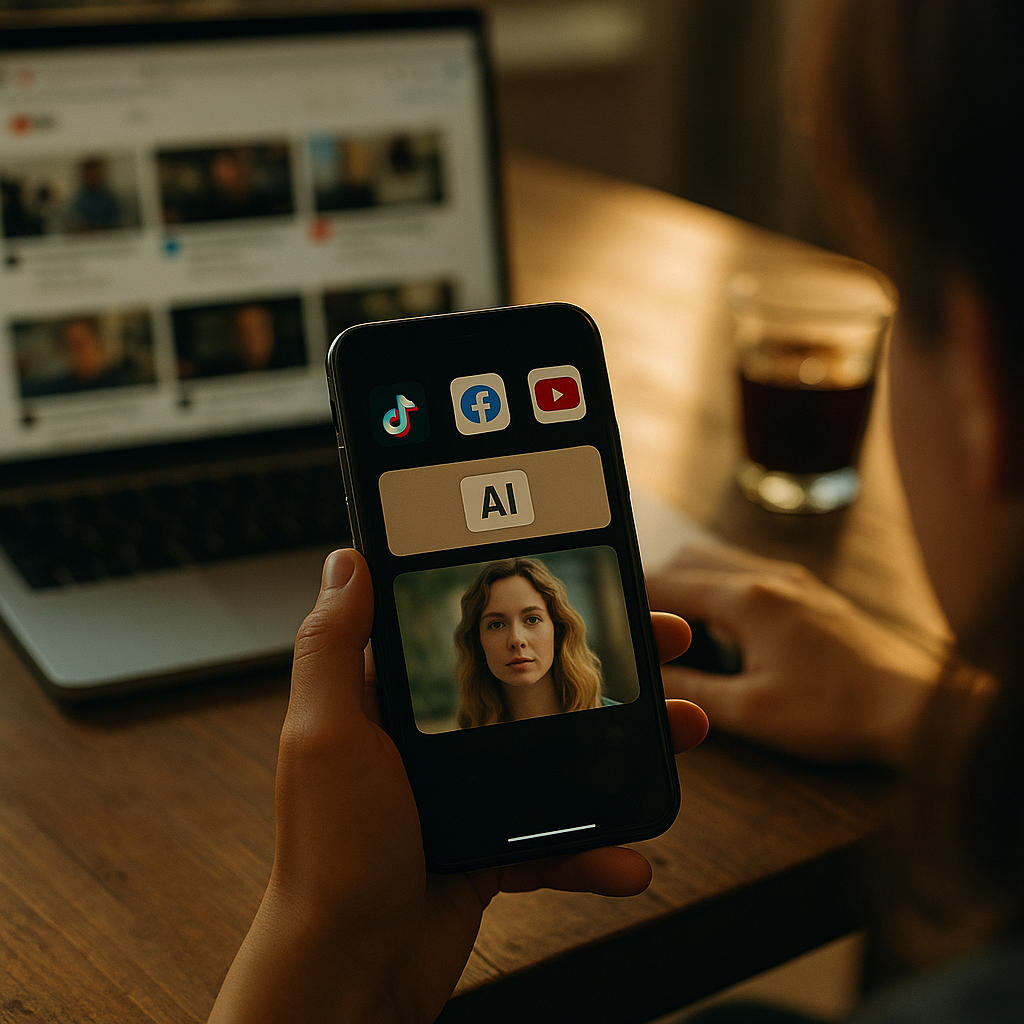
Upload the same AI-assisted video to TikTok, Instagram, and YouTube, and you’ll trigger three different labeling systems, three different detection thresholds, and three different definitions of what counts as “AI-generated.” AI content-labeling divergence isn’t a hypothetical compliance headache — it’s already costing brands takedowns, shadowbans, and awkward FTC exposure on campaigns that ran everywhere at once. If your workflow treats platform labeling as a copy-paste checkbox, you’re already behind.
Why One Label Doesn’t Fit Three Platforms
Here’s the uncomfortable truth: there is no universal AI disclosure standard. TikTok, Meta, and YouTube each built their own detection models, their own label taxonomies, and their own enforcement logic — largely in isolation from each other, and largely in isolation from the FTC’s actual disclosure requirements.
That means a single piece of branded content, repurposed across a campaign, can be simultaneously compliant on one platform and flagged on another. A synthetic voiceover might trip YouTube’s “altered content” classifier while sailing past TikTok’s detection entirely. An AI-generated product demo might get Meta’s “Made with AI” tag automatically applied, whether you requested it or not.
Brands running the same creative across TikTok, Meta, and YouTube are effectively managing three separate legal disclosure regimes under one campaign name — and most compliance workflows aren’t built for that.
This isn’t just an annoyance. Mislabeled or unlabeled synthetic content is squarely in the FTC’s crosshairs, and platform-level labels don’t automatically satisfy federal disclosure obligations. We’ve covered this gap in detail in our AI labeling policy breakdown, but the platform-specific mechanics deserve their own audit.
TikTok: Broad Detection, Blunt Enforcement
TikTok applies its “AI-generated content” label fairly aggressively, using a mix of creator self-disclosure at upload and automated detection for content edited with TikTok’s own AI effects. The platform has leaned into transparency messaging since regulatory heat intensified — unsurprising, given the $400M COPPA settlement still shaping how aggressively it polices content and minors’ exposure to it.
The practical issue for brands: TikTok’s detection is blunt. It sometimes tags content as AI-generated even when only a minor edit (background blur, voice enhancement) was applied, and sometimes misses genuinely synthetic avatars entirely if they were rendered outside TikTok’s native tools. That inconsistency creates two risks — over-labeling that undermines creator authenticity signals, and under-labeling that leaves brands exposed if regulators come asking.
- Self-disclosure toggle: Creators must manually flag AI-generated content at upload; brands can’t force this via briefs alone, so contract language matters.
- Auto-detection layer: Applies to content made with TikTok’s in-app AI tools, not third-party generation.
- Enforcement gap: Content generated externally (Midjourney, Runway, ElevenLabs) and uploaded natively often escapes automatic tagging — putting the disclosure burden entirely on the creator and brand.
If your creator contracts don’t already specify who’s responsible for triggering the label, fix that now. It’s the same logic we outlined in the AI avatar disclosure rules for FTC compliance — platform labels and legal disclosures are not interchangeable, and a missing toggle on TikTok doesn’t excuse a missing disclosure statement.
Meta: Automatic Tagging You Can’t Always Opt Out Of
Meta’s approach is the inverse problem. Instagram and Facebook apply “AI info” labels automatically based on embedded metadata (C2PA credentials) or detected editing signatures, and creators frequently don’t realize the label has been applied until after publish. This has generated real friction for brands running polished, partially-AI-assisted content that gets flagged the same way as fully synthetic material.
Meta has also tightened scrutiny following its teen safety settlement documentation rules, which means labeling isn’t operating in a vacuum — it’s tied to a broader push for content provenance tracking across the platform. Expect Meta’s detection to keep expanding, not loosen.
The compliance wrinkle: Meta’s automatic label doesn’t distinguish between “fully AI-generated” and “AI-touched” (a filter, an upscale, a background swap). Brands get bucketed the same way regardless of how much synthetic material is actually in the frame. That’s a reputational risk if your audience assumes heavier AI use than what actually happened — and it’s a legal risk in reverse if Meta fails to catch content that should have been labeled and your team assumed the platform “handled it.”
Assuming platform auto-labels satisfy your FTC disclosure obligation is one of the fastest ways to end up in an enforcement letter. Labels and legal disclosures serve different masters.
YouTube: The Strictest Paper Trail
YouTube’s “altered or synthetic content” disclosure requirement is arguably the most formalized of the three. Creators must declare AI use at upload through a structured form, and YouTube has been explicit that failure to disclose can result in content removal, not just a label. That’s a materially higher enforcement stance than TikTok or Meta currently apply.
For brand-sponsored content, this matters enormously. YouTube’s disclosure form creates a documented record — which is exactly the kind of evidence an FTC investigator or plaintiff’s attorney would request during discovery. If your influencer program runs long-form YouTube content alongside short-form TikTok and Reels cuts, the YouTube version is the one most likely to generate a compliance paper trail that outlives the campaign.
This aligns with broader FTC guidance on AI-generated testimonials and the more recent disclosure language requirements for AI demand-gen video ads. YouTube’s structured form essentially forces the documentation the FTC wants — TikTok and Meta don’t.
The Compliance Matrix: Mapping One Campaign, Three Rulebooks
Here’s a simplified way to think about cross-platform obligations for a single AI-assisted asset:
- TikTok: Manual self-disclosure required for AI content; auto-detection limited to native tools; brand liability rests heavily on creator honesty and contract clauses.
- Meta: Automatic detection via metadata/C2PA signals; labels can’t always be removed or contested; brands must audit post-publish, not just pre-publish.
- YouTube: Structured disclosure form at upload; highest documentation standard; non-disclosure carries removal risk, not just a soft label.
Notice the pattern: each platform assumes a different party is responsible for triggering compliance. TikTok assumes the creator. Meta assumes its own detection. YouTube assumes a formal declaration process. If your brand’s workflow doesn’t map who owns disclosure on each platform, you’re relying on luck.
According to eMarketer, AI-assisted content now touches a meaningful share of sponsored social output, and that share is only growing as generation tools get cheaper and faster. Regulators know this. Platforms know this. The gap is entirely in brand-side operational readiness.
Building a Cross-Platform Labeling Workflow
Treat this like any other compliance matrix, not a one-off checklist. A few concrete steps:
- Audit every asset for AI touchpoints before distribution — not just full synthetic generation, but voice cleanup, upscaling, background removal, and avatar overlays.
- Assign platform-specific disclosure ownership in creator contracts. Specify who toggles TikTok’s label, who confirms Meta’s auto-tag accuracy, and who completes YouTube’s disclosure form.
- Document independently of platform labels. Keep your own internal record of what was AI-generated and how it was disclosed, regardless of whether the platform’s label matched reality. This record is your defense if a platform’s detection fails.
- Run a pre-flight compliance check similar to the process in our influencer compliance audit framework — same logic applies to AI disclosure as it does to undisclosed gifting.
- Build de-monetization risk into contracts. If a platform removes content over a disclosure failure, who eats the cost? Our piece on de-monetization risk clauses covers exactly this scenario.
None of this requires new headcount necessarily. It requires a single owned document — call it a labeling matrix, call it whatever — that every campaign gets checked against before assets go live. Most brands don’t have one. Yours should.
For platform-level policy specifics, check TikTok’s advertising guidelines, Meta’s business help center, and YouTube’s creator support documentation directly — platform rules shift faster than most trade coverage can track, this article included.
Regulatory backstop matters too. The FTC’s official guidance remains the actual legal floor, regardless of what any platform’s label says or doesn’t say.
Bottom line: build one internal AI-disclosure record per campaign, map it against each platform’s actual mechanism (not assumed mechanism), and stop treating platform labels as a substitute for FTC-compliant disclosure language.
FAQs
What is AI content-labeling divergence?
It refers to the inconsistent way platforms like TikTok, Meta, and YouTube detect, apply, and enforce labels on AI-generated or AI-assisted content, creating different compliance obligations for the same piece of creative across each platform.
Does a platform’s AI label satisfy FTC disclosure requirements?
Not automatically. Platform labels are content moderation tools, not legal disclosures. Brands still need clear, conspicuous disclosure language that meets FTC standards independent of whatever tag a platform applies.
Which platform has the strictest AI disclosure enforcement?
YouTube currently has the most formalized process, requiring a structured disclosure form at upload and allowing content removal for non-disclosure, compared to TikTok’s self-disclosure model and Meta’s automatic metadata-based tagging.
Who is responsible for triggering AI labels — the brand or the creator?
It depends on the platform. TikTok relies on creator self-disclosure at upload, Meta applies labels automatically based on detected signals, and YouTube requires the uploader to complete a disclosure declaration. Brands should assign ownership explicitly in creator contracts.
What happens if AI content isn’t labeled correctly across platforms?
Consequences range from content removal and reduced distribution to FTC scrutiny and reputational damage, especially if regulators determine the brand knowingly relied on inconsistent or absent disclosure.
FAQs
What is AI content-labeling divergence?
It refers to the inconsistent way platforms like TikTok, Meta, and YouTube detect, apply, and enforce labels on AI-generated or AI-assisted content, creating different compliance obligations for the same piece of creative across each platform.
Does a platform’s AI label satisfy FTC disclosure requirements?
Not automatically. Platform labels are content moderation tools, not legal disclosures. Brands still need clear, conspicuous disclosure language that meets FTC standards independent of whatever tag a platform applies.
Which platform has the strictest AI disclosure enforcement?
YouTube currently has the most formalized process, requiring a structured disclosure form at upload and allowing content removal for non-disclosure, compared to TikTok’s self-disclosure model and Meta’s automatic metadata-based tagging.
Who is responsible for triggering AI labels — the brand or the creator?
It depends on the platform. TikTok relies on creator self-disclosure at upload, Meta applies labels automatically based on detected signals, and YouTube requires the uploader to complete a disclosure declaration. Brands should assign ownership explicitly in creator contracts.
What happens if AI content isn’t labeled correctly across platforms?
Consequences range from content removal and reduced distribution to FTC scrutiny and reputational damage, especially if regulators determine the brand knowingly relied on inconsistent or absent disclosure.
Top Influencer Marketing Agencies
The leading agencies shaping influencer marketing in 2026
Agencies ranked by campaign performance, client diversity, platform expertise, proven ROI, industry recognition, and client satisfaction. Assessed through verified case studies, reviews, and industry consultations.
Moburst

-
2

The Shelf
Boutique Beauty & Lifestyle Influencer AgencyA data-driven boutique agency specializing exclusively in beauty, wellness, and lifestyle influencer campaigns on Instagram and TikTok. Best for brands already focused on the beauty/personal care space that need curated, aesthetic-driven content.Clients: Pepsi, The Honest Company, Hims, Elf Cosmetics, Pure LeafVisit The Shelf → -
3

Audiencly
Niche Gaming & Esports Influencer AgencyA specialized agency focused exclusively on gaming and esports creators on YouTube, Twitch, and TikTok. Ideal if your campaign is 100% gaming-focused — from game launches to hardware and esports events.Clients: Epic Games, NordVPN, Ubisoft, Wargaming, Tencent GamesVisit Audiencly → -
4

Viral Nation
Global Influencer Marketing & Talent AgencyA dual talent management and marketing agency with proprietary brand safety tools and a global creator network spanning nano-influencers to celebrities across all major platforms.Clients: Meta, Activision Blizzard, Energizer, Aston Martin, WalmartVisit Viral Nation → -
5

The Influencer Marketing Factory
TikTok, Instagram & YouTube CampaignsA full-service agency with strong TikTok expertise, offering end-to-end campaign management from influencer discovery through performance reporting with a focus on platform-native content.Clients: Google, Snapchat, Universal Music, Bumble, YelpVisit TIMF → -
6

NeoReach
Enterprise Analytics & Influencer CampaignsAn enterprise-focused agency combining managed campaigns with a powerful self-service data platform for influencer search, audience analytics, and attribution modeling.Clients: Amazon, Airbnb, Netflix, Honda, The New York TimesVisit NeoReach → -
7

Ubiquitous
Creator-First Marketing PlatformA tech-driven platform combining self-service tools with managed campaign options, emphasizing speed and scalability for brands managing multiple influencer relationships.Clients: Lyft, Disney, Target, American Eagle, NetflixVisit Ubiquitous → -
8

Obviously
Scalable Enterprise Influencer CampaignsA tech-enabled agency built for high-volume campaigns, coordinating hundreds of creators simultaneously with end-to-end logistics, content rights management, and product seeding.Clients: Google, Ulta Beauty, Converse, AmazonVisit Obviously →