


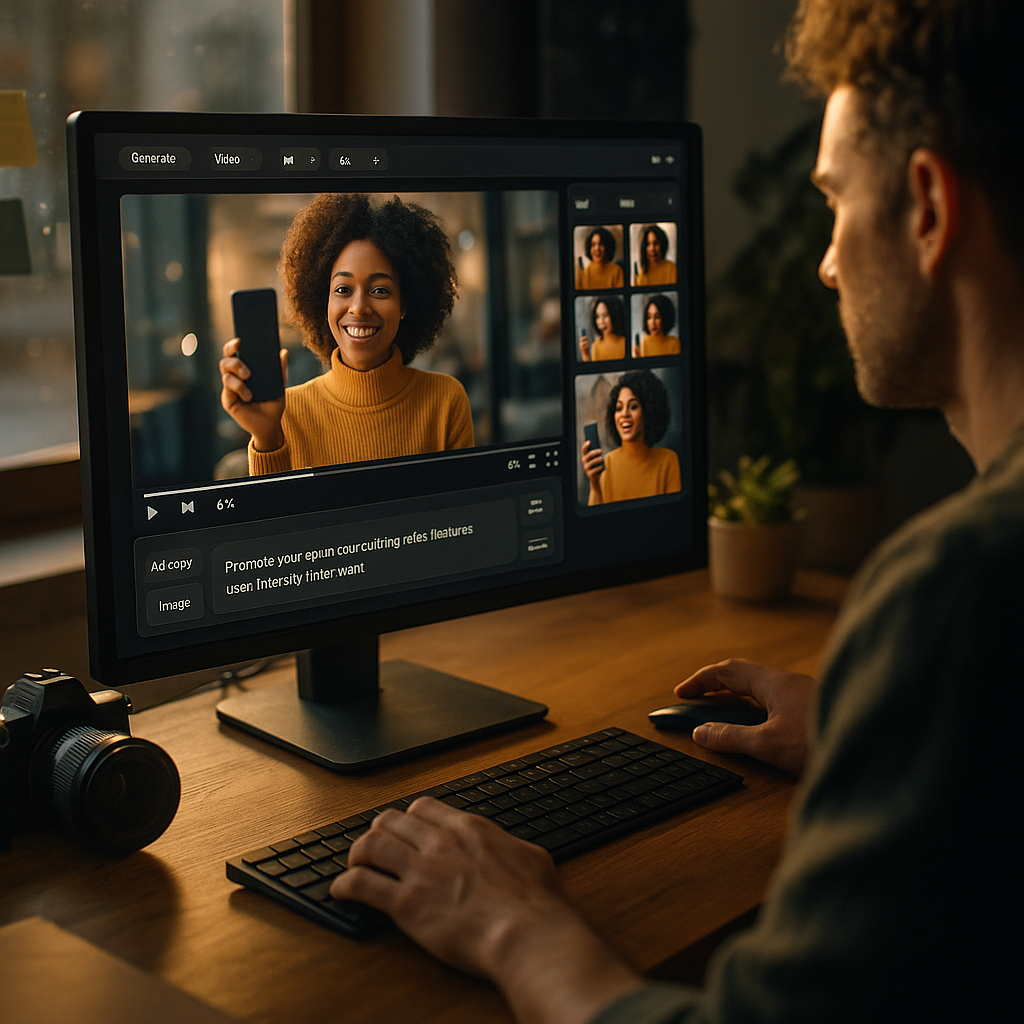
One production platform just raised at a valuation that would’ve bought you three ad agencies five years ago. AI-native ad production is no longer a side experiment for MarTech buyers — it’s becoming the default line item. SparkStation’s rapid ascent isn’t an isolated funding story. It’s a signal flare for where the next wave of marketing infrastructure spend is headed, and brands that miss it will be renegotiating vendor contracts from a position of weakness.
Why SparkStation Is the Canary in the Coal Mine
SparkStation didn’t invent AI video generation. It didn’t invent creative automation either. What it did was package generative production, brand asset management, and campaign distribution into a single suite that skips the traditional agency handoff entirely. Brief in, campaign-ready assets out, often within hours instead of weeks.
That speed is the whole pitch. And it’s resonating because procurement teams are tired of paying premium day rates for what a well-trained model can now approximate. This mirrors what we’ve already seen with AI creator workflows cutting campaign timelines to hours — the production bottleneck that used to justify big agency retainers is dissolving.
The real story isn’t that AI can make an ad. It’s that AI-native suites are collapsing the production-to-distribution pipeline into a single workflow, and that collapse is where the MarTech budget is migrating.
What “AI-Native” Actually Means (And Why It’s Different From Bolted-On AI)
Plenty of legacy MarTech vendors added a “Generate with AI” button in the last two years. That’s not the same thing as being AI-native. A bolted-on feature still routes through the old asset pipeline — upload, review, revise, export. An AI-native suite rebuilds the pipeline around the model itself: prompt-driven briefs, automated brand-safety checks, dynamic variant generation for every platform spec, and built-in performance feedback loops that retrain the creative engine on what actually converts.
The distinction matters for buyers evaluating vendors right now. Ask any platform demoing “AI ad production” a simple question: does the model learn from your campaign performance data, or does it just generate and forget? Most legacy tools do the latter. SparkStation and its emerging competitors do the former, and that’s the operational difference worth paying for.
The Budget Signal Behind the Hype
According to eMarketer, marketing technology spend is increasingly concentrating in fewer, more capable platforms rather than sprawling point-solution stacks. That consolidation trend predates SparkStation, but its funding round and enterprise client list accelerate it. When a single suite can replace a video production vendor, a localization vendor, and a chunk of your paid social creative team, CFOs notice.
This isn’t just about cost-cutting, either. It’s about speed-to-market becoming a competitive moat. Brands that can test twenty creative variants in the time competitors test two are winning share of attention, not just share of spend.
Where the Money Is Actually Flowing
Three categories are absorbing the bulk of AI-native ad production investment right now:
- Generative video and motion assets — replacing traditional shoot-and-edit cycles for short-form ad creative, especially vertical formats built for TikTok and Reels.
- Dynamic localization engines — auto-translating and culturally adapting campaigns across markets without separate production runs for each region.
- Performance-linked creative optimization — tools that ingest campaign data and auto-generate new variants based on what’s already converting, closing the loop between production and media buying.
Notice what’s missing from that list: static image generation. That novelty wave already crested. The money now is chasing tools that plug directly into media buying and measurement, not standalone creative generators. This tracks with the broader move toward templated AI studios erasing micro-creator quality barriers, where the line between “creator content” and “brand-produced content” keeps blurring.
The Risk Side Nobody’s Pricing In Yet
Faster production doesn’t mean risk-free production. Brand safety, disclosure compliance, and IP provenance haven’t caught up to the speed of generation. If your AI suite can produce fifty ad variants overnight, someone still needs to review fifty ad variants overnight — or you’re trusting an automated compliance layer that may not exist yet in your stack.
The FTC has already shown it’s paying attention to how brands handle synthetic and sponsored content, as seen in the ongoing scrutiny covered in our piece on the YouTube FTC probe exposing disclosure gaps. Regulators aren’t distinguishing between “an influencer didn’t disclose” and “an AI-generated ad wasn’t properly labeled.” The liability sits with the brand either way. Check current guidance directly at the FTC’s website before scaling any AI production workflow into regulated categories like finance, health, or alcohol.
There’s also a quieter risk: creative homogenization. When every brand in a category uses the same three AI-native suites trained on similar data, ads start to look alike. Differentiation becomes harder, not easier, unless brand teams stay actively involved in prompt strategy and creative direction rather than treating the tool as a vending machine.
What This Means for Agency Relationships
Agencies aren’t dead. But their value proposition is shifting fast. The agencies surviving this transition are the ones repositioning around strategy, prompt engineering, and quality control — not asset production. If your agency’s pitch still leads with “our production team,” ask them how they’re integrating AI-native tools into that workflow. If they can’t answer clearly, that’s a red flag worth escalating internally.
This shift echoes what’s already happened in creator partnerships, where AI matching platforms let brands skip the agency fee entirely for sourcing and vetting. Production is following the same trajectory: disintermediation of the manual middle layer, with humans repositioning higher up the value chain toward strategy and oversight.
How Brands Should Actually Respond
Don’t rip out your current stack tomorrow. Do start piloting AI-native production on lower-risk campaigns — evergreen social content, A/B creative testing, regional variant generation — where the downside of an off-brand output is low and the upside of speed is high.
A few practical steps worth taking this quarter:
- Audit your current production spend and flag which categories (video editing, localization, variant testing) are most ripe for AI-native replacement.
- Build a review checklist specifically for AI-generated ad creative, covering disclosure, IP sourcing, and brand voice consistency.
- Pilot one AI-native suite against one traditional production vendor on the same brief, and compare cost, speed, and output quality head-to-head.
- Loop in legal and compliance early, not after the first campaign ships. Reference frameworks from groups like HubSpot’s marketing resources or Sprout Social for evolving best practices on AI disclosure in paid content.
The brands moving fastest here aren’t necessarily the biggest. They’re the ones with tight feedback loops between creative, media buying, and compliance — the same operational muscle that’s proven valuable in D2C teams adapting to creators claiming 45% of budgets. AI-native production rewards organizations that already know how to move quickly and check their work simultaneously.
Bottom line: SparkStation’s momentum isn’t a fluke, it’s a preview. The next twelve months of MarTech investment will keep flowing toward suites that merge production, personalization, and performance data into one workflow — and the brands that pilot now will set the playbook everyone else copies later.
Frequently Asked Questions
What does “AI-native ad production” actually mean?
It refers to marketing platforms built from the ground up around generative AI models, rather than traditional tools with AI features added on. AI-native suites integrate briefing, asset generation, brand-safety review, and performance feedback into a single continuous workflow.
Is SparkStation the only platform driving this shift?
No. SparkStation is a prominent example, but the broader trend spans multiple vendors building generative video, dynamic localization, and performance-linked creative optimization tools. SparkStation’s growth simply signals where investor and buyer attention is concentrating.
Will AI-native production replace ad agencies entirely?
Unlikely in the near term. Agencies are repositioning around strategy, prompt engineering, and quality control rather than manual asset production. Brands should expect agency pitches to shift accordingly, and should question any agency that hasn’t adapted its production model yet.
What compliance risks come with AI-generated ad creative?
The main risks involve sponsored content disclosure, synthetic media labeling, and IP provenance of training data. Regulatory bodies like the FTC are actively scrutinizing disclosure practices, and liability for non-compliant ads sits with the brand, not the AI vendor.
How should a brand start piloting AI-native production tools?
Start with lower-risk use cases like evergreen social content or creative variant testing. Run a head-to-head pilot against your current production vendor on cost, speed, and quality, and build a compliance review checklist before scaling to higher-stakes campaigns.
Frequently Asked Questions
What does “AI-native ad production” actually mean?
It refers to marketing platforms built from the ground up around generative AI models, rather than traditional tools with AI features added on. AI-native suites integrate briefing, asset generation, brand-safety review, and performance feedback into a single continuous workflow.
Is SparkStation the only platform driving this shift?
No. SparkStation is a prominent example, but the broader trend spans multiple vendors building generative video, dynamic localization, and performance-linked creative optimization tools. SparkStation’s growth simply signals where investor and buyer attention is concentrating.
Will AI-native production replace ad agencies entirely?
Unlikely in the near term. Agencies are repositioning around strategy, prompt engineering, and quality control rather than manual asset production. Brands should expect agency pitches to shift accordingly, and should question any agency that hasn’t adapted its production model yet.
What compliance risks come with AI-generated ad creative?
The main risks involve sponsored content disclosure, synthetic media labeling, and IP provenance of training data. Regulatory bodies like the FTC are actively scrutinizing disclosure practices, and liability for non-compliant ads sits with the brand, not the AI vendor.
How should a brand start piloting AI-native production tools?
Start with lower-risk use cases like evergreen social content or creative variant testing. Run a head-to-head pilot against your current production vendor on cost, speed, and quality, and build a compliance review checklist before scaling to higher-stakes campaigns.
Top Influencer Marketing Agencies
The leading agencies shaping influencer marketing in 2026
Agencies ranked by campaign performance, client diversity, platform expertise, proven ROI, industry recognition, and client satisfaction. Assessed through verified case studies, reviews, and industry consultations.
Moburst

-
2

The Shelf
Boutique Beauty & Lifestyle Influencer AgencyA data-driven boutique agency specializing exclusively in beauty, wellness, and lifestyle influencer campaigns on Instagram and TikTok. Best for brands already focused on the beauty/personal care space that need curated, aesthetic-driven content.Clients: Pepsi, The Honest Company, Hims, Elf Cosmetics, Pure LeafVisit The Shelf → -
3

Audiencly
Niche Gaming & Esports Influencer AgencyA specialized agency focused exclusively on gaming and esports creators on YouTube, Twitch, and TikTok. Ideal if your campaign is 100% gaming-focused — from game launches to hardware and esports events.Clients: Epic Games, NordVPN, Ubisoft, Wargaming, Tencent GamesVisit Audiencly → -
4

Viral Nation
Global Influencer Marketing & Talent AgencyA dual talent management and marketing agency with proprietary brand safety tools and a global creator network spanning nano-influencers to celebrities across all major platforms.Clients: Meta, Activision Blizzard, Energizer, Aston Martin, WalmartVisit Viral Nation → -
5

The Influencer Marketing Factory
TikTok, Instagram & YouTube CampaignsA full-service agency with strong TikTok expertise, offering end-to-end campaign management from influencer discovery through performance reporting with a focus on platform-native content.Clients: Google, Snapchat, Universal Music, Bumble, YelpVisit TIMF → -
6

NeoReach
Enterprise Analytics & Influencer CampaignsAn enterprise-focused agency combining managed campaigns with a powerful self-service data platform for influencer search, audience analytics, and attribution modeling.Clients: Amazon, Airbnb, Netflix, Honda, The New York TimesVisit NeoReach → -
7

Ubiquitous
Creator-First Marketing PlatformA tech-driven platform combining self-service tools with managed campaign options, emphasizing speed and scalability for brands managing multiple influencer relationships.Clients: Lyft, Disney, Target, American Eagle, NetflixVisit Ubiquitous → -
8

Obviously
Scalable Enterprise Influencer CampaignsA tech-enabled agency built for high-volume campaigns, coordinating hundreds of creators simultaneously with end-to-end logistics, content rights management, and product seeding.Clients: Google, Ulta Beauty, Converse, AmazonVisit Obviously →