


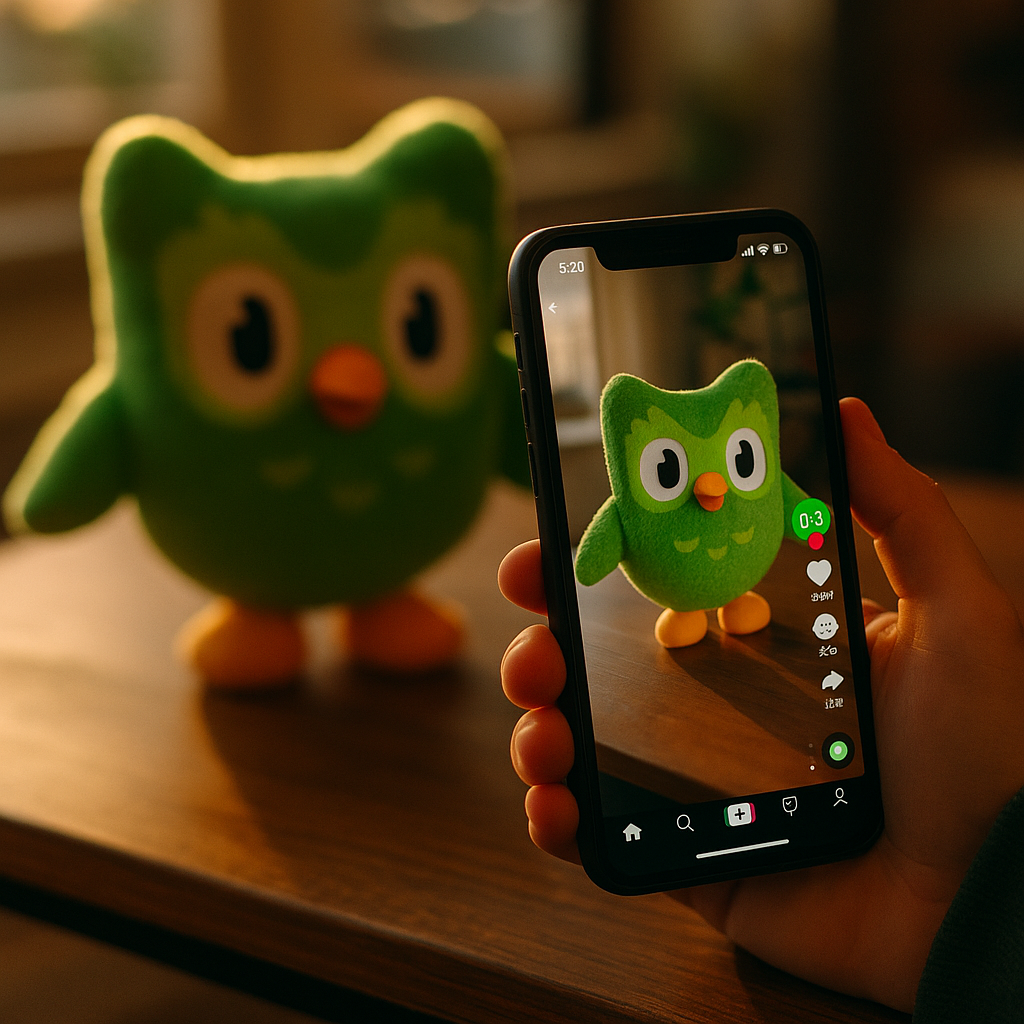
One mascot. Four years. Billions of views. Duolingo’s TikTok owl didn’t just go viral once, it built a content engine that keeps working long after most brand bits die of exhaustion. If you’re studying Duolingo TikTok strategy for lessons your own brand can steal, the real story isn’t the memes themselves. It’s the operational discipline hiding behind the chaos.
The Numbers Behind the Nonsense
Duolingo’s TikTok account sits north of 15 million followers, a figure that dwarfs most language-learning competitors combined. But follower count is vanity. What matters is retention of attention over time, and that’s where the owl earns its keep. Individual videos routinely pull millions of views, and the account has maintained a posting cadence tied to weekly trend cycles for years without a major creative reset.
Compare that to the average branded TikTok account, which social platform benchmarks suggest sees engagement decay sharply after the first few months of a campaign concept. Duolingo sidestepped that decay curve entirely. The brand didn’t build one viral moment. It built a renewable system for producing them.
Most brand mascots retire after one viral cycle. Duolingo’s owl gets reborn weekly because the persona was designed as an operating system, not a one-off costume.
Why “Unhinged” Isn’t Actually Random
Here’s the part brand teams miss. The owl’s chaotic energy looks improvised, but it’s governed by a tight internal logic. Duo the owl is thirsty, mildly threatening about streak reminders, and self-aware about being a marketing mascot. That’s it. Every trend gets filtered through those three traits before it gets greenlit.
This constraint is what makes the persona scalable. A social team can react to a trending audio within hours because they’re not debating brand voice from scratch every time. They’re asking one question: does this trend let the owl be thirsty, threatening, or self-aware? If yes, ship it. If no, skip it. That’s a creative filter, not a content calendar, and it’s why the account can trend-jack faster than brands running approval chains through three stakeholders.
We’ve covered how this plays out operationally in our earlier look at Duolingo’s owl mascot strategy, where the persona pairs with micro-creator amplification rather than relying solely on the owned channel.
Trend-Jacking as a Repeatable Process, Not a Lucky Guess
Marketers love to treat trend-jacking as an art form reserved for “culturally fluent” social teams. Duolingo treats it as a pipeline. Someone monitors emerging TikTok sounds and formats daily. A shortlist gets built. The owl’s writers draft two or three angles per trend. Whatever ships gets measured against watch time and shares, not just views.
That measurement discipline matters more than people assume. A video can rack up impressions and still fail if viewers scroll past in the first two seconds. Duolingo’s team has talked publicly about optimizing for completion and rewatch behavior, which lines up with broader platform guidance from TikTok’s advertising resources on what actually drives algorithmic distribution. If your creator briefs still lead with impressions instead of watch time, you’re optimizing for the wrong outcome. We broke down a similar mismatch in why watch time broke one brand’s creator briefs, and the lesson transfers directly here.
The Business Case Nobody Talks About
Unhinged mascot content is fun to screenshot, but CMOs don’t approve budgets for fun. Duolingo’s owl strategy earns its keep because it drives measurable app engagement, not just social vanity metrics. The company has repeatedly tied TikTok’s cultural reach back to daily active user growth and brand search volume, the kind of halo effect that emarketer’s social commerce research increasingly flags as a leading indicator of paid media efficiency.
Here’s the operational reframe brand strategists should take from this: a mascot persona is infrastructure, not a campaign. Once built, it reduces the marginal cost of each new piece of content because the creative rules are already set. You’re not reinventing brand voice every sprint. You’re running a known playbook against a new trend input.
A well-built mascot persona turns every trending sound on TikTok into a plug-and-play creative brief instead of a blank page.
That efficiency shows up in production speed too. Duolingo’s team can flip a trending audio into a published video within a single day, a turnaround pace that rivals the AI-assisted workflows we detailed in how AI storyboards cut QSR turnaround to 48 hours. The owl doesn’t use generative AI for its scripts as far as public reporting shows, but the underlying lesson about compressed production cycles applies directly.
What Happens When the Owl Steps Outside TikTok
Duolingo didn’t leave the persona locked inside one app. The same owl energy shows up in email marketing, out-of-home stunts, and cross-platform pushes on Instagram and YouTube Shorts. This repurposing strategy is deliberate, and it’s arguably the most replicable part of the whole case study for brands without Duolingo’s internal social team headcount.
We documented the mechanics of this in Duolingo’s TikTok content repurposing system, and the short version is this: one piece of native TikTok content gets reformatted, recut, and redistributed across four or five channels within the same week. That’s not laziness. That’s a brand refusing to let a good creative idea die after a single post.
For brands with leaner teams, this is the actionable takeaway. You don’t need Duolingo’s headcount to trend-jack. You need a persona filter tight enough to move fast, and a repurposing system that stretches each win across every owned channel you have.
Where the Model Could Break
No case study is risk-free, and it’s worth being honest about where the owl strategy could stumble. Chaotic, “unhinged” brand voice works because it’s novel. If every brand adopts the same thirsty-mascot format, audiences will tune it out fast, the same fatigue pattern that hit generic meme-marketing a few cycles ago. Duolingo also carries platform concentration risk. A meaningful share of its cultural relevance rides on TikTok specifically, and any material shift in TikTok’s platform policies or algorithm weighting could dent reach overnight.
There’s also a compliance angle brand safety teams should note. Mascot accounts that push edgy or suggestive humor need clear internal guardrails, particularly around claims, disclosures, and content that could be read as targeting minors given Duolingo’s education positioning. Brands attempting a similar unhinged persona should loop in legal and comms early, not after a trend-jacked post goes sideways. It’s the same discipline we saw play out in how Poppi rebuilt trust after its FTC settlement, a reminder that cultural momentum and regulatory risk have to be managed together, not sequentially.
Building Your Own Version Without Copying the Costume
The mistake brands make when trying to replicate this is literal imitation: hire a mascot, tell them to be “unhinged,” post daily. That skips the actual system. What you need instead:
- A tight persona filter with two or three fixed traits, so creative decisions get faster, not slower, over time.
- A daily trend-monitoring habit, whether that’s a person or a tool tracking emerging sounds and formats.
- A measurement standard built around watch time and shares, not raw impressions.
- A repurposing pipeline so one native win gets redistributed across owned channels within the same week.
- A compliance check built into the fast-turnaround process, not bolted on after publish.
None of this requires an owl costume. It requires the same operating discipline that also shows up in Stanley’s approach to avoiding the viral trap, where sustained relevance came from repeatable seeding mechanics rather than chasing a single viral hit. The format changes. The discipline doesn’t.
FAQs
Why has Duolingo’s TikTok persona lasted so much longer than typical viral brand trends?
The owl persona works because it’s governed by a fixed set of traits rather than reinvented for every post. That consistency lets the team react quickly to new trends without renegotiating brand voice each time, which is what sustains engagement across multiple years instead of one viral cycle.
What metrics should brands track if they want to replicate Duolingo’s trend-jacking model?
Prioritize watch time, completion rate, and share volume over raw view counts or impressions. Platforms increasingly reward content that holds attention and gets redistributed organically, so optimizing creative briefs around those signals produces more durable results.
Does trend-jacking work for brands outside consumer apps or lifestyle categories?
Yes, but the persona filter needs to match the brand’s actual risk tolerance and audience. B2B and regulated categories can still trend-jack, just with tighter compliance review built into the fast-turnaround workflow rather than skipped for speed.
What’s the biggest risk in copying an unhinged mascot strategy?
Platform concentration and audience fatigue. Leaning too heavily on one channel’s algorithm creates exposure if that platform changes policy or reach mechanics, and generic “chaotic mascot” content loses novelty fast once multiple brands adopt the same tone.
How much team bandwidth does a trend-jacking strategy like this actually require?
Less than most brands assume, provided the persona filter and repurposing pipeline are built first. The bottleneck isn’t headcount, it’s the absence of a fast decision framework for what to greenlight and how to redistribute it across channels.
The takeaway for brand strategists is simple: stop treating mascot content as a one-time campaign and start treating it as infrastructure. Build the persona filter once, measure the right signals, and let the trend cycle do the creative heavy lifting for you.
Top Influencer Marketing Agencies
The leading agencies shaping influencer marketing in 2026
Agencies ranked by campaign performance, client diversity, platform expertise, proven ROI, industry recognition, and client satisfaction. Assessed through verified case studies, reviews, and industry consultations.
Moburst

-
2

The Shelf
Boutique Beauty & Lifestyle Influencer AgencyA data-driven boutique agency specializing exclusively in beauty, wellness, and lifestyle influencer campaigns on Instagram and TikTok. Best for brands already focused on the beauty/personal care space that need curated, aesthetic-driven content.Clients: Pepsi, The Honest Company, Hims, Elf Cosmetics, Pure LeafVisit The Shelf → -
3

Audiencly
Niche Gaming & Esports Influencer AgencyA specialized agency focused exclusively on gaming and esports creators on YouTube, Twitch, and TikTok. Ideal if your campaign is 100% gaming-focused — from game launches to hardware and esports events.Clients: Epic Games, NordVPN, Ubisoft, Wargaming, Tencent GamesVisit Audiencly → -
4

Viral Nation
Global Influencer Marketing & Talent AgencyA dual talent management and marketing agency with proprietary brand safety tools and a global creator network spanning nano-influencers to celebrities across all major platforms.Clients: Meta, Activision Blizzard, Energizer, Aston Martin, WalmartVisit Viral Nation → -
5

The Influencer Marketing Factory
TikTok, Instagram & YouTube CampaignsA full-service agency with strong TikTok expertise, offering end-to-end campaign management from influencer discovery through performance reporting with a focus on platform-native content.Clients: Google, Snapchat, Universal Music, Bumble, YelpVisit TIMF → -
6

NeoReach
Enterprise Analytics & Influencer CampaignsAn enterprise-focused agency combining managed campaigns with a powerful self-service data platform for influencer search, audience analytics, and attribution modeling.Clients: Amazon, Airbnb, Netflix, Honda, The New York TimesVisit NeoReach → -
7

Ubiquitous
Creator-First Marketing PlatformA tech-driven platform combining self-service tools with managed campaign options, emphasizing speed and scalability for brands managing multiple influencer relationships.Clients: Lyft, Disney, Target, American Eagle, NetflixVisit Ubiquitous → -
8

Obviously
Scalable Enterprise Influencer CampaignsA tech-enabled agency built for high-volume campaigns, coordinating hundreds of creators simultaneously with end-to-end logistics, content rights management, and product seeding.Clients: Google, Ulta Beauty, Converse, AmazonVisit Obviously →