


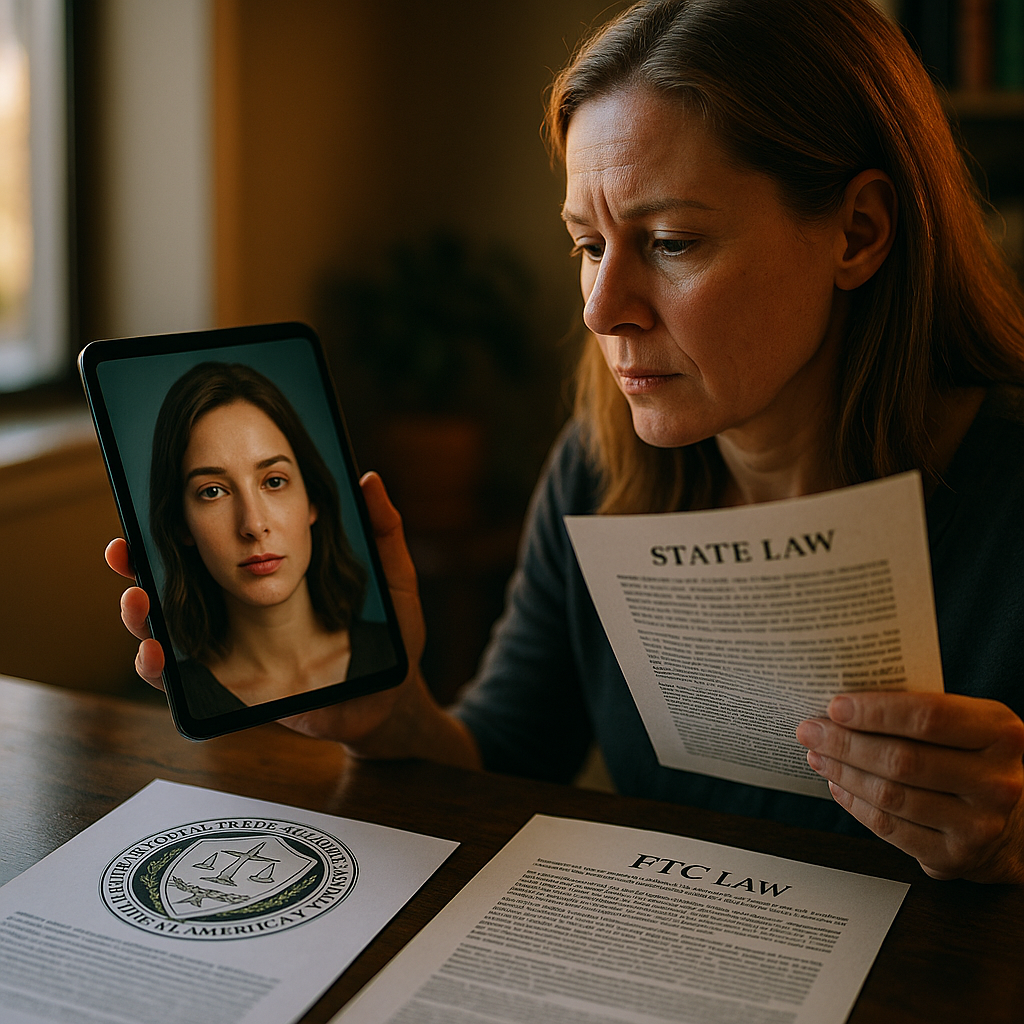
Forty-nine states, one FTC endorsement guide, and a single AI-generated ad running everywhere at once. What could go wrong? Quite a lot, actually. As brands lean harder into AI-assisted talent for national campaigns, the gap between federal disclosure law and a patchwork of state synthetic performer statutes has turned routine media buys into legal minefields.
The Collision Nobody Planned For
The FTC’s endorsement guides were built for a world of human influencers holding up shampoo bottles. They still work reasonably well there. But regulators have quietly expanded interpretation to cover AI-generated spokespeople, synthetic voices, and digitally cloned “talent” that never set foot in a studio. The FTC’s own guidance now treats a synthetic endorser’s claims the same way it treats a human’s: if it’s material to a purchase decision, it needs substantiation and clear disclosure.
That’s the easy part. The hard part is that states haven’t waited for federal clarity. California and New York have both passed synthetic performer laws that go well beyond FTC disclosure requirements, adding consent, licensing, and even union-adjacent protections for performers whose likeness or voice gets digitally replicated. Run one ad nationally, and you’re now answering to at least three different rulebooks simultaneously.
A single AI-generated ad running in all 50 states can trigger FTC disclosure duties, state-level consent requirements, and likeness licensing obligations, sometimes for the same fifteen-second clip.
What the FTC Actually Requires Now
The FTC hasn’t issued a standalone “AI talent” rule. Instead, it’s applying existing endorsement principles more aggressively to synthetic content. The core asks are familiar:
- Disclose material connections between the brand and any endorser, human or synthetic.
- Make clear when a performer is AI-generated if a reasonable consumer would otherwise assume they’re real.
- Substantiate any claims the AI talent makes, especially in testimonial-style formats.
- Avoid implying a synthetic performer has expertise or experience it doesn’t actually possess.
We covered the substantiation angle in depth in our piece on AI-generated testimonials, and the logic carries over here: an AI avatar claiming “I lost 20 pounds using this” needs the same evidentiary backing a human influencer would need, even though no actual weight was lost by anyone.
Where it gets murkier is scripted “talking points” delivered by an AI presenter. Brands sometimes assume that because the avatar isn’t a real person making a personal claim, disclosure rules are looser. They’re not. As we detailed in our analysis of AI talking points, scripted synthetic delivery creates identical liability to a human reading the same script on camera.
State Synthetic Performer Laws: A Faster-Moving Target
If the FTC is playing catch-up, some states are sprinting ahead. California’s synthetic performer statute requires consent from any real person whose likeness, voice, or mannerisms were used to train or generate the AI talent, plus disclosure when a performer is wholly synthetic and could be mistaken for a real endorser. New York has layered on its own consent and compensation requirements, particularly where a digital replica resembles an identifiable person closely enough to raise right-of-publicity concerns.
We broke down the specifics in our comparison of NY and California synthetic performer rules, and the takeaway for national advertisers is blunt: platform-level AI labels (think TikTok’s or Meta’s built-in “AI generated” tags) do not satisfy state legal requirements on their own. A platform label is a UX feature. A state consent statute is a legal obligation with its own paper trail requirements.
This distinction trips up more legal teams than it should. Marketing ops sees the platform checkbox for “AI content” and assumes compliance is handled. It isn’t.
Why “National Campaign” Doesn’t Mean “One Compliance Standard”
Here’s the uncomfortable truth: there is no such thing as a fully “national” ad anymore, not from a compliance standpoint. The moment your synthetic performer content reaches a California IP address, California’s consent and disclosure rules apply. The moment it reaches New York, that state’s rules kick in too. Meanwhile, the FTC’s jurisdiction covers the whole run regardless of where it airs.
Brands that built compliance workflows around a single “US disclosure standard” are discovering that standard doesn’t exist for AI talent. It never really did for influencer marketing broadly (state-specific child labor and endorsement quirks have always existed), but synthetic performer law has widened the gap dramatically.
Consider a hypothetical (and increasingly common) scenario: a DTC skincare brand builds an AI avatar spokesperson trained on a composite of licensed actor performances, then runs a 30-second spot across YouTube, TikTok, and connected TV nationally. The FTC wants disclosure that the endorser isn’t a real person and substantiation for any product claims. California wants documented consent from every real performer whose data trained the model. New York wants similar consent plus, potentially, compensation terms if the resulting avatar is recognizable as tied to a specific identity. Three obligations, one asset, zero room for “we’ll figure it out state by state after launch.”
Building a Compliance Framework That Actually Scales
So how do brand and legal teams reconcile this without slowing campaigns to a crawl? A few practices are emerging among mid-to-senior marketing teams who’ve been burned once already.
- Treat state consent as a production requirement, not a legal afterthought. Get performer consent documentation locked before the AI model is trained, not after the ad ships. Retrofitting consent is expensive and sometimes legally impossible.
- Layer disclosure language for the strictest applicable jurisdiction. If California’s synthetic performer disclosure is more detailed than the FTC’s baseline, build to California’s standard and apply it nationally. It’s simpler than maintaining 50 versions of one ad.
- Separate platform AI labels from legal disclosure copy. Platform tags help with algorithmic transparency; they don’t replace your own on-screen or in-description disclosure language, a distinction we unpacked in our piece on AI labels clashing with FTC disclosures.
- Audit your synthetic talent vendor contracts. Ask directly: whose voice or likeness trained this model, and do we have documented consent covering commercial national use? If the vendor can’t answer quickly, that’s your answer.
- Run every AI-talent asset through the same audit rigor as a digital human endorser. Our digital human endorser audit framework is a solid starting checklist for this.
Building to the strictest state standard and applying it nationally is almost always cheaper than maintaining fifty jurisdiction-specific versions of the same ad.
Documentation Is Your Only Real Defense
Regulators, whether FTC investigators or state attorneys general, tend to ask the same first question during an inquiry: show me the paper trail. For AI-assisted talent campaigns, that means keeping records of consent forms from any real performers involved in training data, substantiation files for every claim the synthetic endorser makes, disclosure language approvals across legal and creative, and platform-specific label configurations for each channel the ad ran on.
This isn’t dramatically different from the documentation discipline brands should already apply to influencer gifting and testimonials, covered well in our influencer compliance audit guide. The stakes are just higher with AI talent because the “performer” can’t testify on your behalf if regulators come asking questions. There’s no human to explain intent. There’s only what you documented.
Data from eMarketer shows AI-generated ad content spend climbing sharply year over year, which means regulatory scrutiny is climbing right alongside it. Legal teams that treated synthetic talent as a novelty two years ago are now building dedicated review lanes for it, similar to how Sprout Social and other platforms have had to build dedicated moderation tooling for AI content at scale.
Platform Rules Add Another Layer
Don’t forget that TikTok, Meta, and YouTube each have their own AI content labeling requirements sitting on top of federal and state law. Our comparison of AI content labeling divergence across TikTok, Meta, and YouTube is essential reading if your national campaign spans multiple platforms, because a label that satisfies TikTok’s policy might not satisfy Meta’s, and neither satisfies California’s consent statute. Brands running the same synthetic performer creative across channels need a labeling matrix, not a single template.
If you haven’t formalized this yet, now’s the time. Our guide on building an AI content labeling policy walks through the internal approval chain most legal and marketing teams are missing.
The reconciliation work here isn’t glamorous. It’s spreadsheets, consent forms, and legal sign-off matrices. But brands that build this infrastructure now, before a state AG or the FTC forces the issue, will move faster on every future AI talent campaign than competitors still improvising jurisdiction by jurisdiction.
Frequently Asked Questions
Does the FTC’s endorsement guide specifically mention AI-generated performers?
The FTC has not issued a standalone rule naming AI performers, but it has confirmed through guidance and enforcement actions that existing endorsement and disclosure principles apply equally to synthetic endorsers making claims that could influence a purchase.
Can a platform’s “AI generated” label satisfy state synthetic performer consent laws?
No. Platform labels address content transparency for viewers but do not fulfill state-level legal requirements like performer consent, licensing, or compensation that laws in states such as California and New York impose separately.
What happens if a national ad complies with the FTC but not a specific state’s synthetic performer law?
The brand remains exposed to enforcement action in that state regardless of FTC compliance elsewhere, since state consumer protection and right-of-publicity statutes operate independently of federal endorsement guidance.
Should brands build separate ad versions for each state with synthetic performer laws?
Most legal teams find it more efficient to build one version that meets the strictest applicable state standard and run it nationally, rather than maintaining and tracking multiple jurisdiction-specific creative versions.
What documentation should brands keep for AI-assisted talent campaigns?
Keep consent records from any real performers used in training data, substantiation files for claims made by the synthetic endorser, disclosure language sign-offs, and records of platform-specific AI labeling applied at launch.
Start by auditing your current or next AI-talent campaign against California’s consent requirements first, since it’s the strictest standard in play. If that creative and paperwork pass California’s bar, you’re in far stronger shape everywhere else.
Top Influencer Marketing Agencies
The leading agencies shaping influencer marketing in 2026
Agencies ranked by campaign performance, client diversity, platform expertise, proven ROI, industry recognition, and client satisfaction. Assessed through verified case studies, reviews, and industry consultations.
Moburst

-
2

The Shelf
Boutique Beauty & Lifestyle Influencer AgencyA data-driven boutique agency specializing exclusively in beauty, wellness, and lifestyle influencer campaigns on Instagram and TikTok. Best for brands already focused on the beauty/personal care space that need curated, aesthetic-driven content.Clients: Pepsi, The Honest Company, Hims, Elf Cosmetics, Pure LeafVisit The Shelf → -
3

Audiencly
Niche Gaming & Esports Influencer AgencyA specialized agency focused exclusively on gaming and esports creators on YouTube, Twitch, and TikTok. Ideal if your campaign is 100% gaming-focused — from game launches to hardware and esports events.Clients: Epic Games, NordVPN, Ubisoft, Wargaming, Tencent GamesVisit Audiencly → -
4

Viral Nation
Global Influencer Marketing & Talent AgencyA dual talent management and marketing agency with proprietary brand safety tools and a global creator network spanning nano-influencers to celebrities across all major platforms.Clients: Meta, Activision Blizzard, Energizer, Aston Martin, WalmartVisit Viral Nation → -
5

The Influencer Marketing Factory
TikTok, Instagram & YouTube CampaignsA full-service agency with strong TikTok expertise, offering end-to-end campaign management from influencer discovery through performance reporting with a focus on platform-native content.Clients: Google, Snapchat, Universal Music, Bumble, YelpVisit TIMF → -
6

NeoReach
Enterprise Analytics & Influencer CampaignsAn enterprise-focused agency combining managed campaigns with a powerful self-service data platform for influencer search, audience analytics, and attribution modeling.Clients: Amazon, Airbnb, Netflix, Honda, The New York TimesVisit NeoReach → -
7

Ubiquitous
Creator-First Marketing PlatformA tech-driven platform combining self-service tools with managed campaign options, emphasizing speed and scalability for brands managing multiple influencer relationships.Clients: Lyft, Disney, Target, American Eagle, NetflixVisit Ubiquitous → -
8

Obviously
Scalable Enterprise Influencer CampaignsA tech-enabled agency built for high-volume campaigns, coordinating hundreds of creators simultaneously with end-to-end logistics, content rights management, and product seeding.Clients: Google, Ulta Beauty, Converse, AmazonVisit Obviously →