


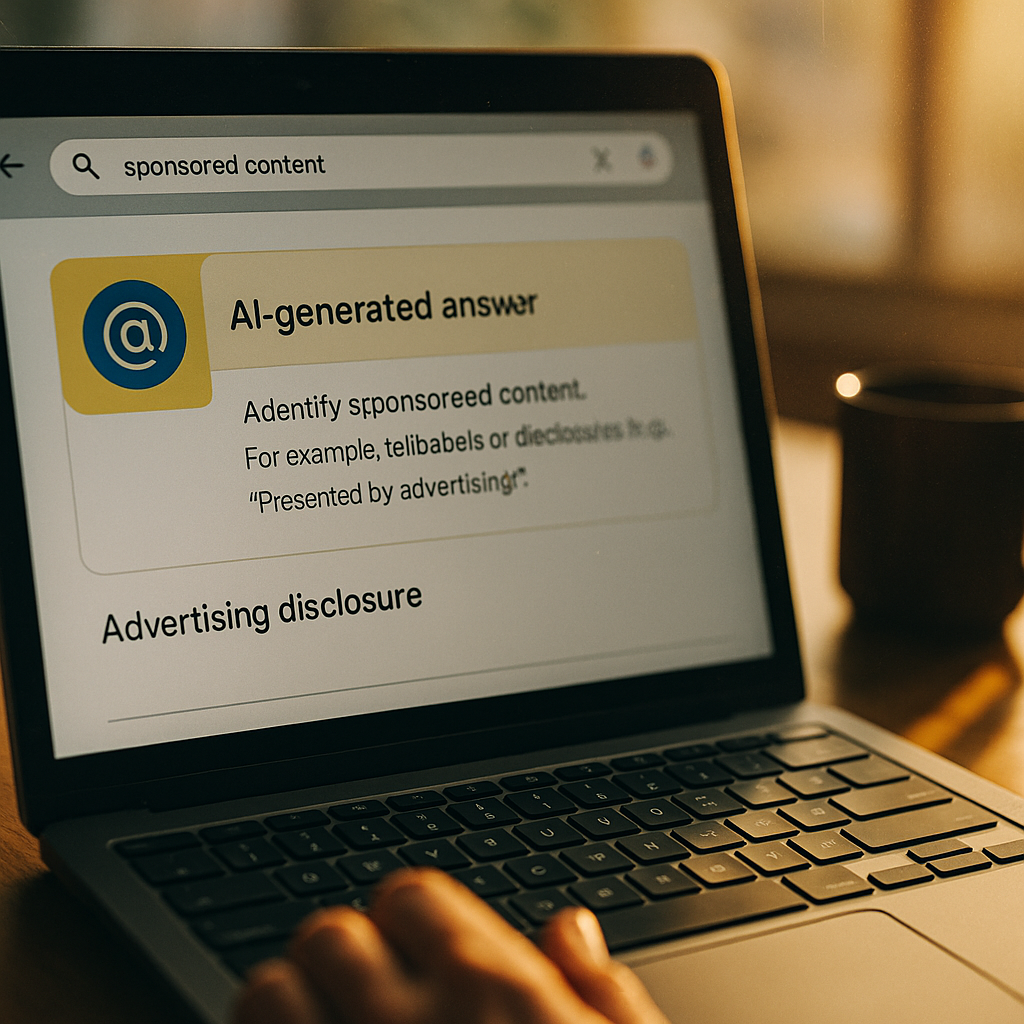
Zero click, zero disclosure, zero paper trail: that is what happens when an AI answer engine recommends your sponsored creator content and nobody ever visits the source. A governance framework for AI answer engines is no longer optional infrastructure. It is the only thing standing between your brand and an FTC inquiry that starts with “how did this recommendation happen?”
Search behavior has quietly flipped. Users ask ChatGPT, Perplexity, Google’s AI Overviews, or Meta AI which serum actually works, which creator’s review to trust, which product to buy. The engine synthesizes an answer, often pulling from sponsored posts, affiliate content, or paid creator reviews, and serves a recommendation with no click-through, no bylines, no visible “#ad” tag. The human who clicked, read the disclosure, and formed a judgment is gone from the loop entirely.
Why This Is a Governance Problem, Not a Marketing One
Marketing teams keep treating AI answer engines like a new distribution channel. That’s the wrong mental model. Distribution channels carry your content as-is. Answer engines transform it: they summarize, paraphrase, rank, and recommend, stripping context along the way. A sponsored post that clearly disclosed “#ad” on Instagram can get summarized by an AI assistant as a neutral, third-party endorsement with no disclosure at all.
That transformation is the liability. The FTC’s Endorsement Guides require clear and conspicuous disclosure wherever a material connection exists, regardless of the medium. When an LLM strips that disclosure during synthesis, your brand is still on the hook. The influencer disclosed. The AI engine didn’t. Guess who the FTC calls first.
If your sponsored content can be recommended by an AI answer engine without a human ever seeing the original disclosure, you don’t have a marketing gap. You have a governance gap, and it’s the kind regulators are actively building enforcement priorities around.
This isn’t hypothetical anxiety. We’ve already covered how AI chatbot product recommendations create compliance exposure when brands have no visibility into how their content gets pulled into synthesized answers. Answer engines are the same problem at greater scale, because they now sit ahead of search, not beside it.
According to eMarketer, a growing share of product research now starts and ends inside an AI assistant conversation, with no visit to a retailer site, review platform, or creator’s original post. If that’s where the discovery happens, that’s where your disclosure obligation lives too.
What a Governance Framework Actually Needs to Cover
A real framework isn’t a policy memo nobody reads. It’s an operational system with five components, each owned by a named team, each auditable.
- Content provenance tagging. Every piece of sponsored creator content needs machine-readable metadata identifying it as paid or gifted, not just a human-readable “#ad” caption. Structured data and schema markup matter here because that’s what answer engines actually parse.
- Disclosure persistence testing. Regularly query major AI assistants (ChatGPT, Perplexity, Gemini, Meta AI) with prompts likely to surface your sponsored content, and document whether disclosure survives the summarization.
- Attribution mapping. Know which creator content is being ingested, cited, or paraphrased by which engines. Most brands have zero visibility here today.
- Escalation protocol. When disclosure fails to survive AI synthesis, who gets notified, what’s the remediation timeline, and does the creator contract require them to cooperate?
- Audit cadence. Quarterly minimum, monthly for high-spend programs. Answer engines update their models and retrieval methods constantly, so a one-time compliance check is worthless.
None of this is exotic. It’s the same discipline brands already apply to platform-specific disclosure rules, just extended to a layer where you don’t control the interface.
The Attribution Blind Spot Nobody’s Pricing In
Here’s the uncomfortable part. Most brands can tell you exactly how a sponsored post performed on TikTok or Instagram: impressions, engagement, click-through, conversion. Ask the same brand how that post performed inside an AI answer engine’s synthesized response, and you’ll get a shrug.
That blind spot is a governance failure waiting to surface. If Perplexity cites your influencer’s skincare review in an answer to “best retinol for sensitive skin,” and that citation strips the paid partnership disclosure, your legal team should know about it before a regulator or journalist does.
Building this visibility isn’t free. It requires monitoring tools, some of which are still maturing, plus internal bandwidth to run structured prompt audits. But compare that cost to the cost of a formal FTC inquiry. The FTC has made clear in its updated Endorsement Guides that disclosure obligations extend to any format where a reasonable consumer would want to know about the material connection, and AI-mediated answers are squarely inside that scope.
Building the Cross-Functional Team This Requires
Governance frameworks fail when they live in one department. AI answer engine governance needs at least four functions at the table, and probably a fifth if your program touches synthetic performers or AI-generated content.
- Legal/compliance: owns the disclosure standard and regulatory interpretation, and signs off on escalation triggers.
- Influencer/creator marketing: owns creator contracts, ensures disclosure language is baked into deliverables, not left to creator discretion.
- SEO/content strategy: owns structured data implementation and understands how retrieval-augmented generation systems ingest and rank content.
- Data/analytics: owns the monitoring infrastructure, tracks where and how content surfaces in AI-generated answers.
- Brand safety/PR: owns the response plan if a disclosure failure becomes public.
If you’re already managing an AI content labeling policy, this cross-functional structure should look familiar. The difference is scope: labeling policies govern content you create, while answer engine governance governs content after a third-party system has reprocessed it. You’re regulating a transformation you don’t control, which is a fundamentally harder problem and why it needs its own framework rather than a bolt-on clause.
Contract Language Has to Catch Up
Most influencer contracts were written for a world where disclosure happens once, at the point of publication, and stays intact. That assumption is dead. Contracts now need clauses requiring creators to use disclosure formats resilient to AI summarization (front-loaded, unambiguous language rather than buried hashtags), and clauses giving the brand recourse if a creator’s content gets stripped of context in a way that creates liability.
This is the same logic behind contract clauses for platform de-monetization risk. You’re building contractual protection against a third-party system’s behavior, not just the creator’s. Expect this to become standard boilerplate within the next contract renewal cycle.
Front-loading disclosure language (“Paid partnership with [Brand]:” as the first six words of a caption) survives AI summarization far more reliably than a hashtag buried at the end of a post. Structure your creator briefs accordingly.
Measuring Whether the Framework Is Working
A governance framework without metrics is a policy document collecting dust. Track these:
- Disclosure survival rate: the percentage of sponsored content that retains clear disclosure when summarized by major AI assistants during audit queries.
- Time-to-remediation: how fast the team can respond when a disclosure failure is identified.
- Creator compliance rate: percentage of creators using AI-resilient disclosure formats per the updated brief guidelines.
- Coverage: percentage of active sponsored campaigns actually being monitored across answer engines, not just social platforms.
Most brands running audits similar to undisclosed gifting audits already have the muscle memory for this kind of systematic review. Apply the same rigor to AI answer engine outputs and you’re most of the way there.
Tools from platforms like Sprout Social and monitoring solutions from HubSpot are beginning to build AI-visibility tracking into their suites, though the category is young. Don’t wait for a mature off-the-shelf tool. Build the audit process manually now, then bolt on automation as it becomes available.
What Happens If You Don’t Build This Now
Regulators move slowly until they don’t. The FTC’s enforcement pattern on influencer disclosure has consistently followed a period of ambiguity, then a settlement that resets industry expectations overnight. We saw it with TikTok Shop pricing practices, we saw it with synthetic performer disclosure, and answer engine recommendations are the next predictable target.
Waiting for an enforcement action to define the rules is the most expensive way to learn them. Brands that build governance now get to shape internal standards on their own timeline, with their own risk tolerance. Brands that wait get to react to whatever standard a consent decree imposes.
Start small if you have to: run one structured audit across ChatGPT, Perplexity, and Gemini for your top ten sponsored creator campaigns this quarter, and document whether disclosure survives synthesis. That single exercise will tell you more about your real exposure than any policy document sitting in a shared drive.
Frequently Asked Questions
What is an AI answer engine governance framework?
It’s a documented, cross-functional system for tracking how AI assistants like ChatGPT, Perplexity, and Gemini surface, summarize, and recommend a brand’s sponsored creator content, and for ensuring FTC-required disclosures survive that process.
Does the FTC’s Endorsement Guides apply to AI-summarized content?
Yes. The disclosure requirement is based on whether a reasonable consumer would want to know about a material connection, not on the specific medium or platform. If an AI answer engine strips disclosure during summarization, the brand and creator remain responsible for ensuring the connection is clear.
How can brands audit whether disclosure survives AI summarization?
Run structured queries across major AI assistants using prompts likely to surface sponsored content (product comparisons, “best of” questions, creator recommendations), then document whether the response includes disclosure language or attributes the recommendation as paid.
Should creator contracts change because of AI answer engines?
Yes. Contracts should require front-loaded, unambiguous disclosure language that is more likely to survive AI summarization, and should include cooperation clauses for remediation if a disclosure failure is identified after publication.
Who should own this governance process internally?
It requires a cross-functional team: legal/compliance for regulatory standards, influencer marketing for creator contracts, SEO/content strategy for structured data, analytics for monitoring, and brand safety/PR for incident response.
Top Influencer Marketing Agencies
The leading agencies shaping influencer marketing in 2026
Agencies ranked by campaign performance, client diversity, platform expertise, proven ROI, industry recognition, and client satisfaction. Assessed through verified case studies, reviews, and industry consultations.
Moburst

-
2

The Shelf
Boutique Beauty & Lifestyle Influencer AgencyA data-driven boutique agency specializing exclusively in beauty, wellness, and lifestyle influencer campaigns on Instagram and TikTok. Best for brands already focused on the beauty/personal care space that need curated, aesthetic-driven content.Clients: Pepsi, The Honest Company, Hims, Elf Cosmetics, Pure LeafVisit The Shelf → -
3

Audiencly
Niche Gaming & Esports Influencer AgencyA specialized agency focused exclusively on gaming and esports creators on YouTube, Twitch, and TikTok. Ideal if your campaign is 100% gaming-focused — from game launches to hardware and esports events.Clients: Epic Games, NordVPN, Ubisoft, Wargaming, Tencent GamesVisit Audiencly → -
4

Viral Nation
Global Influencer Marketing & Talent AgencyA dual talent management and marketing agency with proprietary brand safety tools and a global creator network spanning nano-influencers to celebrities across all major platforms.Clients: Meta, Activision Blizzard, Energizer, Aston Martin, WalmartVisit Viral Nation → -
5

The Influencer Marketing Factory
TikTok, Instagram & YouTube CampaignsA full-service agency with strong TikTok expertise, offering end-to-end campaign management from influencer discovery through performance reporting with a focus on platform-native content.Clients: Google, Snapchat, Universal Music, Bumble, YelpVisit TIMF → -
6

NeoReach
Enterprise Analytics & Influencer CampaignsAn enterprise-focused agency combining managed campaigns with a powerful self-service data platform for influencer search, audience analytics, and attribution modeling.Clients: Amazon, Airbnb, Netflix, Honda, The New York TimesVisit NeoReach → -
7

Ubiquitous
Creator-First Marketing PlatformA tech-driven platform combining self-service tools with managed campaign options, emphasizing speed and scalability for brands managing multiple influencer relationships.Clients: Lyft, Disney, Target, American Eagle, NetflixVisit Ubiquitous → -
8

Obviously
Scalable Enterprise Influencer CampaignsA tech-enabled agency built for high-volume campaigns, coordinating hundreds of creators simultaneously with end-to-end logistics, content rights management, and product seeding.Clients: Google, Ulta Beauty, Converse, AmazonVisit Obviously →