


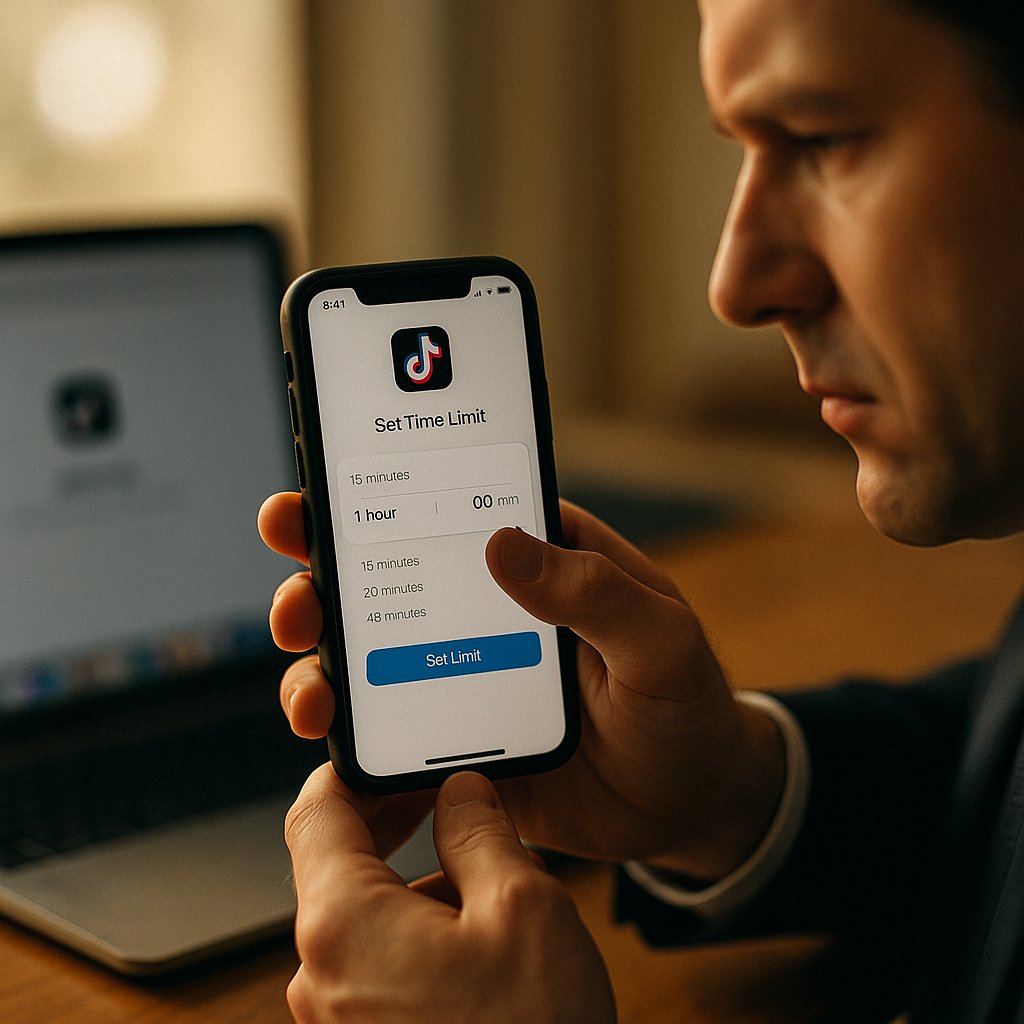
73% of marketers say a single platform policy change could disrupt their entire influencer budget within a quarter. That’s no longer a hypothetical. TikTok’s ownership settlement includes a conditional payment clause that regulators and platform watchers believe could push the app toward Meta-style usage caps, the same throttling mechanisms that reshaped Instagram and Facebook engagement patterns. If you run brand or agency budgets against TikTok, this is the moment to build a contingency plan, not wait for an announcement.
What’s Actually in the Settlement’s Conditional Payment Clause
The TikTok divestiture settlement structures ownership transfer payments around compliance milestones. Buried in that structure is language tying a portion of deferred payments to platform behavior commitments, specifically around youth safety, screen time transparency, and algorithmic content limits. Translation for marketers: the new ownership entity has a financial incentive to implement usage caps, not just a regulatory one.
This mirrors what happened after Meta faced mounting pressure from state attorneys general and EU regulators. Meta didn’t roll out teen time limits and default screen-time nudges purely out of goodwill. It did so to reduce legal exposure and preserve deal terms in ongoing settlements. TikTok’s new structure appears designed the same way: compliance triggers payment, payment triggers valuation, valuation triggers everyone getting paid on schedule.
When a platform’s ownership payout depends on usage restrictions, the restrictions stop being a policy debate and become a contractual inevitability.
Why Meta’s Playbook Is the Template, Not a Coincidence
Meta’s usage cap rollout gives us a fairly precise preview of what TikTok could do. Meta introduced default 60-minute daily reminders for teen accounts, sleep-mode notification pauses, and algorithmic “nudge” prompts that reduced session length among younger cohorts. Internal data reported by outlets covering the rollout suggested measurable drops in average session duration for accounts under 18, with ripple effects on overall time-on-platform metrics.
TikTok’s user base skews even younger than Meta’s, according to Statista’s platform demographic data. If the settlement pushes TikTok toward comparable caps, the impact on reach and frequency could be more pronounced than what Meta experienced, simply because a larger share of TikTok’s daily active users fall into the age brackets most likely to be capped.
There’s also a precedent for how fast this can move. Meta didn’t pilot its restrictions for a year, it rolled out broadly within a few quarters once settlement pressure hit a threshold. CMOs who assume they’ll get six months of advance notice on TikTok are making a risky bet.
The ROI Math Changes Fast Under a Cap
Here’s the part that should worry anyone with a TikTok-heavy influencer allocation. Usage caps don’t just reduce impressions, they reshape the entire cost curve. When time-on-platform drops, competition for remaining attention intensifies. CPMs climb. Organic reach, already inconsistent, becomes even more volatile.
Consider what already happened when TikTok adjusted its algorithm toward watch-time retention over raw reach, a shift covered in our breakdown of the TikTok watch time algorithm update. That single change forced brands to rethink creative pacing and hook structure. A usage cap would compound that pressure, because there’s simply less total attention to compete for across the entire platform, not just within one creator’s feed.
Budget allocators should also expect downstream effects on TikTok Shop performance. The commerce layer, which crossed $20 billion in GMV, depends heavily on scroll-driven discovery. Cap the scroll, and you cap the discovery funnel that feeds live shopping and affiliate conversions.
A 20% reduction in average session length doesn’t produce a 20% drop in results. It produces a nonlinear hit to reach, frequency, and conversion, because the algorithm has less behavioral data to optimize against.
Five Moves CMOs Should Make Now
You don’t need to panic-migrate your entire creator roster off TikTok. But you do need a documented contingency plan that your CFO and board have already seen before the cap lands, not after.
- Audit platform concentration risk. Pull your last four quarters of influencer spend and calculate what percentage lives on TikTok alone. Anything above 40% deserves a diversification conversation this quarter, not next year.
- Stress-test your measurement stack. If your attribution model assumes stable reach curves, a usage cap will break your forecasting accuracy. Rebuild scenario models now with 15%, 30%, and 50% reach-reduction cases.
- Rebalance toward owned and evergreen assets. Programs that lean on evergreen content infrastructure instead of one-off bursts are naturally more resilient to a single platform’s algorithm shifts, because the content library keeps generating value even if distribution on one channel softens.
- Renegotiate creator contracts with platform-neutral deliverables. Push for cross-platform usage rights on every piece of sponsored content so you’re not paying premium fees for assets locked to a single app that might see reduced reach overnight.
- Watch the affiliate and Shop layer separately. Brands running no-inventory affiliate programs through TikTok Shop should model what happens to commission-based revenue if discovery traffic drops, since affiliate models are more exposed to top-of-funnel volume than flat-fee sponsorships.
Compliance Teams Need a Seat at This Table Too
This isn’t purely a media-buying problem. If TikTok’s usage caps arrive tied to youth safety commitments, expect parallel scrutiny of influencer disclosure practices aimed at younger audiences. The FTC has already shown appetite for enforcement in adjacent areas, as seen in the ongoing YouTube sponsored content disclosure probe. A platform under settlement pressure to protect minors will likely tighten its own creator monetization and disclosure rules as a defensive move, independent of what the FTC does directly.
Legal and brand safety teams should review current TikTok campaign briefs for age-targeting language now. Waiting until the platform publishes new creator guidelines means you’re reacting instead of leading. Check the FTC’s endorsement guidance and cross-reference it against your current influencer contracts, particularly clauses covering audience demographics and disclosure placement.
Agencies managing multi-brand TikTok programs should also flag this to clients proactively. A quiet update to your risk memo now costs nothing. A scramble after a cap announcement costs client trust.
Should You Actually Pull Budget Now?
Not necessarily, and here’s why. TikTok’s advertising platform still delivers strong performance for most verticals, and settlement timelines have a habit of sliding. Pulling budget prematurely just hands share of voice to competitors while you sit on the sidelines waiting for a cap that might arrive in a softer form than expected.
The smarter move is incremental diversification paired with tighter measurement. Shift 10 to 15% of incremental new budget toward model-agnostic ad distribution approaches that don’t lock you into a single platform’s reach curve. Keep your core TikTok program running, but stop treating it as the default growth lever for every new campaign brief until the settlement’s usage terms are finalized.
Also worth tracking: how creator earnings shift if reach drops. Programs built around low-hour, high-frequency creator relationships may see creators diversify their own platform presence faster than brands do, which changes negotiating leverage on your next contract cycle.
The Takeaway
Build the contingency plan this quarter, model the reach-reduction scenarios before the cap lands, and diversify creator contracts to include cross-platform usage rights now. Waiting for TikTok’s settlement to finalize before acting is the one strategy guaranteed to leave your Q1 budget exposed.
Frequently Asked Questions
What is the conditional payment clause in TikTok’s settlement?
It’s a deal structure that ties portions of TikTok’s ownership transfer payments to compliance milestones, including commitments around youth safety and usage transparency. This creates a financial incentive, not just a regulatory one, for the new ownership entity to implement usage restrictions.
How would TikTok’s usage caps differ from Meta’s approach?
TikTok’s user base skews younger than Meta’s, so any caps modeled on Meta’s teen time limits and nudge notifications could affect a larger share of daily active users. The mechanics would likely be similar: default time reminders, session pauses, and reduced late-night notifications.
Will usage caps affect TikTok Shop performance?
Likely yes. TikTok Shop’s discovery-driven commerce model depends on scroll volume. Reduced session length would shrink the top-of-funnel traffic that feeds affiliate conversions and live shopping events.
Should brands reduce TikTok ad spend now?
Most practitioners shouldn’t pull spend preemptively. A better approach is incremental diversification, moving 10 to 15% of new incremental budget toward platform-neutral distribution while keeping core TikTok programs active until settlement terms are finalized.
How can CMOs prepare contracts for a potential usage cap?
Push for cross-platform usage rights on all sponsored creator content and avoid locking premium fees into single-platform deliverables. This protects content value even if reach on one app declines.
FAQs
Top Influencer Marketing Agencies
The leading agencies shaping influencer marketing in 2026
Agencies ranked by campaign performance, client diversity, platform expertise, proven ROI, industry recognition, and client satisfaction. Assessed through verified case studies, reviews, and industry consultations.
Moburst

-
2

The Shelf
Boutique Beauty & Lifestyle Influencer AgencyA data-driven boutique agency specializing exclusively in beauty, wellness, and lifestyle influencer campaigns on Instagram and TikTok. Best for brands already focused on the beauty/personal care space that need curated, aesthetic-driven content.Clients: Pepsi, The Honest Company, Hims, Elf Cosmetics, Pure LeafVisit The Shelf → -
3

Audiencly
Niche Gaming & Esports Influencer AgencyA specialized agency focused exclusively on gaming and esports creators on YouTube, Twitch, and TikTok. Ideal if your campaign is 100% gaming-focused — from game launches to hardware and esports events.Clients: Epic Games, NordVPN, Ubisoft, Wargaming, Tencent GamesVisit Audiencly → -
4

Viral Nation
Global Influencer Marketing & Talent AgencyA dual talent management and marketing agency with proprietary brand safety tools and a global creator network spanning nano-influencers to celebrities across all major platforms.Clients: Meta, Activision Blizzard, Energizer, Aston Martin, WalmartVisit Viral Nation → -
5

The Influencer Marketing Factory
TikTok, Instagram & YouTube CampaignsA full-service agency with strong TikTok expertise, offering end-to-end campaign management from influencer discovery through performance reporting with a focus on platform-native content.Clients: Google, Snapchat, Universal Music, Bumble, YelpVisit TIMF → -
6

NeoReach
Enterprise Analytics & Influencer CampaignsAn enterprise-focused agency combining managed campaigns with a powerful self-service data platform for influencer search, audience analytics, and attribution modeling.Clients: Amazon, Airbnb, Netflix, Honda, The New York TimesVisit NeoReach → -
7

Ubiquitous
Creator-First Marketing PlatformA tech-driven platform combining self-service tools with managed campaign options, emphasizing speed and scalability for brands managing multiple influencer relationships.Clients: Lyft, Disney, Target, American Eagle, NetflixVisit Ubiquitous → -
8

Obviously
Scalable Enterprise Influencer CampaignsA tech-enabled agency built for high-volume campaigns, coordinating hundreds of creators simultaneously with end-to-end logistics, content rights management, and product seeding.Clients: Google, Ulta Beauty, Converse, AmazonVisit Obviously →