


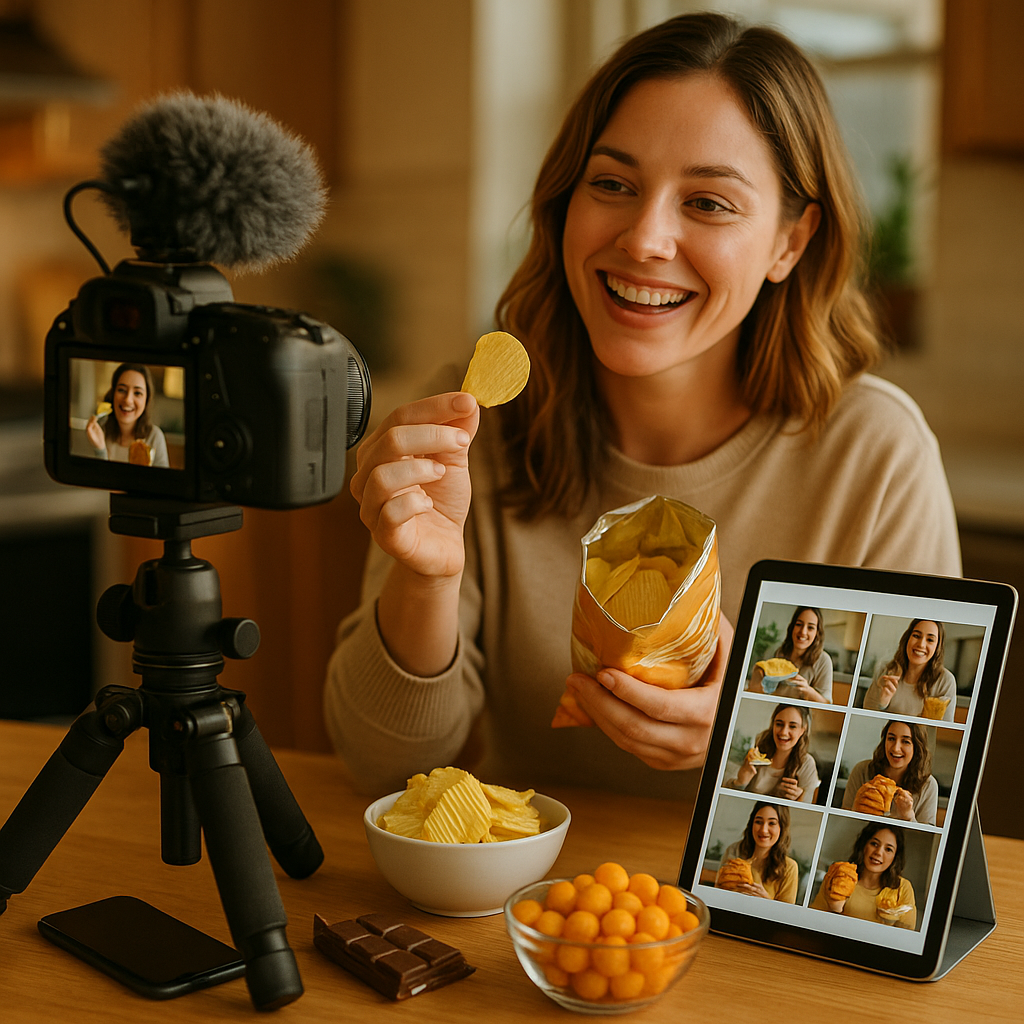
Only 12% of branded content gets saved or shared past the first scroll, according to Sprout Social engagement benchmarks. The rest just gets skipped. That’s the problem the snacky bundle format is built to solve: instead of one polished hero asset, you get a loose, imperfect cluster of photos and clips designed to feel grabbed, not produced, and to spread across every feed you own.
If you’re still briefing creators for a single “final” video, you’re leaving reach on the table. The bundle approach changes the unit of production from asset to set, and that shift matters more than most marketing teams realize.
What Is a Snacky Bundle, Exactly?
A snacky bundle is a batch of six to twelve short, low-lift pieces of content, mostly stills and 5 to 15 second clips, produced in a single creator session and released as a loosely connected set rather than one polished cutdown. Think blurry mirror selfies next to a clean product shot, a candid unboxing clip beside a close-up of hands mid-use, maybe a screen recording of a text thread. Nothing matches. That’s the point.
The format borrows from how real people actually post: in fragments, at odd angles, with inconsistent lighting. Brands that have leaned into this aesthetic, including the shift documented in Vogue’s messy content pivot, found that imperfect visual noise reads as authentic in a feed trained to distrust anything that looks like an ad.
A snacky bundle isn’t a downgrade from a polished video, it’s a different production philosophy: build for the scroll, not for the boardroom reel.
Why Messy Beats Polished (Again)
This isn’t a new insight, but the data keeps confirming it. Consumers have gotten remarkably good at pattern-matching “ad” versus “real.” A single overproduced hero video triggers that pattern instantly. A scattered set of raw stills and clips doesn’t, because it mimics the visual grammar of an actual customer’s camera roll.
There’s also a distribution logic here that’s easy to miss. Platforms reward native-feeling content with better organic distribution, and Meta’s own creator guidance has repeatedly pointed advertisers toward casual, vertical, lightly-edited formats over studio production. TikTok’s algorithm has shown similar preferences. When your bundle already looks like it belongs on the platform, you’re not fighting the feed, you’re feeding it what it wants.
And there’s a budget angle nobody advertises loudly enough: messy is cheaper. You’re not paying for a colorist, a sound mix, or three rounds of client revisions on a 30-second hero cut. You’re paying a creator to hand you raw material, fast.
The Efficiency Case Marketers Actually Care About
Run the math on a typical influencer retainer. One polished video might cost the same production budget as an entire snacky bundle, twelve pieces instead of one. That’s a 10x to 12x increase in usable assets per dollar spent, assuming your team has a plan for where each piece lands. This is the same logic behind ad-syndication ready briefs that turn a single shoot into placements across three or more platforms without a reshoot.
Cost per usable asset drops. Cost per impression drops. The only thing that goes up is the coordination work on your end, which is exactly why the brief matters so much here.
The Brief: How to Direct Chaos on Purpose
Here’s the paradox every brand manager has to sit with: messy content still needs a brief. Unstructured doesn’t mean unmanaged. If you hand a creator zero direction and hope for magic, you’ll get inconsistent quality, missing usage rights, and assets that don’t actually cover your placement needs.
A working snacky bundle brief should specify:
- Asset count and mix: for example, four stills, four short clips, two screen-recording style pieces, one longer 30-second clip for repurposing.
- Orientation requirements: vertical for Stories and Reels, square for feed posts, a couple of horizontal options if you’re running paid on connected TV or YouTube.
- “Ugly” cues: explicit instructions to skip ring lights, skip tripods, film handheld, use available light, include one visibly imperfect take.
- A loose narrative thread: not a script, but a throughline (morning routine, unboxing to first use, a problem-to-solution arc) so the bundle doesn’t feel random when compiled.
- Rights and usage terms: spelled out clearly so legal doesn’t stall your syndication timeline.
This is where a lot of teams borrow from adjacent formats that already solved similar production puzzles. The modular storyboard approach for AI-assisted video, for instance, applies almost directly: shoot once with intentional variety, then assemble differently for each channel.
What “Directed Messiness” Looks Like in Practice
Picture a skincare brand briefing a creator for a snacky bundle. The ask isn’t “make a video about our serum.” It’s: film yourself applying it in bad bathroom lighting, snap a blurry photo of the bottle on your nightstand, record a 6-second clip of you squinting at the ingredient list, grab a screenshot of a text you sent a friend about it. Four wildly different pieces, all usable, all cheap to produce, all more believable than a single glossy 30-second ad.
That’s directed chaos. You’re not scripting authenticity, you’re just making sure the raw material exists in the shapes your media plan needs.
Syndication Math: One Shoot, Six Placements
The real ROI of the snacky bundle format shows up at the distribution stage. A well-planned bundle can populate an Instagram carousel, two Reels, a TikTok, a Pinterest pin, a paid social ad variant, and an email hero image, all from a single creator session. That’s the kind of leverage that turns a modest influencer budget into a full-funnel content engine.
eMarketer has tracked a steady climb in the share of ad budgets going toward creator-sourced content precisely because of this repurposing math. Brands aren’t just buying reach anymore, they’re buying raw material they can cut a dozen ways. The same principle drives formats like turning one livestream into a week of short-form content and the zero-warehouse model that treats UGC as ad inventory.
Practically, this means your content calendar shouldn’t map one creator deliverable to one post. Map it to a week or two of scattered drops: a still on Monday, a clip Wednesday, a carousel pulling three bundle pieces together Friday. Stagger the release and the bundle keeps generating impressions long after the creator’s been paid and moved on.
Treat every creator session as a content mine, not a content delivery. The value isn’t in the single best clip, it’s in everything around it you’d normally throw away.
Compliance and Rights: Don’t Skip This
Messy doesn’t mean loose on paperwork. If anything, bundles need tighter rights language because you’re planning to reuse pieces across more placements than a single-asset deal typically covers. Confirm usage rights cover paid amplification, not just organic posting, and confirm the window (90 days, one year, perpetual) matches your syndication plan.
Disclosure rules apply to every piece in the bundle, not just the “main” video. A blurry Story-style clip still needs a clear #ad or paid partnership label if it’s sponsored. The FTC’s endorsement guidance doesn’t grade on production value, casual content gets the same scrutiny as a studio ad. Teams that have built repeatable processes for this, like the ones outlined in short-form briefs that pass legal review fast, tend to avoid the last-minute scramble when a compliance team flags an asset the week before launch.
One more wrinkle: because bundles get chopped and recombined across platforms, it’s easy to lose track of which piece has which disclosure baked in. Build a simple asset tracker before production starts, not after.
Where This Format Fits (and Where It Doesn’t)
Snacky bundles work best for consideration-stage and awareness campaigns where volume and native feel matter more than a single polished conversion moment. They’re a weaker fit for high-stakes demo content or anything requiring precise product claims, where the data on demo videos outperforming lifestyle content suggests clarity beats grit.
Blend the two. Use a bundle to flood the top of funnel, then point your best-performing pieces toward a more structured asset, like a blended UGC-plus-influencer brief, for the conversion push. The bundle earns attention. The structured asset closes it.
Marketing teams tracking this on HubSpot or similar CRM-linked attribution setups often find bundle-sourced traffic has a longer, slower path to purchase than a direct-response ad, but a lower cost per acquisition once you factor in the reuse across channels.
Next Step
Don’t brief creators for one perfect video. Brief them for a bundle: specify the mix, the orientations, the ugly cues, and the rights window upfront, then build a two-week posting cadence that stretches one shoot across six or more placements before you ever book the next session.
Frequently Asked Questions
What is the snacky bundle format in influencer marketing?
It’s a production approach where a creator delivers a batch of short, casual photos and video clips from one session, rather than a single polished video, so brands can syndicate the pieces across multiple platforms and posting slots.
How many assets should a typical snacky bundle include?
Most brands request six to twelve pieces per bundle, mixing stills, short clips under 15 seconds, and at least one slightly longer clip for repurposing into ads or email.
Does messy content actually perform better than polished video?
It often performs better on engagement and organic reach because it mimics native, personal content rather than obvious advertising, though polished demo content can still outperform for conversion-focused campaigns.
How do you keep FTC compliance intact across a whole bundle?
Every sponsored piece in the bundle needs its own clear disclosure, regardless of how casual or low-quality it looks. Track disclosures per asset before production, since bundles get split and recombined across channels.
What usage rights should a brand secure for bundle content?
Confirm rights cover both organic posting and any planned paid amplification, and match the usage window to your full syndication timeline rather than a single campaign date.
Is the snacky bundle format cheaper than traditional creator video production?
Generally yes, since it skips heavy post-production and generates far more usable assets per session, often lowering cost per usable asset even when the total creator fee is similar to a single polished video.
Top Influencer Marketing Agencies
The leading agencies shaping influencer marketing in 2026
Agencies ranked by campaign performance, client diversity, platform expertise, proven ROI, industry recognition, and client satisfaction. Assessed through verified case studies, reviews, and industry consultations.
Moburst

-
2

The Shelf
Boutique Beauty & Lifestyle Influencer AgencyA data-driven boutique agency specializing exclusively in beauty, wellness, and lifestyle influencer campaigns on Instagram and TikTok. Best for brands already focused on the beauty/personal care space that need curated, aesthetic-driven content.Clients: Pepsi, The Honest Company, Hims, Elf Cosmetics, Pure LeafVisit The Shelf → -
3

Audiencly
Niche Gaming & Esports Influencer AgencyA specialized agency focused exclusively on gaming and esports creators on YouTube, Twitch, and TikTok. Ideal if your campaign is 100% gaming-focused — from game launches to hardware and esports events.Clients: Epic Games, NordVPN, Ubisoft, Wargaming, Tencent GamesVisit Audiencly → -
4

Viral Nation
Global Influencer Marketing & Talent AgencyA dual talent management and marketing agency with proprietary brand safety tools and a global creator network spanning nano-influencers to celebrities across all major platforms.Clients: Meta, Activision Blizzard, Energizer, Aston Martin, WalmartVisit Viral Nation → -
5

The Influencer Marketing Factory
TikTok, Instagram & YouTube CampaignsA full-service agency with strong TikTok expertise, offering end-to-end campaign management from influencer discovery through performance reporting with a focus on platform-native content.Clients: Google, Snapchat, Universal Music, Bumble, YelpVisit TIMF → -
6

NeoReach
Enterprise Analytics & Influencer CampaignsAn enterprise-focused agency combining managed campaigns with a powerful self-service data platform for influencer search, audience analytics, and attribution modeling.Clients: Amazon, Airbnb, Netflix, Honda, The New York TimesVisit NeoReach → -
7

Ubiquitous
Creator-First Marketing PlatformA tech-driven platform combining self-service tools with managed campaign options, emphasizing speed and scalability for brands managing multiple influencer relationships.Clients: Lyft, Disney, Target, American Eagle, NetflixVisit Ubiquitous → -
8

Obviously
Scalable Enterprise Influencer CampaignsA tech-enabled agency built for high-volume campaigns, coordinating hundreds of creators simultaneously with end-to-end logistics, content rights management, and product seeding.Clients: Google, Ulta Beauty, Converse, AmazonVisit Obviously →