


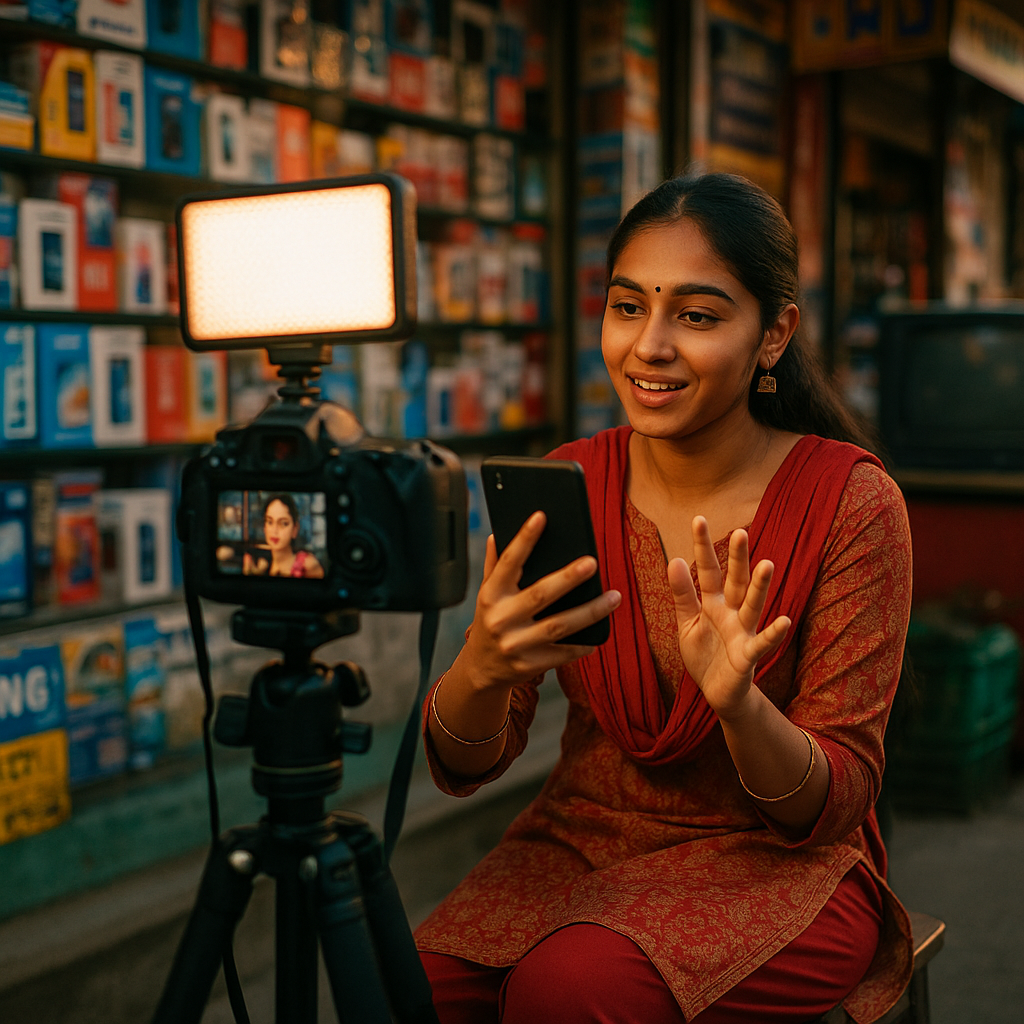
India’s entertainment and media market is projected to hit $36.7 billion by 2030. That’s not a rounding error on a global forecast, it’s a signal that the next decade of creator economy growth won’t be decided in Los Angeles or London. If your influencer strategy still treats India as a low-cost sourcing market rather than a primary growth engine, you’re already behind.
The Number Behind the Noise
A $36.7 billion market by 2030 puts India among the fastest-growing entertainment and media economies globally, trailing only a handful of mature markets in absolute size but outpacing nearly all of them on growth rate. Digital advertising, gaming, and online video are the primary drivers, not traditional television or print. That composition matters enormously for brands building creator programs, because it tells you where the audience attention (and the ad dollars chasing it) is actually moving.
Compare that trajectory to the plateauing growth rates in the US and Western Europe, where eMarketer’s ad spend forecasts show single-digit growth in mature digital channels. India isn’t growing at single digits. It’s compounding.
A market growing this fast doesn’t reward brands that “test and learn” for three years before committing budget. By the time you’ve run your pilot, the competitive landscape has already shifted.
Why This Isn’t Just an India Story
Here’s the part global CMOs keep missing: India’s growth curve is a preview of what creator-driven media consumption looks like when a market skips straight to mobile-first, vernacular-language, short-form content without the legacy baggage of cable TV or desktop internet. The playbook that wins in India (hyper-local language content, festival-tied campaign calendars, cricket and regional entertainment tie-ins) is increasingly the playbook that wins in Southeast Asia, parts of Africa, and Latin America too.
Brands that build India-specific creator infrastructure now aren’t just capturing one market. They’re building a template for the next wave of high-growth digital economies. This mirrors what we’ve already seen with micro-communities outperforming mega-influencers across APAC, where regional specificity beat broad reach on nearly every ROI metric measured.
What’s Actually Fueling the Growth
- Regional language content: Over 90% of India’s internet users consume content in a language other than English, and creators who speak directly to Tamil, Telugu, Marathi, or Bengali audiences are seeing engagement rates that outperform pan-India English content by wide margins.
- Gaming and interactive media: India’s gaming audience is one of the largest in the world by user count, even if average revenue per user still trails mature markets.
- Short-form video dominance: Platforms optimized for vertical, sub-60-second content have effectively become the default discovery layer for younger Indian consumers, a shift that parallels what we’ve documented in feed decline and the rise of search-driven discovery.
- Rising disposable income in tier-two and tier-three cities: Growth isn’t concentrated in Mumbai and Delhi anymore. Smaller cities are driving a disproportionate share of new ad-supported media consumption.
How Should Global Brands Reallocate Creator Budgets?
If you’re a brand marketer sitting on a global influencer budget, the honest question isn’t “should we invest in India,” it’s “how much of our 2027 to 2030 creator budget should shift there, and how fast.” A few operational realities should shape that math.
First, cost efficiency remains a genuine advantage, at least for now. Creator fees and production costs in India are still meaningfully lower than in the US, UK, or Australia for comparable reach and engagement. That arbitrage won’t last forever as the market matures, which is exactly why early movers capture disproportionate value. This is the same dynamic that’s made nano and micro influencer deals outperform macro placements on speed and engagement in other emerging markets, smaller creators with hyper-engaged niche audiences deliver better cost-per-engagement than broad-reach macro talent.
Second, rising CPMs globally are already pushing budget toward markets where inventory is cheaper and audiences are still under-monetized. We’ve covered how rising CPMs are reshaping short-form video budgets, and India remains one of the few large markets where CPMs haven’t caught up to audience size and engagement quality.
Third, and this is the part brand strategists tend to underweight: India’s creator economy is shifting from campaign bursts to ongoing brand partnerships far faster than Western markets did. Indian creators, particularly in beauty, fintech, and gaming verticals, are building long-term ambassador relationships rather than one-off sponsored posts. That trend lines up neatly with what we’ve seen globally as the creator economy moves from bursts to evergreen infrastructure.
Brands that still budget for India as a quarterly campaign line item are leaving efficiency on the table. The market rewards always-on creator relationships, not seasonal spikes.
Risk Mitigation Isn’t Optional Here
Fast growth markets come with fast growth compliance headaches. India’s advertising self-regulatory framework, guided by the Advertising Standards Council of India, has tightened disclosure requirements for influencer content over the past several years, and enforcement has followed suit. Brands operating globally already know this pattern from watching FTC disclosure enforcement tighten in the US and ICO guidance shape data practices in the UK. India is following the same arc, just faster.
Practical risk mitigation for brands entering or scaling in India should include:
- Contractual disclosure language matched to Indian regulatory standards, not a copy-paste of US or EU influencer agreements.
- Vetting processes that account for regional language nuance, since sentiment analysis tools built for English content often miss context in vernacular posts.
- Platform diversification, given that regulatory attention on major platforms has intensified globally, a trend we’ve tracked closely in coverage of usage caps and platform-level compliance shifts.
- Budget allocated specifically for creator vetting and fraud detection, not just sourcing, echoing the broader industry pattern where AI has made sourcing cheap but vetting expensive.
None of this should scare brands off. It should make them build smarter contracts before scaling spend, not after a compliance incident forces a rewrite.
Building the Operational Playbook
So what does an actual 2030-ready India strategy look like for a global brand? Start with three moves.
Regionalize your creator roster before you regionalize your ad spend. Language and cultural fluency drive engagement far more than follower count. A creator with 50,000 engaged followers in a specific regional language market will typically outperform a pan-India English-language creator with ten times the audience, on both cost and conversion.
Shift from software-only tooling to managed services where local nuance matters. Many global brands run influencer discovery and payment through software platforms alone, but India’s market complexity (language, regional regulation, payment infrastructure) often demands human oversight. This mirrors the broader industry shift where creator budgets are moving from software to managed services.
Treat India as a proving ground for AI-assisted personalization. With such a linguistically diverse audience, AI-driven content localization isn’t a nice-to-have, it’s the only scalable way to serve dozens of language markets without proportionally scaling headcount. That said, brands should stay alert to the trust gap that’s emerging as AI personalization rises while consumer trust in ads falls. Localization has to feel authentic, not automated.
Track your measurement approach too. Traditional last-click attribution models are already breaking down globally as zero-click search reshapes how consumers research products, and India’s mobile-first, discovery-driven consumer journey makes attribution even messier. Budget for multi-touch measurement from day one rather than retrofitting it later.
For benchmarking purposes, tools like Sprout Social’s analytics suite and market sizing data from Statista can help brand teams validate regional performance assumptions before committing large budgets.
What Happens If Brands Wait?
The honest answer: someone else captures the audience relationship first. India’s creator economy is already producing homegrown brand-creator partnerships in fintech, D2C beauty, and gaming that rival anything coming out of the US in sophistication. Global brands that delay past the next two to three budget cycles will find themselves negotiating from a weaker position, paying premium rates for creators whose audiences have already been claimed by faster-moving competitors, domestic and international alike.
The takeaway: Treat India not as an emerging line item but as a core 2030 growth market, build regionalized creator relationships and compliance-first contracts now, and revisit your budget allocation every two quarters rather than annually. The brands that move deliberately in the next 18 months will set the pricing and partnership norms everyone else has to follow.
Frequently Asked Questions
Why is India’s entertainment and media market growth relevant to global brand marketers, not just regional teams?
Because the growth patterns driving India’s projected $36.7 billion market, mobile-first consumption, vernacular content, and short-form video dominance, are becoming the template for other high-growth digital economies. Brands that build capability in India gain a repeatable playbook for Southeast Asia, Africa, and Latin America.
How much of a global influencer budget should shift toward India by 2030?
There’s no universal percentage, but brands should benchmark against category growth rates rather than historical spend. Categories like gaming, fintech, and D2C beauty are seeing disproportionate creator engagement in India relative to global averages, and budget allocation should track that engagement data rather than legacy market size assumptions.
What compliance risks should brands watch for when scaling creator programs in India?
Disclosure requirements under India’s advertising self-regulatory framework have tightened, and enforcement is increasing. Brands should build India-specific contract language rather than adapting US or EU influencer agreements, and budget for regional-language content vetting since standard sentiment tools often miss vernacular context.
Do macro-influencers or micro-influencers perform better in the Indian market?
Regionally focused micro and nano creators consistently outperform broad-reach macro influencers on cost-per-engagement in India, particularly in vernacular language markets. This mirrors global trends where smaller, niche creators deliver stronger ROI than mega-influencers.
How should brands measure creator campaign performance in a market like India?
Multi-touch attribution is essential given how mobile-first and discovery-driven the Indian consumer journey is. Last-click models tend to undercount influence from short-form video and search-driven discovery, so brands should build measurement frameworks that account for zero-click and assisted conversions from the start.
Top Influencer Marketing Agencies
The leading agencies shaping influencer marketing in 2026
Agencies ranked by campaign performance, client diversity, platform expertise, proven ROI, industry recognition, and client satisfaction. Assessed through verified case studies, reviews, and industry consultations.
Moburst

-
2

The Shelf
Boutique Beauty & Lifestyle Influencer AgencyA data-driven boutique agency specializing exclusively in beauty, wellness, and lifestyle influencer campaigns on Instagram and TikTok. Best for brands already focused on the beauty/personal care space that need curated, aesthetic-driven content.Clients: Pepsi, The Honest Company, Hims, Elf Cosmetics, Pure LeafVisit The Shelf → -
3

Audiencly
Niche Gaming & Esports Influencer AgencyA specialized agency focused exclusively on gaming and esports creators on YouTube, Twitch, and TikTok. Ideal if your campaign is 100% gaming-focused — from game launches to hardware and esports events.Clients: Epic Games, NordVPN, Ubisoft, Wargaming, Tencent GamesVisit Audiencly → -
4

Viral Nation
Global Influencer Marketing & Talent AgencyA dual talent management and marketing agency with proprietary brand safety tools and a global creator network spanning nano-influencers to celebrities across all major platforms.Clients: Meta, Activision Blizzard, Energizer, Aston Martin, WalmartVisit Viral Nation → -
5

The Influencer Marketing Factory
TikTok, Instagram & YouTube CampaignsA full-service agency with strong TikTok expertise, offering end-to-end campaign management from influencer discovery through performance reporting with a focus on platform-native content.Clients: Google, Snapchat, Universal Music, Bumble, YelpVisit TIMF → -
6

NeoReach
Enterprise Analytics & Influencer CampaignsAn enterprise-focused agency combining managed campaigns with a powerful self-service data platform for influencer search, audience analytics, and attribution modeling.Clients: Amazon, Airbnb, Netflix, Honda, The New York TimesVisit NeoReach → -
7

Ubiquitous
Creator-First Marketing PlatformA tech-driven platform combining self-service tools with managed campaign options, emphasizing speed and scalability for brands managing multiple influencer relationships.Clients: Lyft, Disney, Target, American Eagle, NetflixVisit Ubiquitous → -
8

Obviously
Scalable Enterprise Influencer CampaignsA tech-enabled agency built for high-volume campaigns, coordinating hundreds of creators simultaneously with end-to-end logistics, content rights management, and product seeding.Clients: Google, Ulta Beauty, Converse, AmazonVisit Obviously →