


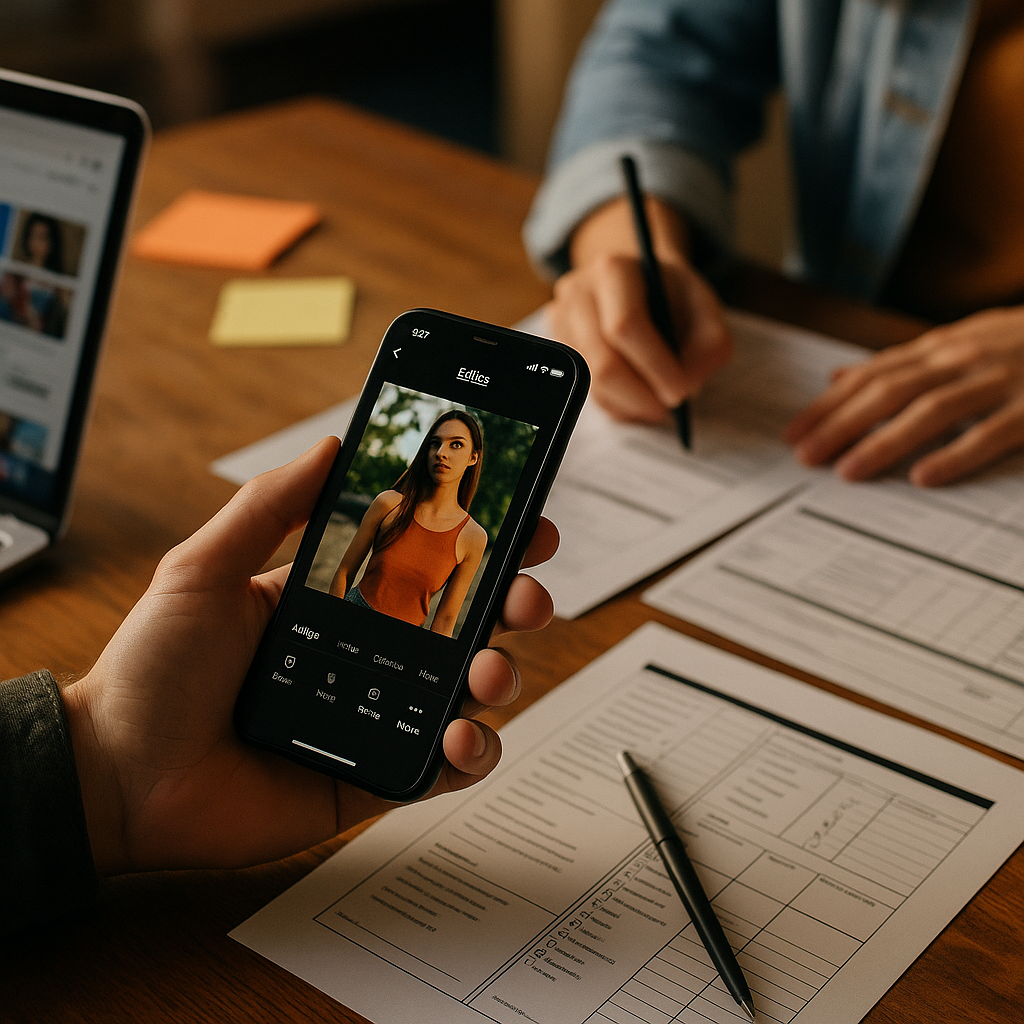
Meta’s Edits app has quietly become the default camera roll for over half of Instagram’s creator base, according to internal platform estimates shared at recent creator economy conferences. That shift matters more than another editing tool launch usually would. When creators stop bouncing between CapCut, InShot, and third-party apps and start cutting everything inside Instagram’s own Edits app, the entire chain of custody for a sponsored post changes. Brief design has to catch up.
Here’s the uncomfortable question brand teams should be asking: if your creator brief still assumes footage gets exported, edited elsewhere, and re-uploaded, is it built for how creators actually work anymore?
The Edits App Isn’t Just Another CapCut Clone
On the surface, Edits looks like Meta playing catch-up with CapCut and InShot. It has templates, precision trimming, layered audio, and draft syncing across devices. Nothing revolutionary in isolation.
The difference is where the data lives. When a creator edits inside Edits, Instagram retains metadata about the project: draft history, template usage, audio source, and export timestamps. That’s a meaningfully different audit trail than a video that arrives as a finished MP4 with no provenance. For brands managing FTC disclosure risk or trying to prove usage rights in a licensing dispute, that metadata is a gift most legal teams don’t yet know they have.
It also changes creative QA. Agencies used to request raw footage as a hedge against last-minute edits going rogue. Now, if a creator works natively in Edits and shares project access (a feature Meta has been expanding), brand teams can review drafts before publish without waiting for a rendered export. That’s a workflow upgrade hiding inside a feature update.
What Changes in the Brief When Creators Edit Natively
A creator brief written for the CapCut era usually specifies deliverables in terms of final output: aspect ratio, caption copy, hashtag placement, posting window. Those requirements don’t disappear, but they’re no longer sufficient.
Native editing means brands can now brief at the project level instead of just the output level. That opens up new fields worth adding to your standard brief template:
- Template source approval: if the creator uses a branded or trending Edits template, specify which ones are pre-approved to avoid off-brand pacing or transitions.
- Draft-sharing checkpoint: a required review stage before the creator finalizes export, not after.
- Audio licensing confirmation: Edits pulls from Instagram’s licensed audio library, which reduces copyright risk but doesn’t eliminate the need to confirm commercial usage rights for sponsored content.
- Caption and disclosure timing: whether the paid partnership label gets applied at export or added manually post-upload.
None of this is complicated. But it requires brief templates to be rebuilt, not patched. Teams still running briefs designed two platform generations ago are going to see more revision cycles, not fewer, simply because the brief never asked about the tool being used to make the thing.
The brands seeing the fewest revision rounds this quarter aren’t the ones with the strictest briefs. They’re the ones whose briefs actually match the tool the creator is already using.
Template Locking Solves a Problem Most Brands Didn’t Know They Had
Brand consistency across a creator roster has always been a losing battle. Ask twenty creators to hit the same three brand beats in a fifteen-second Reel and you’ll get twenty different pacing choices, twenty different transition styles, and at least a few that miss the CTA placement entirely.
Edits’ template locking feature, where a brand or agency can push a pre-built template with fixed timing markers and swap-in zones for creator footage, closes a chunk of that gap. It’s not full creative control (creators still shoot their own footage and write their own hooks), but it standardizes structure. Think of it as a rough equivalent to a PowerPoint master slide: creators fill in content, but the skeleton stays consistent.
This pairs naturally with the broader shift toward hook-first structuring that’s already reshaping short-form editing standards. The same logic that applies to structuring hook, pacing, and payoff on YouTube Shorts applies inside Edits templates: if the first two seconds don’t earn attention, the rest of the locked structure doesn’t matter.
For multi-creator campaigns, template locking also cuts editing costs. Agencies that used to pay a post-production vendor to standardize fifteen creator cuts into a cohesive campaign look can now push that standardization upstream, into the brief and the template itself.
The Compliance Angle Nobody’s Briefing For Yet
Disclosure sequencing keeps coming up across every platform update we’ve covered this year, and Edits is no exception. Because Edits allows in-app caption and label placement before export, brands have an opportunity to require disclosure labels be embedded at the project level rather than bolted on after upload.
That matters because the FTC has been explicit that disclosures need to be clear and conspicuous at the point of viewing, not buried in a caption a scroll away. The FTC’s endorsement guidance doesn’t care which app rendered the video, but it absolutely cares whether the disclosure is visible in the first few seconds of view. If Edits lets a creator lock a disclosure overlay into the template itself, that’s a compliance win worth writing into the brief as a requirement, not a suggestion.
This isn’t dissimilar to the disclosure sequencing challenges brands have already worked through on other platforms. The same care applied in shoppable overlay disclosure sequencing and the approach outlined in the LinkedIn sponsorship disclosure playbook both point to the same principle: build disclosure into the production tool, not into a compliance afterthought.
Metrics You Can Now Actually Trust (Mostly)
One underrated benefit of native editing: cleaner attribution data. When footage never leaves Instagram’s ecosystem, from capture to edit to publish, the platform can attribute watch time, completion rate, and template performance with fewer gaps than when creators exported and reimported through third-party tools.
This won’t fix every measurement headache. Brands still need to negotiate what counts as a “view” and how that maps to campaign KPIs, a conversation that’s been messy across nearly every platform this year. But it does mean the data feeding into Instagram’s own analytics dashboard should be more reliable when the whole project lifecycle happened natively.
For brands still reconciling view-counting inconsistencies elsewhere, it’s worth comparing notes with how other platforms have handled similar transitions. The lessons from rebuilding CPV after view counting changes apply directly here: don’t assume a new metric means better decision-making until you’ve mapped it against your actual conversion data for at least one full campaign cycle.
Building the New Brief Checklist
If you’re rebuilding your Instagram creator brief template this quarter, here’s the minimum viable checklist:
- Specify whether the creator should use Edits natively or if external editing is still acceptable for this campaign.
- List pre-approved templates or transition styles if brand consistency matters for this deliverable.
- Require a draft-sharing checkpoint before final export, with a defined turnaround window for feedback.
- Confirm audio licensing status for any music used, even from Instagram’s own library.
- Mandate disclosure label placement at the project level, not as a post-publish edit.
- Define what “performance” means for this deliverable (completion rate, saves, shares) so both sides agree on success metrics before the first cut is made.
None of these are radical additions. But brands that skip them are relying on the creator to make brand-safe, compliance-safe decisions on their own, inside a tool the brand hasn’t fully briefed for.
Sprout Social’s recent creator marketing benchmarks (via Sprout Social’s research hub) have repeatedly found that clarity in creative briefs correlates more strongly with campaign satisfaction than budget size. A tool-aware brief costs nothing extra to write. It just requires actually updating the template.
Reels distribution logic has already shifted brand expectations once this year, as covered in our breakdown of how Reels-first distribution beats shopping tags. Edits is the production-side counterpart to that distribution shift: it’s not enough to know how content gets seen, brands now need to understand how it gets made, too.
Frequently Asked Questions
FAQs
Does using Instagram’s Edits app affect how brand deals should be briefed?
Yes. Because Edits retains project metadata and supports draft sharing, brands can add checkpoints and disclosure requirements at the editing stage rather than only reviewing finished exports.
Is Edits replacing third-party editing apps like CapCut for sponsored content?
Not entirely, but adoption is rising fast among creators who want tighter integration with Instagram’s publishing and analytics tools. Brands should ask creators which tool they’re using before finalizing brief requirements.
Can brands require disclosure labels to be added inside the Edits app itself?
Brands can request it as part of the brief, and doing so helps ensure disclosures appear clearly at the point of viewing, which aligns with FTC endorsement guidance on conspicuous placement.
Does native editing improve campaign measurement accuracy?
It can. When content is captured, edited, and published without leaving the platform, attribution data tends to have fewer gaps than content that’s exported and reimported through external tools.
What’s the biggest brief mistake brands make with the Edits app?
Treating it as a cosmetic update instead of updating the brief template itself. Skipping template approval, draft checkpoints, and disclosure placement requirements just shifts compliance risk onto the creator.
The tool doesn’t need a bigger budget line or a new vendor contract, just a brief template that finally catches up to how creators are actually cutting footage. Pull up your current Instagram brief today, add the template-approval and draft-checkpoint fields, and test it on your next campaign before your competitors do.
Top Influencer Marketing Agencies
The leading agencies shaping influencer marketing in 2026
Agencies ranked by campaign performance, client diversity, platform expertise, proven ROI, industry recognition, and client satisfaction. Assessed through verified case studies, reviews, and industry consultations.
Moburst

-
2

The Shelf
Boutique Beauty & Lifestyle Influencer AgencyA data-driven boutique agency specializing exclusively in beauty, wellness, and lifestyle influencer campaigns on Instagram and TikTok. Best for brands already focused on the beauty/personal care space that need curated, aesthetic-driven content.Clients: Pepsi, The Honest Company, Hims, Elf Cosmetics, Pure LeafVisit The Shelf → -
3

Audiencly
Niche Gaming & Esports Influencer AgencyA specialized agency focused exclusively on gaming and esports creators on YouTube, Twitch, and TikTok. Ideal if your campaign is 100% gaming-focused — from game launches to hardware and esports events.Clients: Epic Games, NordVPN, Ubisoft, Wargaming, Tencent GamesVisit Audiencly → -
4

Viral Nation
Global Influencer Marketing & Talent AgencyA dual talent management and marketing agency with proprietary brand safety tools and a global creator network spanning nano-influencers to celebrities across all major platforms.Clients: Meta, Activision Blizzard, Energizer, Aston Martin, WalmartVisit Viral Nation → -
5

The Influencer Marketing Factory
TikTok, Instagram & YouTube CampaignsA full-service agency with strong TikTok expertise, offering end-to-end campaign management from influencer discovery through performance reporting with a focus on platform-native content.Clients: Google, Snapchat, Universal Music, Bumble, YelpVisit TIMF → -
6

NeoReach
Enterprise Analytics & Influencer CampaignsAn enterprise-focused agency combining managed campaigns with a powerful self-service data platform for influencer search, audience analytics, and attribution modeling.Clients: Amazon, Airbnb, Netflix, Honda, The New York TimesVisit NeoReach → -
7

Ubiquitous
Creator-First Marketing PlatformA tech-driven platform combining self-service tools with managed campaign options, emphasizing speed and scalability for brands managing multiple influencer relationships.Clients: Lyft, Disney, Target, American Eagle, NetflixVisit Ubiquitous → -
8

Obviously
Scalable Enterprise Influencer CampaignsA tech-enabled agency built for high-volume campaigns, coordinating hundreds of creators simultaneously with end-to-end logistics, content rights management, and product seeding.Clients: Google, Ulta Beauty, Converse, AmazonVisit Obviously →