


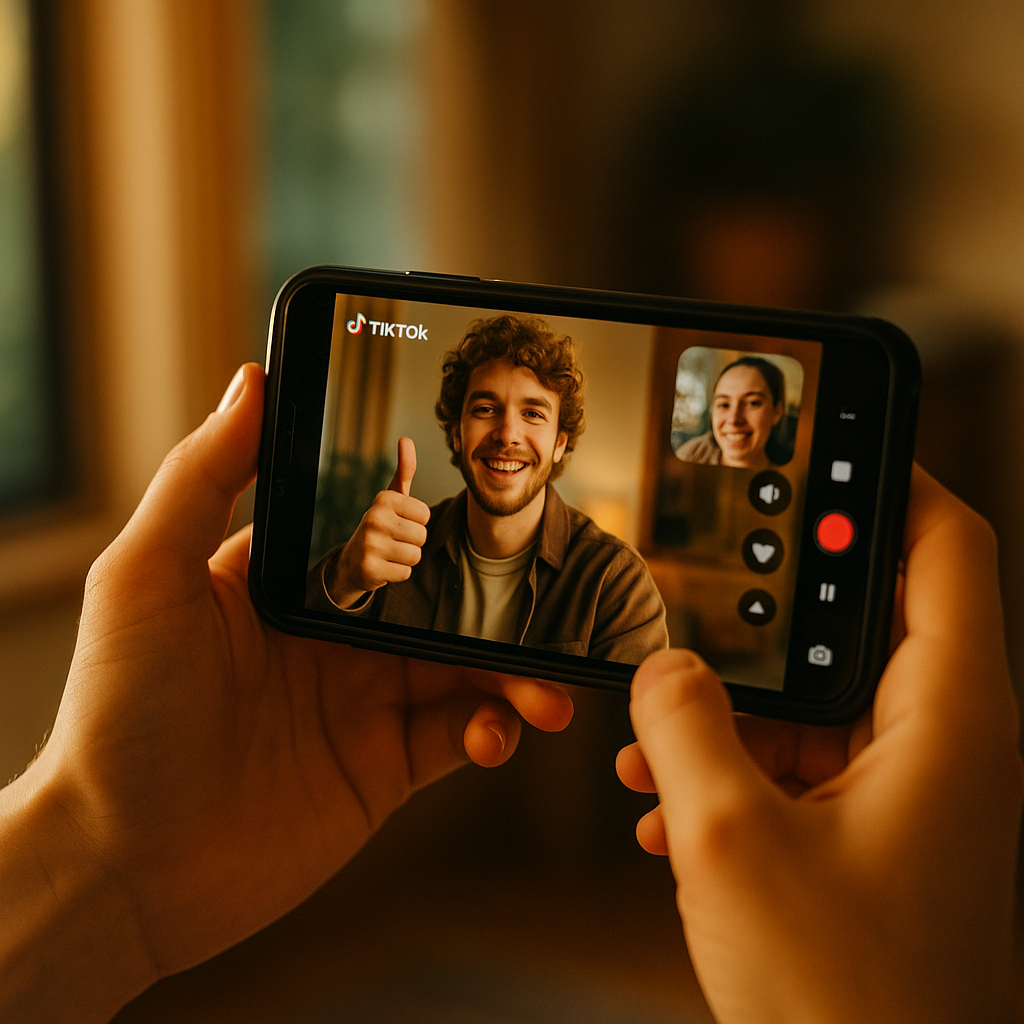
Feed-and-reaction videos using dual-camera formats see meaningfully higher completion rates than single-frame content, according to internal creator benchmarking shared across TikTok’s marketing partner network. That’s not a small edge when every extra second of watch time feeds the algorithm. The new TikTok Now dual-camera feature lets brands and creators shoot front and back camera simultaneously, splitting the screen between a product or moment and the real human reaction to it. For an industry drowning in over-produced brand content, that split screen might be the most useful trust signal TikTok has shipped this cycle.
What the Dual-Camera Feature Actually Does
TikTok Now originally launched as a BeReal-style daily prompt feature, asking users to capture an unposed moment within a tight window. The platform has since folded that mechanic into core TikTok functionality, and the dual-camera update is the latest expansion. When activated, it records front and rear camera feeds at once, stacking them into a single frame, one half showing the subject (a product demo, a store shelf, a factory line), the other showing the person’s genuine, unscripted reaction.
For brands, this isn’t just a novelty filter. It’s a format built entirely around the thing influencer marketing has been chasing for years: proof that the reaction is real. Split-screen authenticity removes the “was this staged” question that skeptical audiences bring to sponsored content, because viewers can literally watch the creator’s face while the product does its thing.
The dual-camera format works because it removes editing as a variable. You can’t fake a reaction shot that’s happening in the same frame, in real time, as the product moment it’s reacting to.
Why This Matters for Brand Trust Right Now
Consumer skepticism toward influencer content isn’t slowing down. Audiences have gotten fluent in spotting a scripted unboxing versus a genuine one, and that fluency is exactly why heavily produced brand campaigns are losing ground to messier, behind-the-scenes formats. Sprout Social’s research on social trust has repeatedly shown that audiences rank authenticity above production value when deciding whether to trust a brand’s social presence.
Dual-camera content leans into that preference by design. It’s low-fi by nature. There’s no time to storyboard a “surprised” face when the camera is capturing it live alongside the product reveal.
This is also a compliance advantage, oddly enough. Split-screen reaction content reads as unscripted, which makes disclosure language feel more natural rather than bolted on. A creator saying “brand sent me this, let’s see” while the dual feed captures their actual first impression is a cleaner disclosure moment than a polished ad read layered over b-roll. Brands still need to follow FTC guidance on clear and conspicuous disclosure, but the format itself lends credibility to the disclosure rather than undercutting it.
Where It Fits in the Content Funnel
Dual-camera isn’t a bottom-funnel conversion tool. Don’t expect it to replace your TikTok Shop livestream or your affiliate-driven product pages. Think of it as top-and-mid funnel trust-building, the kind of content that makes a cold audience stop scrolling and warms them up before they ever see a shoppable link. Brands running affiliate programs should already understand how format choice affects payout expectations, something covered in our breakdown of affiliate rate setting for TikTok Shop creators.
Practical use cases brands are already testing:
- Factory or warehouse walk-throughs paired with a creator’s real-time reaction to production scale or quality
- Event activations where the front camera captures the booth or product and the rear captures attendee reactions
- Founder or employee “day in the life” content that pairs workplace moments with candid commentary
- Unboxing content where the reaction and the product reveal happen in the same shot, removing the “cut to reaction” edit that audiences have learned to distrust
The Operational Reality: What Brands Need to Plan For
Here’s the part that doesn’t make it into the hype cycle. Dual-camera content is harder to brief than a standard sponsored post, precisely because the whole value proposition depends on it not looking scripted. If you hand a creator a shot list for their “authentic reaction,” you’ve defeated the purpose. Briefs need to shift from dictating exact lines and shots to setting parameters: what the product moment should show, what disclosure language must appear, and what’s off-limits, while leaving the reaction itself unscripted.
That’s a mindset shift for brand teams used to tight creative control. It also raises new risk questions. An unscripted reaction can go sideways. A creator’s genuine first impression of a product might be lukewarm, confused, or just flat. Agencies need to build in a review step before content goes live, even though the format’s appeal is its rawness. That tension, between authenticity and quality control, is going to define how well brands actually execute this format versus how well it performs in theory.
The brands that win with dual-camera content are the ones who brief for boundaries, not for outcomes. Scripting the reaction defeats the entire point of the format.
Measurement Gets Murkier Before It Gets Clearer
TikTok hasn’t rolled out a dedicated analytics layer specifically for dual-camera content yet, which means brands are stuck applying standard watch-time and completion-rate metrics to a format that behaves differently than a normal video. Split-screen content tends to hold attention longer because there’s more visual information competing for the eye, but that doesn’t automatically mean it’s driving intent or purchase consideration.
Brands should treat early dual-camera campaigns as a benchmarking exercise. Run parallel tests, same product, same creator tier, one asset in dual-camera format and one in standard single-camera format, and compare completion rate, shares, and comment sentiment. This is similar to how brands had to recalibrate reporting after TikTok Shop’s Instant-View metric changes, where a new signal required new benchmarks rather than assuming old KPIs still applied cleanly.
It’s also worth remembering that TikTok’s underlying ranking systems have been in flux. The platform’s recommendation engine migration already reset some ranking behavior this cycle, so isolating the true performance lift from a new format like dual-camera requires patience and controlled testing rather than a single campaign’s results.
Whitelisting and Paid Amplification Considerations
If a dual-camera piece performs well organically, the next question is always the same: can we put paid behind it without stripping out what made it work? Whitelisting dual-camera content through a creator’s handle preserves the authentic framing while giving brands targeting control, and that pairs well with tools like TikTok’s Symphony Agent, which already merges whitelisting and dark posting workflows. Brands running Symphony-based campaigns should test dual-camera assets specifically, since the format’s raw aesthetic may perform differently under paid distribution than fully polished creative does.
One caution: TikTok’s Symphony system has also introduced restrictions around AI-generated content in Shop Live contexts, and brands should confirm dual-camera assets, which are camera-captured rather than AI-generated, remain fully compliant before scaling paid spend behind them. This is a fast-moving compliance area and worth a quick check with your platform rep before committing budget.
Does This Replace Traditional BTS Content?
Not entirely. Traditional single-camera behind-the-scenes content still has a place, especially for longer-form storytelling where a creator needs to walk through multiple steps or locations. Dual-camera shines in moments that are inherently reactive: first impressions, reveals, live events, taste tests. If the content doesn’t have a clear “reaction moment,” the split-screen format loses its purpose and just becomes a gimmick.
Brands running livestream commerce, particularly in categories like beauty where trust and skin-match concerns already create friction (see our notes on fixing shipping anxiety in beauty livestreams), might find dual-camera especially useful for pre-stream teaser content. A creator’s genuine reaction to trying a product before going live builds anticipation in a way a scripted teaser can’t replicate.
Getting Started Without Overcomplicating It
Don’t overthink the rollout. Start with one or two creators already in your roster who have strong on-camera presence and a track record of low-scripted content. Brief them on the product moment and disclosure requirement, then let the reaction happen. Review before publishing, but resist the urge to request retakes that “look more excited.” That’s exactly the instinct that kills the format’s credibility.
Track completion rate, comment sentiment, and share rate against a control group of standard content over a two-to-three week window. If the format performs, expand to more creators and consider testing paid amplification through whitelisting. If it underperforms, look at whether the product category is a fit. Not every product creates a genuine reaction moment, and forcing the format onto a low-excitement SKU will just produce a flat, unconvincing reaction.
FAQs
What is TikTok’s dual-camera feature and how does it work for brands?
It’s a recording mode within TikTok Now that captures front and rear camera feeds simultaneously, splitting the frame between a product or moment and a person’s real-time reaction to it. Brands use it to create behind-the-scenes content that feels unscripted because the reaction and the moment happen in the same shot.
Does dual-camera content require FTC disclosure like other sponsored posts?
Yes. Any paid partnership or gifted product arrangement still requires clear and conspicuous disclosure regardless of format. Brands should review current FTC guidance on endorsements before running dual-camera campaigns.
Can dual-camera content be used with TikTok’s whitelisting tools?
Yes. Dual-camera assets can be whitelisted and amplified through paid channels the same way standard sponsored content can, though brands should confirm the content isn’t flagged under any AI-generation restrictions tied to Shop Live features.
Is dual-camera content better for top-funnel or conversion campaigns?
It performs best as a top-and-mid funnel trust-building tool. It’s less suited to direct conversion campaigns since the format prioritizes genuine reaction over clear product demonstration or shoppable calls to action.
How should brands measure dual-camera content performance?
Run controlled comparisons against standard single-camera content using the same creator and product, tracking completion rate, share rate, and comment sentiment over a multi-week window before scaling the format.
The Next Move
Test dual-camera content with one trusted creator this month, brief for boundaries rather than outcomes, and measure it against a standard-format control before committing bigger budget to the format.
Top Influencer Marketing Agencies
The leading agencies shaping influencer marketing in 2026
Agencies ranked by campaign performance, client diversity, platform expertise, proven ROI, industry recognition, and client satisfaction. Assessed through verified case studies, reviews, and industry consultations.
Moburst

-
2

The Shelf
Boutique Beauty & Lifestyle Influencer AgencyA data-driven boutique agency specializing exclusively in beauty, wellness, and lifestyle influencer campaigns on Instagram and TikTok. Best for brands already focused on the beauty/personal care space that need curated, aesthetic-driven content.Clients: Pepsi, The Honest Company, Hims, Elf Cosmetics, Pure LeafVisit The Shelf → -
3

Audiencly
Niche Gaming & Esports Influencer AgencyA specialized agency focused exclusively on gaming and esports creators on YouTube, Twitch, and TikTok. Ideal if your campaign is 100% gaming-focused — from game launches to hardware and esports events.Clients: Epic Games, NordVPN, Ubisoft, Wargaming, Tencent GamesVisit Audiencly → -
4

Viral Nation
Global Influencer Marketing & Talent AgencyA dual talent management and marketing agency with proprietary brand safety tools and a global creator network spanning nano-influencers to celebrities across all major platforms.Clients: Meta, Activision Blizzard, Energizer, Aston Martin, WalmartVisit Viral Nation → -
5

The Influencer Marketing Factory
TikTok, Instagram & YouTube CampaignsA full-service agency with strong TikTok expertise, offering end-to-end campaign management from influencer discovery through performance reporting with a focus on platform-native content.Clients: Google, Snapchat, Universal Music, Bumble, YelpVisit TIMF → -
6

NeoReach
Enterprise Analytics & Influencer CampaignsAn enterprise-focused agency combining managed campaigns with a powerful self-service data platform for influencer search, audience analytics, and attribution modeling.Clients: Amazon, Airbnb, Netflix, Honda, The New York TimesVisit NeoReach → -
7

Ubiquitous
Creator-First Marketing PlatformA tech-driven platform combining self-service tools with managed campaign options, emphasizing speed and scalability for brands managing multiple influencer relationships.Clients: Lyft, Disney, Target, American Eagle, NetflixVisit Ubiquitous → -
8

Obviously
Scalable Enterprise Influencer CampaignsA tech-enabled agency built for high-volume campaigns, coordinating hundreds of creators simultaneously with end-to-end logistics, content rights management, and product seeding.Clients: Google, Ulta Beauty, Converse, AmazonVisit Obviously →