


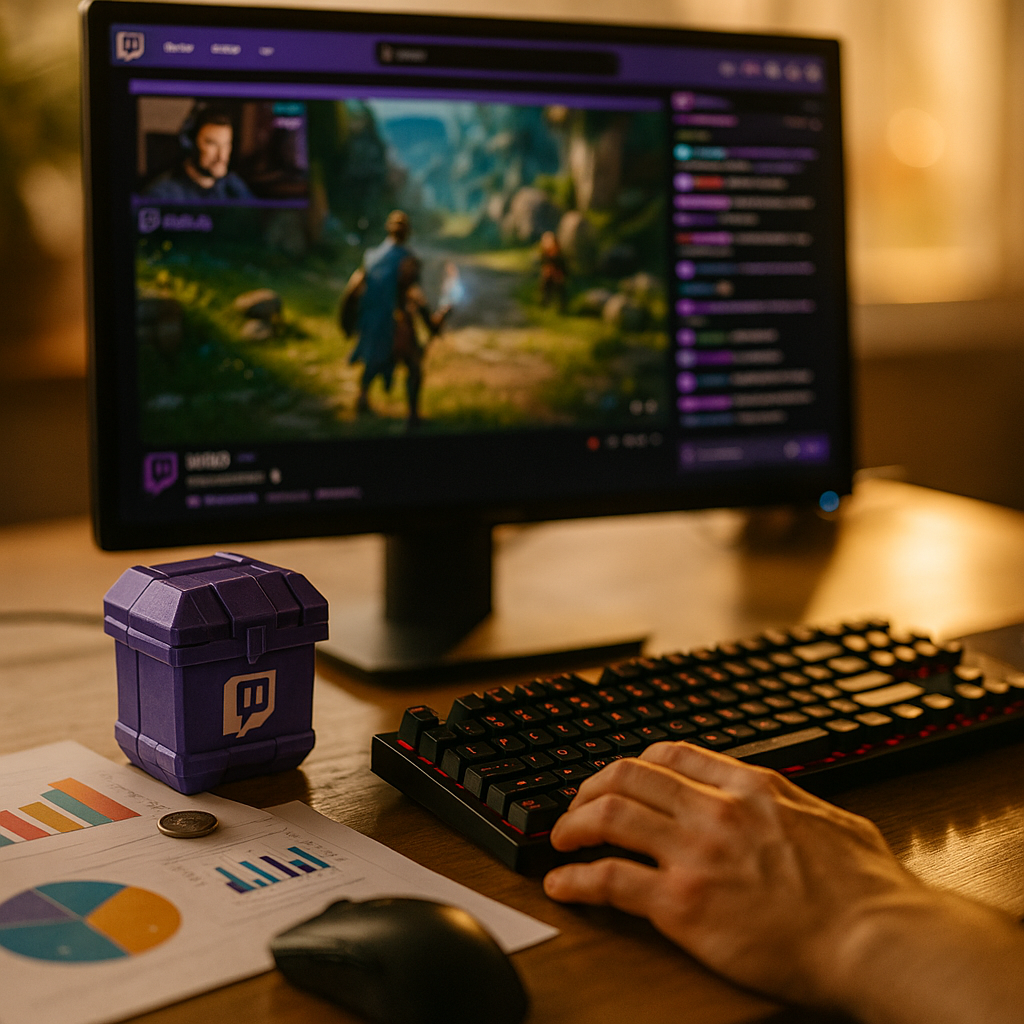
Twitch reported that Drops campaigns can lift average watch time by double digits during an active reward window. That single stat explains why every gaming brand from peripheral makers to soda companies is suddenly obsessed with in-stream loot. But most marketing teams still treat Twitch Drops like a vague “give away skins and hope” tactic instead of a structured, measurable campaign format.
What Twitch Drops Actually Are (and Why Brands Get the Mechanics Wrong)
Drops are Twitch’s native reward system. A viewer links their account to a game or campaign, watches a qualifying stream for a set duration, and unlocks an in-game item, currency, or real-world perk automatically. No codes to type, no forms to fill out. The friction is gone, which is exactly why the format converts better than most influencer-run giveaways.
The mistake brands make is treating Drops as a bolt-on to a sponsorship instead of the campaign’s core mechanic. A Drops-enabled stream isn’t a creator reading a script with a reward attached. It’s a structured watch-to-earn loop, and every element (duration, reward tiers, creator selection) needs to be engineered around retention, not just reach.
Drops work because they reward attention, not clicks. That single distinction is why redemption rates on Twitch routinely outperform code-based giveaways run through other creator channels.
Building the Campaign Architecture
A well-structured Drops campaign has four moving parts, and skipping any one of them is how brands end up with inflated watch numbers and no actual conversion.
- Qualification window: The minimum watch time required before a Drop unlocks. Too short and you get drive-by viewers who bounce immediately after claiming. Too long and you lose casual audiences who won’t commit.
- Reward tiering: Staggered Drops (a small reward at 30 minutes, a better one at 2 hours) keep viewers in the stream longer than a single all-or-nothing unlock.
- Creator allowlist: Twitch lets brands designate which channels are eligible to trigger Drops. This is your single biggest lever for controlling campaign quality, and most teams underuse it.
- Campaign duration: Time-limited windows (a long weekend, a single patch cycle) create urgency. Open-ended Drops campaigns tend to flatline after the first week because there’s no reason to tune in now.
Set these four variables deliberately, and you’ve got a campaign brief. Skip them, and you’ve got a Twitch feature turned on with no strategy behind it.
Picking Creators: Reach vs Retention
Every brand defaults to booking the biggest channel with an open sponsorship slot. That’s usually the wrong call for Drops specifically, because the format rewards audience stickiness over raw viewership.
A mid-tier variety streamer with a chatty, returning audience will often outperform a mega-streamer whose viewers churn in and out during a broadcast. Twitch’s own analytics let you check average concurrent viewer retention per channel, not just peak viewership, before you sign a deal. Ask any creator’s manager for that number. If they can’t produce it, that’s a red flag worth noting before budget commits.
Categorize prospective creators into two buckets: reach anchors (large audiences, used to seed initial claim volume) and retention engines (loyal, engaged communities, used to sustain qualification rates through the full campaign window). A balanced roster needs both. All reach and no retention gets you a spike in claims followed by a redemption cliff.
Budgeting and Reward Structuring: Where Most Campaigns Overspend
Here’s the uncomfortable math nobody wants to run: cosmetic in-game items cost the publisher almost nothing to produce, but the media spend to promote the campaign (creator fees, Twitch ad placements, community management) is real cash. Brands frequently overweight the reward budget and underweight the promotion budget, which is backwards.
A tighter structure looks like this: allocate roughly 60 to 70 percent of campaign budget to creator fees and platform promotion, and the rest to reward fulfillment and tooling. If your Drops require a physical redemption (a code for merchandise, a discount tied to account linking) add a fulfillment buffer, because claim rates on time-limited campaigns tend to spike in the final hours as urgency kicks in, and slow fulfillment pipelines choke under that load.
Also budget for creator briefing time. A Drops campaign only works if the streamer actually explains the mechanic on air, reminds viewers of the qualification window, and re-announces reward tiers as they unlock. That’s a production responsibility, not an afterthought, and it should be spelled out in the contract, not assumed.
Compliance and Risk: The Part Legal Will Ask About
Time-limited reward campaigns invite bot activity and account farming, full stop. Viewers running multiple accounts to stack Drops, or bot viewership designed to inflate a creator’s numbers, are real risks that brand safety teams should flag before launch, not after.
Twitch has anti-fraud detection built into the Drops system, but brands running high-value rewards (real-world prizes, exclusive access) should add their own monitoring layer. Cross-reference claim spikes against known bot-farm IP ranges, and set maximum claim caps per campaign to limit exposure if something slips through.
Disclosure is the other compliance pillar. If a creator is compensated to run a Drops campaign, that’s a paid partnership and needs the same on-stream disclosure standards the FTC expects from any sponsored content. Twitch’s built-in branded content tools help here, but the disclosure needs to be verbal and on-screen, not buried in a panel link nobody clicks. This is the same lesson brands have had to relearn across nearly every platform running compensated creator formats, from creator whitelisting deals to sponsored livestream commerce.
A Drops campaign without a disclosure standard baked into the creator contract isn’t a growth hack. It’s a compliance liability waiting for a screenshot.
Measuring ROI Beyond Redemption Rates
Redemption count is the vanity metric everyone reports back to leadership, and it’s the least useful one on its own. A campaign can post a huge redemption number and still fail commercially if the people claiming Drops were never in-market for the product.
Better KPIs to track: average qualification watch time (are people actually sticking around, or claiming and immediately tabbing out), chat engagement lift during the Drops window, follower conversion on participating channels, and post-campaign purchase or install data if the reward ties to a product. Gaming brands running Drops tied to a title launch should be pulling install attribution data from the same window, not just Twitch-side metrics.
This mirrors a pattern showing up across the creator economy right now: platforms are pushing brands to rethink what a “view” or a “claim” actually proves. The same recalibration is happening with view counting changes on YouTube and instant-play metrics elsewhere. Treat Drops the same way. A claim is an action, not a conversion, and your reporting deck should reflect that distinction to leadership.
Industry data on livestream engagement from eMarketer and creator benchmarking tools from Sprout Social both point to the same trend: engaged-minute metrics are outpacing raw reach as the KPI advertisers actually trust. Drops campaigns should be reported the same way.
Where Drops Fits Alongside Other Gaming-Adjacent Formats
Drops isn’t the only mechanic brands are testing to reward attention rather than just buy it. Sponsored mini-games are following a similar logic on other platforms, and briefing teams are having to rebuild creative processes to match, as covered in our look at sponsored mini-game briefs on YouTube. Even B2B marketers are watching the gamification trend spread into unlikely corners, including gaming features showing up on LinkedIn. The through-line across all of it: reward-based engagement converts better than passive impressions, but only when the reward structure is built with the same rigor as a paid media plan.
Brands experimenting with AI-generated creative to support these campaigns should also read up on emerging compliance questions, since tools like those covered in our AI content compliance guide are already being tested for Drops-adjacent promotional assets.
Run one test campaign before committing a full-quarter budget. Pick two creators, one reach anchor and one retention engine, cap the reward tier at two levels, and measure qualification watch time against your existing benchmark before scaling spend. That’s how you turn Drops from a novelty feature into a repeatable line item in your influencer budget.
Frequently Asked Questions
What is a Twitch Drops campaign in simple terms?
It’s a reward system where viewers automatically unlock in-game items, currency, or other perks by watching a qualifying Twitch stream for a set amount of time, without needing to enter a code or fill out a form.
How long should a Twitch Drops campaign run?
Most effective campaigns run between a few days and two weeks. Shorter, time-limited windows create urgency and drive concentrated tune-in, while open-ended campaigns tend to lose momentum after the first week.
Do brands need to pay creators separately from the Drops rewards?
Yes. Reward fulfillment (the items or perks viewers claim) is a separate cost from creator fees and platform promotion. Budgeting should weight creator fees and promotion higher than reward fulfillment in most cases.
Is Twitch Drops content subject to FTC disclosure rules?
If a creator is compensated to run a Drops campaign, it counts as a paid partnership and requires clear, on-screen disclosure, consistent with FTC guidance on sponsored content.
What’s the biggest risk in running a Drops campaign?
Bot activity and account farming designed to inflate claim numbers. Brands should set maximum claim caps and monitor for suspicious claim spikes tied to known bot IP ranges.
How do you measure ROI on a Drops campaign beyond redemption count?
Track average qualification watch time, chat engagement during the Drops window, follower conversion on participating channels, and post-campaign purchase or install data tied to the promoted product.
Top Influencer Marketing Agencies
The leading agencies shaping influencer marketing in 2026
Agencies ranked by campaign performance, client diversity, platform expertise, proven ROI, industry recognition, and client satisfaction. Assessed through verified case studies, reviews, and industry consultations.
Moburst

-
2

The Shelf
Boutique Beauty & Lifestyle Influencer AgencyA data-driven boutique agency specializing exclusively in beauty, wellness, and lifestyle influencer campaigns on Instagram and TikTok. Best for brands already focused on the beauty/personal care space that need curated, aesthetic-driven content.Clients: Pepsi, The Honest Company, Hims, Elf Cosmetics, Pure LeafVisit The Shelf → -
3

Audiencly
Niche Gaming & Esports Influencer AgencyA specialized agency focused exclusively on gaming and esports creators on YouTube, Twitch, and TikTok. Ideal if your campaign is 100% gaming-focused — from game launches to hardware and esports events.Clients: Epic Games, NordVPN, Ubisoft, Wargaming, Tencent GamesVisit Audiencly → -
4

Viral Nation
Global Influencer Marketing & Talent AgencyA dual talent management and marketing agency with proprietary brand safety tools and a global creator network spanning nano-influencers to celebrities across all major platforms.Clients: Meta, Activision Blizzard, Energizer, Aston Martin, WalmartVisit Viral Nation → -
5

The Influencer Marketing Factory
TikTok, Instagram & YouTube CampaignsA full-service agency with strong TikTok expertise, offering end-to-end campaign management from influencer discovery through performance reporting with a focus on platform-native content.Clients: Google, Snapchat, Universal Music, Bumble, YelpVisit TIMF → -
6

NeoReach
Enterprise Analytics & Influencer CampaignsAn enterprise-focused agency combining managed campaigns with a powerful self-service data platform for influencer search, audience analytics, and attribution modeling.Clients: Amazon, Airbnb, Netflix, Honda, The New York TimesVisit NeoReach → -
7

Ubiquitous
Creator-First Marketing PlatformA tech-driven platform combining self-service tools with managed campaign options, emphasizing speed and scalability for brands managing multiple influencer relationships.Clients: Lyft, Disney, Target, American Eagle, NetflixVisit Ubiquitous → -
8

Obviously
Scalable Enterprise Influencer CampaignsA tech-enabled agency built for high-volume campaigns, coordinating hundreds of creators simultaneously with end-to-end logistics, content rights management, and product seeding.Clients: Google, Ulta Beauty, Converse, AmazonVisit Obviously →