


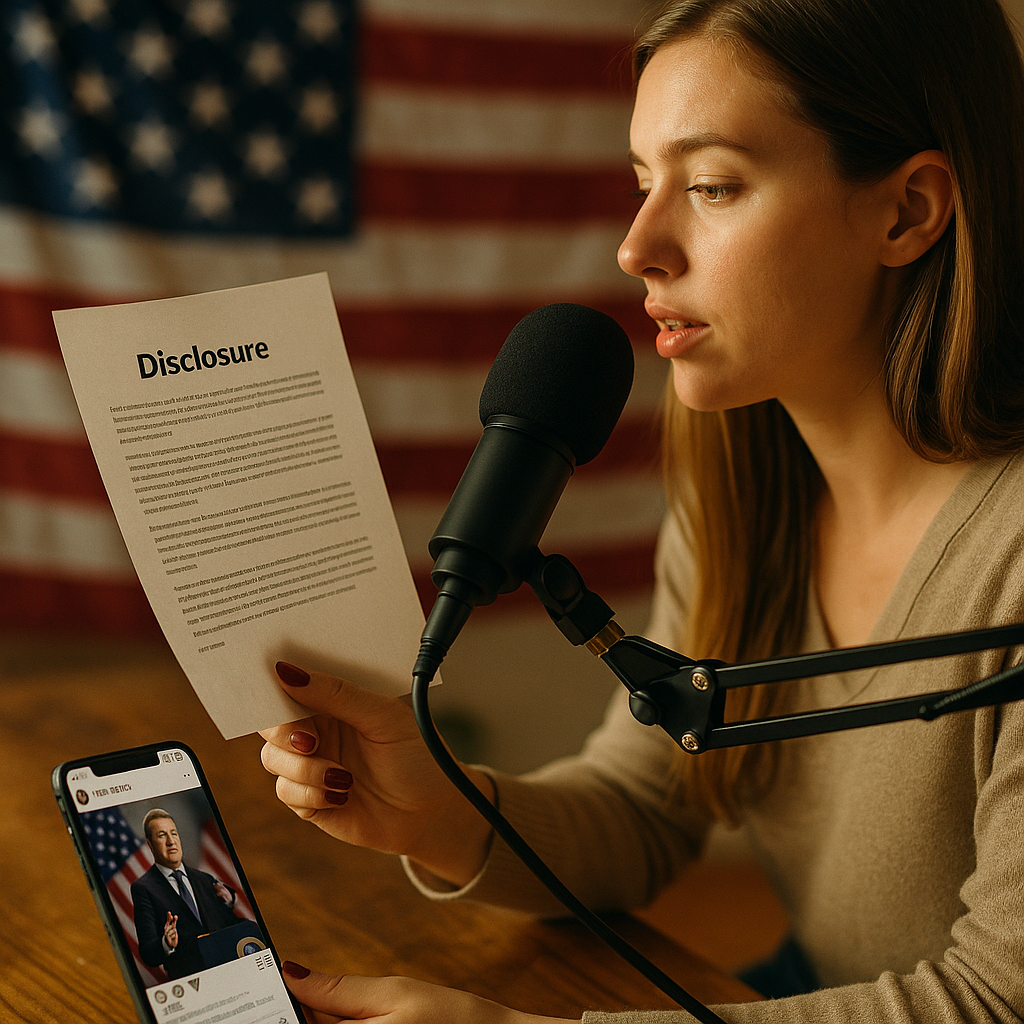
Roughly 1 in 5 registered voters now say they’ve encountered political content from a creator they follow for entirely unrelated reasons, according to Pew Research trend data on social platforms. That’s the mess brands are walking into. Political influencer disclosure rules are no longer a niche concern for campaign consultants. They’re a live compliance issue for any marketing team running creator programs anywhere near a hot-button topic, a state ballot measure, or a candidate’s orbit ahead of the midterms.
Why This Isn’t Just an FEC Problem for Brands
Here’s the confusion trap most marketing teams fall into: they assume political disclosure is a Federal Election Commission issue that only applies to campaigns and PACs. It doesn’t stop there. The FTC’s endorsement guidance applies regardless of subject matter, and a growing patchwork of state laws now specifically target AI-generated or “synthetic” political media, deepfake disclosure, and paid issue advocacy delivered through creators.
So a brand running an “authentic conversation” campaign about, say, healthcare affordability or gun safety, using paid creators, can trip multiple wires at once: FTC material connection rules, state-level political ad disclosure statutes, and platform policies that treat the content as political regardless of whether a candidate is named.
The riskiest campaigns aren’t the ones that mention a candidate by name. They’re the “issue awareness” campaigns that brands don’t realize count as political speech under state law.
What Actually Counts as Political Content Now
Definitions vary by jurisdiction, which is exactly the problem. Generally, regulators and platforms are looking at four buckets:
- Candidate-related content: anything mentioning, depicting, or implicitly referencing a candidate for office, even satirically.
- Ballot measure and referendum content: creator posts urging a vote for or against a specific proposition.
- Issue advocacy tied to legislation: content pushing a policy position that’s actively being debated (immigration, healthcare, energy policy) where a brand or advocacy group is the paying party.
- Coordinated messaging: content that echoes campaign talking points closely enough that regulators infer coordination, even without direct payment from a campaign.
That last bucket is the sleeper risk. If your creator brief for a “civic engagement” or corporate social responsibility campaign happens to mirror language a candidate is using, you can end up in a coordination inquiry you never intended to invite.
Platform Rules Are Diverging, and That’s the Real Headache
Meta has maintained restrictions on political, electoral, and social issue ads that require additional authorization and “paid for by” disclosures, a policy documented on Meta’s business platform. TikTok has gone further in some markets, prohibiting paid political advertising outright, including creator content that promotes political figures or issues in exchange for compensation, per TikTok’s advertising policies. YouTube requires verification and disclosure for election ads through its own compliance process.
The trouble is that “organic” creator content sits in a gray zone. A creator posting unpaid political opinions is protected speech. The same creator posting a brand-sponsored video that touches a political theme is a different animal entirely, and most platforms require the standard paid partnership label at minimum, with some demanding additional political disclosure banners.
Brands running influencer programs across Meta, TikTok, and YouTube simultaneously need separate compliance checklists per platform this cycle. A single unified disclosure strategy won’t survive contact with three different enforcement regimes.
State Laws Are Moving Faster Than Federal Rules
While federal election law reform has stalled, states haven’t waited. A growing number have passed or expanded laws requiring explicit disclosure when political ads, including creator-distributed content, use AI-generated imagery, voice cloning, or synthetic media of a candidate. Several states now require a clear, unambiguous disclaimer stating that content was manipulated or generated by AI if it depicts a candidate or election-related claim.
This overlaps directly with issues brands are already tracking around synthetic media. If you’re running virtual influencer programs or AI-assisted creative anywhere near political or civic content this cycle, the compliance bar just moved. Teams already navigating biometric privacy rules for virtual influencers should treat state political deepfake statutes as an adjacent, stacking risk rather than a separate checklist.
The FTC Angle Brands Keep Underestimating
Even when political content clears FEC and state hurdles, FTC endorsement rules still apply in full. Material connection disclosure isn’t optional just because the topic is civic rather than commercial. If a creator is compensated (cash, product, or even long-term partnership consideration) to post about a ballot measure or issue campaign, the same #ad-style disclosure obligations kick in that would apply to a skincare post.
This is where a lot of teams get sloppy. They treat “issue advocacy” content as somehow exempt from commercial disclosure norms because it feels like advocacy rather than advertising. The FTC doesn’t draw that distinction. Compensation triggers disclosure, full stop.
Marketing teams that have already built rigorous review processes for AI-generated ad claims should extend that same rigor here. The overlap between FTC native advertising standards and political content disclosure is closer than most legal teams assume, and enforcement attention tends to spike in election years as watchdog groups file complaints proactively.
Compensation triggers disclosure. It doesn’t matter whether the content is selling sneakers or a ballot measure position.
Building a Compliance Workflow That Actually Holds Up
Waiting until a campaign is live to sort out disclosure obligations is a losing strategy. Build the review into the brief stage instead. A workable process looks like this:
- Flag political adjacency early. Screen every creator brief for candidate names, ballot measures, and active legislative topics before creative starts.
- Route flagged content through legal, not just brand safety. Marketing teams shouldn’t be making the coordination-risk call alone.
- Layer platform-specific disclosure requirements on top of FTC baseline. Don’t assume one disclosure label satisfies every platform’s rules.
- Audit AI-assisted creative separately. Any synthetic media touching a political theme needs its own disclosure review, independent of the standard sponsorship label.
- Document the approval chain. If regulators or platforms come asking, a paper trail showing intentional review beats a scramble to reconstruct decisions after the fact.
This is essentially the same discipline behind human-in-the-loop approval workflows that compliance teams have already built for AI creator ads. Political content just adds another checkpoint to the same pipeline rather than requiring an entirely new system.
Brands should also revisit creator contracts. Indemnification language matters enormously here: who bears liability if a creator fails to disclose properly, or if content is later deemed coordinated messaging? Teams that have already tightened indemnification clauses for platform risk should extend similar language to cover political and regulatory exposure specifically, not assume existing boilerplate covers it.
Undisclosed Material Connection Is Getting Harder to Hide
Watchdog organizations and journalists are actively scanning creator content for undisclosed political sponsorships this cycle, using the same techniques increasingly applied to auditing creator scripts for undisclosed material connection. A missed disclosure that might have gone unnoticed in a quieter product campaign can become a news story when it touches an election. That asymmetry in scrutiny is exactly why political-adjacent campaigns deserve a higher compliance bar than routine brand work, not a lower one.
There’s also an insurance dimension worth flagging. Campaigns touching political or civic themes carry reputational and legal exposure that standard influencer marketing coverage may not anticipate. Brands scaling creator partnerships into this territory should revisit whether their existing creator partnership insurance coverage actually contemplates election-related claims or regulatory inquiries.
What Brands Should Do Between Now and the Midterms
Treat any campaign with political adjacency as a distinct compliance track, not a variant of your standard influencer program. According to industry benchmarks tracked by eMarketer, political and issue-driven ad spend typically surges in the final months before midterm elections, and enforcement attention tends to follow the money. Get your disclosure workflow, platform-specific labeling, and indemnification language locked before that spend curve hits, not after.
Frequently Asked Questions
Do brands need FEC approval to run influencer campaigns touching political topics?
Not typically, unless the brand is coordinating directly with a candidate committee or PAC. Most brand campaigns fall under FTC disclosure rules and state-level advertising laws rather than direct FEC jurisdiction, but coordination risk still exists if messaging overlaps too closely with active campaign talking points.
Does standard #ad disclosure satisfy political content requirements?
Usually not on its own. Standard paid partnership labels satisfy baseline FTC material connection rules, but several states and platforms require additional disclosure specific to political, election, or synthetic media content.
What happens if a creator fails to disclose a political sponsorship?
Liability can extend to the brand as well as the creator, particularly under FTC enforcement, which holds advertisers responsible for ensuring disclosures happen. Contract indemnification language determines how that liability gets allocated between brand, agency, and creator.
Are AI-generated political ads treated differently from human-created content?
Yes. A growing number of states require explicit disclaimers when political content uses AI-generated or synthetic media depicting a candidate, separate from standard sponsorship disclosure requirements.
Should brands avoid issue-based creator campaigns entirely during election season?
Not necessarily, but they should route any content touching active legislative or ballot topics through a dedicated legal and compliance review before creative production begins, rather than treating it as a standard brand campaign.
Frequently Asked Questions
Do brands need FEC approval to run influencer campaigns touching political topics?
Not typically, unless the brand is coordinating directly with a candidate committee or PAC. Most brand campaigns fall under FTC disclosure rules and state-level advertising laws rather than direct FEC jurisdiction, but coordination risk still exists if messaging overlaps too closely with active campaign talking points.
Does standard #ad disclosure satisfy political content requirements?
Usually not on its own. Standard paid partnership labels satisfy baseline FTC material connection rules, but several states and platforms require additional disclosure specific to political, election, or synthetic media content.
What happens if a creator fails to disclose a political sponsorship?
Liability can extend to the brand as well as the creator, particularly under FTC enforcement, which holds advertisers responsible for ensuring disclosures happen. Contract indemnification language determines how that liability gets allocated between brand, agency, and creator.
Are AI-generated political ads treated differently from human-created content?
Yes. A growing number of states require explicit disclaimers when political content uses AI-generated or synthetic media depicting a candidate, separate from standard sponsorship disclosure requirements.
Should brands avoid issue-based creator campaigns entirely during election season?
Not necessarily, but they should route any content touching active legislative or ballot topics through a dedicated legal and compliance review before creative production begins, rather than treating it as a standard brand campaign.
Next step: Pull every active creator brief with political, civic, or ballot-adjacent language and route it through legal review this week, before midterm spend accelerates and enforcement scrutiny follows it.
Top Influencer Marketing Agencies
The leading agencies shaping influencer marketing in 2026
Agencies ranked by campaign performance, client diversity, platform expertise, proven ROI, industry recognition, and client satisfaction. Assessed through verified case studies, reviews, and industry consultations.
Moburst

-
2

The Shelf
Boutique Beauty & Lifestyle Influencer AgencyA data-driven boutique agency specializing exclusively in beauty, wellness, and lifestyle influencer campaigns on Instagram and TikTok. Best for brands already focused on the beauty/personal care space that need curated, aesthetic-driven content.Clients: Pepsi, The Honest Company, Hims, Elf Cosmetics, Pure LeafVisit The Shelf → -
3

Audiencly
Niche Gaming & Esports Influencer AgencyA specialized agency focused exclusively on gaming and esports creators on YouTube, Twitch, and TikTok. Ideal if your campaign is 100% gaming-focused — from game launches to hardware and esports events.Clients: Epic Games, NordVPN, Ubisoft, Wargaming, Tencent GamesVisit Audiencly → -
4

Viral Nation
Global Influencer Marketing & Talent AgencyA dual talent management and marketing agency with proprietary brand safety tools and a global creator network spanning nano-influencers to celebrities across all major platforms.Clients: Meta, Activision Blizzard, Energizer, Aston Martin, WalmartVisit Viral Nation → -
5

The Influencer Marketing Factory
TikTok, Instagram & YouTube CampaignsA full-service agency with strong TikTok expertise, offering end-to-end campaign management from influencer discovery through performance reporting with a focus on platform-native content.Clients: Google, Snapchat, Universal Music, Bumble, YelpVisit TIMF → -
6

NeoReach
Enterprise Analytics & Influencer CampaignsAn enterprise-focused agency combining managed campaigns with a powerful self-service data platform for influencer search, audience analytics, and attribution modeling.Clients: Amazon, Airbnb, Netflix, Honda, The New York TimesVisit NeoReach → -
7

Ubiquitous
Creator-First Marketing PlatformA tech-driven platform combining self-service tools with managed campaign options, emphasizing speed and scalability for brands managing multiple influencer relationships.Clients: Lyft, Disney, Target, American Eagle, NetflixVisit Ubiquitous → -
8

Obviously
Scalable Enterprise Influencer CampaignsA tech-enabled agency built for high-volume campaigns, coordinating hundreds of creators simultaneously with end-to-end logistics, content rights management, and product seeding.Clients: Google, Ulta Beauty, Converse, AmazonVisit Obviously →