


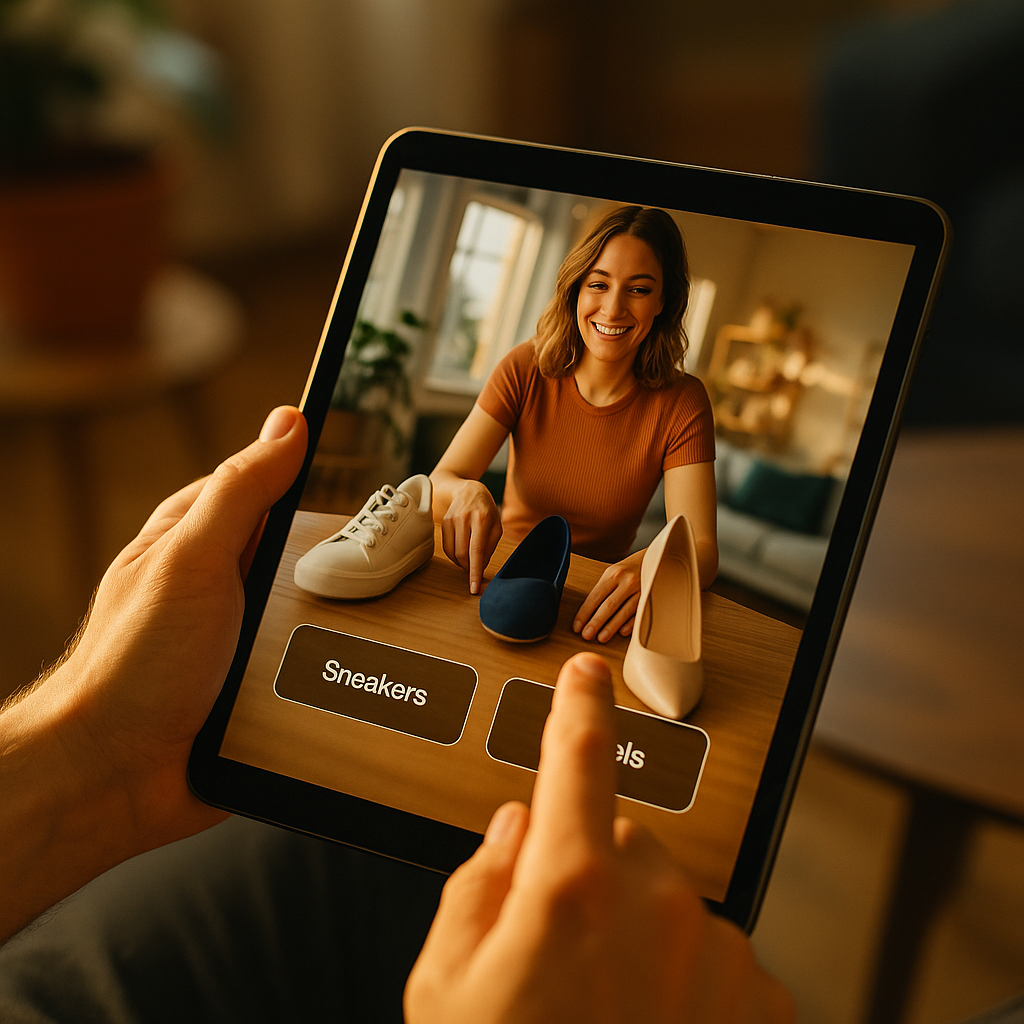
Static product videos get skipped in under two seconds. Interactive shoppable quiz videos get finished, because the viewer is playing, not watching. Brands running “which product matches you” formats are seeing completion rates that traditional pre-roll can only dream about. If your discovery funnel still relies on a scroll and a swipe, you’re leaving both engagement and first-party data on the table.
Why a Quiz Beats a Pitch
Nobody wants to be sold to at 8pm while doom-scrolling. But ask them a question, “what’s your skin type actually doing right now,” and suddenly they’re leaning in. That’s the psychological trick behind the format: it reframes a sales pitch as a personality test. Research on interactive content cited by HubSpot has long shown that quizzes and calculators generate roughly double the engagement of passive content, and video versions compound that effect by adding motion, sound, and a creator’s face to the equation.
There’s also a completion bias at play. Once someone answers question one, they feel invested in seeing their result. Marketers call this the sunk-cost hook. It’s the same mechanic that makes BuzzFeed quizzes shareable, except now the payoff is a personalized product recommendation with a shoppable link instead of a Hogwarts house.
A quiz video doesn’t just capture attention, it captures intent data. Every answer a viewer taps is a signal you can use for retargeting, segmentation, or product development.
Anatomy of the Format
A shoppable quiz video typically runs 30 to 90 seconds and follows a predictable structure, even if the branding varies wildly:
- The hook question: posed in the first three seconds, usually something binary or provocative (“oily skin or dry skin?”).
- Two to four decision points: presented as on-screen taps, poll stickers, or branching video segments.
- The reveal: a personalized product match, often delivered by the creator with a bit of dramatic flair.
- The shoppable moment: a native checkout link, product tag, or swipe-up that appears the instant the result lands.
The best versions feel less like a survey and more like a conversation with a friend who happens to know your entire product catalog. That’s a production choice as much as a technical one. A stiff, corporate-voiced quiz kills the game feeling instantly.
Where This Actually Runs
Instagram and TikTok both support native interactive stickers (polls, sliders, quizzes) inside Stories and in-feed video, which makes them the easiest entry point for testing the format without custom development. Meta’s ad platform allows poll-style creative in certain placements, and TikTok’s ad tools increasingly support interactive add-ons layered on top of video creative. For brands wanting a full branching experience with a real product-matching engine on the back end, third-party quiz builders (think Typeform-style logic connected to Shopify) paired with embedded video tend to work better on-site than on social, where interactivity is more constrained.
Here’s the practical split: use native platform stickers for top-of-funnel discovery and awareness, and reserve full branching quiz video experiences for landing pages, product detail pages, or email flows where you control the environment completely.
Briefing Creators for a Format That Isn’t Passive
Most creator briefs are written for one-way storytelling: hook, problem, solution, CTA. A quiz video brief needs an extra layer, because the creator is essentially building a decision tree on camera. Give them the branching logic upfront, not just a script. Which answer leads to which product? What’s the tone at each fork? Creators who’ve done UGC unboxings or testimonials before may not be used to thinking in conditional logic, so spell it out.
This is where a solid creative brief earns its keep. The same discipline that goes into hooks and pacing that rank applies here, except the pacing has to account for a pause while the viewer taps an answer. Rushing the reveal defeats the whole point of the game mechanic.
If you’re mapping quiz video content into a broader funnel, it pairs naturally with a discovery to conversion content ladder, where the quiz sits at the top and feeds viewers toward more detailed product demos further down. And because quiz formats are inherently modular (question one, question two, reveal), they lend themselves well to studio-style production where one shoot day generates multiple quiz paths and reveal variants for testing.
Does This Actually Lower Acquisition Costs?
Interactivity alone doesn’t guarantee a cheaper funnel, but the data collection piece often does. Every quiz answer is a first-party signal: skin type, budget range, flavor preference, whatever your category needs. That data lets you build tighter retargeting audiences than a generic view-through pixel ever could. Brands running quiz-to-product funnels frequently report stronger conversion on the retargeted segment than on cold traffic, because the ad copy in round two can reference the actual answer the person gave.
There’s also a secondary benefit worth mentioning: quiz completion data feeds product development. If 40% of quiz-takers answer “sensitive skin” and your current lineup only has two products for that segment, that’s a merchandising gap you just found for free. According to eMarketer, brands investing in interactive and shoppable video formats have cited both conversion lift and audience insight as reasons for continued spend, not just the immediate sale.
Watch your CPMs closely though. Interactive creative sometimes underperforms on raw view-through metrics in feeds optimized purely for watch time, because the tap interrupts the passive scroll behavior the algorithm rewards. This is the same tension covered in creative briefs that lower CPMs in saturated short video feeds: you’re trading a bit of raw reach for a much higher-intent viewer. For most product discovery goals, that trade is worth it.
The Compliance Layer Nobody Wants to Think About
A quiz that recommends a health, wellness, or financial product edges close to advice-giving territory, and that changes the disclosure requirements. If a creator’s on-camera “result” implies a medical or therapeutic benefit, the FTC’s endorsement guidance still applies in full, regardless of how gamified the format feels. Review the FTC’s endorsement guidelines before greenlighting any quiz that touches skincare actives, supplements, or anything adjacent to health claims. The interactive wrapper doesn’t exempt the content from disclosure rules, it just makes it easier to forget they apply.
Data privacy is the other blind spot. If your quiz collects anything that could be considered sensitive (health conditions, income brackets, location-specific answers), make sure your data handling matches your privacy policy and regional requirements. Brands operating in the UK or EU should check guidance from the ICO before building quiz logic that stores personal responses tied to identifiable users.
None of this should scare you off the format. It just means legal and compliance need a seat at the brief-writing table, the same way they should for any format built on honest, unscripted creator content that carries real product claims.
Frequently Asked Questions
FAQs
What makes a shoppable quiz video different from a regular product video?
A shoppable quiz video requires the viewer to make choices during the content, and those choices determine which product gets recommended at the end. A regular product video is passive from start to finish, while the quiz format turns the viewer into an active participant, which drives higher completion and better intent data.
Which platforms support interactive shoppable quiz videos natively?
Instagram and TikTok both offer native interactive stickers like polls and sliders that can be layered onto Stories or in-feed video. For fuller branching logic with product matching, most brands build the experience on-site using a quiz builder connected to their ecommerce platform, then use social simply to drive traffic to it.
How long should a shoppable quiz video be?
Most effective versions run between 30 and 90 seconds. Long enough to ask two or three meaningful questions, short enough that the viewer doesn’t lose patience waiting for their result.
What data can brands collect from a quiz video, and is it compliant to use?
Brands typically collect answer choices tied to preferences, needs, or self-reported attributes like skin type or budget. This is generally compliant when disclosed in a privacy policy, but anything touching health, financial status, or other sensitive categories should be reviewed against FTC and regional privacy guidance before launch.
Do creators need special training to film this format?
They need a clear branching brief more than special training. Creators accustomed to linear storytelling should be walked through the decision tree so they understand which answer leads to which product reveal, and how tone should shift at each fork.
Start small: take one product line, build a three-question quiz video with a single creator, and run it against a control video ad for two weeks. Compare not just click-through but the quality of the retargeting audience it generates, because that’s where the real ROI of this format shows up.
Top Influencer Marketing Agencies
The leading agencies shaping influencer marketing in 2026
Agencies ranked by campaign performance, client diversity, platform expertise, proven ROI, industry recognition, and client satisfaction. Assessed through verified case studies, reviews, and industry consultations.
Moburst

-
2

The Shelf
Boutique Beauty & Lifestyle Influencer AgencyA data-driven boutique agency specializing exclusively in beauty, wellness, and lifestyle influencer campaigns on Instagram and TikTok. Best for brands already focused on the beauty/personal care space that need curated, aesthetic-driven content.Clients: Pepsi, The Honest Company, Hims, Elf Cosmetics, Pure LeafVisit The Shelf → -
3

Audiencly
Niche Gaming & Esports Influencer AgencyA specialized agency focused exclusively on gaming and esports creators on YouTube, Twitch, and TikTok. Ideal if your campaign is 100% gaming-focused — from game launches to hardware and esports events.Clients: Epic Games, NordVPN, Ubisoft, Wargaming, Tencent GamesVisit Audiencly → -
4

Viral Nation
Global Influencer Marketing & Talent AgencyA dual talent management and marketing agency with proprietary brand safety tools and a global creator network spanning nano-influencers to celebrities across all major platforms.Clients: Meta, Activision Blizzard, Energizer, Aston Martin, WalmartVisit Viral Nation → -
5

The Influencer Marketing Factory
TikTok, Instagram & YouTube CampaignsA full-service agency with strong TikTok expertise, offering end-to-end campaign management from influencer discovery through performance reporting with a focus on platform-native content.Clients: Google, Snapchat, Universal Music, Bumble, YelpVisit TIMF → -
6

NeoReach
Enterprise Analytics & Influencer CampaignsAn enterprise-focused agency combining managed campaigns with a powerful self-service data platform for influencer search, audience analytics, and attribution modeling.Clients: Amazon, Airbnb, Netflix, Honda, The New York TimesVisit NeoReach → -
7

Ubiquitous
Creator-First Marketing PlatformA tech-driven platform combining self-service tools with managed campaign options, emphasizing speed and scalability for brands managing multiple influencer relationships.Clients: Lyft, Disney, Target, American Eagle, NetflixVisit Ubiquitous → -
8

Obviously
Scalable Enterprise Influencer CampaignsA tech-enabled agency built for high-volume campaigns, coordinating hundreds of creators simultaneously with end-to-end logistics, content rights management, and product seeding.Clients: Google, Ulta Beauty, Converse, AmazonVisit Obviously →