


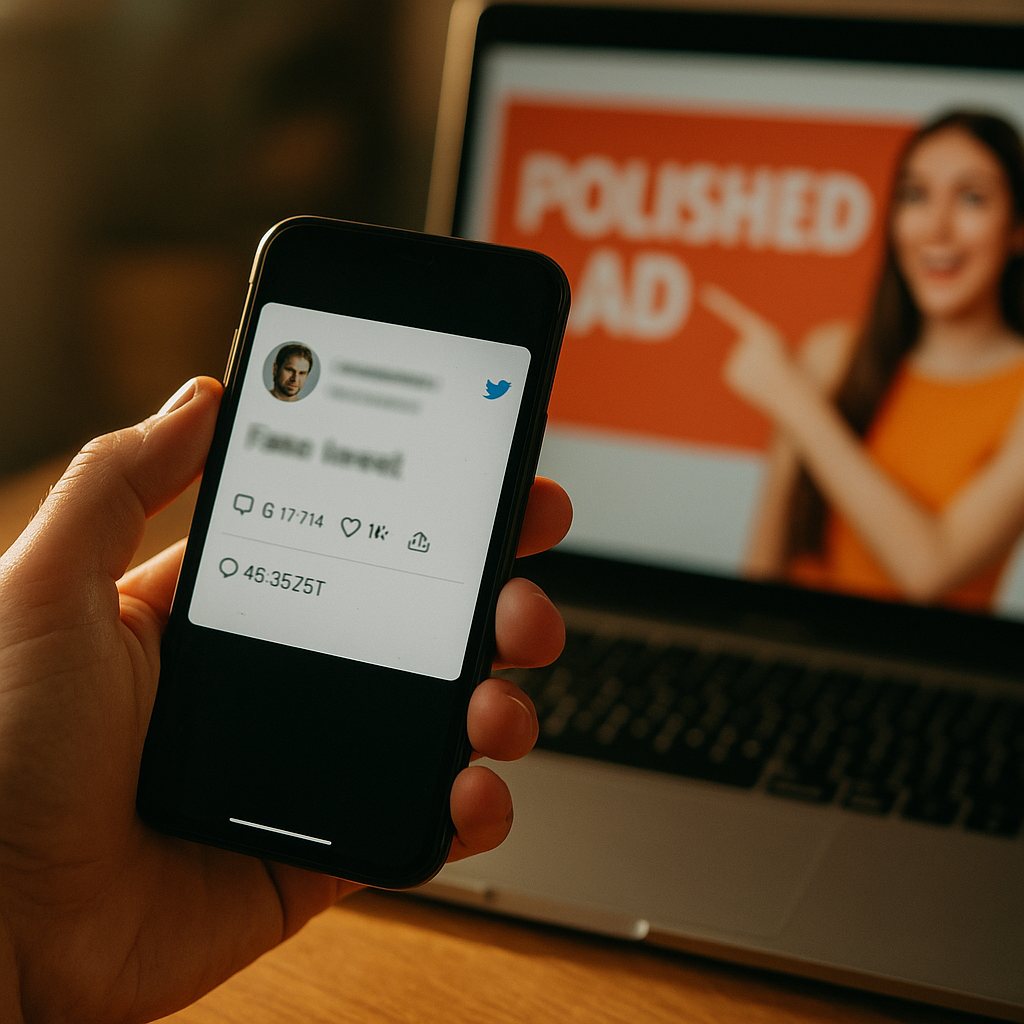
Some of the highest-performing paid social creative right now costs nothing to produce and looks like a screenshot from someone’s phone. That’s not an accident. Brands running the screenshot meme format are seeing engagement rates that outpace polished video, because the human brain reads “screenshot of a post” as unpaid, unscripted, and real, even when a brand paid for it.
If your creative team is still storyboarding six-figure shoots while a $0 screenshot outperforms them in the feed, it’s time to rethink the brief.
What Is the Screenshot Meme Format, Exactly?
The screenshot meme format takes a real (or realistic-looking) post from X, reformats it as a static image or short video overlay, and drops it into a paid or organic feed placement. Think of the classic “someone tweeted this and it’s too real” post that gets recirculated on Instagram Stories, TikTok, and LinkedIn. Brands have started manufacturing that exact aesthetic on purpose: writing the tweet, screenshotting it, adding a reaction video or caption, and running it as an ad.
It works because it borrows the credibility signals of organic social chatter without needing an actual viral moment to happen first. No waiting for lightning to strike. You write the bit, format it like authentic commentary, and distribute it like any other creative asset.
The format’s core value isn’t the joke, it’s the wrapper. A screenshot signals “unpaid opinion” even inside a paid placement, and that signal is doing most of the conversion work.
Why This Format Is Winning Attention Right Now
Feed fatigue is real. Consumers have gotten extremely good at pattern-matching “ad” versus “not ad” in under a second, and that pattern recognition is exactly what platforms like Sprout Social and other social analytics providers have flagged as a growing threat to traditional ad creative performance. Polished product shots trigger the skip reflex. A screenshot of what looks like a real post doesn’t, because it mimics the exact visual grammar of the content a user was already scrolling through before the ad interrupted them.
There’s also a cost angle that agencies love and rarely say out loud: this format is cheap. No studio, no talent day rate beyond a quick voiceover or reaction clip, no elaborate production timeline. A copywriter, a screenshot tool, and a rough caption can produce test creative in an afternoon. Compare that to the budget and lead time required for something like a full studio-style shoot, and it’s easy to see why performance marketers keep pushing more spend toward this format.
Platforms have noticed the shift too. Meta’s ad library and TikTok’s creative center both show a rising share of “text post” and “screenshot” style creative in top-performing ad sets, which lines up with broader industry data from eMarketer on the decline of traditional produced-video performance relative to native-feeling formats.
The Trust Mechanics Behind a Fake (or Real) Screenshot
Why does a screenshot read as more trustworthy than a video testimonial with better lighting and a script? A few reasons, and marketers building briefs around this format should understand each one:
- Familiarity bias. Users have scrolled past thousands of real X posts. The format is instantly recognizable, so the brain processes it as “content,” not “ad.”
- Perceived low production value. Ironically, looking cheap is an asset here. High production value now triggers skepticism in a way it didn’t five years ago.
- Implied third-party endorsement. Even when the brand wrote the post, the screenshot format implies someone else said it first, and the brand is just resharing.
- Shareability. Screenshots get forwarded, saved, and reposted in ways that feel less like ad engagement and more like meme circulation.
This is the same underlying psychology behind formats like the employee discount reveal and the manufacturing defect reveal, where imperfection and apparent leakage of “insider” information outperform polish. The screenshot meme format is really the text-based cousin of that same trust mechanic.
Building a Brief That Doesn’t Feel Like Marketing
Here’s where most brand teams get it wrong: they hand this format to their usual copywriters and ask for “something funny in the brand voice.” That produces content that reads exactly like an ad wearing a screenshot costume. Users see through it in about half a second.
Instead, the brief needs to prioritize authenticity of language over brand consistency. That means:
- Writing in the actual grammar of X: lowercase starts, fragment sentences, self-deprecating tone, minimal punctuation.
- Avoiding brand-speak entirely in the “post” text itself. Save the CTA for the overlay or caption, not the fake post.
- Sourcing real customer language wherever possible. Pull phrases from support tickets, reviews, or actual social mentions and lightly edit them rather than writing from scratch.
- Testing multiple “voices” (the skeptic, the convert, the deadpan observer) rather than a single brand persona.
This overlaps heavily with the discipline covered in briefing for intentionally imperfect content. The screenshot format is arguably the purest expression of that philosophy: the entire unit of content is built around looking unintentional.
Where Real Posts Fit Into the Pipeline
Not every screenshot needs to be manufactured. Plenty of brands are running a hybrid model: monitor real X mentions (with permission and proper attribution), identify the ones with strong emotional hooks or unexpected humor, and repurpose those as paid creative. This is lower risk from a compliance standpoint because you’re amplifying something that actually happened, not fabricating a persona.
The tradeoff is volume and control. Waiting for organic gold means your creative pipeline depends on unpredictable customer behavior. Manufacturing the format means consistent output but higher scrutiny risk if it’s ever perceived as deceptive.
Most mature programs run both tracks in parallel: a “harvest” workflow for real mentions and a “manufacture” workflow for brief-driven creative, feeding both into the same testing pipeline described in creative briefs built to lower CPMs in saturated feeds.
Compliance: The Part Everyone Skips Until It’s a Problem
This is the section that should get forwarded to your legal team before the first test goes live. The screenshot meme format sits in a genuinely gray compliance zone, and brand and agency teams need to treat it that way.
The core risk: if a fabricated screenshot is presented in a way that a reasonable consumer would believe is a genuine, unsolicited post, and the brand doesn’t disclose its involvement, that can run afoul of FTC guidance on deceptive advertising and endorsements. The FTC has been explicit for years that fake reviews and fabricated testimonials, in any format, are enforcement targets, and a manufactured “viral tweet” ad is functionally the same category of risk as a fake review.
A manufactured screenshot that implies unsolicited third-party praise, without disclosure, isn’t a gray area. It’s the same enforcement category as a fake review, just dressed differently.
Practical safeguards worth building into every brief:
- Include a subtle “Ad” or “Sponsored” label on the creative unit itself, not buried in platform metadata alone.
- Avoid attributing the fake post to a specific fictional handle designed to look like a real, findable account. That’s a bright line for a lot of legal teams.
- If using a real customer’s actual words, get documented permission, even if the original post was public.
- Keep records of what was fabricated versus sourced, so your compliance team can answer questions fast if a regulator or platform asks.
Regional teams running this format in the UK or EU should also check guidance from the ICO on data handling if any real user content or handles are involved, since screenshotting a real account touches personal data considerations that a purely fabricated post doesn’t.
This is the same category of thinking behind restock countdown campaigns built to avoid FTC risk. Urgency and authenticity formats both carry outsized compliance exposure relative to their production cost, which is exactly why legal review needs to happen before the media buy, not after a complaint.
Measuring Performance Without Fooling Yourself
Screenshot creative tends to post strong scroll-stop and engagement numbers almost immediately, which can trick teams into declaring victory too early. The real test is whether that engagement converts down-funnel, or whether it’s just cheap dopamine that inflates vanity metrics.
Track these formats against the same conversion benchmarks you’d apply to any other creative, not a separate “engagement content” bucket with softer standards. Specifically:
- Compare cost per click and cost per acquisition against your control creative set, not just against other screenshot variants.
- Watch for engagement decay. Meme-style formats can fatigue faster than product-led creative because the joke stops landing after a few exposures.
- Segment performance by placement. What lands in a Stories feed often flops as an in-feed static image, and vice versa.
- Layer this format into a broader content ladder rather than treating it as a standalone tactic. Screenshot creative is excellent at top-of-funnel scroll-stopping but rarely closes the sale on its own.
Teams that have had success pairing this format with a stronger down-funnel asset, like a trust-first unboxing or a founder-led explainer, tend to see the best blended CAC. The screenshot gets the scroll-stop, the second asset closes the loop.
Next Step
Run a small test batch before committing meaningful budget: three fabricated posts, three harvested real mentions, one clear compliance-approved disclosure treatment, and measure against your existing control creative for a full week before scaling spend.
Frequently Asked Questions
Is the screenshot meme format the same as a fake testimonial?
Not necessarily, but it can cross that line quickly if it’s presented as unsolicited praise without disclosure. The safest approach treats fabricated screenshots with the same disclosure rigor as any paid endorsement.
Do I need permission to screenshot a real customer’s post?
Yes. Even though the original post is public, using it in paid creative typically requires documented permission from the original poster, both for compliance reasons and platform terms of service.
Why does this format outperform polished video ads in the feed?
It mimics the visual grammar of organic social content, which lowers the viewer’s guard and reduces the instinctive skip reflex that polished, obviously branded creative tends to trigger.
How long does screenshot meme creative typically stay effective before fatigue sets in?
Most teams see faster creative fatigue than with product-led video, often within a couple of weeks of heavy rotation, since the format relies on novelty and humor rather than product demonstration.
Should this format replace other UGC or influencer content in the mix?
No. It performs best as a top-of-funnel scroll-stopper paired with stronger conversion-focused assets further down the funnel, not as a standalone replacement for trust-building formats.
Visible FAQ (duplicate for schema accuracy)
Top Influencer Marketing Agencies
The leading agencies shaping influencer marketing in 2026
Agencies ranked by campaign performance, client diversity, platform expertise, proven ROI, industry recognition, and client satisfaction. Assessed through verified case studies, reviews, and industry consultations.
Moburst

-
2

The Shelf
Boutique Beauty & Lifestyle Influencer AgencyA data-driven boutique agency specializing exclusively in beauty, wellness, and lifestyle influencer campaigns on Instagram and TikTok. Best for brands already focused on the beauty/personal care space that need curated, aesthetic-driven content.Clients: Pepsi, The Honest Company, Hims, Elf Cosmetics, Pure LeafVisit The Shelf → -
3

Audiencly
Niche Gaming & Esports Influencer AgencyA specialized agency focused exclusively on gaming and esports creators on YouTube, Twitch, and TikTok. Ideal if your campaign is 100% gaming-focused — from game launches to hardware and esports events.Clients: Epic Games, NordVPN, Ubisoft, Wargaming, Tencent GamesVisit Audiencly → -
4

Viral Nation
Global Influencer Marketing & Talent AgencyA dual talent management and marketing agency with proprietary brand safety tools and a global creator network spanning nano-influencers to celebrities across all major platforms.Clients: Meta, Activision Blizzard, Energizer, Aston Martin, WalmartVisit Viral Nation → -
5

The Influencer Marketing Factory
TikTok, Instagram & YouTube CampaignsA full-service agency with strong TikTok expertise, offering end-to-end campaign management from influencer discovery through performance reporting with a focus on platform-native content.Clients: Google, Snapchat, Universal Music, Bumble, YelpVisit TIMF → -
6

NeoReach
Enterprise Analytics & Influencer CampaignsAn enterprise-focused agency combining managed campaigns with a powerful self-service data platform for influencer search, audience analytics, and attribution modeling.Clients: Amazon, Airbnb, Netflix, Honda, The New York TimesVisit NeoReach → -
7

Ubiquitous
Creator-First Marketing PlatformA tech-driven platform combining self-service tools with managed campaign options, emphasizing speed and scalability for brands managing multiple influencer relationships.Clients: Lyft, Disney, Target, American Eagle, NetflixVisit Ubiquitous → -
8

Obviously
Scalable Enterprise Influencer CampaignsA tech-enabled agency built for high-volume campaigns, coordinating hundreds of creators simultaneously with end-to-end logistics, content rights management, and product seeding.Clients: Google, Ulta Beauty, Converse, AmazonVisit Obviously →