


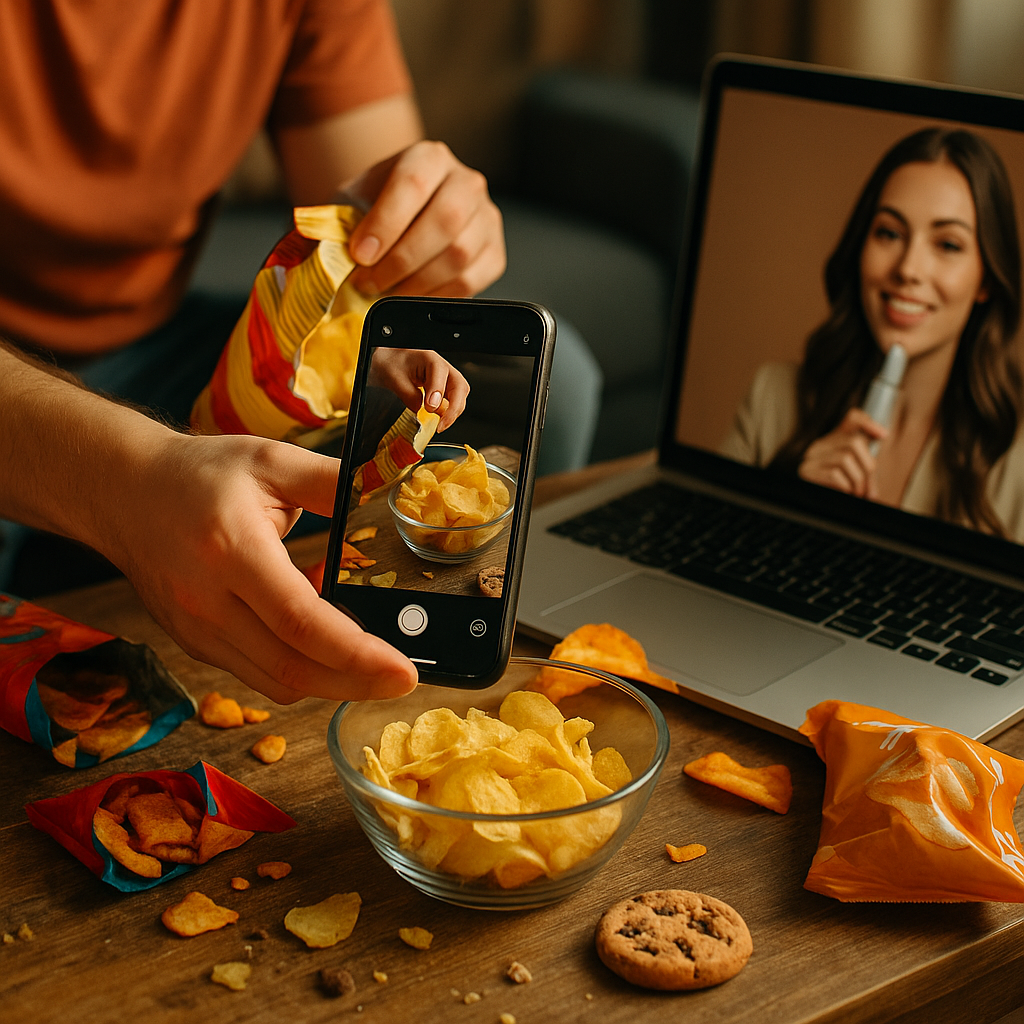
Polished brand content now gets skipped in under two seconds. Sprout Social and multiple platform reports have flagged the same pattern for the past several quarters: lower-fi, faster-paced, deliberately imperfect posts are consistently out-performing studio-grade production on watch time, shares, and conversion. Call it the “snacky and messier” content shift, and it’s rewriting how brands brief creators, budget campaigns, and measure success.
The Data Behind the Format Shift
Start with the numbers, because this isn’t a vibe, it’s a pattern showing up across platforms and verticals. Short-form video completion rates on TikTok and Instagram Reels skew heavily toward content shot in under 15 seconds with minimal editing. eMarketer has repeatedly noted that engagement on native-feeling, lower-production creator content outpaces branded studio content by wide margins, particularly among users under 35.
The mechanics are simple. Algorithms reward watch time and completion, not aesthetic quality. A shaky, 9-second clip of someone reacting honestly to a product beats a beautifully lit 45-second brand film if the film gets scrolled past at second three. Platforms don’t grade on production value. They grade on retention.
Brands chasing polish are optimizing for the wrong signal. The algorithm doesn’t care how good your content looks, it cares how long people stay on it.
This lines up with what we’ve covered around organic CPM economics: cheaper, faster, rougher content is also cheaper to produce and often cheaper to distribute, because it earns organic reach that polished ad creative has to buy.
h3 skip, moving to next section.
What “Snacky and Messier” Actually Means
It’s not “low quality” in the sloppy sense. It’s low production friction. Think: phone-shot, single-take, jump cuts, captions typed in real time, imperfect lighting, a creator talking directly into the lens like they’re texting a friend. The strategy behind it is intentional even when the execution looks casual.
- Snacky: Short enough to consume in one scroll pause, usually under 20 seconds, front-loaded with a hook in the first two seconds.
- Messier: Visually imperfect, unscripted-feeling, often single-take with no reshoots or heavy color grading.
- Native-coded: Formatted to match whatever the platform’s organic content looks like that week, not a repurposed TV spot.
This format works because it mimics what audiences already trust: content from friends, not from brands. It borrows the visual language of UGC even when a paid creator is behind it. That’s why UGC sellers have become such a durable budget line item rather than a passing trend.
Why Is Polish Losing Ground?
Three forces are converging here, and none of them are going away soon.
Trust fatigue. Consumers have gotten sharp at spotting a paid ad from a mile away, and polished production is now a tell, not a virtue. AI Personalization is rising precisely as consumer trust in ads falls, and slick creative reads as “trying to sell me something” faster than a rough clip does.
Algorithmic economics. Platforms reward native-feeling content with organic distribution. A polished ad often needs paid amplification to get seen at all, which changes the entire cost structure. That’s the core argument behind organic-first seeding strategies replacing paid amplification in media mix models.
Speed to market. Messier content ships faster. No storyboard, no studio booking, no three rounds of client approval on color correction. That speed advantage compounds when you’re running always-on programs instead of quarterly campaign bursts, a shift covered in depth around evergreen content infrastructure.
The ROI Case for Rawness
Here’s where it gets interesting for anyone holding a budget line. Lower production cost plus higher organic reach plus stronger completion rates equals a materially better cost-per-engagement, and often a better cost-per-acquisition too.
Consider the math a mid-market DTC brand runs internally: a $15,000 branded video shoot competing for attention against a $500 creator package shot on an iPhone. If the $500 version gets triple the view-through rate and a fraction of the cost per view, the ROI conversation is over before it starts. This is exactly the dynamic explored in view-through rate as the new core KPI in creator marketing: brands are increasingly measuring completion and re-watch behavior over impressions, and messier content wins that scoreboard more often than not.
It also plays into how brands are re-ranking creator tiers. When conversion data replaces reach as the selection criteria, a nano creator posting rough, authentic content frequently outperforms a macro influencer’s studio-produced sponsorship. Nano and micro deals already beat macro influencer deals on speed and engagement, and the format shift only widens that gap.
A $500 raw clip that outperforms a $15,000 shoot isn’t a fluke, it’s a predictable outcome of how attention and algorithms actually work in 2026.
Where This Breaks Down: Risk and Brand Safety
None of this means brands should abandon polish entirely or greenlight anything shot in a bathroom mirror. There are real limits, and skipping them creates operational and compliance headaches.
- Regulated categories still need guardrails. Financial services, health, and pharma content has to meet disclosure standards regardless of how “native” it looks. The FTC’s endorsement guidance applies just as strictly to a shaky iPhone clip as it does to a studio ad.
- Brand safety doesn’t scale with volume. Running dozens of messier, faster creator posts means more surface area for off-brand messaging, and manual review doesn’t keep pace. This is part of why machine readability compliance is burning out ops teams trying to vet content at scale.
- Flagship moments still need production value. Product launches, brand campaigns tied to major sponsorships, and anything appearing in paid placements on Meta or TikTok’s ad platform often still benefit from a hybrid approach: polished hook, messy middle.
The smart move isn’t “messier always wins.” It’s segmenting your content strategy by funnel stage and platform, then applying the right production level to each. Top-of-funnel discovery content can and should be snacky and rough. Consideration and conversion content, especially anything tied to a purchase decision, may still need more structure.
Operationalizing the Shift
Brands that are winning with this format aren’t just telling creators to “be more casual.” They’re rebuilding briefs, approval workflows, and budget allocation around it.
That means shorter creative briefs focused on hooks and pacing rather than shot lists. It means faster approval turnarounds, sometimes same-day, because messier content loses relevance if it sits in legal review for two weeks. And it means reallocating budget away from single hero productions toward a higher volume of smaller creator deals, a shift that’s already reshaping how agencies structure teams, as detailed in coverage of the creator economy forcing agency org chart changes.
Compensation structures are adjusting too. Instead of flat fees tied to reach, more contracts now tie pay to performance outcomes, echoing the trend of LTV metrics replacing reach in pay contracts. If messier content drives better completion and conversion, paying for that outcome rather than production value makes financial sense.
Worth benchmarking against broader platform data too: HubSpot’s marketing research and Statista’s social media usage data both show consistent year-over-year growth in short-form, low-production video consumption, which suggests this isn’t a temporary algorithm quirk. It’s a durable shift in how audiences want to consume brand content.
Next Step
Audit your last ten pieces of sponsored content: rank them by production cost against completion rate, not impressions. If the cheapest, roughest posts are quietly outperforming your hero shoots, that’s your signal to shift budget from polish to volume, starting with your next quarter’s creator briefs.
Frequently Asked Questions
What does “snacky and messier” content mean in influencer marketing?
It refers to short, low-production creator content, typically under 20 seconds, shot in a single take with minimal editing, that mimics organic user-generated content rather than polished brand advertising.
Why does messier content outperform polished brand videos?
Platform algorithms reward watch time and completion rate over production quality. Rougher, native-feeling content tends to earn stronger retention and organic distribution than studio-produced ads, which often need paid amplification to get seen.
Does this mean brands should stop producing high-quality video content?
No. Polished production still matters for flagship launches, regulated industries, and paid placements where brand safety and compliance requirements are higher. The shift is about segmenting production quality by funnel stage, not eliminating it entirely.
How should brands measure the ROI of messier creator content?
Track view-through rate, completion rate, and conversion data rather than impressions or reach alone. These metrics better reflect whether audiences are actually engaging with lower-production content, and they increasingly drive creator tier selection and pay structures.
Are there compliance risks with rougher, faster creator content?
Yes. FTC endorsement disclosure rules apply regardless of production quality, and higher content volume increases the surface area for brand safety issues. Marketing ops teams need scalable review workflows to keep pace with faster content cycles.
Top Influencer Marketing Agencies
The leading agencies shaping influencer marketing in 2026
Agencies ranked by campaign performance, client diversity, platform expertise, proven ROI, industry recognition, and client satisfaction. Assessed through verified case studies, reviews, and industry consultations.
Moburst

-
2

The Shelf
Boutique Beauty & Lifestyle Influencer AgencyA data-driven boutique agency specializing exclusively in beauty, wellness, and lifestyle influencer campaigns on Instagram and TikTok. Best for brands already focused on the beauty/personal care space that need curated, aesthetic-driven content.Clients: Pepsi, The Honest Company, Hims, Elf Cosmetics, Pure LeafVisit The Shelf → -
3

Audiencly
Niche Gaming & Esports Influencer AgencyA specialized agency focused exclusively on gaming and esports creators on YouTube, Twitch, and TikTok. Ideal if your campaign is 100% gaming-focused — from game launches to hardware and esports events.Clients: Epic Games, NordVPN, Ubisoft, Wargaming, Tencent GamesVisit Audiencly → -
4

Viral Nation
Global Influencer Marketing & Talent AgencyA dual talent management and marketing agency with proprietary brand safety tools and a global creator network spanning nano-influencers to celebrities across all major platforms.Clients: Meta, Activision Blizzard, Energizer, Aston Martin, WalmartVisit Viral Nation → -
5

The Influencer Marketing Factory
TikTok, Instagram & YouTube CampaignsA full-service agency with strong TikTok expertise, offering end-to-end campaign management from influencer discovery through performance reporting with a focus on platform-native content.Clients: Google, Snapchat, Universal Music, Bumble, YelpVisit TIMF → -
6

NeoReach
Enterprise Analytics & Influencer CampaignsAn enterprise-focused agency combining managed campaigns with a powerful self-service data platform for influencer search, audience analytics, and attribution modeling.Clients: Amazon, Airbnb, Netflix, Honda, The New York TimesVisit NeoReach → -
7

Ubiquitous
Creator-First Marketing PlatformA tech-driven platform combining self-service tools with managed campaign options, emphasizing speed and scalability for brands managing multiple influencer relationships.Clients: Lyft, Disney, Target, American Eagle, NetflixVisit Ubiquitous → -
8

Obviously
Scalable Enterprise Influencer CampaignsA tech-enabled agency built for high-volume campaigns, coordinating hundreds of creators simultaneously with end-to-end logistics, content rights management, and product seeding.Clients: Google, Ulta Beauty, Converse, AmazonVisit Obviously →